Bicester's history: from the priory and the market to the garden town
Most people know Bicester for a shopping village and a ring road. Behind them is an old market town with a lost priory, a Friday market granted in 1239, two centuries of fox hunting and a century of soldiers. Here is how it got from there to here.
· 10 minute read
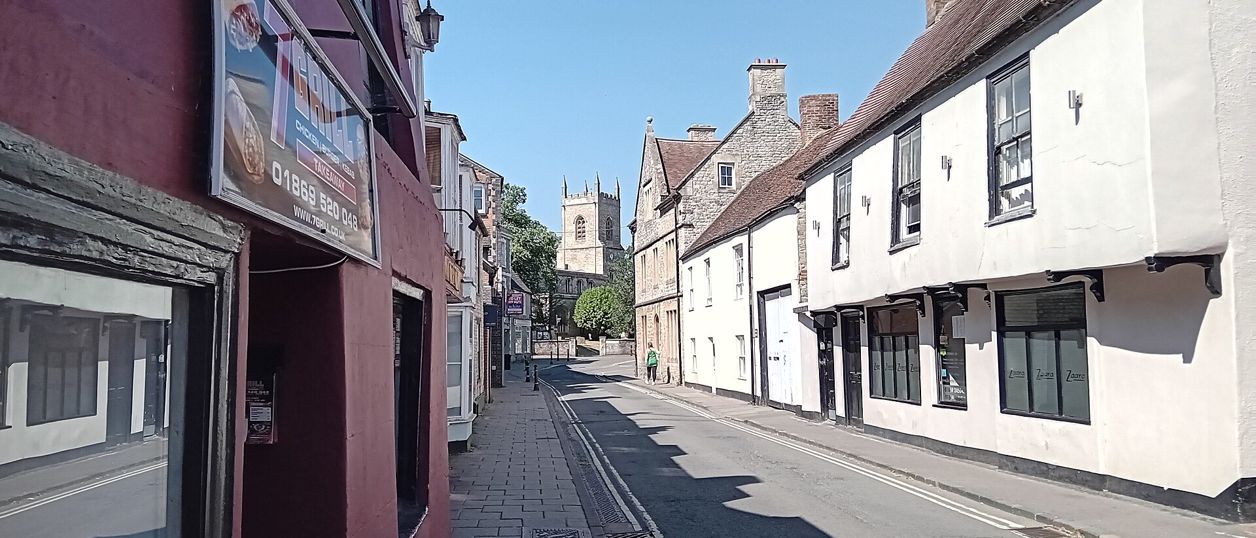
From the A41 or the ring road, Bicester looks like a town built last week: roundabouts, new estates, the car parks of a shopping village. Its centre is much older. The county history, written in the 1950s, found that the core of the street plan, Sheep Street, the Market Square, Church Way and the Causeway, had probably altered little since the Middle Ages. The town grew around a priory and a market, lived for two centuries on hunting, was turned by two world wars into a garrison town, and in 2014 was named a garden town with up to 13,000 new homes to come. This is that story, from the record, with what you can still see of it.
A fort by a ford
People lived here long before the town. The Victoria County History (opens in a new tab) notes traces of an Iron Age and Romano-British settlement beside the Roman road at the southern edge of the old parish, near the walled town of Alchester, which our story of Alchester and the Romans covers. The Anglo-Saxons settled further north, by a ford over the Bure Brook, at about 75 metres up. Their name for the place was Bernecestre, which the county history reads as 'the fort of the warriors' or 'of Beorna', some Anglo-Saxon war-lord.
Much of the early story is tradition rather than record. A tradition that Birinus, the seventh-century Bishop of Dorchester, founded the village has nothing to support it beyond the age of the name. Another holds that the first town stood at King's End and was destroyed by the Danes, and Bicester Town Council's own history page dates a Danish raid to 912. What the record does show is a town of two halves divided by the brook: Bury End, later Market End, round the church, and King's End to the west, a separate township that owed suit to the manor court at Kirtlington, its name recorded by 1316. The two were only joined under one local board in 1875.
Domesday Book found two manors here in 1086, Bicester and Wretchwick, with land for 22 ploughs, 28 villeins, 14 bordars and five serfs. Wretchwick, 'the shelter of the exiles', had dwindled to a farm by the 1950s, when the county history could still make out the mounds of its lost village and green in a field by the main road.
The priory of St Edburg
Between 1182 and 1185 Gilbert Basset, lord of Bury End, gave crofts and houses near his own fishpond and chapel for a house of Augustinian canons, meant for a prior and 11 canons. Its church, dedicated to the Virgin Mary and St Edburg, was built by about 1200 and enlarged around 1300: stone came from Bloxham for its seats in 1296, a loan raised from Florentine merchants in 1300 may have helped pay for the work, and in 1304 an indulgence was granted to anyone who gave to it. It was reconsecrated in 1312. The canons kept the bones of St Edburg, and a shrine was made for them between 1294 and 1317, one of the last pieces of figure sculpture in Purbeck marble to survive. Our story of St Edburg follows the saint and the shrine.
The priory stayed small. At the bishop's visit of 1445 there were a prior, seven canons and two or more boys, the jewels were pawned and the canons' clothing allowance unpaid; in 1520 the younger canons were ordered lessons in grammar and in their own rule, of which they were 'somewhat ignorant'. Henry VIII came to Bicester in 1526. The house was suppressed in 1536, the prior retiring on a pension of £24, and its church was pulled down in 1537. The buildings became a private mansion where Thomas Moore entertained Elizabeth I in 1568, on her way to Rycote, and that too was pulled down in 1673.
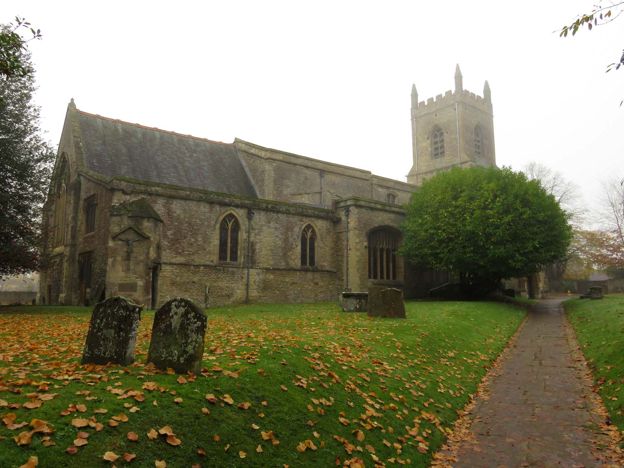
Almost nothing of the priory stands. What survives is a seventeenth-century dovecote and Old Priory House (listed today as The Old Priory), a two-storey building largely rebuilt in the early sixteenth century with medieval work in its west gable, which may have been the priory's guest house. Both are close to the parish church of St Edburg, which the canons served and which outlived them.
A market since 1239
In 1239 Henry III granted William de Longespée a market for his Bicester manor, and in 1252 a three-day fair about St Edburg's day, 18 July. The county history thinks he was doing what other founders of market towns did: offering plots for a money rent to draw traders in. It worked. By 1310 there were 22 free tenants 'living on the market' and a Friday market worth £1, and the town's tradesmen included barkers, curriers, skinners, glovers, fullers, dyers and weavers. The Black Death of 1349 cut the tolls to 30s.
The Friday market became a cattle market. Towards the end of the seventeenth century White Kennett, who had lived in Bicester, called it 'a great resort and a good vend for all country commodities, especially all sorts of cattle', which were sold in Sheep Street. Then came a run of disasters. Smallpox in 1704 nearly ruined it, so that grass grew in the market place like 'a meadow'. Disastrous fires followed in 1718, 1724 and 1730, the second destroying malt, barley, tobacco, flax and hay worth £2,231. Cholera in 1832 brought 'a total stagnation of trade'. In 1910 the cattle sales left Sheep Street for a new market near Victoria Road.
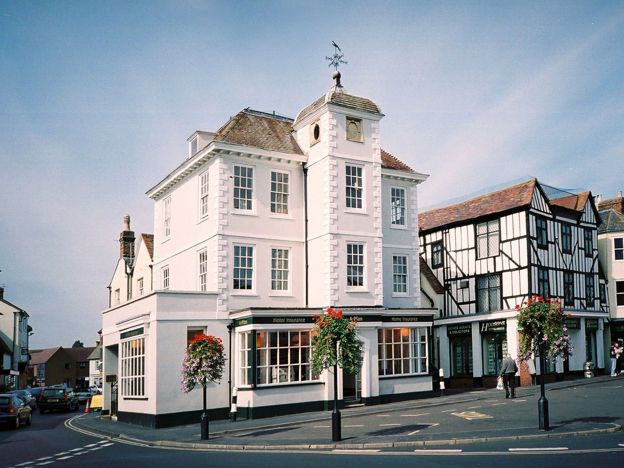
The general market is still held every Friday, now in Sheep Street. Cherwell District Council's markets page lists it from 9am to 4.30pm with about 20 stalls, run by the Bicester Market Association. Our page on the Market Square covers the square and the buildings around it.
Slippers, sacking and pale ale
The market drew trades to the town. Wool, skins and barley fed glove-making, saddlery, tanning and malting. By 1790 the sackcloth trade was failing and most of the poor worked at lace, but the town had one claim to fame: a trade directory of that time thought more common leather slippers were made in Bicester 'than in any other place in the kingdom'. Later, lace gave way to straw-plaiting for hats. By 1846 Shillingford's brewery was established, and in 1866 a national gazetteer named pale ale, clothing and sacking as Bicester's three chief manufactures.
The fires led to a rebuilding that you can still read in the streets. Many old houses of coursed rubble were refaced in stucco or brick in the eighteenth century, given sash windows and porticoes, so that the county history found houses from the sixteenth to the nineteenth century standing side by side. In 1826 rioters destroyed the Town Hall and Shambles in the Market Square. The town was lit by gas in 1845, its streets were paved in the 1860s, and the Bure, by then foul, was covered over in the Causeway.
Coaches, the canal and two railways
Bicester sits where two main routes between the south and the Midlands cross, and the roads made its fortune more than once. Coaches ran to London from 1752, and the roads were turnpiked between 1768 and 1791. The Oxford Canal brought a wharf at Lower Heyford, six miles away, in 1790, and with it cheap coal from the Midlands. The railway arrived in 1850 with a station on the London road on the Bletchley to Oxford line, and a second, Bicester North, was opened by the Great Western in 1906. The rival companies got on well enough that until 1940 both stations shared one stationmaster. Our guide to getting to Bicester covers the town's two stations as they are today.
The census found 1,946 people here in 1801. The figure peaked at 3,343 in 1891 and then fell back, and as late as 1851 farming employed more people than any other work.
The hunting town
For two centuries what kept Bicester's inns full was horses. Races were run here from at least 1718, first in King's End Field and later at Kirtlington, Bucknell and Cottisford Heath, and they brought London society to balls at the Black Boy. The Bicester and Warden Hill Hunt began in 1778, when John Warde kept a pack at Weston-on-the-Green, and took the Bicester name when its kennels moved to the town early in the nineteenth century. Robert Surtees put 'Mr. Drake's hounds' and the King's Arms into print. Saddlers, farriers, breeches-makers, grooms and sporting tailors lived off the hunt, and when the market and the road traffic declined in the nineteenth century, the hunting season filled the stables instead.
The houses show it. Bicester Hall was built as a hunting box for the Earl of Cottenham, and Garth House, now the town council's office, was built in the 1840s as a hunting lodge, according to the council. In the 1950s the county history noted that the Boxing Day meet in the Market Square had been a big event in the town's year since about 1930.
The garrison town
The twentieth century turned the hunting town into a military one, in the county history's phrase a 'cosmopolitan and garrison town'. Belgian refugees were lodged at the George in the First World War. An airfield was built at Bicester in 1917, closed in 1920 and reopened as a bomber station in 1928; our story of RAF Bicester tells the rest. Its buildings, neglected for about 40 years and put on Historic England's At Risk Register in 2008, are now Bicester Heritage, created in 2013 as a home for the classic-car trade.
The bigger change came south of the town. Southern Command's Bicester Base Ordnance Depot was set up at Arncot, three miles away, during the Second World War and was finished shortly before D-Day in 1944. Our story of the Bicester military railway picks up the depot's history. In 1950 the War Office decided to make Bicester a garrison town in peacetime, and barracks were built. A camp for 1,000 European Voluntary Workers opened in 1948. With the Americans at Upper Heyford nearby, the county history noted, the café had become as conspicuous as the inn. Between 1947 and 1956 more than 600 council houses went up, 300 of them for civilian workers at the depot, and the town's population was 4,171 in 1951.
In 1946, after the death of its owner that May, the urban district council bought Garth House and its grounds for £6,500, partly from donations, and made the house its offices and the grounds a park. The bell on the park gates was cast by the Bicester bellfounder Edward Hemins and hung at the Town Hall and Shambles until the rioters of 1826. Bicester Town Council, set up in 1974, is still based at the Garth.
The garden town
The modern town is the product of the last 30 years. In 1995 a wet field at the edge of the town became an outlet shopping centre, the start of the story of Bicester Village. In July 2009 land to the north-west was named as one of four eco-towns, and its first phase, Elmsbrook, is told in full in our eco-town story. On 2 December 2014 the government announced 'a locally-led garden town at Bicester, backed by the council and local MP', with up to 13,000 new homes. Cherwell District Council now describes Graven Hill as the UK's largest self-build and custom-build development, and Kingsmere as a new neighbourhood with schools, shops and healthcare.
Not everyone in the town has been happy with how it has been sold. When the railway station by the outlet was renamed Bicester Village in 2015, the then mayor told the BBC it made it sound as though Bicester was only about Bicester Village, and a local campaign group described a town of over 30,000 people with a history and culture of its own. That history is what this story is about.
The Banburyshire newsletter
Events, new places and the best of the season, about once a month. Unsubscribe at any time.
Seeing old Bicester
The old town is small enough to walk in an hour. Start at the Market Square, ideally on a Friday when the market is on in Sheep Street, and look up at the fronts: the eighteenth-century rebuilding after the fires is still the face of the town. Walk west from the square along the Causeway, where the Bure was covered over in the nineteenth century, to St Edburg's church, with Old Priory House and the dovecote close by. Then head east to Garth Park for the bell and the old hunting lodge. Our Bicester guide has what else to see, and where to eat and park.
If you are coming for the history alone, be honest with yourself: Bicester's old centre is a pleasant hour, not a day. It pairs well with Bicester Heritage on a day it opens to the public, or with the villages to the north, among them Juniper Hill, the hamlet Flora Thompson made famous as Lark Rise.
Mentioned in this story
The places, sights and walks in this story, each with a page of its own: what it is, when to go and how to get there.
-
St Edburg's Church, Bicester
Sight · Church · Bicester
-
Bicester Market Square
Sight · Historic building · Bicester
-
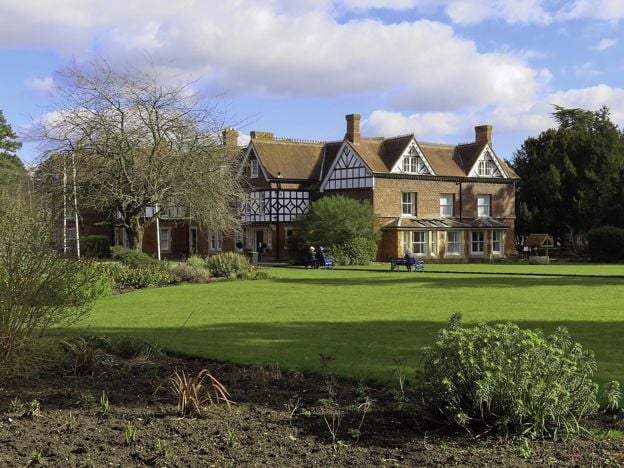
Garth Park, Bicester
Sight · Common or park · Bicester
-
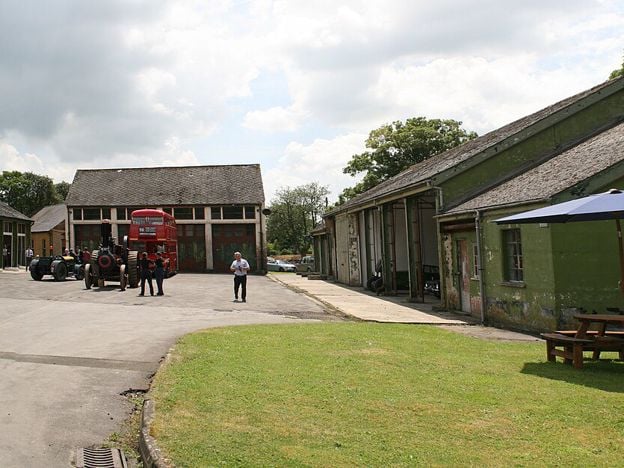
Bicester Heritage (RAF Bicester)
Sight · Historic building · Bicester
-
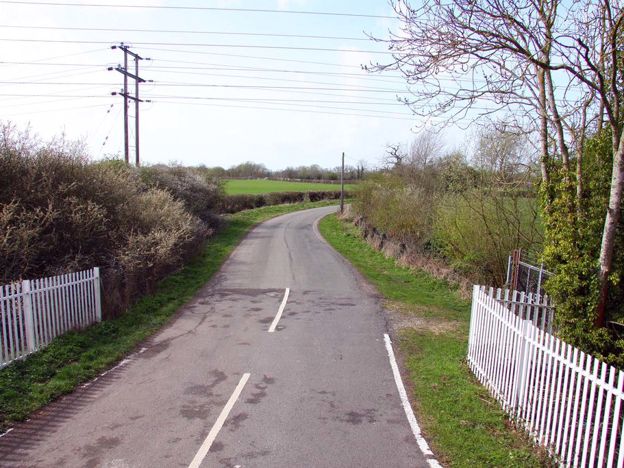
Alchester Roman Town, near Bicester
Sight · Monument · Bicester
Places to stay near Bicester
-
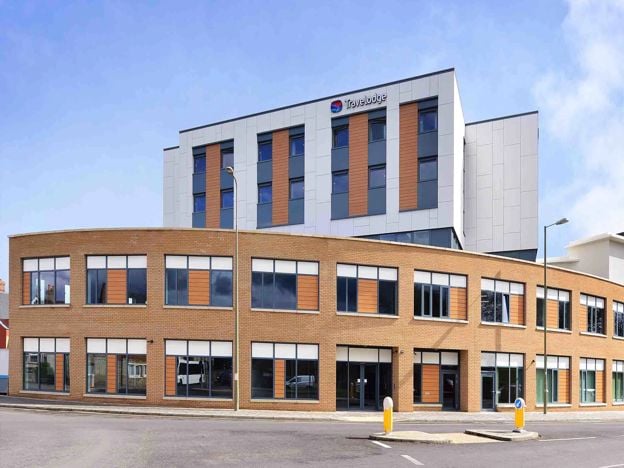
Travelodge Bicester
Hotel · Bicester
A budget chain hotel on Pioneer Square in the middle of Bicester, under half a mile from Bicester North station and within walking distance of Bicester Village, with family, accessible and pet-friendly rooms but no car park of its own.
Dog-friendly · Car-free
Verified Nov 2026
-
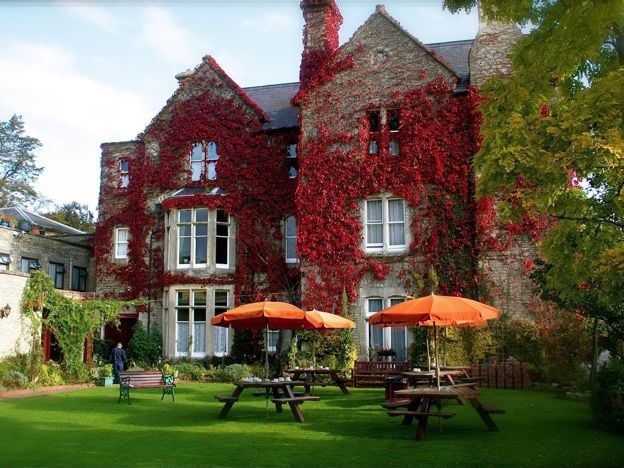
The Littlebury Hotel, Bicester
Hotel · Bicester
A family-run hotel on Kings End in Bicester since 1959, with 35 en-suite rooms, breakfast included, a lounge bar, gardens and a large car park, within walking distance of the town centre and Bicester Village.
Family-friendly · Wedding venues
Verified Nov 2026
-
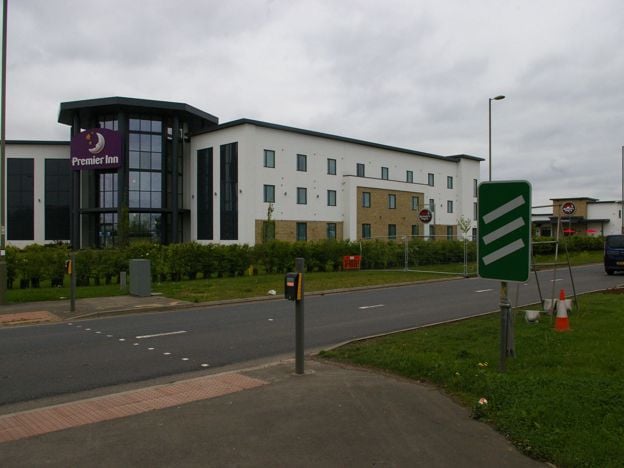
Premier Inn Bicester
Hotel · Bicester
A Premier Inn on Oxford Road, on the A41 at the southern edge of Bicester, half a mile from Bicester Village by the chain's measure, with family, accessible and Premier Plus rooms, a restaurant and a paid car park.
Family-friendly
Verified Nov 2026
Read next
-
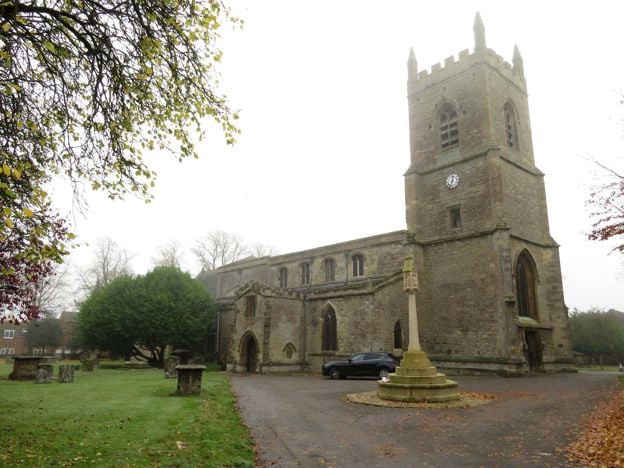
St Edburg of Bicester: the saint, the priory and the shrine that moved
Story · History · 5 minute read
Bicester's parish church and its lost priory were both dedicated to St Edburg, an Anglo-Saxon saint nobody can quite identify. Her marble shrine was carried off at the Dissolution and still stands in a church west of Oxford. What is known, what is guessed, and where to see it.
-
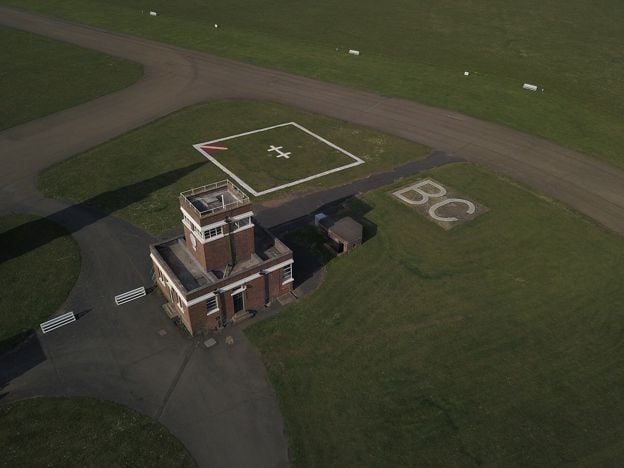
RAF Bicester: the bomber station that kept its 1920s shape
Story · History · 6 minute read
RAF Bicester opened in 1918, was rebuilt as a bomber station from 1925, trained bomber crews through the Second World War and ended as stores, gliders and an American hospital. Its hangars and bomb stores are now protected, and the site is Bicester Motion.
-
Alchester: the Roman fortress and town under the fields south of Bicester
Story · History · 5 minute read
Just south of Bicester, under grass and plough, lies Alchester: a Roman army base dated by its gate posts to AD 44, then a walled town. The dig of 1996 to 2004, the veteran's tombstone found in its wall, and what there is to see now.