St Edburg of Bicester: the saint, the priory and the shrine that moved
Bicester's saint left town at the Dissolution, when Sir Simon Harcourt took her marble shrine for his family's church. Who she was is still argued over. Where she went is on the record.
· 5 minute read
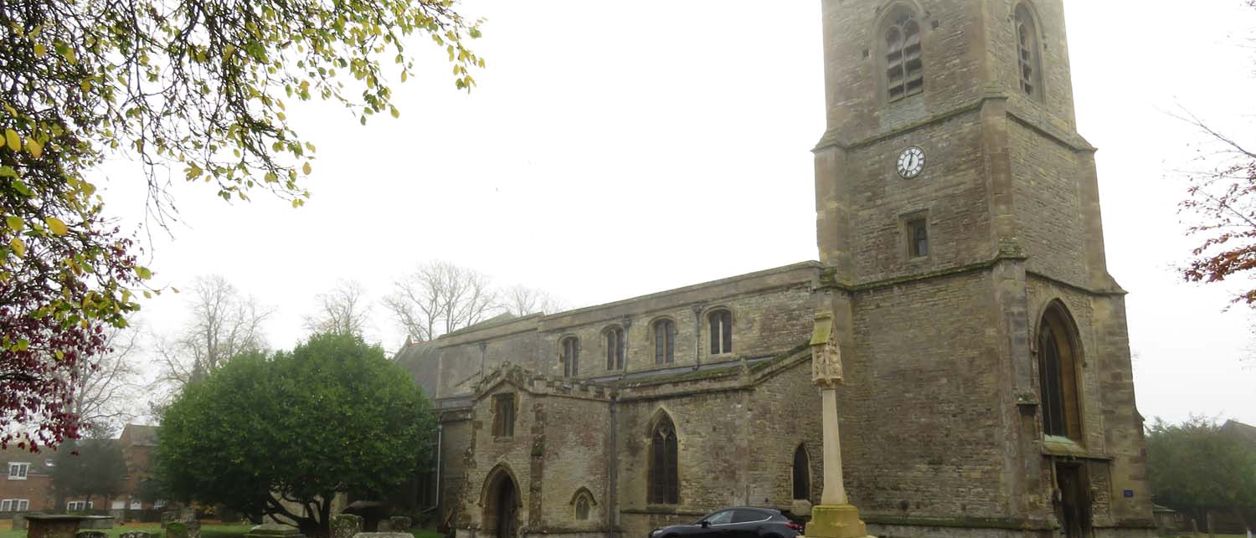
Bicester has two names for its saint, Edburg and Eadburh, and at least two serious candidates for who she was. The parish church on Church Street is St Edburg's, and so, until 1536, was the priory next to it. The saint's shrine survived the priory and now stands in the chancel of a church west of Oxford. This is what the record says about her, and where it runs out.
Which Edburg?
Eadburh was a common Anglo-Saxon name, and several women who bore it were made saints. The Victoria County History (opens in a new tab) thinks Bicester's was probably one of the saintly daughters of King Edward the Elder, which would place her in the tenth century. The Victorians favoured that answer too, according to a talk Nigel Collett gave the Bicester Local History Society (opens in a new tab) in March 2026.
Collett argued for an older woman: a daughter of the pagan King Penda of Mercia, born at Quarrendon near Aylesbury, who is said to have founded an abbey at Aylesbury with her sister Edith and died about 650. He called much of her story conjecture, and nobody has found a medieval life of her to settle it. Her feast day is 18 July, the day the town's fair was licensed to mark in 1252.
The Adderbury connection
The name of Adderbury, on the road from Bicester to Banbury, is read as Edburg's burg, her fortified place. Collett's talk says the name appears in the will of a woman called Wynflaed, made between 990 and 995, and that the saint is said to have had her own religious house there. If so, the Penda candidate fits a map of north Oxfordshire better than the Winchester one, but it remains a reading of a place name rather than a record of a life.
The priory
Bicester itself was Bernecestre, which the county history reads as the fort of the warriors, or of a man called Beorna. Between 1182 and 1185 Gilbert Basset founded a priory of Augustinian canons beside the parish church, for a prior and eleven canons, and dedicated it to the Virgin Mary and St Edburg. The county history thinks the canons took her bones from the parish church, and that in later centuries they were shown in the priory church.
The priory's church was built by about 1200. Its high altar was consecrated in March 1292, gifts for the fabric were encouraged in about 1304, and in 1312 the church was consecrated again by the Bishop of Annaghdown, an Irish bishop acting for the Bishop of Lincoln. The shrine belongs to those years.
The well and the green way
The saint had a well as well as a shrine. The county history says St Edburg's well "early gained a miraculous reputation", and that a path called St Edburg's Way led to it by the end of the thirteenth century. John Dunkin, writing Bicester's history in 1816, gives the old names: the green way of St Edburg, Via Sanctae Edburge, later Edburg balk and then Tadbury balk. He says people stopped bringing vows and offerings after the Reformation, and the spring was stopped up until the dry summer of 1666, when John Coker, lord of the manor of King's End, cleared it out and the water gushed back. It was known from then on as the New-found spring.
The shrine
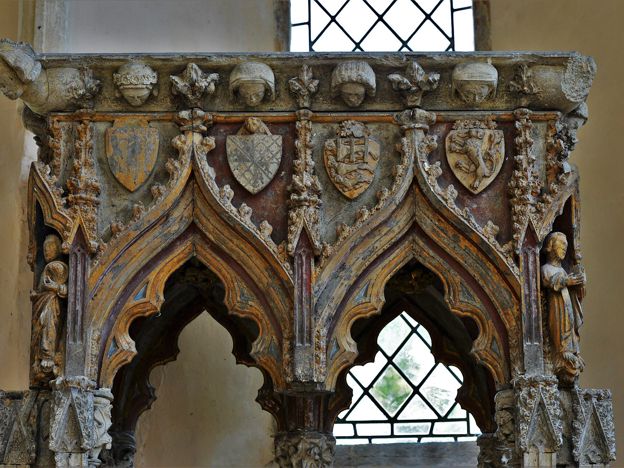
The shrine is the best thing to survive from the priory. Historic England's list entry for St Michael's, Stanton Harcourt (opens in a new tab) describes a painted and gilded Purbeck marble canopy with crocketed ogee arches and coats of arms in the spaces between them, dated 1294 to 1317. The county history dates it by those arms, suggests it may have been a gift from Henry de Lacy, Earl of Lincoln, and calls it one of the last surviving pieces of figure sculpture in Purbeck marble.
The priory was suppressed in 1536. Its last prior, William Brown, took a pension of £24 a year, and the church was pulled down in 1537. Historic England's entry says the shrine was removed from Bicester Priory at the Dissolution by Sir Simon Harcourt, and it now stands in the north wall of the chancel of his family's church at Stanton Harcourt. Whether he meant to save it or simply wanted a fine piece of carving for his own church is not recorded.
What is left in Bicester
Little of the priory stands. The local history society says the site of its church lies partly under St Edburg's House and Bryan House, and that the house now called the Old Priory, in Priory Lane, was rebuilt on the site of what is thought to have been the canons' guesthouse, using medieval material. The Oxfordshire Historic Churches Trust places the priory roughly where Old Place Yard is now.
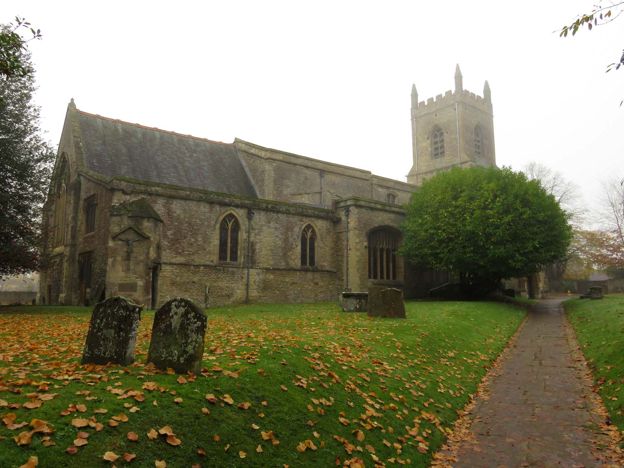
St Edburg's Church is the place to start. It is Grade I listed, and its fabric runs from the twelfth century to a fifteenth-century west tower. A small arch with a roughly triangular head at the east end of the north arcade is sometimes taken for Saxon work, though the county history says that is not established. Inside are two carved panels from a fourteenth-century tomb chest and the effigy of a lady, both reputedly brought from the priory church when it came down.
The Banburyshire newsletter
Events, new places and the best of the season, about once a month. Unsubscribe at any time.
Seeing the shrine
St Michael's at Stanton Harcourt is a Grade I church west of Oxford, beside the village's medieval manor buildings, and its parish page (opens in a new tab) says it houses the medieval shrine of St Edburg of Bicester. Neither it nor St Edburg's in Bicester publishes regular opening times, so check with each parish before a special trip. For the rest of the town's story, from the market to the garden town, read our history of Bicester, and for what lay under the fields before any saint, the Romans at Alchester.
Mentioned in this story
The places, sights and walks in this story, each with a page of its own: what it is, when to go and how to get there.
-
St Edburg's Church, Bicester
Sight · Church · Bicester
-
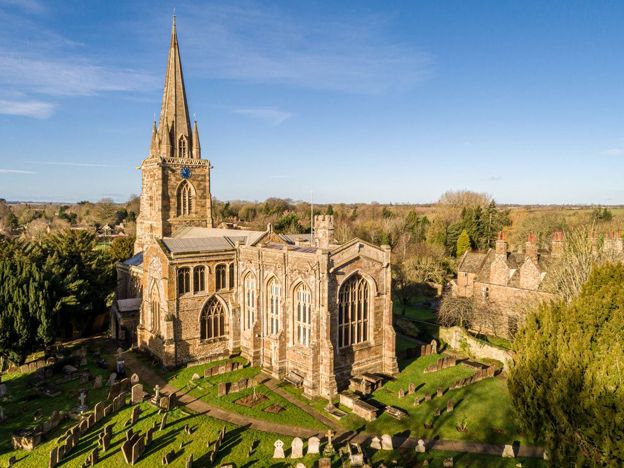
St Mary's Church, Adderbury
Sight · Church · Adderbury
Places to stay near Bicester
-

Travelodge Bicester
Hotel · Bicester
A budget chain hotel on Pioneer Square in the middle of Bicester, under half a mile from Bicester North station and within walking distance of Bicester Village, with family, accessible and pet-friendly rooms but no car park of its own.
Dog-friendly · Car-free
Verified Nov 2026
-
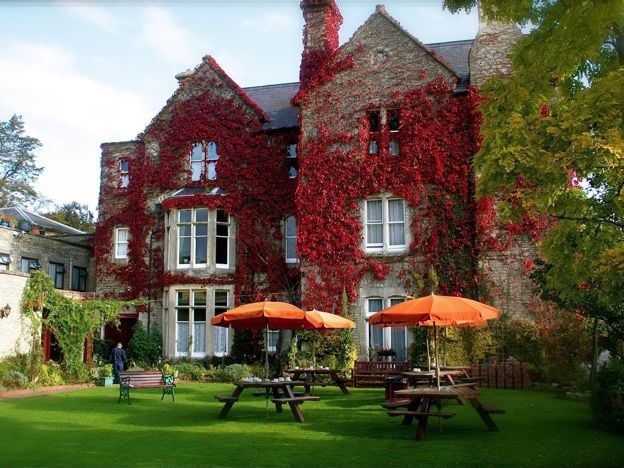
The Littlebury Hotel, Bicester
Hotel · Bicester
A family-run hotel on Kings End in Bicester since 1959, with 35 en-suite rooms, breakfast included, a lounge bar, gardens and a large car park, within walking distance of the town centre and Bicester Village.
Family-friendly · Wedding venues
Verified Nov 2026
-
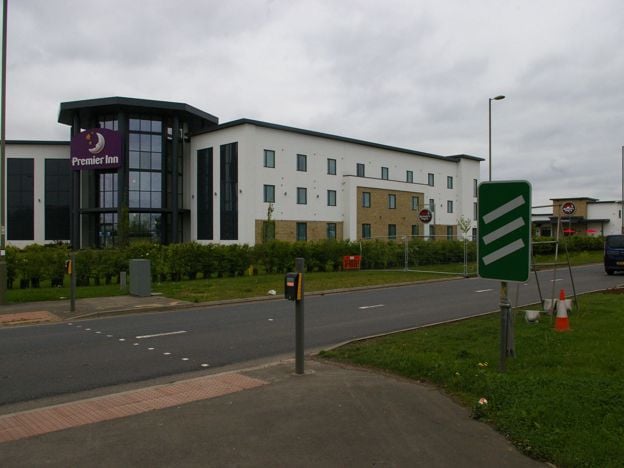
Premier Inn Bicester
Hotel · Bicester
A Premier Inn on Oxford Road, on the A41 at the southern edge of Bicester, half a mile from Bicester Village by the chain's measure, with family, accessible and Premier Plus rooms, a restaurant and a paid car park.
Family-friendly
Verified Nov 2026
Read next
-
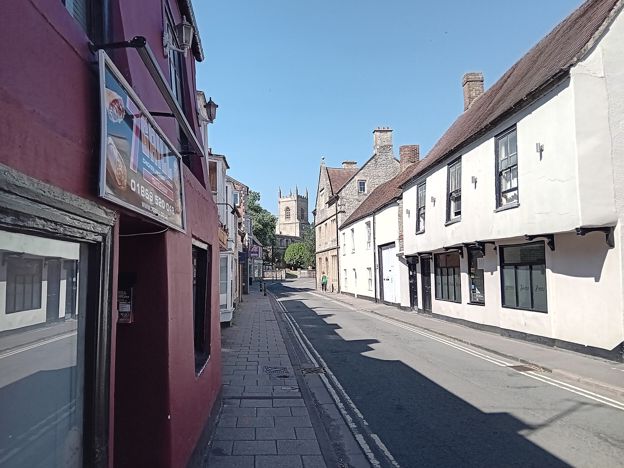
Bicester's history: from the priory and the market to the garden town
Story · History · 10 minute read
Bicester grew up by a ford over the Bure Brook, gained an Augustinian priory in the 1180s and a market in 1239 that still runs every Friday. It was a hunting town, then a garrison town, and since 2014 a garden town. The story from the record, and what of it you can still see.
-
Alchester: the Roman fortress and town under the fields south of Bicester
Story · History · 5 minute read
Just south of Bicester, under grass and plough, lies Alchester: a Roman army base dated by its gate posts to AD 44, then a walled town. The dig of 1996 to 2004, the veteran's tombstone found in its wall, and what there is to see now.
-
Bicester's ghosts: the White Lady, the Cavalier and M.R. James
Story · Strange Things · 5 minute read
Bicester's ghost stories: the White Lady who hid her household's valuables from the Roundheads, the Cavalier by the old Crock Well, monks by the priory site, a cunning man flown to Kirtlington by demons, and the Christmas ghost story M.R. James set in the Market Square.