Elmsbrook and the Bicester eco-town: the story of North West Bicester
In 2007 the government promised ten zero-carbon new towns. One was built to the rules: a field on the edge of Bicester, now 400 or so homes with solar roofs, a heat network and a bus lane. Here is how it happened, what it achieved, and where it fell short.
· 26 minute read
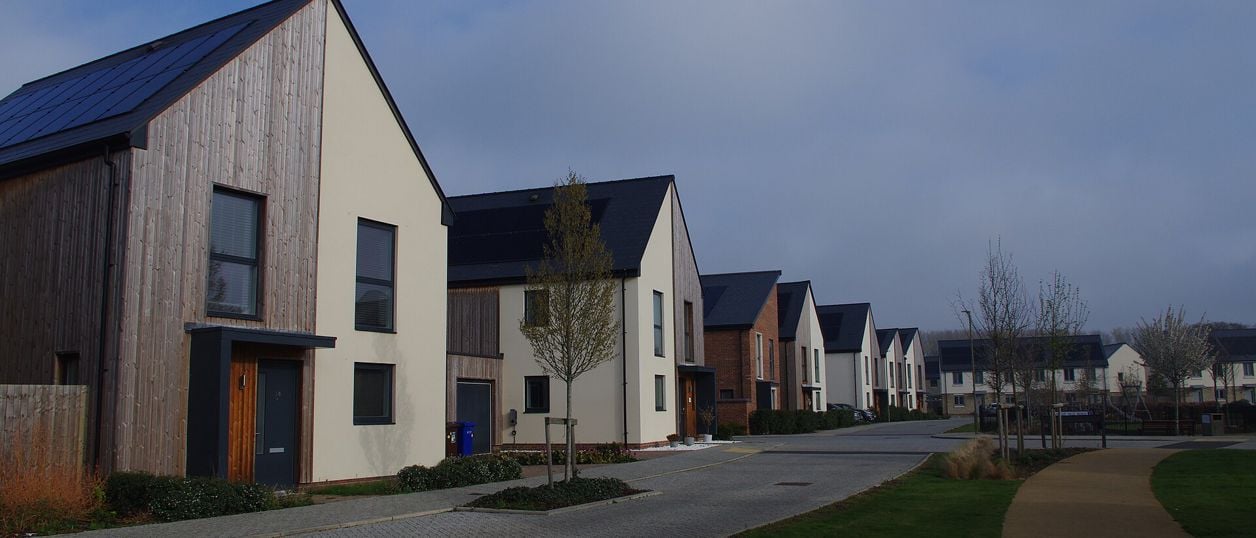
On the north-west edge of Bicester, off the Banbury road at Caversfield, is a neighbourhood of about 400 homes with solar panels on every roof, rainwater tanks, triple glazing and a district heat network fed from its own energy centre. Its name is Elmsbrook. It is the first phase of North West Bicester, the only one of the eco-towns announced by Gordon Brown's government that was taken forward to the standards the government set for them. The others either fell away or were released from those standards when the policy was cancelled in 2015, and the Bicester site is the one place in England where it still applies.
That makes Elmsbrook unusual twice over: a national experiment, and also somewhere people live, take their children to school and park outside their houses. This is its story from the published record: the government papers, Cherwell District Council's planning register, the developer's own plans, the monitoring reports written for it, a planning inspector's decision and dated press. Where the record is thin, or where people disagree, we say so. Nothing here comes from a visit.
Ten towns on a promise
The idea began as a campaign pledge. On 14 May 2007, as he set out to succeed Tony Blair, the then Chancellor Gordon Brown promised five new low-carbon towns of up to 20,000 homes each (opens in a new tab), with zero-carbon homes powered by sources such as solar and wind. The first named site was the former Oakington barracks in Cambridgeshire, and councils were to bid for the rest. Building magazine reported that about 40 had already shown interest.
In July 2007 the government published an eco-towns prospectus alongside its housing green paper, inviting bids, and by October it had 57 proposals (opens in a new tab) from councils and developers. The ambition grew with the response. When the housing minister Caroline Flint announced a shortlist on 3 April 2008, the target had doubled to ten eco-towns (opens in a new tab), to be built over the following decade. Her 15 shortlisted locations ran from Coltishall in Norfolk to Ford in West Sussex, and included Middle Quinton in Warwickshire and Weston Otmoor in Oxfordshire. The other 42 bids had been turned down, most because they were on green belt, threatened wildlife or had already been refused planning permission for something similar.
Why most of the eco-towns never happened
Trouble came quickly. Building reported in April 2008 that people living near the shortlisted sites feared the schemes would get round the normal planning process, which the government denied, and that environmental groups worried that small towns without their own facilities would leave residents driving to the next town for everything. By the time the final list was published in July 2009, the plans had met protests and a legal challenge (opens in a new tab), and only four sites went forward.
On 16 July 2009 the housing minister John Healey published the rules, a planning policy statement on eco-towns (opens in a new tab), and named four locations in its annex: Whitehill-Bordon in Hampshire, Rackheath in Norfolk, the china clay country near St Austell in Cornwall, and North-West Bicester. The government said it still meant to find six more. In February 2010 it shared £60 million (opens in a new tab) between the four, enough for up to 600 show homes. Even then, a planning consultant told Building that getting the private sector to commit was a challenge, and a Zero Carbon Hub study found buyers unwilling to pay for green features they thought expensive and unproven.
Then the government changed. The programme and its money were wound up shortly after the coalition took office (opens in a new tab) in May 2010. In January 2014 ministers proposed cancelling the planning policy, and when they confirmed it the government's own screening report gave a blunt reason why little would be lost: in its words, there was evidence that the standards were "highly unlikely to all be achieved in any single development anyway", because that could make schemes unviable. On 5 March 2015 the housing minister Brandon Lewis cancelled the statement everywhere except one place, saying the government was saving the policies for north-west Bicester (opens in a new tab) until Cherwell District Council had an up-to-date local plan in place. North West Bicester was the one site where they had already been put to work.
How Bicester replaced Weston Otmoor
North West Bicester was not on the 2008 shortlist. The Oxfordshire candidate was Weston Otmoor, a proposal by Partridge Holdings for a new settlement. The local councils turned against it. In January 2009 they commissioned four studies of a 15,000-home eco-town there, on the economy, water, landscape and ecology, and found the effect on Bicester and its villages would be harmful (opens in a new tab), with transport the main worry. The government's draft policy of November 2008 had already floated an alternative at North West Bicester, and in December 2008 Cherwell asked the consultants Halcrow whether an eco-town there was practical and viable.
The difference was the town next door. The other proposals were for stand-alone settlements, but the North West Bicester plan, in the words of the 2012 action plan, was favoured because it joined an existing town (opens in a new tab) with services, facilities and transport links already close by. The same document is frank about the cost. The site was greenfield, productive farmland, it says, and its semi-rural position made sustainable transport harder than in a city scheme.
The rules it had to meet
The 2009 policy statement (opens in a new tab) is short, and most of what makes Elmsbrook unusual comes straight from it. Its key tests, by paragraph number:
- Zero carbon (ET 7): over a year, net carbon dioxide emissions from all energy use within the buildings on the development as a whole should be zero or below. That includes shops, schools and offices as well as homes, and what people plug in as well as the heating, but it leaves out transport and the carbon spent in construction.
- Homes (ET 9): at least Level 4 of the Code for Sustainable Homes and Building for Life Silver, Lifetime Homes and space standards, real-time energy and public transport information in every home, at least 30 per cent affordable housing, and a cut of at least 70 per cent in carbon from heating, hot water and lighting on the 2006 Building Regulations.
- Jobs (ET 10): access to one job per new home, reachable on foot, by bike or by public transport.
- Transport (ET 11): homes within ten minutes' walk of frequent public transport and everyday services, at least 50 per cent of trips by means other than the car, rising to 60 per cent, and a primary school no more than 800 metres' walk from home. A site next to an existing town was to aim higher still.
- Green space and wildlife (ET 14 and ET 16): 40 per cent of the area as green space, at least half of it public, and a net gain in local biodiversity.
- Water (ET 17): in areas of serious water stress, an aim of water neutrality, and homes meeting the water standard of Code Level 5.
The statement also expected an eco-town to have room for at least 5,000 homes, to plan for waste well beyond national targets, and to monitor itself. That last requirement is why Bioregional can call Elmsbrook one of the most comprehensively monitored developments in the country.
A developer, a masterplan and a first phase
The developer was A2Dominion, a housing association formed in October 2008 when A2 and Dominion merged, which by 2012 described itself as providing more than 34,000 homes across London and southern England. The planning application for the first phase was made in the names of A2Dominion Group and P3Eco (Bicester) Ltd (opens in a new tab). The masterplan for the whole site, about 6,000 homes, was drawn by the architects Farrells (opens in a new tab), who describe it as growing the new community around the existing farmsteads. The sustainability charity Bioregional was brought in from 2010 under a joint appointment by A2Dominion and Cherwell, and wrote the first phase's One Planet Living action plan (opens in a new tab) in 2012.
The scheme had its own website, nwbicester.co.uk. The Internet Archive's earliest copy, from November 2010 (opens in a new tab), describes an 800-acre site chosen for a zero-carbon community of 5,000 homes over 20 years, led at that stage by P3Eco, which called itself an eco-development specialist, with A2Dominion as its housing partner. The site carried the public consultations of 2010 and the news of the next decade, and by August 2019 (opens in a new tab) it had shrunk to a single page saying A2Dominion was completing Elmsbrook, the same page the archive's last copy, of March 2026 (opens in a new tab), still shows. Where we quote it below, these are the developer's own words.
Cherwell received the application for the first phase, which it called the Exemplar, on 29 November 2010, and permitted it on 10 July 2012 (opens in a new tab), well past its target date. The permission covered 393 homes and an energy centre in full, with outline permission for a nursery, a community centre, three shops, an eco business centre, offices, an eco-pub and a site for a primary school.
Of the 393 homes, the developer's site said in 2012, 119 would be affordable (opens in a new tab), 30 per cent of the total: 93 for affordable rent and 26 for shared ownership, with A2Dominion as landlord. A local lettings plan was to give most of them to people with a Bicester connection, and 70 per cent of successful applicants were to be in work, training or regular volunteering. A2Dominion repeated the figure of 119 when site preparation began in January 2014. We could not read it in Cherwell's own record, but Bioregional's 2021 monitoring report is a check: of the 255 homes in the first three phases, 61 were affordable rented and 23 shared ownership, about a third between them by our sum of its table.
Every resident, whatever their tenure, was to be asked to sign a Residents' Green Charter (opens in a new tab). Its pledges, as the site listed them, were to take part in surveys measuring the community's effect on the environment, to waste as little as possible and report anything that got in the way of recycling, to learn to grow food and make gardens friendlier to wildlife, to support local shops and businesses, and to get involved in community activities. The lettings plan page adds walking and cycling wherever possible and using the homes' eco features to save energy. The site framed it as encouragement, and we found no record of how many residents signed.
The 2012 action plan shows what the Exemplar was meant to be. Every home was to reach Code Level 5, a step beyond the policy's minimum, and every non-residential building BREEAM Excellent. About 13,450 square metres of solar panels with a peak output of 1,682 kilowatts were to meet more than all the site's electricity demand, and A2Dominion called it the UK's biggest residential solar array. Heat was to come through underground pipes, in the long term from an energy-from-waste plant then being built about 2km away, and until that link was confirmed from a gas-fired combined heat and power plant on site. Homes were to use 80 litres of water per person per day, against about 150 for a typical UK household, with rainwater for toilets and gardens. Car trips were to fall to half of all journeys, from 67.5 per cent in Bicester as a whole, helped by a bus every 15 minutes, a stop within 400 metres of every home and a tablet in each home, the Shimmy, showing bus times and energy use. The plan also named the phase: it was to be known as Thurlington. That name did not survive. By the time it was built it was Elmsbrook.
The plan drew national attention. In November 2012, after the Exemplar was named a One Planet Community, the developer's site carried a statement from the Deputy Prime Minister, Nick Clegg, welcoming the vision and ambition (opens in a new tab) behind the plan for 5,000 homes as the kind of big thinking needed to tackle the housing crisis, and saying it was critical that infrastructure came early. The release does not say he visited Bicester, and we found no record that he did.
Building Elmsbrook
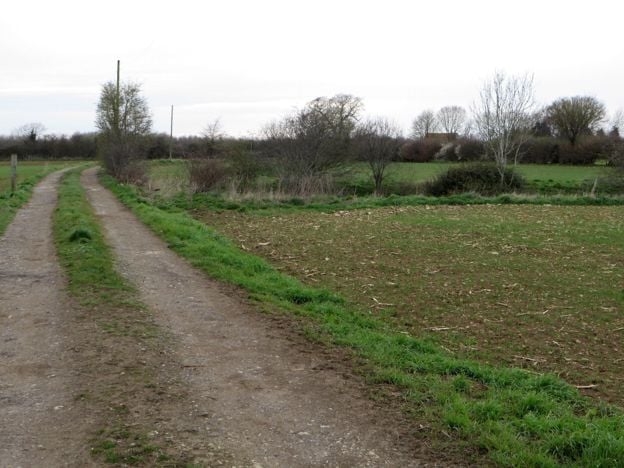
Work began on site in April 2014 (opens in a new tab). Willmott Dixon had a £27 million contract for the first 91 homes (opens in a new tab). By January 2015 Bioregional could report 72 foundations poured and 17 timber frames up, a first airtightness test better than its target, solar panels on the first homes and the first heat network pipes going in. A2Dominion ran a public competition to name the new streets and received more than 900 entries. The first residents moved in during mid-2016 (opens in a new tab).
The dates slipped. In December 2012 the developer's site (opens in a new tab) expected the first residents in summer 2013 and the whole phase finished in 2017; when it announced in January 2014 (opens in a new tab) that site preparation had begun, it said spring 2015; at the sales launch it said the end of 2015. The homes went on sale under Fabrica, A2Dominion's sales brand, at a launch on 6 and 7 June 2015 (opens in a new tab), with prices from £295,000, and by September the old site's sales page (opens in a new tab) sent buyers to a separate Elmsbrook website. We found no dated source for the top of the price range at launch. The energy minister Andrea Leadsom opened the energy centre on 23 May 2016 (opens in a new tab), with SSE to run it, and in April 2017 A2Dominion turned a three-bedroom house on Bramley Avenue into a Community House (opens in a new tab) for residents, to serve until a community hall was built in the local centre, then expected in 2020.
The rest followed in phases. In 2017 A2Dominion announced a partnership with the housebuilder Crest Nicholson for 232 of the homes, and Bioregional's 2021 monitoring report describes four phases of housing, the first occupied for more than five years by then, the fourth still being built. The homes are a mix of flats, terraces, semi-detached and detached houses and a few bungalows, from one to five bedrooms, in private, affordable rented and shared ownership tenures. The site is split in two by a brook. The county council calls the halves Southern Fields and Northern Fields; each has its own entrance from the B4100, and Braeburn Avenue serves the northern half, the third and fourth phases.
Elmsbrook today is about 400 homes, all built to the zero-carbon standard (opens in a new tab), according to Cherwell District Council, with Bicester Town Council's minutes of June 2026 putting the number of households at about 400 too.
What is there
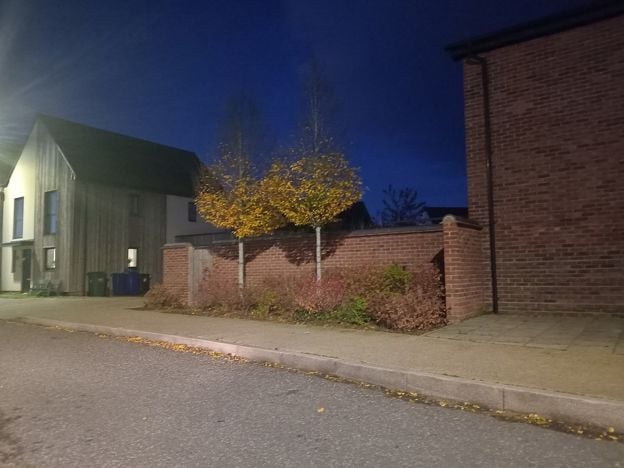
The housing is the bulk of it, but the first phase was planned as a small village with its own centre, and some of the pieces were built.
Gagle Brook Primary School (opens in a new tab) opened on 4 September 2018, run by The White Horse Federation to serve Elmsbrook. Oxfordshire County Council said at the time that it was designed to have a minimal carbon footprint, and it was the first new school for the North West Bicester community. It admitted nursery and reception children first, with older year groups to follow.
The eco business centre (opens in a new tab) on Charlotte Avenue was developed by Cherwell District Council, with European regional development money, to designs by the architects Architype. It has three floors of co-working space and serviced offices for up to 125 people, and in March 2019 it was reported as the first non-domestic building in the UK to reach Passivhaus Plus, a stricter grade of the Passivhaus energy standard, as well as BREEAM Excellent.
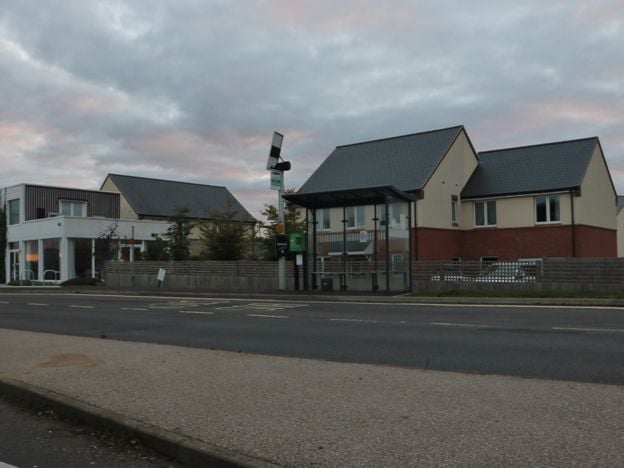
The energy centre houses the gas combined heat and power engine and back-up gas boilers that heat every building through the district network, with its own solar panels on the roof. The homes have solar panels averaging about 34 square metres each, according to Bioregional, triple glazing, mechanical ventilation and rainwater harvesting. A2Dominion said 40 per cent of the site would be open space, and the plans included two community orchards, half a hectare of allotments and a fruit tree in every garden.
The local centre is the piece still missing. Permission for a community building and café of 542 square metres with 16 homes (opens in a new tab) was applied for in June 2019 and granted in July 2021, and Oxfordshire County Council's papers of 2025 provide a loading bay on Charlotte Avenue for deliveries to it. But in June 2026 a speaker at Bicester Town Council said that more than ten years after the first residents arrived there was still no shop, café or other everyday service within walking distance, and the town council backed the residents' association's campaign for the centre. Under the 2021 legal agreement, as the town council heard it, land that found no occupier after three years of marketing was to be offered to Cherwell for £1; Cherwell told the town council (opens in a new tab) that no such offer had been made, that it had opened an enforcement investigation on 22 June 2026, and that the outline part of the permission would lapse if work had not begun by 12 July 2026. The residents do have Elmsbrook Community House, one of the homes turned into a base for community events with A2Dominion, Cherwell says.
What changed between the plans and the streets
Some of the 2012 vision was built as drawn and some was not. The clearest differences on the record are these.
The village centre shrank. The 2012 permission allowed in outline for three shops of up to 770 square metres between them, including a convenience store, a post office and a pharmacy, an eco-pub, offices and a nursery. What was granted in 2021 for the local centre was a community building, a café and homes, with outline permission for flexible retail, community or commercial space. We found no pub in the later plans, and by November 2026 even the smaller centre had not been built.
The heat did not come from waste. The 2012 plan expected to take spare heat from the energy-from-waste plant at Ardley in the long run, with the gas plant as a stopgap. Nine years later, Bioregional's monitoring report still describes heat coming from the gas engine and gas boilers, and the Australian sustainability journal The Fifth Estate reported in 2019 that the gas plant might later be replaced by heat pumps. We found no record that either change has happened.
The rules moved underneath it. The government withdrew the Code for Sustainable Homes in 2015, the same year it cancelled the eco-town policy for every site but this one. Cherwell's 2015 local plan (opens in a new tab) carried the eco-town standards into its own Policy Bicester 1, including the same definition of zero carbon, so later developers on the site are measured against the council's policy rather than the old national one.
The bus link took years to enforce. The 2012 permission required a bus-only road between the two halves of the site, so that a short trip across the estate would be easier on foot or by bike than by car, and no one was to move into the northern half until it was built. The county council says the restriction has been signed since 2013 but could not be enforced. In September 2025 (opens in a new tab) it approved a 24-hour bus lane on Charlotte Avenue, between Carraway Fields and Sage Street, enforced by number-plate cameras, and formalised the 20mph limit across the estate. Of 61 people who answered the consultation, about half supported the bus lane and 30 per cent objected.
Is it zero carbon?
This is the question people most often ask about Elmsbrook, and the honest answer is: in some years, on one way of counting.
Start with what is being counted. The eco-town definition takes all the energy used in all the buildings on the site over a year, homes, school, business centre and energy centre together, including what residents use for cooking and appliances, which Bioregional calls true zero carbon. It sets the carbon from the gas burned and the electricity imported against the carbon saved by the electricity the site exports, from its solar panels and its gas engine. If the balance is zero or below, the site is zero carbon. Transport and the carbon in the building materials are left out.
The carbon in the materials had a target of its own, outside that sum. The 2012 action plan aimed to cut embodied carbon from construction by more than 40 per cent (opens in a new tab). By 2015 the developer's factsheet, What makes North West Bicester unique? (opens in a new tab), promised 30 per cent per home through the choice of materials and local sourcing, and the sales release a 30 per cent cut against a typical build. The only measurement we found is in Bioregional's January 2015 review (opens in a new tab): a 29 per cent saving at design stage, against a UK baseline from a 2011 report by the waste body WRAP, taken from a 2013 assessment by the consultants Sustain, with the team working on towards 40 per cent. We found no figure for the homes as built, so whether either target was met is not on the record.
The early results were good. Monitoring of 2017 to 2018 was announced in 2019 as confirming Elmsbrook as the UK's first large-scale true zero carbon development, and the UK Green Building Council's case study (opens in a new tab) reports that in that year the site exported 276,291 kWh more electricity than it imported, and residents used 28 per cent less electricity than the Bicester average. The next full report we could read (opens in a new tab), Bioregional's fourth, covering April 2020 to March 2021 and finished in November 2021, came out the other way. The development as a whole emitted a net 383 tonnes of carbon dioxide that year, after 115 tonnes in the previous report; an earlier year had come out 25 tonnes below zero.
The report is candid about why. The gas engine was meant to supply 90 per cent of the heat once the second phase was finished, with the boilers covering the rest; in 2020 to 2021 the split was 58 to 42, and the boilers are more carbon-intensive. About 40 per cent of the heat the energy centre made was lost in storage, distribution and keeping pipes warm for homes still being built, against 28 per cent in the design. Some solar inverters had tripped or been switched off, one block of flats generated nothing all year, and meters in the first phase had failed, so about 100 homes' figures had to be estimated. Lockdown kept people at home. The authors suggest the operator may be running the boilers for commercial reasons rather than the engine, and that with the planned 90 per cent from the engine the site would probably have met the target.
There is a deeper problem with the counting. The balance depends on the carbon value given to each unit of electricity, and that value has fallen as the national grid has shifted from coal and gas. Under the factors of 2009, when the scheme was designed, 2020 to 2021 would have been 294 tonnes over; under the 2012 factors used in the report, 383; under the newer factors then proposed for building regulations, 886. In effect, exported electricity is worth less on paper every year the grid gets cleaner, so a gas-fired heat network looks worse over time even if nothing on site changes.
Set against an ordinary estate, though, the homes perform well. Bioregional estimated the average Elmsbrook home emitted 894 kg of carbon dioxide in 2020 to 2021, against 3,500 kg for a typical new-build home and 5,424 kg for the average UK household. Homes used less electricity than the Bicester average (the report gives both 15 and 29 per cent less in different places) and about 55 per cent less heat, but 24 per cent more heat than the design predicted.
Water, waste, travel and the people who live there
Water came close. In 2020 to 2021 residents used an estimated 83 litres per person per day (opens in a new tab), 4 per cent over the 80-litre target, against a UK average the report puts at 142 litres; just over half of households met the target. The figure is an estimate, as data protection rules meant the monitors did not know how many people lived in each home.
Waste improved. The recycling rate rose to 62 per cent, above Cherwell's 56 per cent and England's 45.5 per cent, although the total thrown away per household, 591 kg, barely moved.
Travel is the gap in the record. The eco-town rules make transport central, but we could not find a published survey of how Elmsbrook residents actually travel. The 2021 report says transport was being analysed separately by Mode consultants and was due to be published shortly; we have not found it. In June 2026 a speaker at Bicester Town Council cited council monitoring data (opens in a new tab) showing 68 per cent of residents travelling mainly by car alone, but we could not find those figures published. What else we can report is partial. The Fifth Estate said in 2019 that a half-hourly bus to the town centre and station, with free travel offered as an incentive, was used by about a fifth of residents, and that 48 people had joined the electric car club. It also reported that many residents commute to London, Birmingham and Milton Keynes. When a later developer on the site went to appeal in 2023, the transport modelling for its scheme was rerun assuming half of trips by car rather than 40 per cent (opens in a new tab), because the better bus service would not be in place in time.
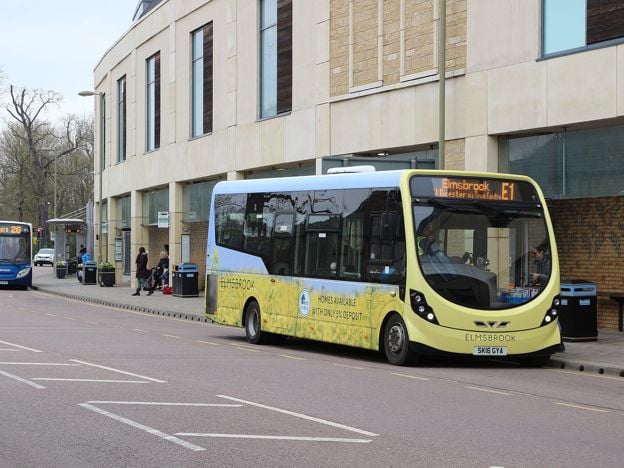
What the developer provided is better documented. Its 2015 transport factsheet (opens in a new tab) promised a dial-a-bus from the first occupation and a bus every 15 minutes from the 200th home. In practice the first residents got the E1, a half-hourly bus run by Grayline Coaches from 8 June 2016 (opens in a new tab), from 6.30am to 7.30pm on weekdays and 8am to 6pm on Saturdays, along the Banbury Road into the town centre and to Bicester Village station at peak times, with six weeks' free travel paid for by A2Dominion. On 7 July 2016 (opens in a new tab) the E Car Club launched with a BMW i3 and a Renault Zoe for hire from £4.50 an hour, alongside four Brompton folding bikes to borrow free for a week. A2Dominion set a target of 10 per cent of residents switching to electric cars by 2018, and offered a free home charger to those who switched within two years of moving in. We found no published result for that target.
A2Dominion also ran an annual Bicester Bike Day for the whole town. The fourth, in July 2015, drew more than 400 people (opens in a new tab) to the field behind the leisure centre and was joined by the first Bicester Cycle Sportive, run with the leisure centre over 28, 65 and 100 miles, in which 315 riders took part, the organisers said. The developer's site announced the fifth for July 2016.
Residents themselves have been positive in A2Dominion's surveys. In the 2020 to 2021 survey 83 per cent rated their health as good or better, 71 per cent said they felt happy, and 62 per cent felt they belonged strongly to their neighbourhood. Bioregional reported that residents saved an average of about £400 a year on electricity, heat and hot water compared with Bicester neighbours, a figure The Fifth Estate said was based on 86 first-phase homes with a year of data and 32 second-phase homes with up to six months. These are surveys commissioned by the developer, so read them as that.
The Banburyshire newsletter
Events, new places and the best of the season, about once a month. Unsubscribe at any time.
The criticism and the defence
The case against starts with the land. Elmsbrook and the rest of North West Bicester are built on farmland, as the 2012 action plan acknowledged, in a town already planned to take up to 13,000 new homes as a garden town. The second is energy: a zero-carbon scheme heated by gas, whose carbon balance depends on accounting rules, which in its fourth monitored year missed its target. The third is cost. The government argued in 2015 that the full set of standards was unlikely to be viable in any one scheme, and the 2023 appeal showed what that can mean: Firethorn Developments' scheme for 530 homes off Charlotte Avenue was found able to offer only 10 per cent affordable housing (opens in a new tab) rather than the policy's 30 per cent while meeting the zero-carbon rule, with a review that could raise it later. The North West Bicester Alliance and the Bicester Bike Users' Group both took part in that inquiry to oppose the scheme on viability, carbon, affordable housing and roads. And there is the car. A local centre still unbuilt ten years after the first residents arrived, a bus lane not approved for camera enforcement until 2025, and modelling that assumes half of trips by car, sit awkwardly with a target of half or fewer.
The defence is that nothing else in England has been held to these rules at this scale, and that measurement is the point. The homes use much less energy and water than ordinary new homes, the shortfalls are known because the site is monitored in detail, and the monitoring has named its own failures, from tripped inverters to the boiler split, which most estates would never discover. Our own reading adds one point: a heat network can change its source later, while the fabric of a home is hard to improve once built, and here the fabric was built to a high standard from the start. Bioregional reported in 2021 that demand from buyers remained high, and residents report high wellbeing. The development has won awards, including silver for best sustainable development (opens in a new tab) at the WhatHouse? Awards in 2017 and recognition as a Bioregional One Planet Living Leader.
Both sides can be true. Elmsbrook has shown that homes can be built to far higher standards than the building regulations of their day and still sell. It has also shown how hard the last steps to zero are when heat comes from gas and the counting rules keep changing.
Eco-town, garden town
Bicester gained a second label in December 2014, when the government named it a locally-led garden town (opens in a new tab) to provide up to 13,000 homes. Cherwell has said the status did not change the plans for the town's growth but confirmed them, and its newest local plan describes North West Bicester as part of the garden town while keeping the eco-town name and standards. So the two labels overlap: the eco-town is one large site within a garden town, and the garden town is the wider programme of growth around it.
A healthy new town
Bicester gained a third label in March 2016, when NHS England chose it as one of ten healthy new town demonstrator sites (opens in a new tab), picked from more than 100 applicants for a programme launched in 2015 to build health into new places. Cherwell led a bid of more than 20 organisations, among them A2Dominion, the county's clinical commissioning group and both Oxford universities, and A2Dominion's release (opens in a new tab) said Elmsbrook's walkable layout, with a bus stop within 400 metres and a school within 800 metres of every home, was central to it. Cherwell set two priorities, according to the launch report on the same site: more children and adults physically active and at a healthy weight, and fewer people socially isolated. The programme was launched in the town centre on 13 May 2017 (opens in a new tab) with health walks, a social bike ride and cookery demonstrations. The Fifth Estate reported in 2019 that it had produced three Health Routes, a Discovery Walk in the town centre and outdoor gym equipment in three parks. NHS England published what the ten sites learned as Putting Health into Place (opens in a new tab).
The rest of North West Bicester
Elmsbrook was meant to be the start. The 2015 local plan allocated 6,000 homes to North West Bicester, but after more than a decade the rest of the site is still mostly plans.
In March 2015 A2Dominion announced that Cherwell had resolved to grant it outline permission for up to 2,600 more homes (opens in a new tab) on 155 hectares north of Lords Lane, with schools, a local centre, a country park, a community farm and a woodland burial ground. The permission depended on a legal agreement, and the register shows the application as withdrawn in February 2022 (opens in a new tab). Other landowners have done better on paper. Portfolio Property Partners won outline permission for Himley Village, up to 1,700 homes (opens in a new tab) off Middleton Stoney Road, in January 2020. Firethorn's 530 homes off Charlotte Avenue were allowed on appeal in July 2023 after Cherwell said it would have refused them and then chose not to defend its reasons.
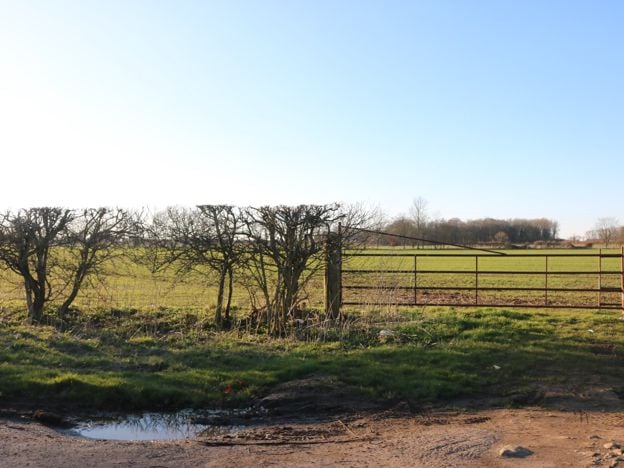
Two large applications were still undecided in November 2026: Hallam Land's 3,100 homes (opens in a new tab) beside Lords Lane near Hawkwell Farm, made in December 2021, and A2Dominion and the Thames Valley Police and Crime Commissioner's 1,000 homes off Howes Lane (opens in a new tab), made in November 2023. Meanwhile Cherwell's new local plan, submitted for examination in July 2025 and still being examined in 2026 (opens in a new tab), would raise the allocation to about 7,500 homes (opens in a new tab), with at least half of trips by means other than the car, 40 per cent green space and net zero operational energy. It expects only part of that to be built within the plan's lifetime.
Where things stand in 2026
In November 2026 Elmsbrook is a largely finished neighbourhood of about 400 homes with its school and business centre, but still without the community building, café and shops of its planned local centre, which Cherwell is investigating as a possible breach of planning control. Its bus lane has been approved for camera enforcement, and in 2025 the county council said Braeburn Avenue would get its final surface before the roads are adopted. The eco-town policy that shaped it still stands for this one site, and the council has written its own version into local policy. The rest of the eco-town is a set of permissions and applications, with one landowner's large scheme withdrawn and two more awaiting decisions. Whether Elmsbrook becomes the first small part of a 7,500-home eco-town, or stays the one exemplar, is not yet known.
Seeing Elmsbrook for yourself
Elmsbrook is a housing estate, not an attraction. People live in every house, so stay on the public roads and paths, keep off drives and gardens, and do not photograph people or their homes in a way they would not welcome. There is no visitor centre, no tour and, as far as we could find, no public car park. The school is a working school.
From the public streets you can see what makes the place different: the roofs given over to solar panels, the timber-framed terraces, the green space and the brook that splits the site, and the bus-only stretch of Charlotte Avenue. The eco business centre is on Charlotte Avenue, though we could not confirm its opening hours in 2026, so check before you rely on it. The community centre and café planned beside it had not been built when we checked, and there is no shop on the estate.
Coming from Banbury, the simplest way is the Stagecoach 500 bus (opens in a new tab), which runs from Banbury through Brackley to Bicester and stops at Elmsbrook Braeburn Avenue, opposite Gagle Brook School and outside the business centre, in the timetable data published for November 2026. Our buses page has its times. By train, Chiltern runs from Banbury to Bicester North in under 20 minutes (see Bicester Village from Banbury and getting to Bicester). The station is about 2km, a mile and a quarter, from the school as the crow flies, by our measurement on OpenStreetMap; we could not confirm a bus between them in 2026. If you drive, the estate is off the B4100 Banbury road on the north-west edge of Bicester; the bus lane on Charlotte Avenue was approved for camera enforcement in 2025, and the limit is 20mph.
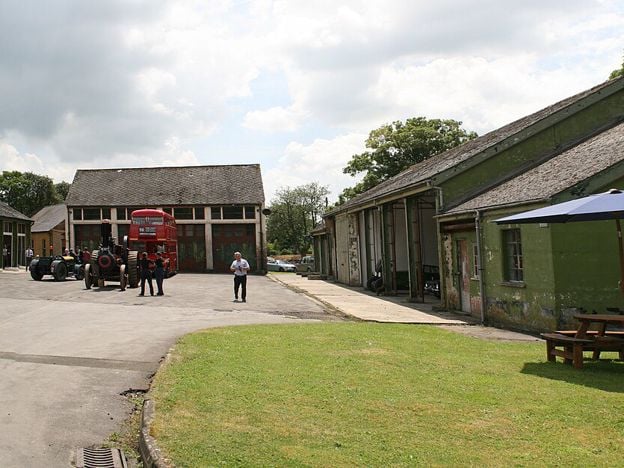
If you are interested in Cold War Oxfordshire as well as new towns, the former RAF Upper Heyford is nearby, and our day trips from Banbury cover the rest of the area. For the town itself, see our guide to Bicester, things to do in Bicester and the history of Bicester. Bicester's own airfield, RAF Bicester, is on the north-east edge of the town, now Bicester Heritage, whose hangars open on its Scramble days.
Mentioned in this story
The places, sights and walks in this story, each with a page of its own: what it is, when to go and how to get there.
-
Bicester Heritage (RAF Bicester)
Sight · Historic building · Bicester
-
Bicester West Health Route and Bure Park
Walk · Starts in Bicester · 1 hr, 10 mins · Circular · Dog-friendly
Places to stay near Bicester
-
Travelodge Bicester
Hotel · Bicester
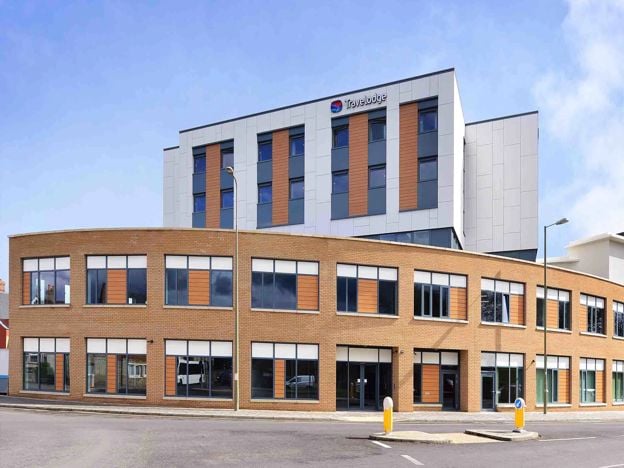
A budget chain hotel on Pioneer Square in the middle of Bicester, under half a mile from Bicester North station and within walking distance of Bicester Village, with family, accessible and pet-friendly rooms but no car park of its own.
Dog-friendly · Car-free
Verified Nov 2026
-
The Littlebury Hotel, Bicester
Hotel · Bicester
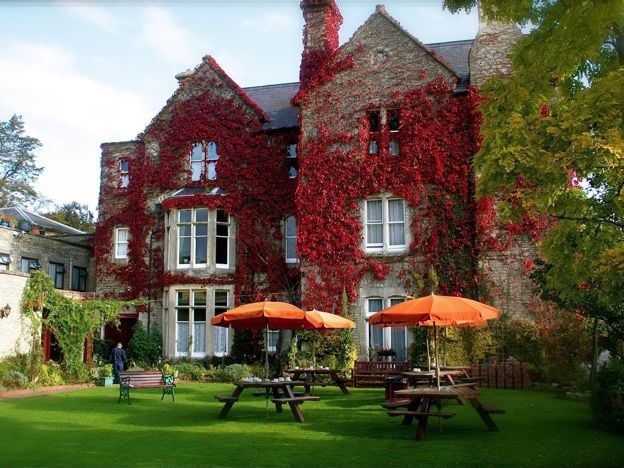
A family-run hotel on Kings End in Bicester since 1959, with 35 en-suite rooms, breakfast included, a lounge bar, gardens and a large car park, within walking distance of the town centre and Bicester Village.
Family-friendly · Wedding venues
Verified Nov 2026
-
Premier Inn Bicester
Hotel · Bicester
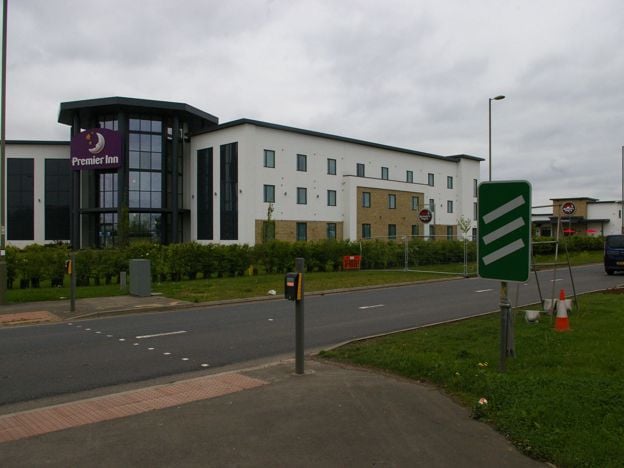
A Premier Inn on Oxford Road, on the A41 at the southern edge of Bicester, half a mile from Bicester Village by the chain's measure, with family, accessible and Premier Plus rooms, a restaurant and a paid car park.
Family-friendly
Verified Nov 2026
Read next
-
Bicester's history: from the priory and the market to the garden town
Story · History · 10 minute read
Bicester grew up by a ford over the Bure Brook, gained an Augustinian priory in the 1180s and a market in 1239 that still runs every Friday. It was a hunting town, then a garrison town, and since 2014 a garden town. The story from the record, and what of it you can still see.
-
Things to do in Bicester
Story · Guides · 8 minute read
Things to do in Bicester: St Edburg's Church, the Market Square and the Friday market, the town trail and Garth Park, Bicester Village, the Scramble days at Bicester Heritage, then the Cold War tours at Heyford Park and Rousham's garden, with what to skip.
-
Alchester: the Roman fortress and town under the fields south of Bicester
Story · History · 5 minute read
Just south of Bicester, under grass and plough, lies Alchester: a Roman army base dated by its gate posts to AD 44, then a walled town. The dig of 1996 to 2004, the veteran's tombstone found in its wall, and what there is to see now.