RAF Upper Heyford: the Cold War airbase south of Banbury
For 40 years an American air force flew nuclear bombers from a plateau in north Oxfordshire. The last three F-111s took off on a windy December morning in 1993, and what they left is protected like a hillfort.
· 7 minute read
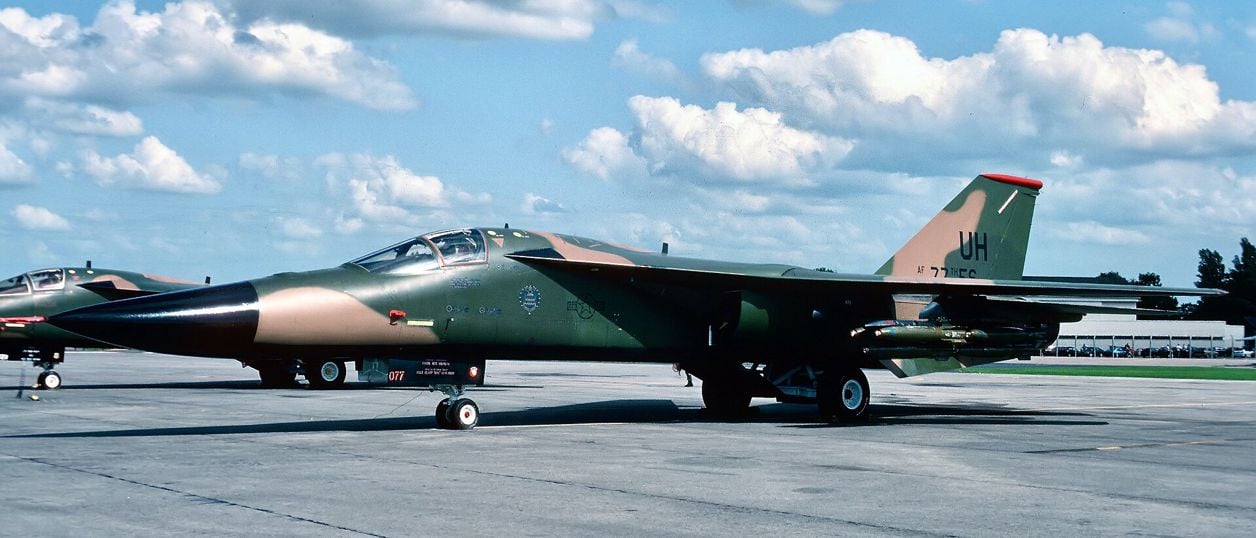
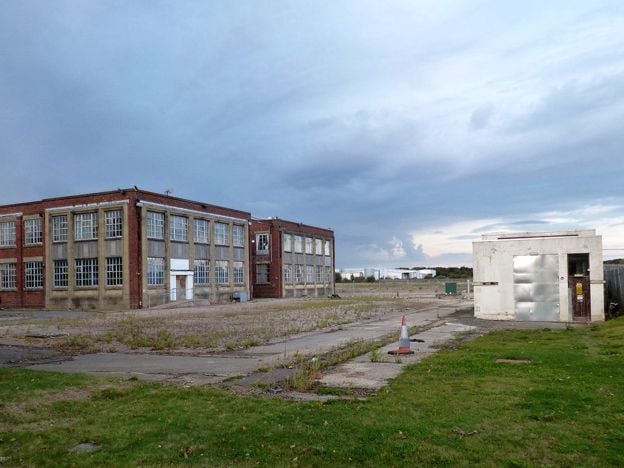
RAF Upper Heyford sits on high ground above the Cherwell valley, south of Banbury, and for most of the Cold War it was one of the main American airbases in England. Nuclear bombers flew from it from the 1950s, and F-111 strike aircraft from 1970 until December 1993. Since 2006 parts of it have been protected in the same way as a prehistoric monument.
A First World War field
The airfield is older than the Cold War by more than 30 years. Cherwell District Council's conservation area appraisal (opens in a new tab) of 2006 tells the early story. Work began in 1916, when Canadian engineers laid out a landing field with six hangars. It opened late in 1918 as No 3 Mobilisation Station, and the first two squadrons of the new Canadian air force formed there that August. The war ended before they flew in action, and in 1919 the land went back to New College, Oxford, which had owned most of it.
The RAF was soon back. The land was bought again in 1924, and the appraisal describes the new station as the model for airfields of its type from 1925 to 1934. The first unit to fly from it, in 1927, was the Oxford University Air Training Squadron.
In the 1930s it became a bomber station. The appraisal says one of its aircraft was the target in the 1935 experiment with the BBC transmitter at Daventry, the first trial of what became radar; other accounts name the aircraft only as a Handley Page Heyford bomber and do not say where it flew from. Through the Second World War it was mainly a training base, with concrete runways laid only in the winter of 1943 to 1944, a decoy field at Otmoor and a satellite at Croughton. In 1942 its aircraft briefly joined the thousand-bomber raids.
The Americans arrive
The British government approved permanent American bases on 26 June 1950, and work to remodel Upper Heyford began the same month. It was one of four bases the US Strategic Air Command chose in the west of England, away from the exposed east coast, with Brize Norton, Fairford and Greenham Common. From 1951 to 1953 about 170 new buildings went up under a programme whose costs the two countries shared. The airfield stayed RAF property, with an RAF commander in name.
Through the 1950s and early 1960s it held long-range bombers on rotation. Between 1957 and 1959 it was refitted for Reflex Alert, under which up to 20 aircraft at each main base had to be airborne 15 minutes after an alert. Reconnaissance aircraft also flew from it to gather intelligence on Soviet radar and nuclear tests.
The F-111 years
The base changed role in 1965 and 1966, when the bombers stopped their regular rotations and American reconnaissance squadrons moved in from France, flying RF-101 Voodoos. Then in March 1970 the 20th Tactical Fighter Wing arrived, three squadrons that were soon flying the F-111. By July 1971, the appraisal says, Upper Heyford could claim to be the largest fighter base in Europe.
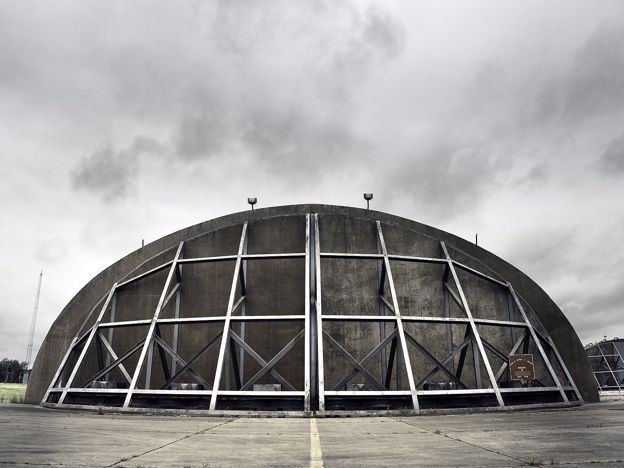
The F-111s' job was to strike targets behind the Iron Curtain, and their fixed airfield made them vulnerable. So from 1977 hardened aircraft shelters were built for them, 56 in all, the last five in 1984. Ground crews often painted the insides on the theme of the aircraft they looked after. A separate alert area held the aircraft kept ready on nuclear standby.
The wing flew in action more than once. Electronic warfare F-111s from Upper Heyford took part in the raid on Libya in 1986, and its aircraft served in the Gulf War in 1991. By then the Cold War was over.
7 December 1993
The end is precisely recorded. At a little after 11am on 7 December 1993, the appraisal says, the last flight of three F-111s lifted off into a windy but clear blue sky. The flight line closed on 15 December and the base went back to the Ministry of Defence in 1994. A memorial to the link between the village and the airfield, and to the people who died serving there, went up in 1992 and 1993.
The Banburyshire newsletter
Events, new places and the best of the season, about once a month. Unsubscribe at any time.
What is protected
Historic England scheduled five areas of the base on 30 November 2006 as 'Cold War structures at the former Upper Heyford Airbase', and the flying field is a conservation area. The scheduled areas are the quick reaction alert complex, with nine shelters inside a double fence, each about 21.5m wide, 36.6m long and up to 10m high, the northern bomb stores and special weapons area, the avionics maintenance building, the hardened telephone exchange and the battle command centre. The special weapons area has 21 igloo stores for weapons, and a trigger store disguised as an office block. Other buildings, such as a nose dock hangar and a squadron headquarters, are listed.
Visiting
The old base is now part of the new settlement of Heyford Park, and the scheduled areas are not open to wander. The way in is through the RAF Upper Heyford Heritage Centre (opens in a new tab), a not-for-profit company at 103 West Castle Street, Heyford Park, OX25 5BX. Its own site gives its hours as Wednesdays and Sundays, 10am to 4.30pm, and Saturdays, midday to 4.30pm, and it runs pre-booked tours of the airbase on most Sundays from March to November, taking in a shelter, the nuclear bomb store and the battle command centre, with a minibus between sites. When we checked, a tour cost £25, started at 10am with sign-in from 9.30am and lasted three hours or more. Book online, or ring 01869 221446 for groups and veterans’ visits. If you are coming by train, the walk from Heyford station starts in the valley below.
Places to stay near Steeple Aston
-
The Holt Hotel, Steeple Aston
Hotel · Steeple Aston
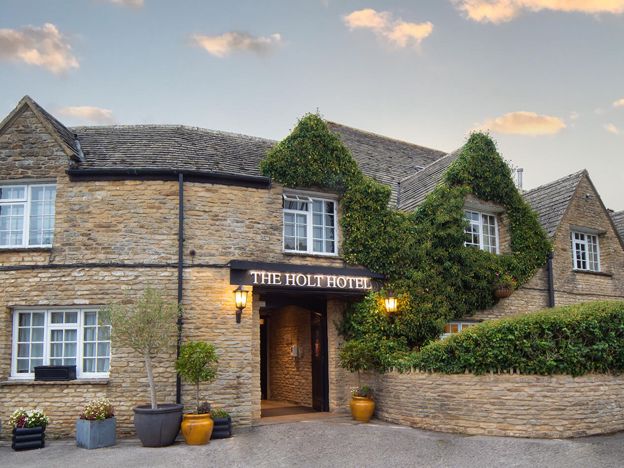
An independent 87-room hotel in an old coaching inn at the Hopcrofts Holt crossroads on the A4260 near Steeple Aston, with a bar, restaurant, afternoon teas and a Sunday carvery, about 15 minutes' drive from Bicester Village.
Family-friendly · Wedding venues · EV charging
Verified Nov 2026
-
Oxfordshire Narrowboats, Lower Heyford
Self-catering · Upper and Lower Heyford
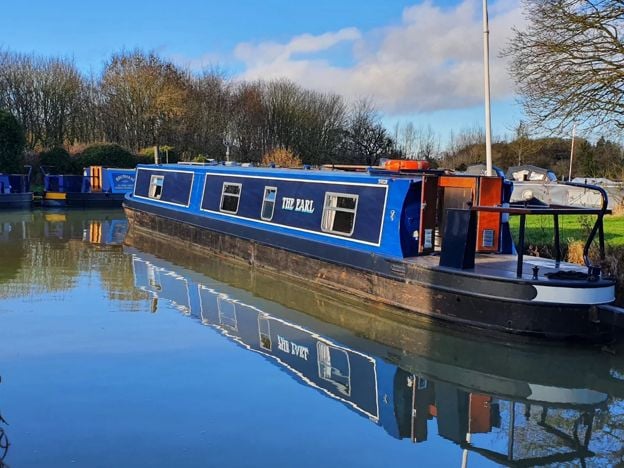
Self-drive narrowboat holidays, short breaks and day boats from Heyford Wharf on the Oxford Canal at Lower Heyford, from mid March to the end of October, for 2 to 12 people, dogs included.
Dog-friendly · Family-friendly
Verified Nov 2026
-
The Unicorn Inn, Deddington
Pubs · Deddington
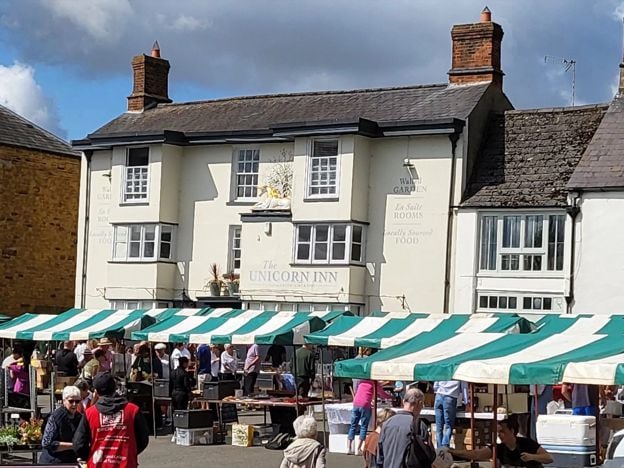
A Grade II listed inn of the mid 17th century on Deddington Market Place, with open fires, a garden behind, British classics and seven rooms, four of which take dogs.
Dog-friendly · Family-friendly
Verified Nov 2026
Read next
-
Motorsport Valley: how Formula One settled around Banbury
Story · History · 19 minute read
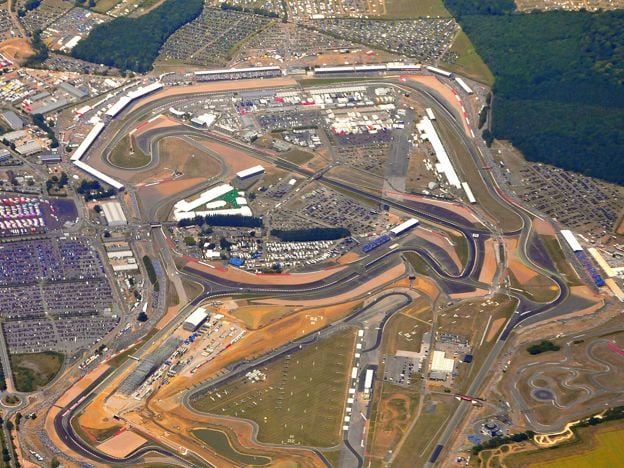
Motorsport Valley is the cluster of racing firms around Silverstone and Banbury. It grew from a wartime airfield, post-war engineers and people leaving one team to start another. This is the history of Formula One in the region, who is where in 2026, and how to see it.
-
Banbury's First World War munitions factory: National Filling Factory No 9
Story · History · 5 minute read
National Filling Factory No 9, east of Banbury, filled shells from April 1916 and employed about 2,000 people at its height. The M40 now cuts through it. About three quarters of its plan survives as earthworks, protected as a scheduled monument, on private land.
-
Alcan in Banbury: the aluminium works that made a market town industrial
Story · History · 6 minute read
In 1931 the Northern Aluminium Company opened a works on the Southam Road, and Banbury stopped being only a market town. It rolled sheet for wartime aircraft behind a decoy factory, employed over 3,000 at its height, became Alcan and closed in 2009.