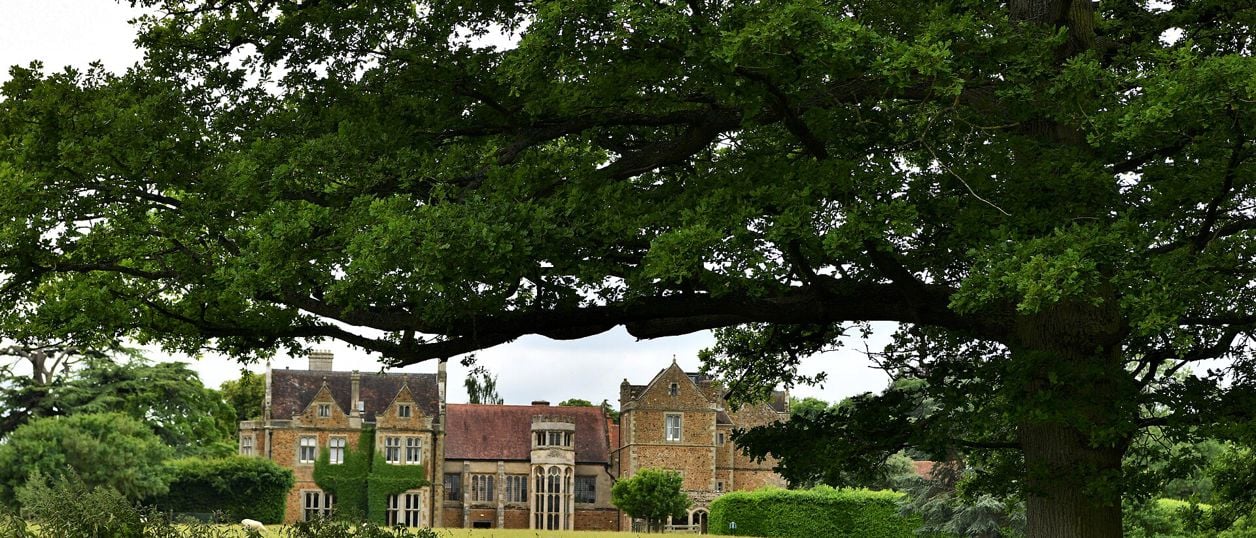
Michael Garlick, CC BY-SA 2.0, via Wikimedia Commons
Fawsley
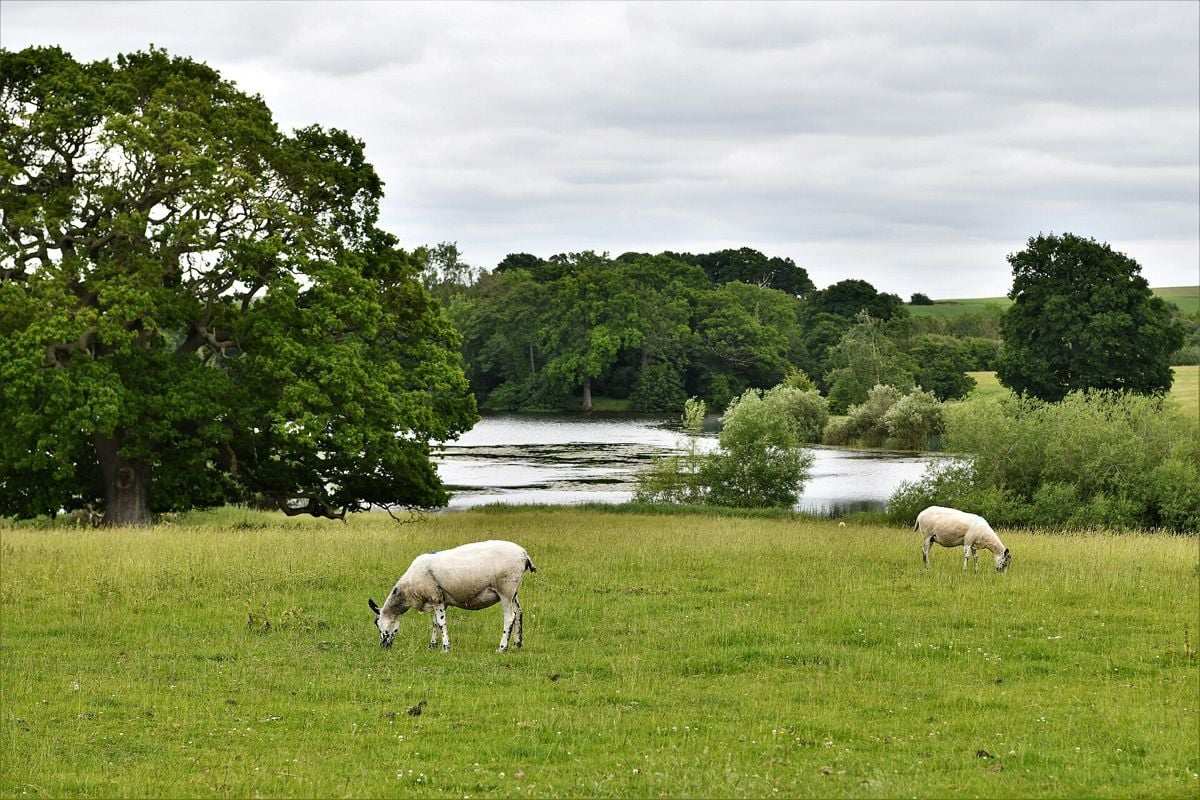
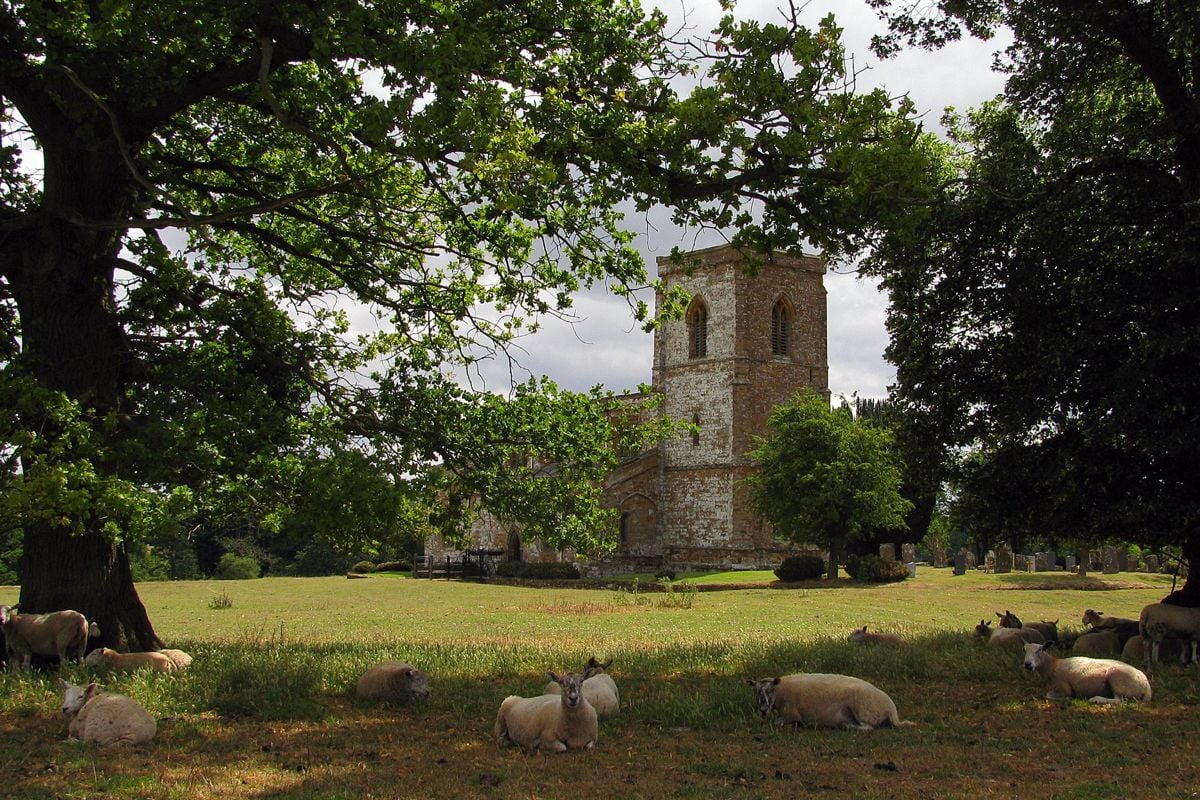
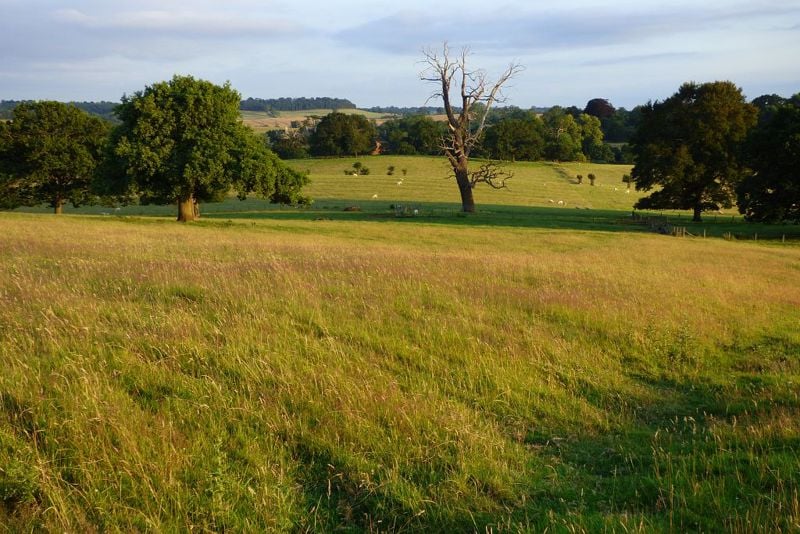
Not a village at all, but a Tudor hall, a Capability Brown park with lakes and a Grade I church standing alone in the fields, full of Knightley tombs. Walk in from Badby, see the church, and leave the Hall to its hotel guests.
- Nearest station
- None. Banbury, then the 200 bus to Badby, Monday to Saturday, and walk the Knightley Way south
- Parking
- The National Churches Trust lists street parking at the church and more within 250m. The Hall's own grounds are for hotel guests
- Best time
- Late April to early May, walking in from Badby through the bluebells
- When it's busy
- Nothing we read suggests crowds at the church. The Hall is a hotel and wedding venue, so expect traffic on its drive on wedding days, and be quiet around services.
- Toilets
- The National Churches Trust lists accessible toilets nearby without saying where. We could not confirm any public ones
- Dogs
- The church's own entry says dogs are welcome. On the Knightley Way through the park, keep dogs on a lead near stock
About Fawsley
Fawsley is a parish without a village, about 12 miles north-east of Banbury Cross in a straight line and under 2 miles south of Badby. The houses went long ago, and what is left is a great house, its park and lakes, and a church out on its own in the grass. The benefice says 22 people live here. Come on foot if you can, for the church and the walk.
What to see at Fawsley
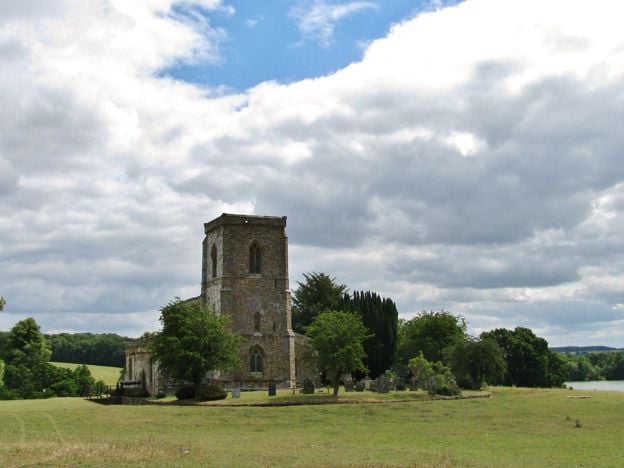
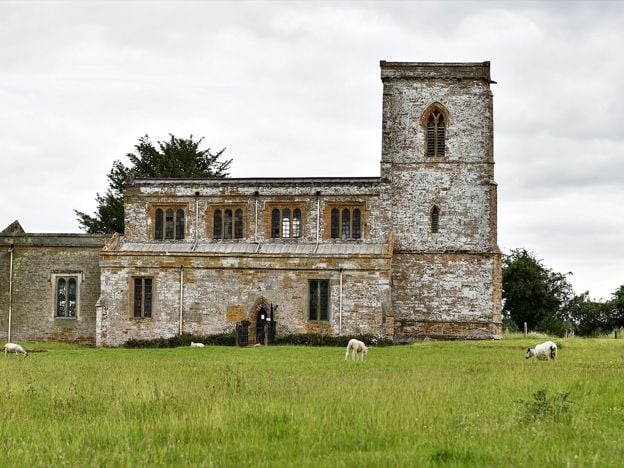
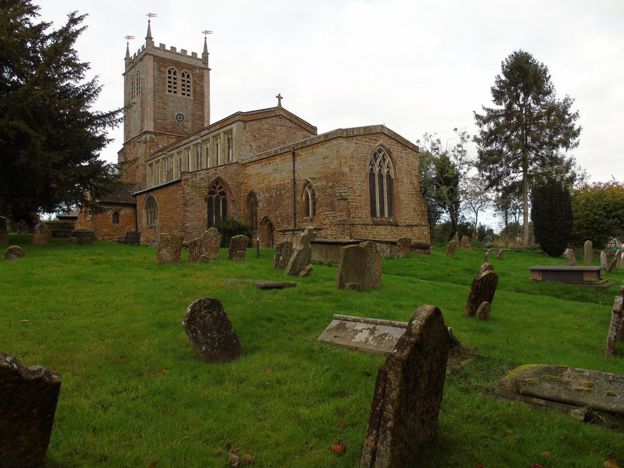
The reason to come is St Mary's church, listed Grade I. It is of the thirteenth, fourteenth and sixteenth centuries, in ironstone with limestone dressings, and its chancel was rebuilt in 1690, with a datestone to show it. Historic England's entry singles out an outstanding series of brasses, wall monuments and a tomb chest with effigies of the Knightley family, from the sixteenth century to the nineteenth.
Look also at the glass. The chancel windows hold sixteenth and seventeenth-century painted roundels and heraldic panels, and the church's own entry on the National Churches Trust says the Washington family's heraldic glass was brought here from Sulgrave in 1830. The furnishings are a period piece: late eighteenth-century box pews made up with older linenfold panels, a sixteenth-century hall pew in the south aisle, a Gothick communion table and rails, a chamber organ on Greek Doric columns, and the Commandments painted to look like an open Bible.
The church's entry says it is open daily from 9.30am to 5pm, but may be shut in bad weather to keep mud from the field out of the building. Services still run here, led for now by visiting clergy while the benefice is in vacancy.
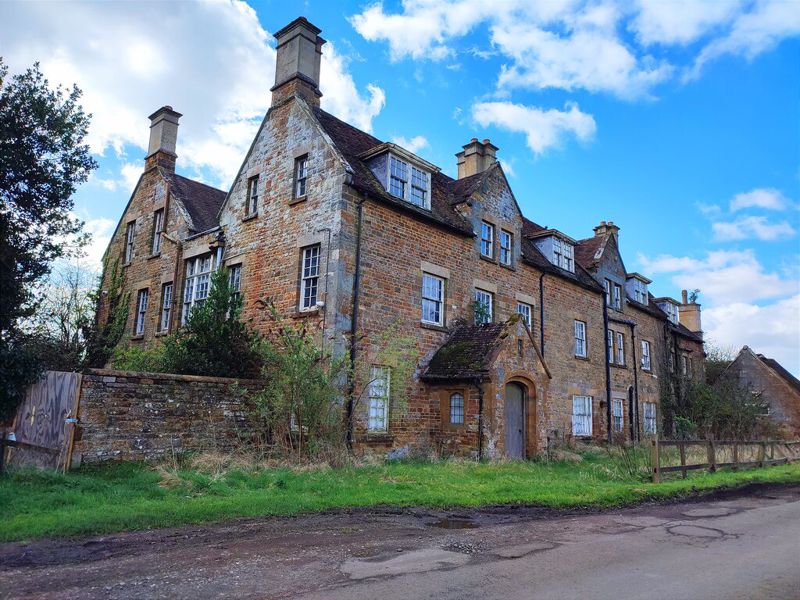
Fawsley Hall is listed Grade I and is now a hotel, spa and wedding venue. Parks and Gardens UK says it was begun by Richard Knightley, who died in 1534, with a range of 1732, alterations in 1815 and an extension by Anthony Salvin in 1867 to 1868. Its record of the park gives access as hotel guests only, so see the Hall from the footpath and the churchyard.
The park and the walk from Badby
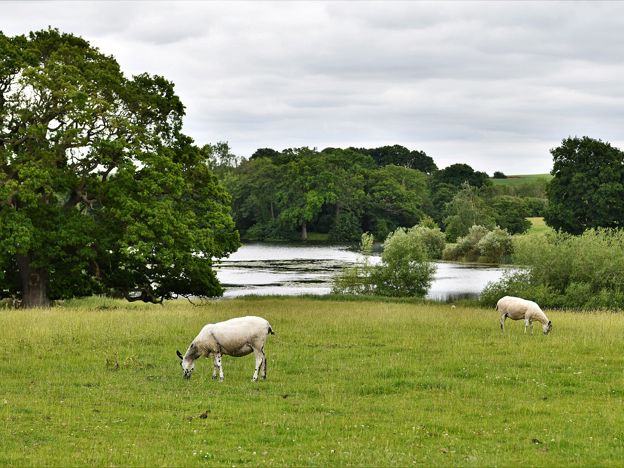
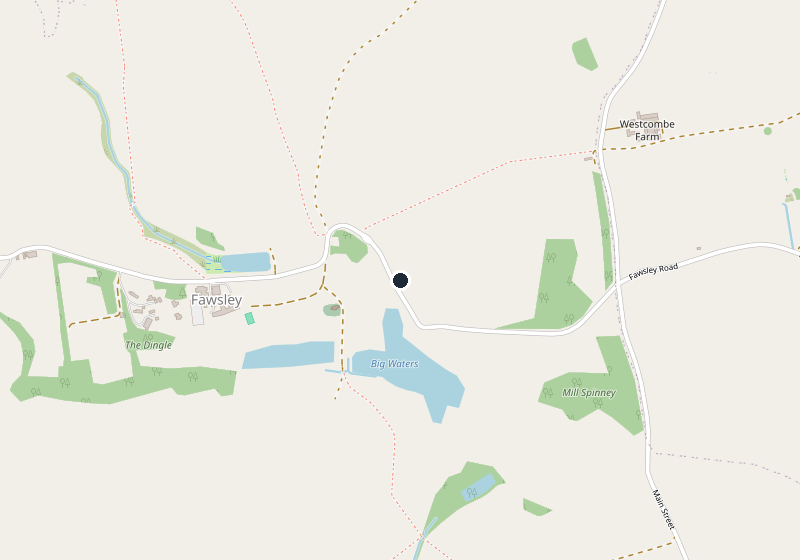
The park is registered Grade II*. Capability Brown was at work here by 1763, when Horace Walpole found him making a large piece of water, and he held contracts again in 1765 to 1766 and 1767 to 1768. The lakes today are Big Waters, The Canal and Horse Pond. The Knightley Way, a public footpath, starts by the church in Badby, skirts Badby Woods and crosses the park to Fawsley. That is the way to arrive: under 2 miles in a straight line, through the bluebells in spring. Our walk from Badby through the woods to Fawsley has the route.
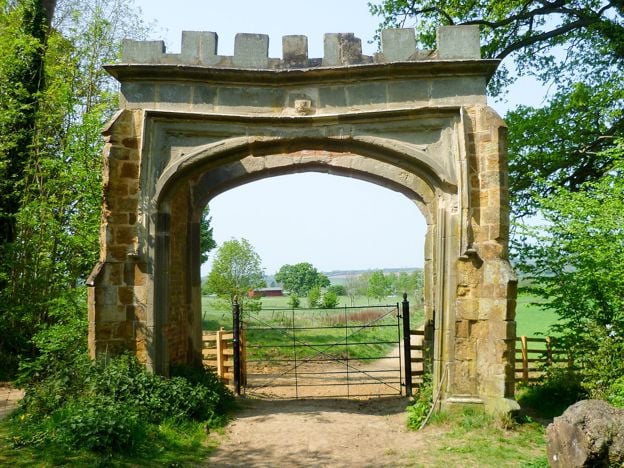
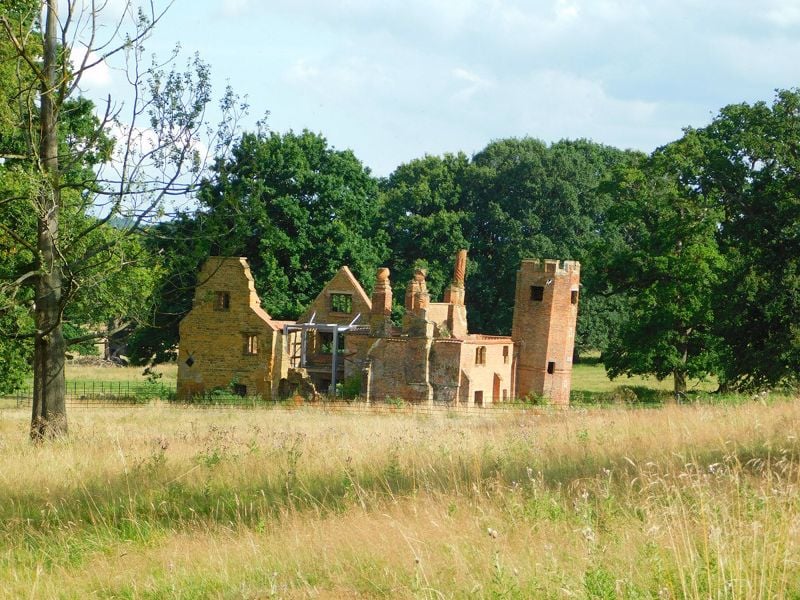
Look out on the way for the Dower House, a ruin on private land. The park's record calls it a sixteenth-century hunting lodge of brick and ironstone on an H plan, probably the lodge named in a lease of 1619. It is listed Grade II and is seen from the path, not visited.
A morning at Fawsley
Park in Badby, or at the A361 picnic area north of it, and walk south on the Knightley Way through the wood and across the park. Allow an hour in the church and churchyard, then walk back, or carry on east to Everdon, under 2 miles in a straight line, for its church and its own bluebell wood. For the family who made all this, read Fawsley and the Knightleys.
Food and drink near Fawsley
There is nowhere to eat at Fawsley except the Hall, whose own pages advertise afternoon tea in its Tudor great hall and a restaurant; book ahead. Otherwise bring a flask. On Bluebell Sunday, the first Sunday in May, Badby serves teas in its village hall, which is the best excuse for the walk.
The Banburyshire newsletter
Events, new places and the best of the season, about once a month. Unsubscribe at any time.
When to come to Fawsley
Spring, for the walk in through the bluebells, which are usually at their best from late April into early May. Autumn suits the park and the lakes. Pick a dry spell: the path crosses grass and clay, and the church may be closed after heavy rain.
Last verified 11 November 2026 by our editors
Things to do in Fawsley
Historic houses and heritage
Canons Ashby
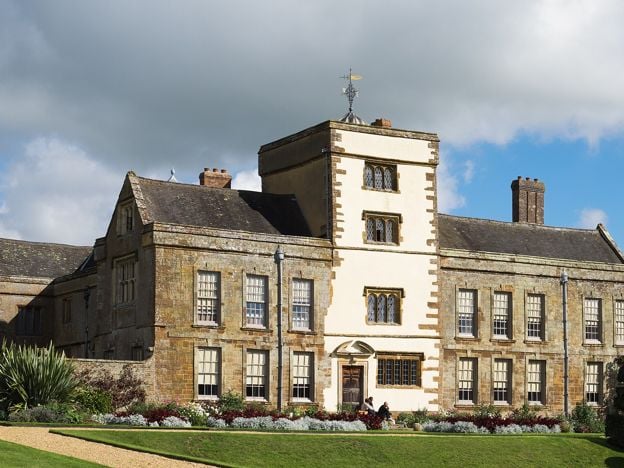
The Dryden family's Elizabethan manor house in south Northamptonshire, with painted rooms, Jacobean plasterwork and terraced gardens, beside the surviving church of a medieval priory. National Trust, north east of Banbury.
Walks in and around Fawsley
-
Badby Woods and Fawsley
Walk · Starts in Badby · 1 hr, 30 mins · Circular
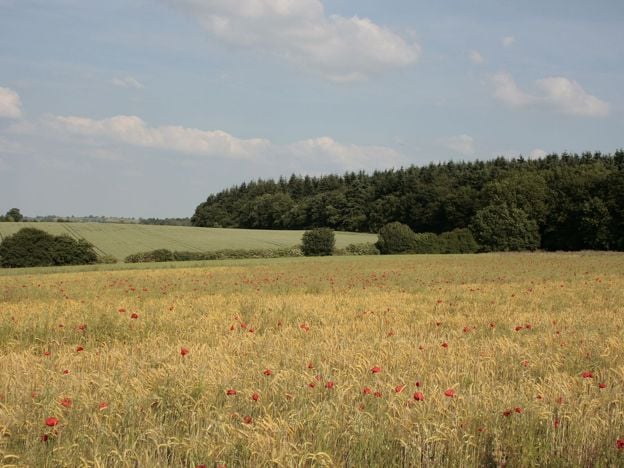
A 2.9-mile (4.7km) circular walk from Fawsley across the old deer park to the edge of Badby Woods and up to Badby church, moderate and about an hour and a half, with about 120m of climbing. It follows the county council's Southern Circular and the Knightley Way.
Sights in and around Fawsley
-
St Mary's Church, Fawsley
Sight · Church · Fawsley
A Grade I church standing alone in Fawsley's park, its village long gone, filled with Knightley tombs, brasses and box pews, with Washington arms in a window. Open daily, says the church, across a field and a ha-ha.
-
Badby Woods
Sight · Wood · Badby
An ancient bluebell wood at Badby, Northamptonshire, on the Fawsley estate: woodland for over 700 years, a deer park from 1246 and now an SSSI. Free and private, on permissive paths. Bluebells usually peak from late April into early May, and parking is for about 12 cars.
-
St Mary's Church, Badby
Sight · Church · Badby
Badby's Grade II* ironstone church on the hill above the greens, with a tower rebuilt after the old one fell in 1705, glass with the arms of Evesham Abbey, and the start of the Knightley Way opposite. Open every day, 10am to 4pm.
Stories about Fawsley
-
Fawsley and the Knightleys: a lost village, a secret press and 500 years
Story · History · 7 minute read
The Knightleys bought Fawsley, near Daventry, in 1416 and cleared its village for sheep. They built a Tudor hall, hid a puritan press in 1588 and held the estate for about 500 years. The village is gone, and the church stands alone in the park with their tombs.
Getting to Fawsley
- By car
- About 14 miles from Banbury by road, about 30 minutes, by the A361 through Byfield and Badby. Narrow lanes for the last stretch.
- By bus
- Stagecoach's 200 between Banbury and Daventry calls at Badby, roughly hourly Monday to Saturday. Walk on from there. We found no Sunday journeys.
- By train
- No station. From Banbury, take the 200 bus to Badby.
- Parking
- Street parking at the church, and more within 250m, says the church's entry. The A361 picnic area north of Badby suits the walk in.
- Access
- The church's entry on the National Churches Trust lists level access to its main areas. The walk in from Badby crosses woodland, parkland and fields.
Places near Fawsley
-
 BadbyAn ironstone and thatch village about 3 miles south of Daventry, and the way in to Badby Woods. Greens, a church up a steep hill, the start of the Nene Way and the Knightley Way, and little parking. Come to walk, and on busy days leave the car north of the village.
-
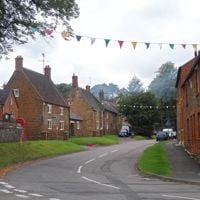 EverdonA conservation village south of Daventry, with a big fourteenth-century church open in daylight and Everdon Stubbs, a Woodland Trust wood of bluebells and wild daffodils, on the hill above. A quieter alternative to Badby in bluebell time.
-
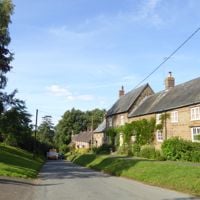 Preston CapesA small village on high ground south of Daventry, with a Norman castle mound and a medieval church. Small and with nowhere to eat, so see it on the way between Fawsley, Everdon and Canons Ashby.
-
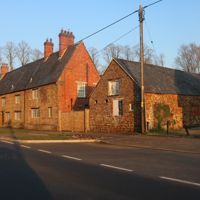 CharweltonA village on the A361 named after the River Cherwell, which rises nearby, with a fifteenth-century packhorse bridge beside the road and a Grade I church out where a medieval village was probably emptied for sheep, with brasses, an alabaster tomb and Eric Gill's lettering.