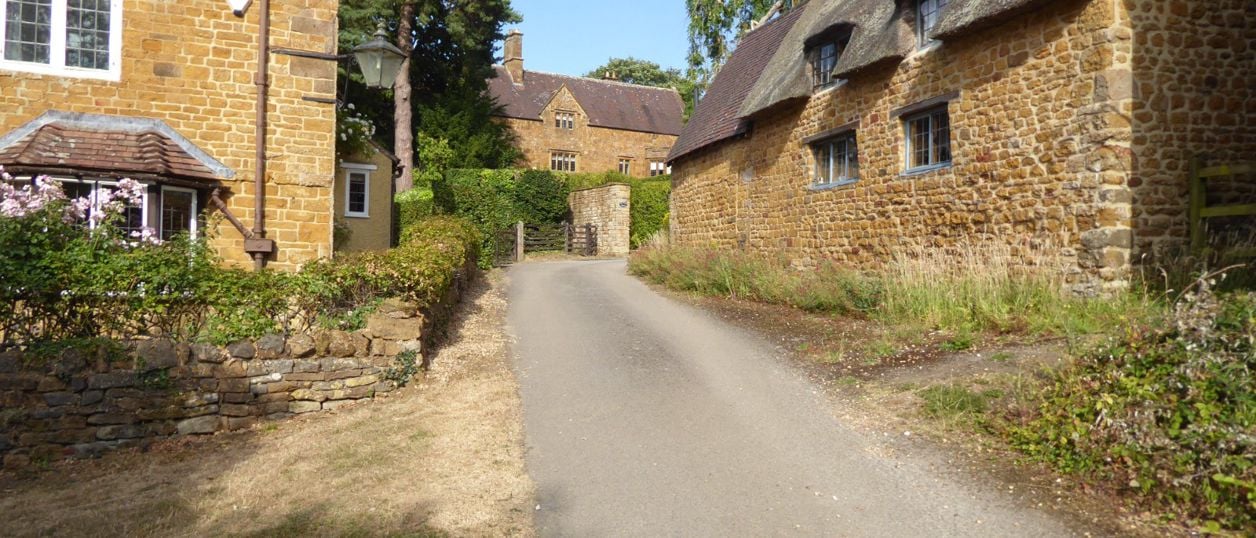
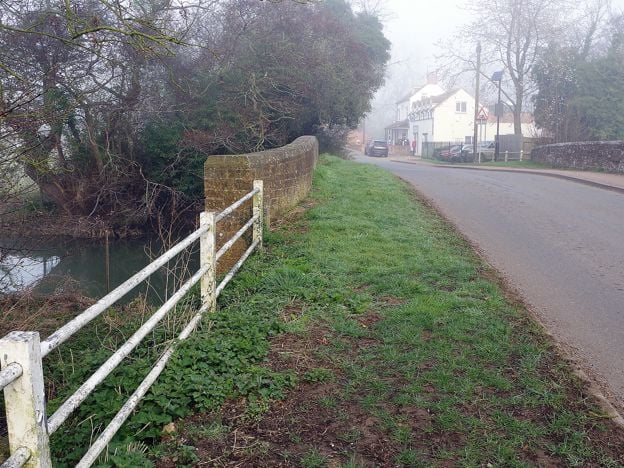
Philip Halling, CC BY-SA 2.0, via Wikimedia Commons
Farnborough
A small estate village of yellow stone and thatch beside Farnborough Hall, the Holbech family's Palladian house, whose terrace walk to an obelisk opens from April to September with the National Trust. A church with a Scott spire, and a 5.5-mile parkland walk.
- Nearest station
- Banbury, about 6 miles south, then a taxi, or the one 77A bus each way that calls, Monday to Saturday
- Parking
- At Farnborough Hall for National Trust visitors, OX17 1DU. In the village, park with care on the lanes
- Best time
- An open afternoon at the hall, from April to September
- Toilets
- None public that we could confirm
- Dogs
- Dogs on leads may use the hall's grounds, says the National Trust. Its 5.5-mile parkland walk is not suitable for dogs, its trail sheet says.
About Farnborough
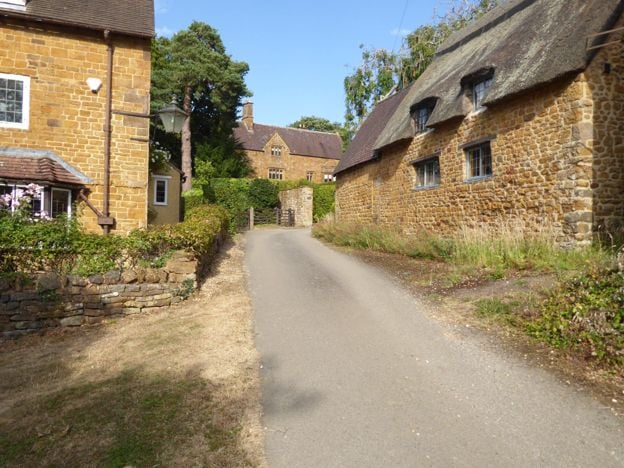
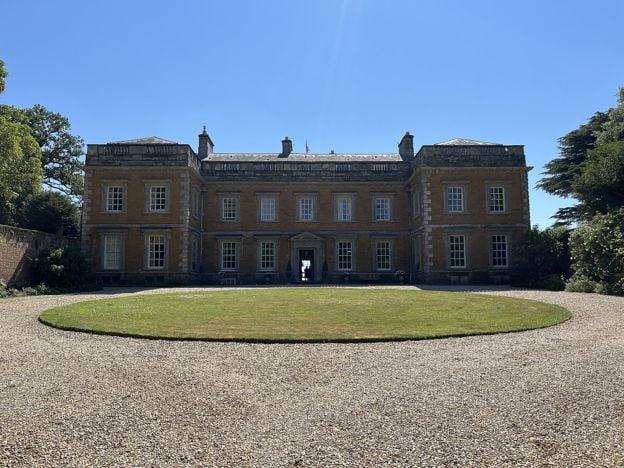
Farnborough is a small village on the Warwickshire edge, about 6 miles north of Banbury in a straight line, close to the Banbury to Coventry road. The county history counted about ten cottages of yellow stone round the church, most of them thatched. Across a small road stands Farnborough Hall, and the hall and its terrace are the reason to come.
Farnborough Hall and the terrace
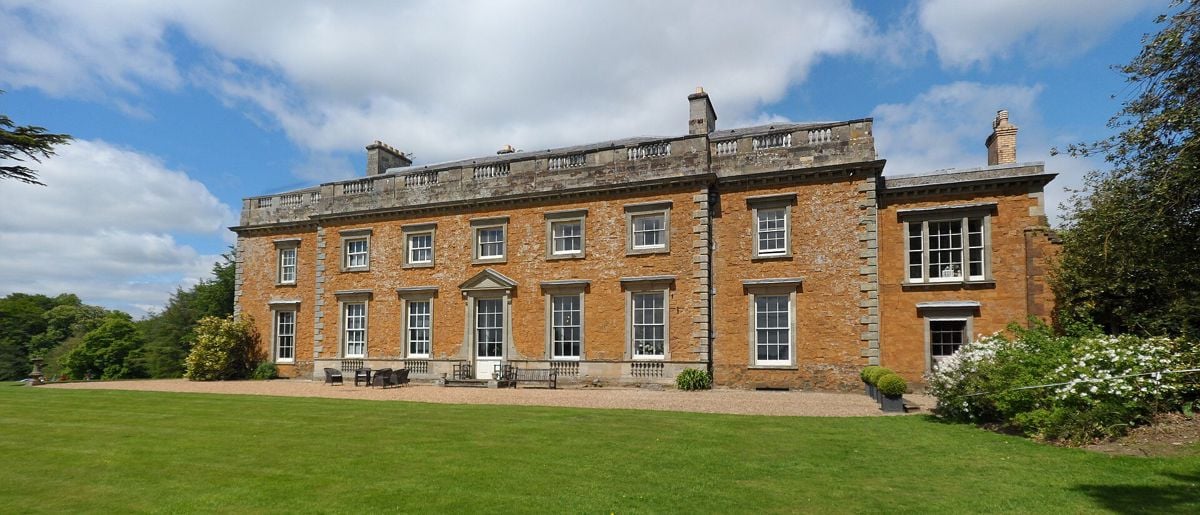
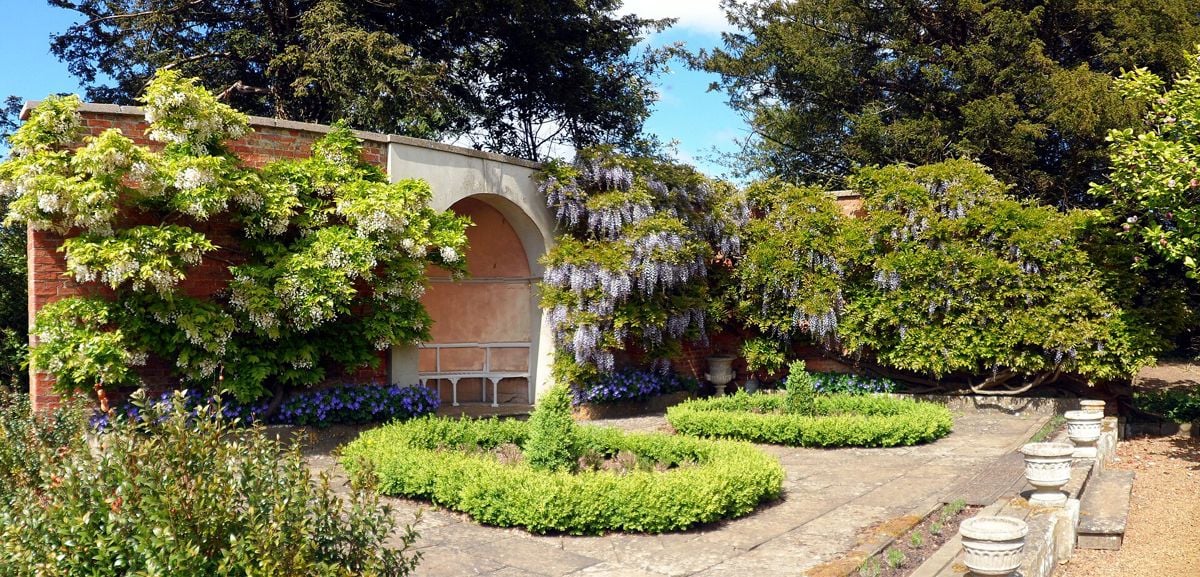
Farnborough Hall is the Holbech family's house, bought in the 1680s, and they still live in it. The National Trust owns it, and the family run the opening. Historic England lists the house Grade I. William Holbech spent 1730 to 1745 in Italy and rebuilt it when he came home, with an entrance hall made to show his classical sculpture.
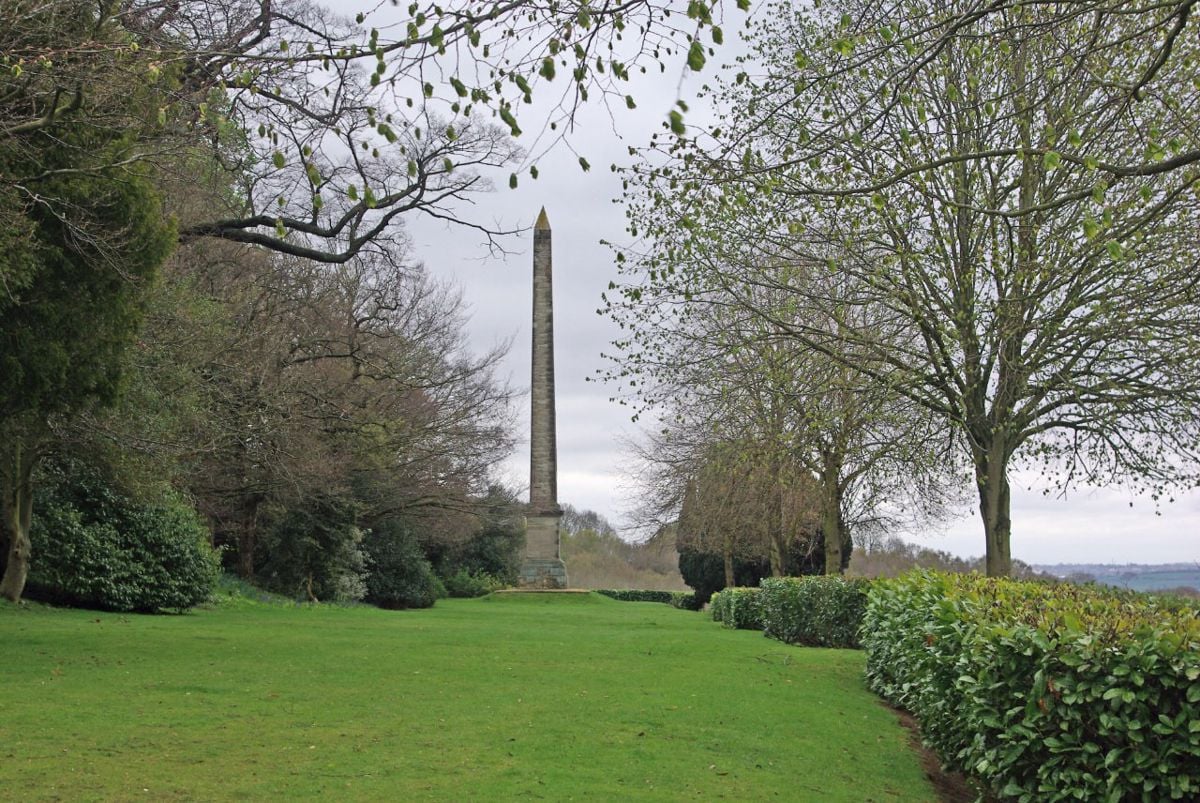
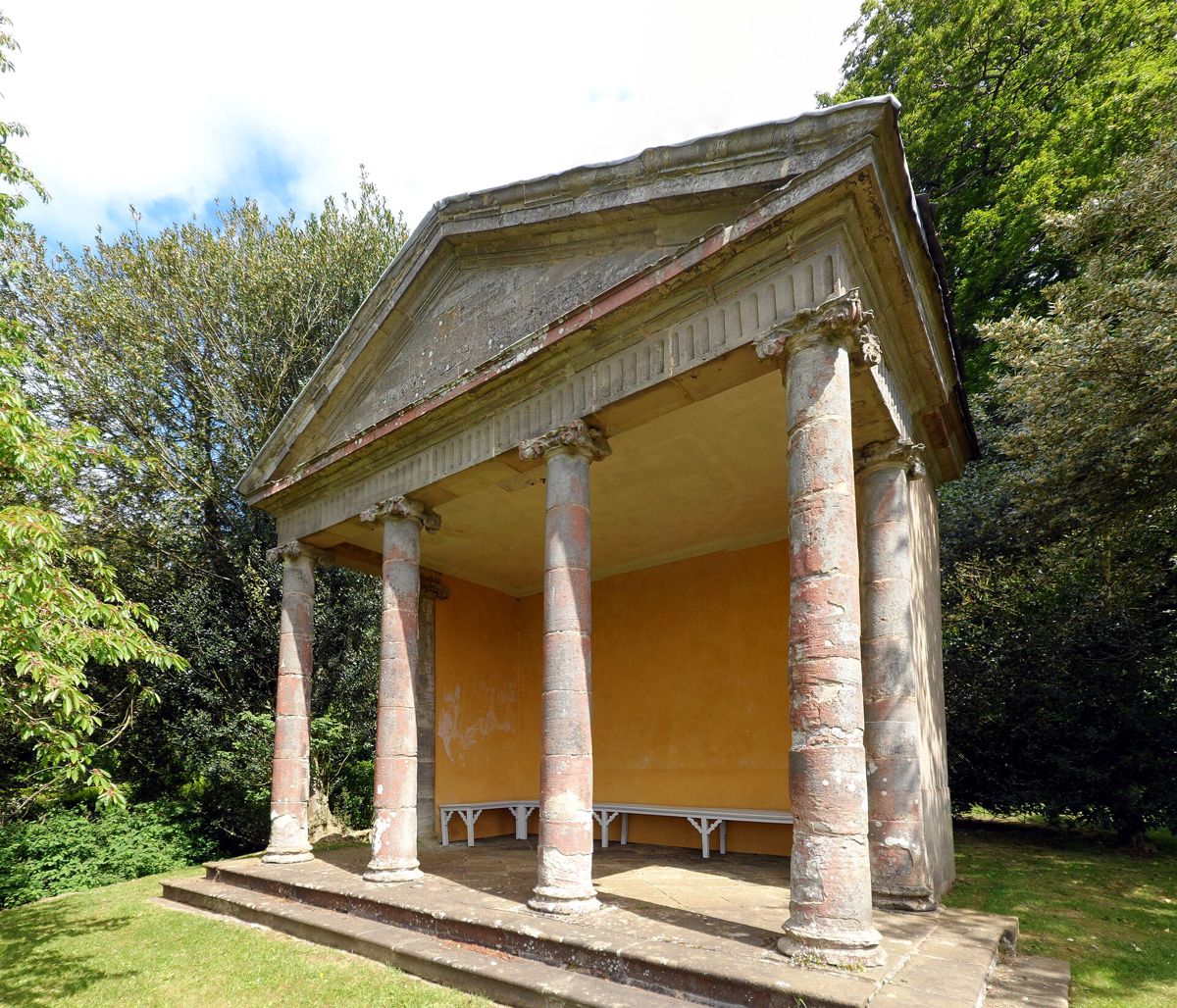
The terrace is what to come for. It runs along the ridge from the house to an obelisk, past an Ionic Temple and an Oval Pavilion of about 1750, both listed Grade II*, with views over the park. The landscape is registered Grade I. In 2026 tickets for the whole property were £9.50 for an adult, cash only, and the hall is closed until 7 April 2027, then open on Wednesday and Saturday afternoons from April to September.
St Botolph's Church
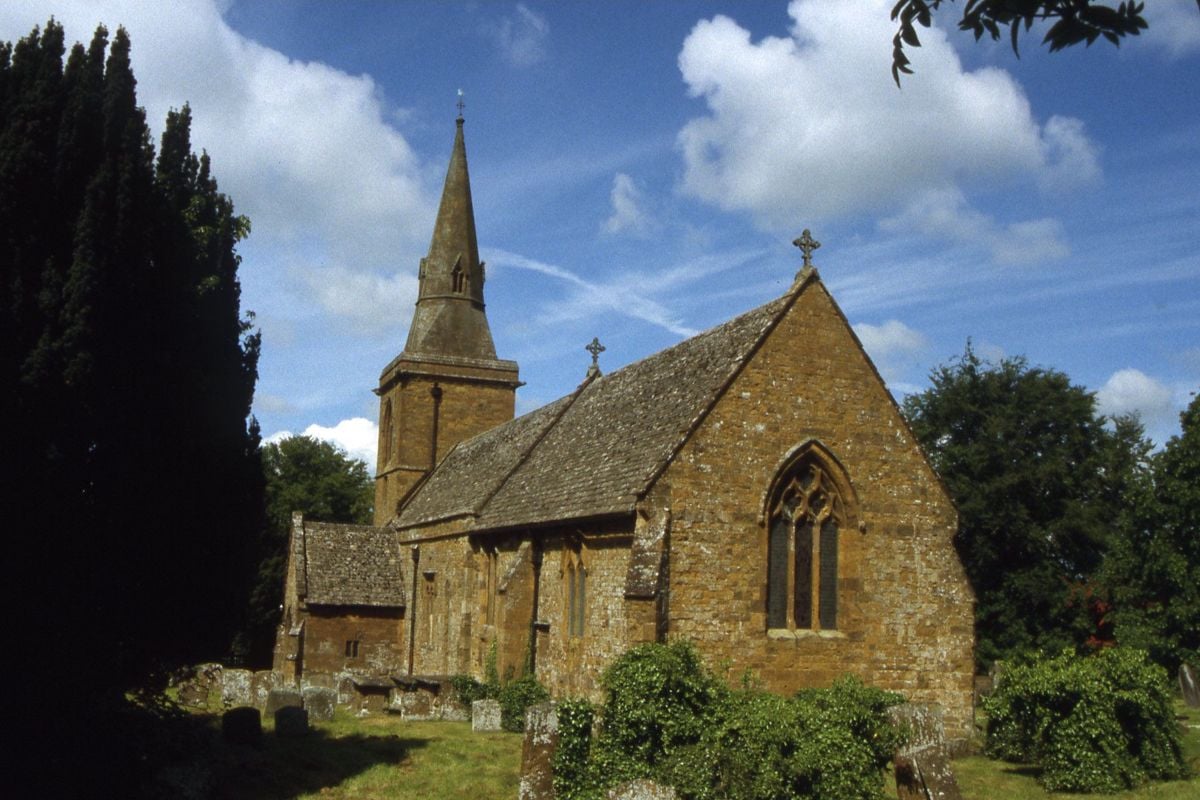
St Botolph's is listed Grade II*, with a lychgate of its own at Grade II. The county history found twelfth-century stonework re-used in the chancel arch and the south doorway, whose jambs are unusually rusticated. Much of the chancel, the porch and the lower tower is fourteenth century, and a tablet dated 1611 sits above the west window of the tower. George Gilbert Scott built the north aisle and the octagonal stone spire in 1875.
In the porch lies the head of a knight's effigy of the late twelfth or early thirteenth century, its origin unknown. Some seats at the west end of the nave keep sixteenth-century bench ends, and the walls carry memorials to the Raleghs, lords of the manor before the Holbechs. We could not find published opening hours. Historic England has the church on its Heritage at Risk register.
An afternoon in Farnborough
On an open day, start at the church and the cottages round it, then cross to the hall. See the rooms, and walk the terrace to the obelisk and back, which the National Trust calls a mile walk. On a closed day, the village and the church make a short stop on the way to Burton Dassett or Warmington.
Walks from Farnborough
The National Trust publishes a 5.5-mile Farnborough Parkland Walk from the hall, mapped in OpenStreetMap, with stiles, narrow tracks and field crossings. It allows three to four hours, and its trail sheet says it is not suitable for dogs.
Food and drink near Farnborough
Farnborough's pub, in a listed building by the church, showed no 2026 evidence we could find, so we name it only once it has been checked. The nearest checked picks are the Castle at Edgehill, about 4 miles west, and the Lost Pug at Northend.
The Banburyshire newsletter
Events, new places and the best of the season, about once a month. Unsubscribe at any time.
When to come to Farnborough
Come from April to September, when the hall opens. Out of season the hall and its terrace are closed, and the village is small enough to see in half an hour. When we checked, the National Trust's calendar gave Wednesday and Saturday afternoons, 2pm to 5.30pm, so check its page for the days before you go.
Last verified 11 November 2026 by our editors
Things to do in Farnborough
Historic houses and heritage
Farnborough Hall
A Palladian house north of Banbury, still lived in by the Holbech family and run with the National Trust, with a raised terrace walk to an obelisk. A few rooms and the grounds open from April to September. Closed until 7 April 2027.
-
The National Herb Centre, Warmington
Parks and gardens
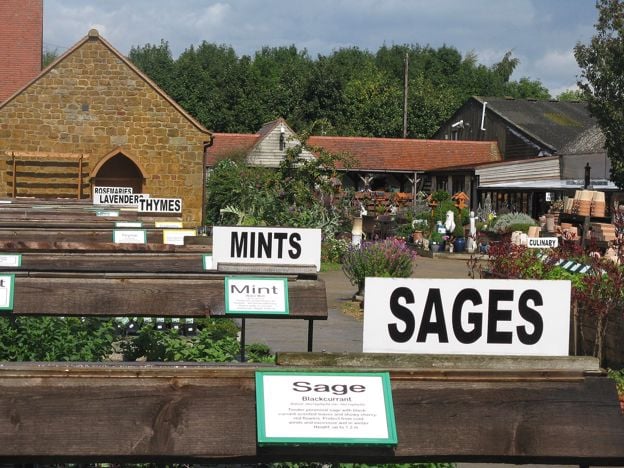
A plant centre at Warmington, near Banbury, growing culinary and medicinal herbs, fruit and native wildflowers, most of them on site in peat-free compost, with a café bistro, a play area and nature trails.
Verified Nov 2026
-
Burton Dassett Hills Country Park
Parks and gardens · Burton Dassett
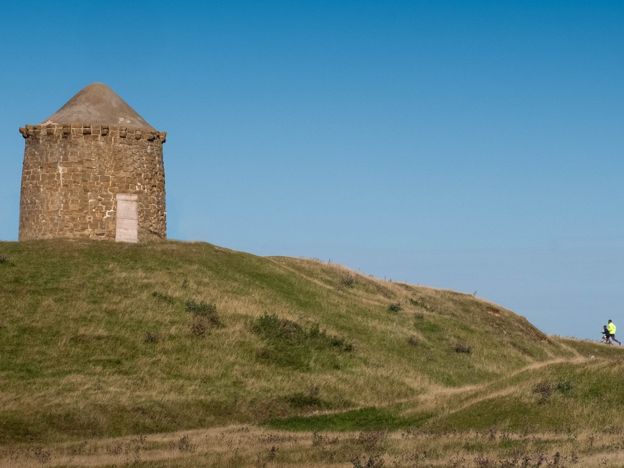
A hundred acres of open hilltop in south Warwickshire with wide views, old quarry workings and a beacon, plus the medieval church of All Saints. A country park since 1971. Car parking £3.50 a day.
Dog-friendly · Family-friendly · Walker-friendly
Verified Nov 2026
-
Upton House and Gardens
Historic houses and heritage
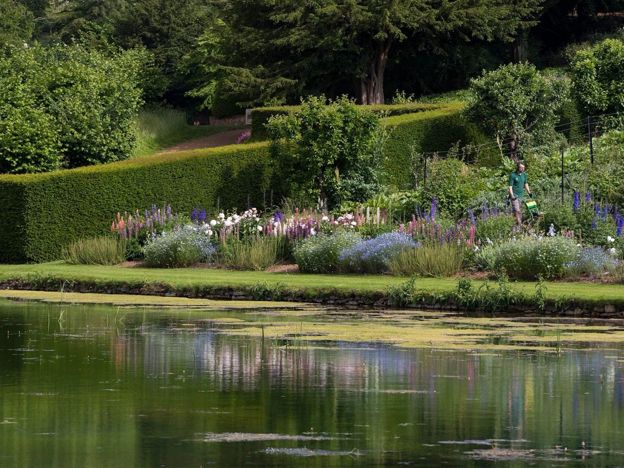
A National Trust house on the Edge Hill ridge, remodelled in the 1920s for the oil magnate Lord Bearsted to show his paintings by Bosch, El Greco, Stubbs and Hogarth, above terraced gardens that drop 30m to a Mirror Pool.
Family-friendly · Dog-friendly · Rainy days
Verified Nov 2026
Where to eat and drink in Farnborough
-
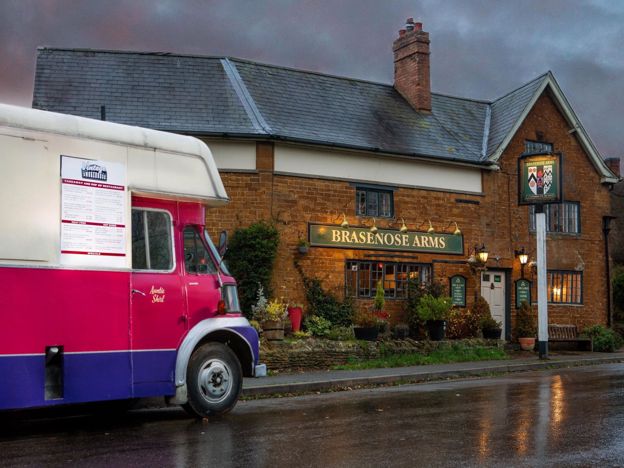
The Brasenose Arms, Cropredy
Pubs · Cropredy
A 17th-century inn on Station Road in Cropredy, with four refurbished bed and breakfast rooms, a bar and garden, and its own music fringe alongside Fairport's Cropredy Convention each August. The pub says it is the only one in the country with the name.
Verified Nov 2026
-
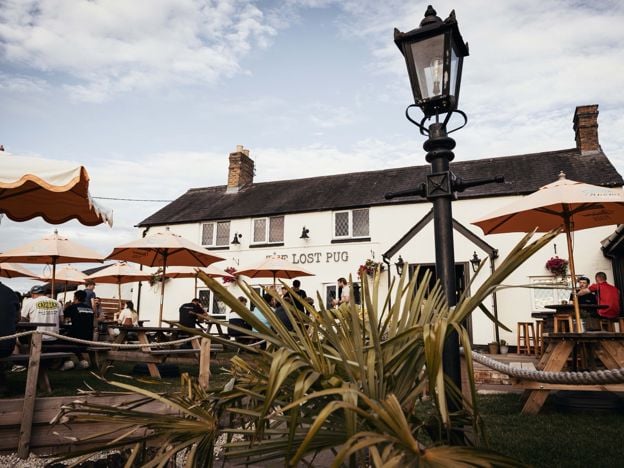
The Lost Pug, Northend
Pubs · Burton Dassett
A village pub at Northend under the Burton Dassett Hills, taken over by Pug Pubs in 2024 after a couple of years shut as the Red Lion. It opens from 9am every day, with a kitchen until 9pm, a west-facing garden and dogs welcome.
Dog-friendly
Verified Nov 2026
-
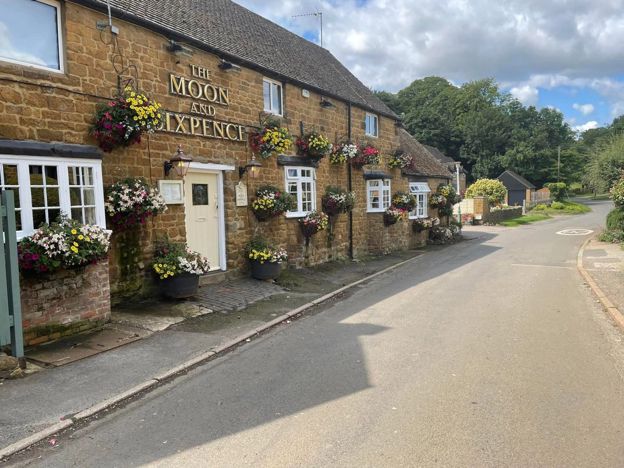
The Moon and Sixpence, Hanwell
Pubs · Hanwell
A refurbished dining pub on Main Street in Hanwell, about two miles north-west of Banbury, with an open kitchen run by chef Hylton Bradley, a set lunch and dinner menu, and a large car park.
Family-friendly · Walker-friendly
Verified Nov 2026
Walks in and around Farnborough
-
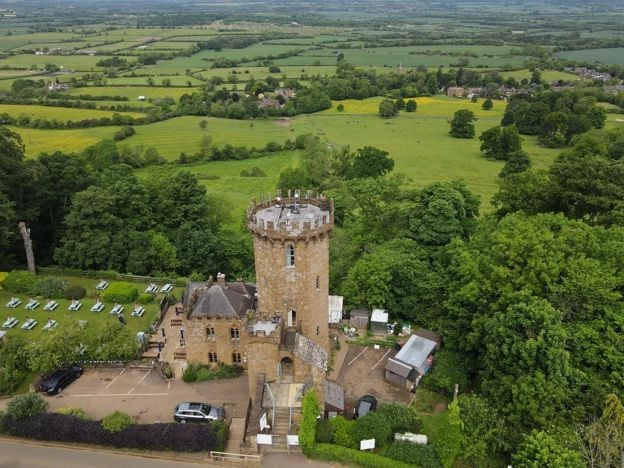
Edgehill Circular
Walk · Starts in Edgehill and Radway · 2 hrs, 30 mins · Circular
The Edgehill Circular is a 5.4-mile (8.6km) moderate circular walk from the Upton House car park, about two and a half hours with 220m of climbing. It follows the Edge Hill ridge to the Castle pub, returns through Ratley, and has six stiles and 500m on the A422.
Sights in and around Farnborough
-
Cropredy Bridge
Sight · Bridge · Cropredy
The bridge over the River Cherwell at Cropredy, north of Banbury, where a royalist army beat Sir William Waller on 29 June 1644. This is a 1937 rebuild faced in old Hornton stone, with an inscription on its south side. Free to see at any time.
Getting to Farnborough
- By train
- Banbury is the nearest station, about 6 miles south, with Chiltern trains from London Marylebone. Take a taxi on.
- By bus
- One of Stagecoach's 77A journeys (Leamington to Banbury) calls at Farnborough each way, Monday to Saturday: when we checked, a morning bus to Banbury and a midday one back. Check the timetable first.
- By car
- About 7 miles and 13 minutes from Banbury Cross by road. The hall's postcode is OX17 1DU.
- Parking
- At the hall for its visitors. The National Trust says there is no safe coach access.
- Access
- The National Trust says the hall has two steps at the entrance, an accessible ground floor and grounds that are partly accessible. We have not checked the church. The parkland walk has stiles, narrow tracks and field crossings.
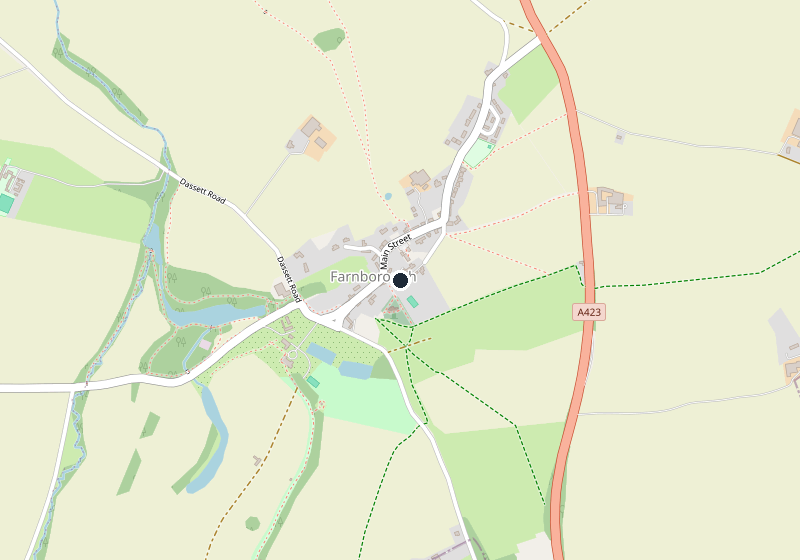
Places near Farnborough
-
 WarmingtonA village round a sloping green off the Banbury to Warwick road, with a Grade I church on the brow above, a priest's room with its own fireplace, and the grave of a Scots captain killed at Edgehill in 1642. The National Herb Centre is at the bottom of the hill.
-
 Fenny ComptonA rambling stone and thatch village under the Dassett hills, with the Oxford Canal and the railway on its eastern edge, a church open every day, and Burton Dassett Hills Country Park about a mile and a quarter away. A place to walk from rather than to linger.
-
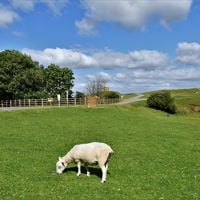 Burton DassettA lost market town on the Warwickshire hills: a Grade I church on a slope, a holy well, and quarried humps with views all round. Park at the country park, walk up to the beacon and down to All Saints. Bring a coat.
-
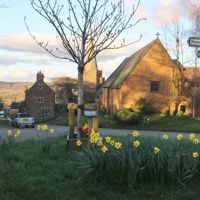 ShotteswellA small hillside village of dark brown stone and thatch, almost surrounded by Oxfordshire, about 4 miles from Banbury. There is little to do but the church, which has a Norman arcade, a medieval spire, an oak chest of the thirteenth century and Flemish carvings.