How Bicester Village happened: from a wet field to a station of its own
When it opened in 1995, its founder says, nobody in Britain thought it would work. Thirty years on, Bicester Village had a record 6.7 million visitors in 2024, and the town has had to share its name.
· 7 minute read
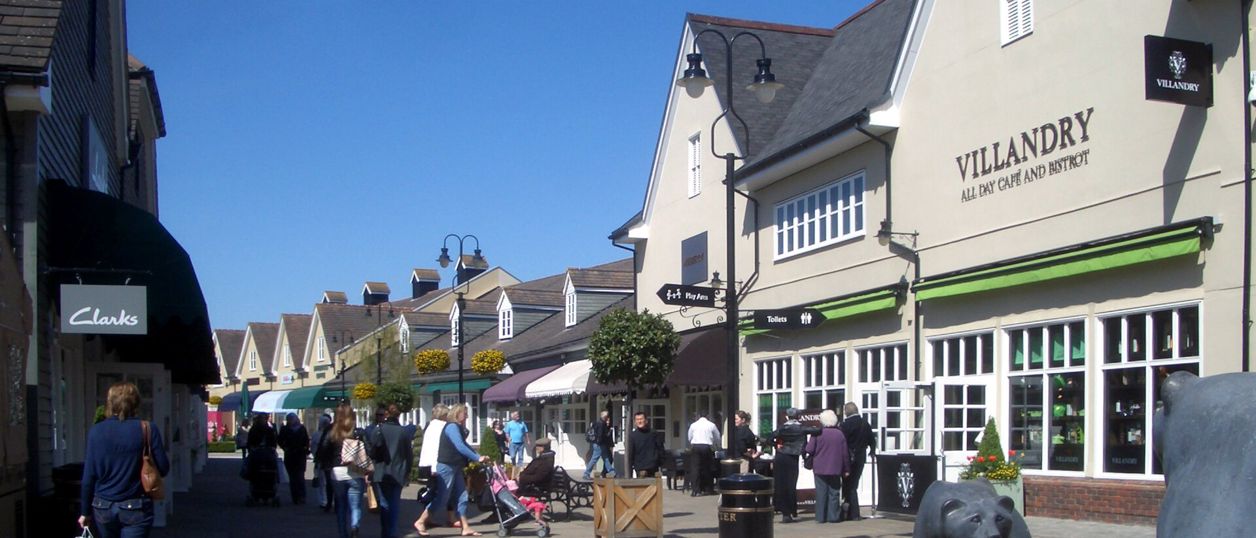
In April 1995 a shopping centre selling last season's designer clothes at a discount opened on the edge of Bicester. It had 13 boutiques and one café. By its 30th birthday in 2025 it had more than 150 boutiques, a record 6.7 million visitors the year before, by The Guardian's count, and a railway station that carries its name rather than the town's. This is how it happened, from what the company, the railway and the press have published, and what it has meant for Bicester. If you want to go, our guide to Bicester Village from Banbury has the trains, the bus and the parking.
A field and an American
The Village was the idea of Scott Malkin, an American property developer who founded the company Value Retail. He told The Sunday Times in 2025 that he first came to Bicester in 1991 to look at a piece of land just off the M40, and found a forlorn-looking mare among fields full of debris. The paper reports that he bought the land for £15 million. Companies House records the business that runs the site today being set up on 4 January 1994 under an off-the-shelf name, renamed Value Retail (Bicester) Limited that March, and given its present name, Value Retail Management (Bicester Village) Limited, in November 1994.
A PR director who worked on the launch, Colin Woodhead, told The Guardian the site had been a wet field with two old horses 'and a fallen-down shed behind a small branch of Tesco'. Malkin had a lower opinion still of the town. In 2018 the BBC quoted his description of Bicester as 'a garrison town best known for Friday night fighting and take-out food'. That was not entirely unfair as history: the town's story since the Second World War had been one of barracks, a huge army depot and the RAF.
A gamble on a new kind of outlet
Outlet shopping in Britain then meant factory shops and food courts. Malkin's idea, as the company tells it, was that discounted, out-of-season designer stock could be sold somewhere that felt like a holiday resort rather than a warehouse. 'Bicester was a gamble in many ways,' Desirée Bollier, the chair of the business, told the American trade paper WWD in 2025. Location came first: close enough to London and its airports for tourists, and to a big population all year round.
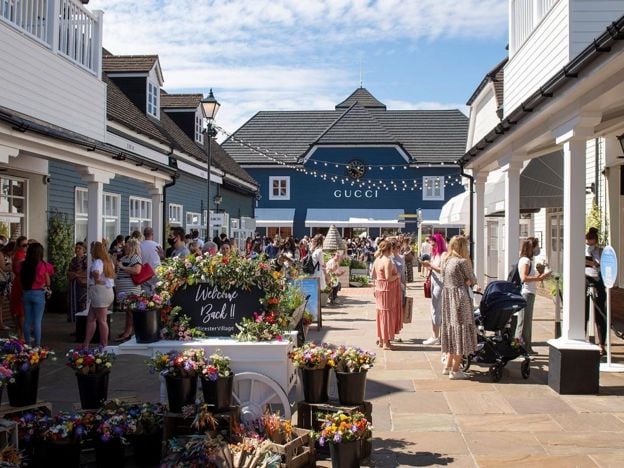
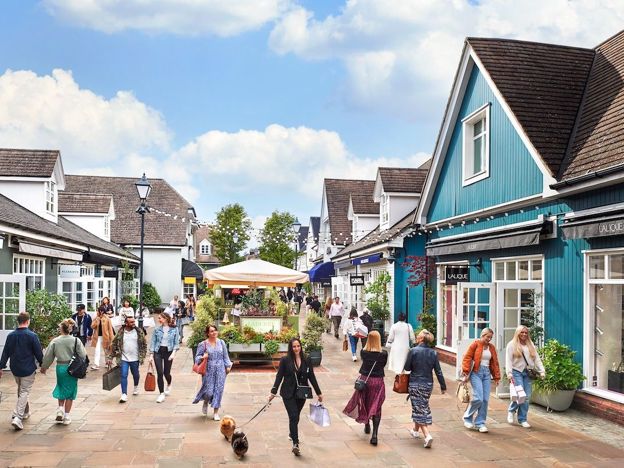
The setting was the other half. The Guardian describes white picket fences and wide walkways modelled on Disneyland, and visitors called guests rather than shoppers. A bear called Porridge, a sculpture by the late Michael Cooper, has stood in the Village since it opened, and in 2025 starred in its anniversary films. Some of the big fashion houses were sniffy at first, The Sunday Times reported, but most came round. The Village grew by a third in 2017, when an extension added 30 shops, and by 2025 the names included Dior, Celine, Fendi, Gucci and Prada.
The arrangement suits both sides. Brands have end-of-season stock they do not want to discount in their own full-price shops, and here they sell it for at least 30% off, away from the high street. The Sunday Times reported in 2025 that a small share of new-season stock would be sold at full price in some shops for the first time, which shows how far the place has moved from a clearance sale.
The Chinese connection
What turned a successful outlet into a national curiosity was China. The BBC reported in 2018 that the Village had worked with Chinese tour operators since the mid-2000s, that more than half of Chinese visitors to the UK shopped there by the company's own figures, and that Chiltern's trains announced the stop in Mandarin. The shoppers it spoke to talked of brand names, discounts and claiming back VAT. It is often said that only Buckingham Palace draws more Chinese visitors in Britain, and The Guardian repeated the claim in 2025, adding that the station announcements now come in Arabic too. We have not found the survey behind it.
The numbers grew with it. Network Rail put the Village's visitors at 6.3 million a year in 2015. Value Retail estimated 6.6 million in 2017, which the BBC noted was about the same as the British Museum, and The Guardian reported a record 6.7 million in 2024, staying about six hours each on average.
A station of its own
All those visitors came mostly by road, and Bicester paid for it. A BBC report of March 2015 noted that the Village had once had to close for a time on Black Friday because the traffic was gridlocked. The answer was the railway. Chiltern was rebuilding the town's second station as part of a new route from Oxford to London Marylebone, and on 12 March 2015 it announced that the town's station on that line, Bicester Town, would reopen as Bicester Village.
The BBC reported outrage. The town's mayor, Lynn Pratt, said the council had not been told, and that 'it makes it sound like Bicester is only about Bicester Village'. A local campaign group described a town of over 30,000 people with a history and culture worth protecting. Chiltern's director, Thomas Ableman, said the name would encourage visitors to come by train and ease congestion in the town, and pointed to a poll of households in which 49% favoured the change and 23% opposed it.
The new line opened on 26 October 2015, at a cost of £320 million shared between Chiltern and Network Rail, with Bicester Village 46 minutes from Marylebone. The Sunday Times reported in 2025 that Malkin had spent millions on a Village-branded entrance to hide the station's ticket hall. The town's older station, Bicester North, kept its name and its trains to Banbury; our guide to getting to Bicester covers both.
The Banburyshire newsletter
Events, new places and the best of the season, about once a month. Unsubscribe at any time.
Thirty years on
Bicester was the template for a group. By 2025 Value Retail ran 12 villages under the name The Bicester Collection, eight more in Europe, two in China and one near New York, and in 2024 the investment fund L Catterton bought a 42% stake in the business in a deal that valued it at £1.5 billion, according to WWD. Cherwell District Council now describes the Village as a world-renowned retail destination drawing millions of visitors a year and anchoring the town's economy.
For Bicester the relationship is still mixed. The Village brings jobs, trade and trains, and it has given the town a name known across the world, but it is that name, not the town's, that most visitors carry home. The Village and the old centre are separate places, and it is easy to visit one without seeing the other. If you do come for the shopping, the old market town, with its Friday market and St Edburg's church, is worth an hour of the six, and our Bicester guide has the rest. Our page on Bicester Village itself has the practical details.
Mentioned in this story
The places, sights and walks in this story, each with a page of its own: what it is, when to go and how to get there.
-
Bicester Village
Sight · Historic building · Bicester
Places to stay near Bicester
-
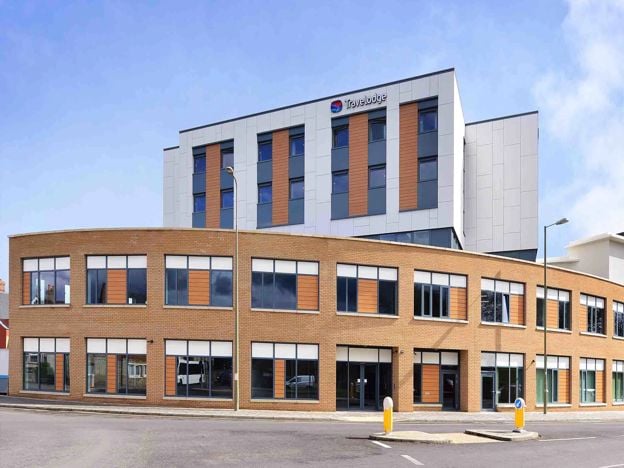
Travelodge Bicester
Hotel · Bicester
A budget chain hotel on Pioneer Square in the middle of Bicester, under half a mile from Bicester North station and within walking distance of Bicester Village, with family, accessible and pet-friendly rooms but no car park of its own.
Dog-friendly · Car-free
Verified Nov 2026
-
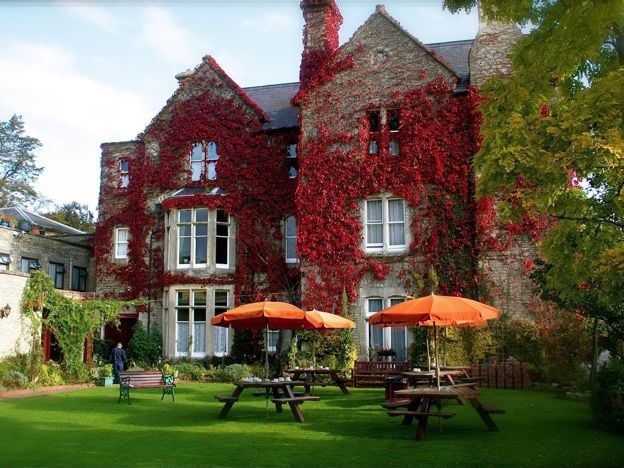
The Littlebury Hotel, Bicester
Hotel · Bicester
A family-run hotel on Kings End in Bicester since 1959, with 35 en-suite rooms, breakfast included, a lounge bar, gardens and a large car park, within walking distance of the town centre and Bicester Village.
Family-friendly · Wedding venues
Verified Nov 2026
-
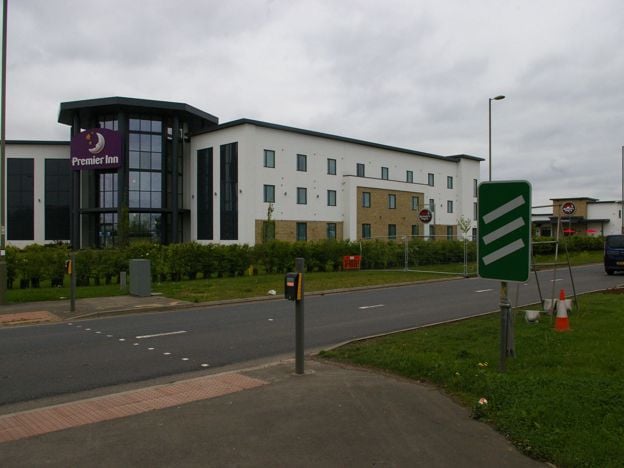
Premier Inn Bicester
Hotel · Bicester
A Premier Inn on Oxford Road, on the A41 at the southern edge of Bicester, half a mile from Bicester Village by the chain's measure, with family, accessible and Premier Plus rooms, a restaurant and a paid car park.
Family-friendly
Verified Nov 2026
Read next
-
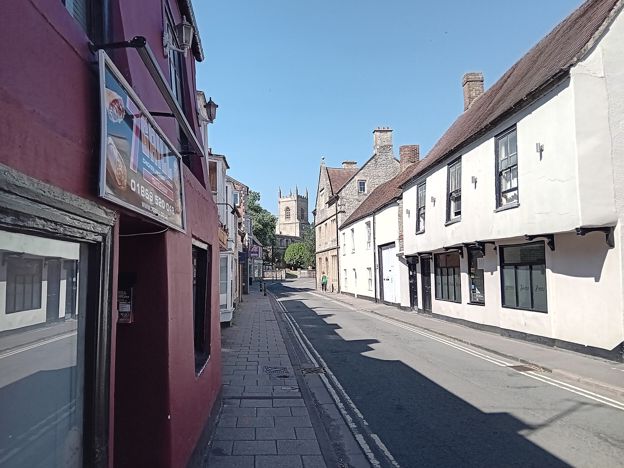
Bicester's history: from the priory and the market to the garden town
Story · History · 10 minute read
Bicester grew up by a ford over the Bure Brook, gained an Augustinian priory in the 1180s and a market in 1239 that still runs every Friday. It was a hunting town, then a garrison town, and since 2014 a garden town. The story from the record, and what of it you can still see.
-
Elmsbrook and the Bicester eco-town: the story of North West Bicester
Story · History · 26 minute read
Elmsbrook is the first phase of North West Bicester, the only one of Labour's eco-towns built to the 2009 standards. This is the full story: the programme and why it failed elsewhere, the rules, who built it, what monitoring found, the later phases, and how to see it.
-
RAF Bicester: the bomber station that kept its 1920s shape
Story · History · 6 minute read
RAF Bicester opened in 1918, was rebuilt as a bomber station from 1925, trained bomber crews through the Second World War and ended as stores, gliders and an American hospital. Its hangars and bomb stores are now protected, and the site is Bicester Motion.