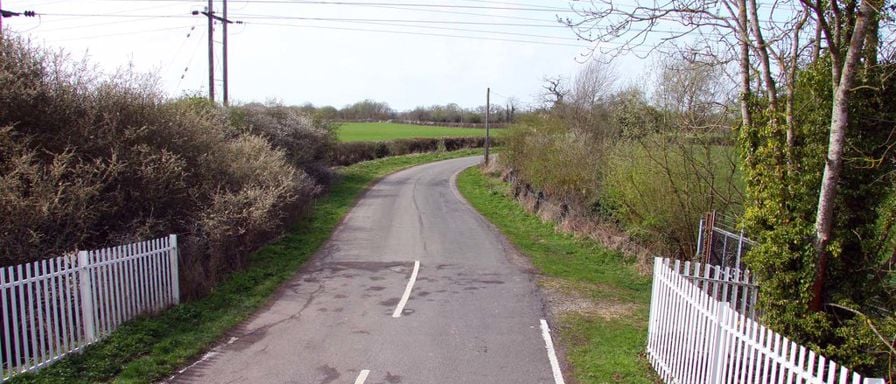
Steve Daniels, CC BY-SA 2.0, via Geograph
Alchester Roman Town, near Bicester
The buried site of Oxfordshire's largest Roman town, south-west of Bicester, and of the legionary fortress before it, dated by its gate timbers to AD 44/45. A scheduled monument under private farmland, with nothing standing above ground.
Monument
BicesterAlchester was the largest Roman town in Oxfordshire, and before the town there was a legionary fortress, dated by its gate timbers to AD 44/45, one of the earliest Roman bases in Britain. It lies under farmland about a mile and a half south-west of Bicester, a scheduled monument with nothing standing above ground.
The story of Alchester
The site has been known since William Camden wrote of it in 1607. It sits where the Roman road from the south meets Akeman Street, the road running east to west, and the later town was roughly square, about 320 metres a side, inside a rampart and ditch. Antiquaries thought it one of the earliest Roman foundations in Britain, digs in the early twentieth century supported them, and the excavations of 1996 to 2004 put a date on it.
The fortress
From 1996 to 2004 Eberhard Sauer directed excavations here with the permission of the landowners. The University of Edinburgh's account of the project says the timber gate posts date to AD 44/45, the immediate aftermath of the invasion of AD 43, and that Alchester is now considered a legionary fortress, most likely of the Second Augustan Legion. The fortress and a large annexe covered 14 to 15 hectares, much of the area of the later town, and sharpened stakes at the approach to a timber gate suggest the army expected trouble.
In 2003 the dig found the tombstone of a veteran of the Second Legion, a man from northern Italy. Veterans usually settled near their legion's base, so the stone helps say who was garrisoned here, and the university calls it the first known biography of anyone who lived and died in the Oxfordshire area before the Middle Ages.
About 500 metres to the south-east lies a second scheduled site, protected in 2017: a buried Roman parade ground of about 1.9 hectares inside a U-shaped ditch, with a straight access road from the north and part of a temporary marching camp that probably came before the fortress. Historic England calls the parade ground a rare kind of site, believed by some to be one of the earliest of its kind in the Roman Empire, and notes its likely association with Vespasian.
The town
The town grew over the fortress. The Historic Oxfordshire page records first-century pottery and, as the latest finds, fourth-century coins of the emperors Honorius and Arcadius dug up in the 1920s. In 1766 Francis Penrose of Chesterton uncovered walls, mosaic cubes and a heated floor at a spot called the Castle, later read as a bath house, and in the nineteenth century its stone was carted off for road building. When the railway was built in 1848, workmen found a cemetery of 28 skeletons just outside the south-east corner of the town. Our story of Alchester and the Romans tells the whole of it.
What to look for
Little shows. Even in the seventeenth century there were only lumps and bumps. The northern field has been ploughed for centuries; the southern one, not ploughed since about 1800, keeps its ridge and furrow. What you can see is the setting: the flat land where two Roman roads met, and Wendlebury Road, which OpenStreetMap shows following the line of the Roman road south past the site.
Visiting
Alchester is private farmland, and we found no public footpath across the scheduled area and nothing on site to explain it. See it from Wendlebury Road, which runs along its edge, and park only where it is safe and legal; there is no car park. The fields are worth a look if you are passing and have read the story first. They are not worth a special trip on their own.
Getting there
The site is between Bicester and Wendlebury, off Wendlebury Road and close to the railway to Oxford. From Bicester town centre it is about a mile and a half by our measurement on the map. Getting to Bicester has the trains and buses into town.
Nearby
Bicester's own story begins after Alchester's ends: St Edburg's Church may have eleventh-century arches, and the Market Square was granted its market in 1239. West along the valley, St Mary's Church, Kirtlington has Norman arches and late medieval wall paintings.
Walks past Alchester Roman Town, near Bicester
-
Bicester Historic Town Trail
Walk · Starts in Bicester · 1 hr, 15 mins · Circular
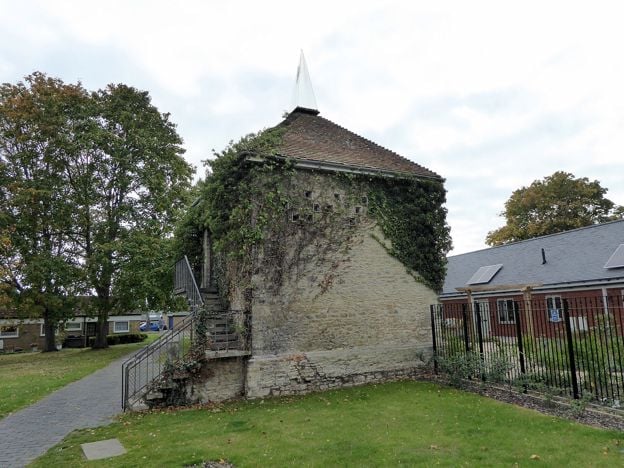
The Bicester Historic Town Trail is a 1.9-mile (3km) easy circular walk round the old town, about an hour and a quarter with stops. It links 25 buildings on the council's leaflet, from the priory's dovecote and St Edburg's church to Market Square, Sheep Street and Garth Park.
Stay and eat near Alchester Roman Town, near Bicester
-
Holiday Inn Express Bicester
Hotel · Bicester
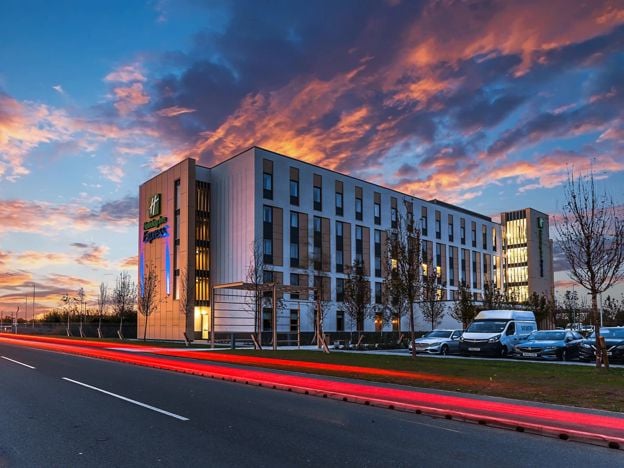
A Holiday Inn Express on Bicester Gateway Business Park at the southern edge of Bicester, near Bicester Village and the M40, with 149 rooms, breakfast in the rate, dinner every evening, pets welcome and electric-car chargers.
Dog-friendly · EV charging
Verified Nov 2026
-
Cecconi's, Bicester Village
Restaurants · Bicester
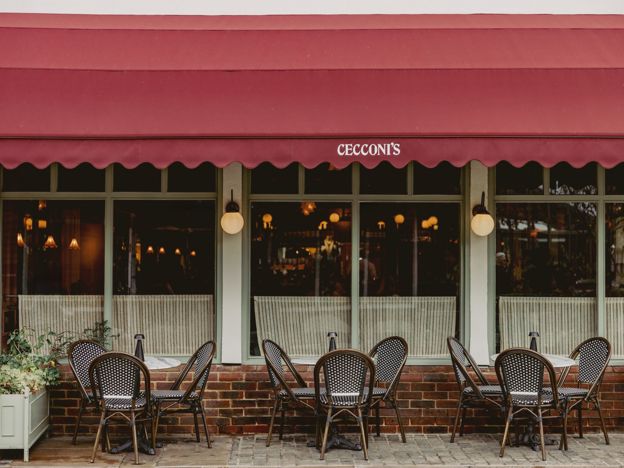
Cecconi's at Bicester Village: a Northern Italian restaurant open for breakfast, lunch and dinner, with fresh pasta, wood-fired pizza and cicchetti, bookable for breakfast and dinner, walk-in only at lunch.
Car-free · Rainy days
Verified Nov 2026
-
The Double Red Duke, Bicester Village
Restaurants · Bicester
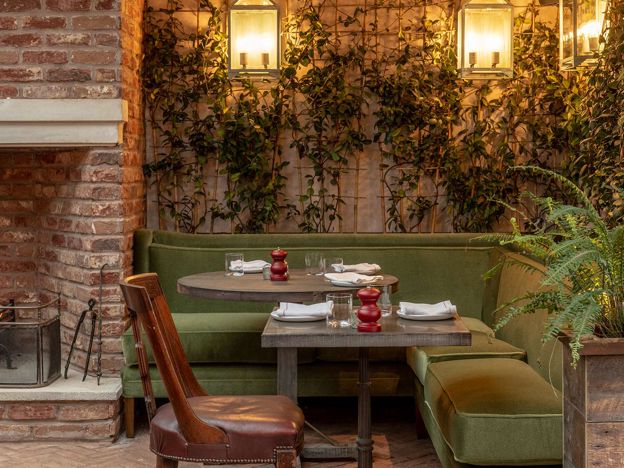
The Bicester Village restaurant of the Double Red Duke at Clanfield: a British grill open all day, with breakfast from 9am, pies, steaks and Sunday roasts, and tables bookable online from 9am to 4pm.
Family-friendly · Car-free · Rainy days
Verified Nov 2026
Stories about Alchester Roman Town, near Bicester
-
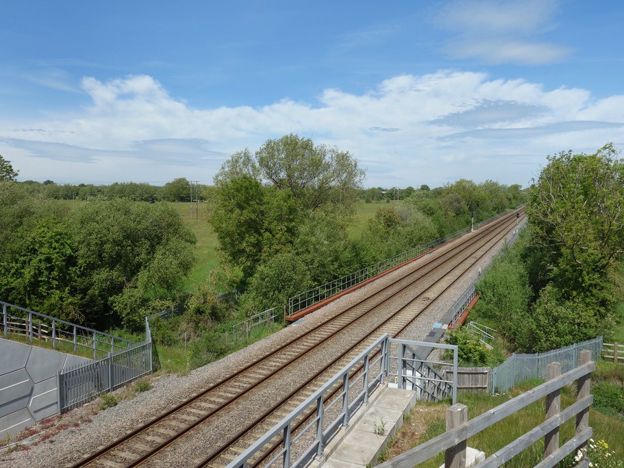
Alchester: the Roman fortress and town under the fields south of Bicester
Story · History · 5 minute read
Just south of Bicester, under grass and plough, lies Alchester: a Roman army base dated by its gate posts to AD 44, then a walled town. The dig of 1996 to 2004, the veteran's tombstone found in its wall, and what there is to see now.
-
Bicester's history: from the priory and the market to the garden town
Story · History · 10 minute read
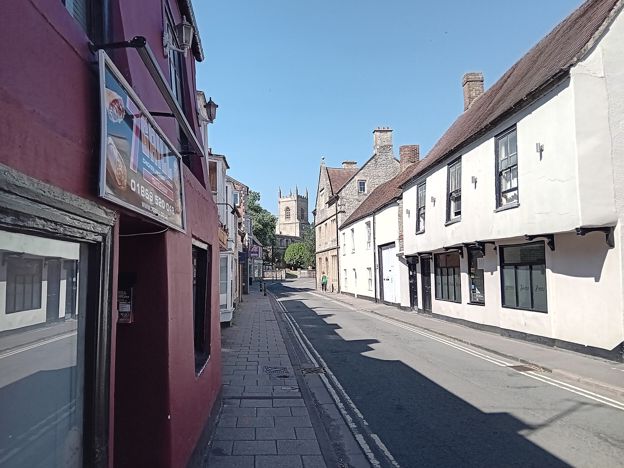
Bicester grew up by a ford over the Bure Brook, gained an Augustinian priory in the 1180s and a market in 1239 that still runs every Friday. It was a hunting town, then a garrison town, and since 2014 a garden town. The story from the record, and what of it you can still see.
More sights to see
-
St Edburg's Church, Bicester
Sight · Church · Bicester
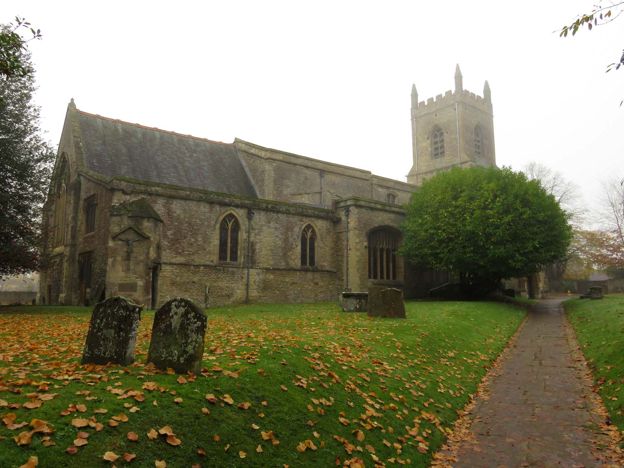
Bicester's Grade I parish church, grown from a Norman church with a central tower into the big Perpendicular church of today. Inside are brasses from about 1500, Georgian monuments by Scheemakers, Wilton and Westmacott, and a Morris & Co. window of 1866.
-
Bicester Market Square
Sight · Historic building · Bicester
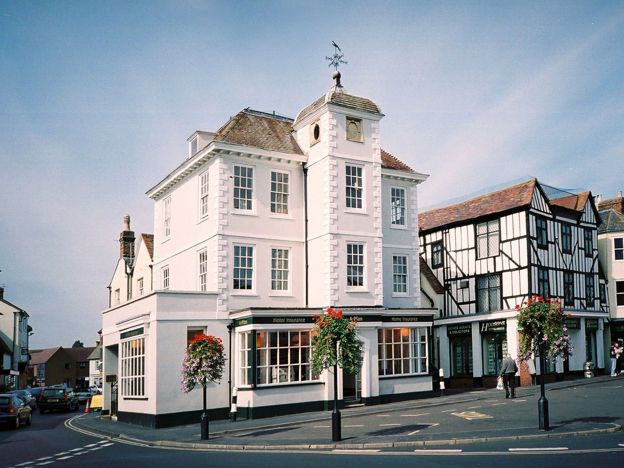
The old market place at the centre of Bicester, where the town's market was granted in 1239, lined with listed houses such as No. 47 of 1698 with its oval-windowed tower. The Friday market is on Sheep Street beside it, and the square is due to be remade.
-
St Mary's Church, Kirtlington
Sight · Church · Kirtlington
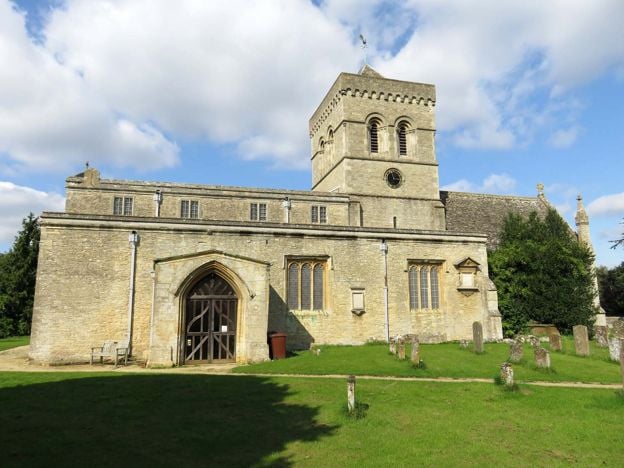
Kirtlington's Grade II* church, with Norman arches under a Victorian tower that replaced one pulled down in 1770, late medieval paintings of St George and St Christopher, and the chapel of the Dashwoods of Kirtlington Park. Normally open in daylight.