Lark Rise: Flora Thompson's Juniper Hill and the real Candleford
Flora Thompson's Lark Rise is a real hamlet in the north-east corner of Oxfordshire, and her Candleford Green a real village with a real post office. Here is what the record says about the places behind the books, and how to see them without trespassing on anyone's privacy.
· 7 minute read
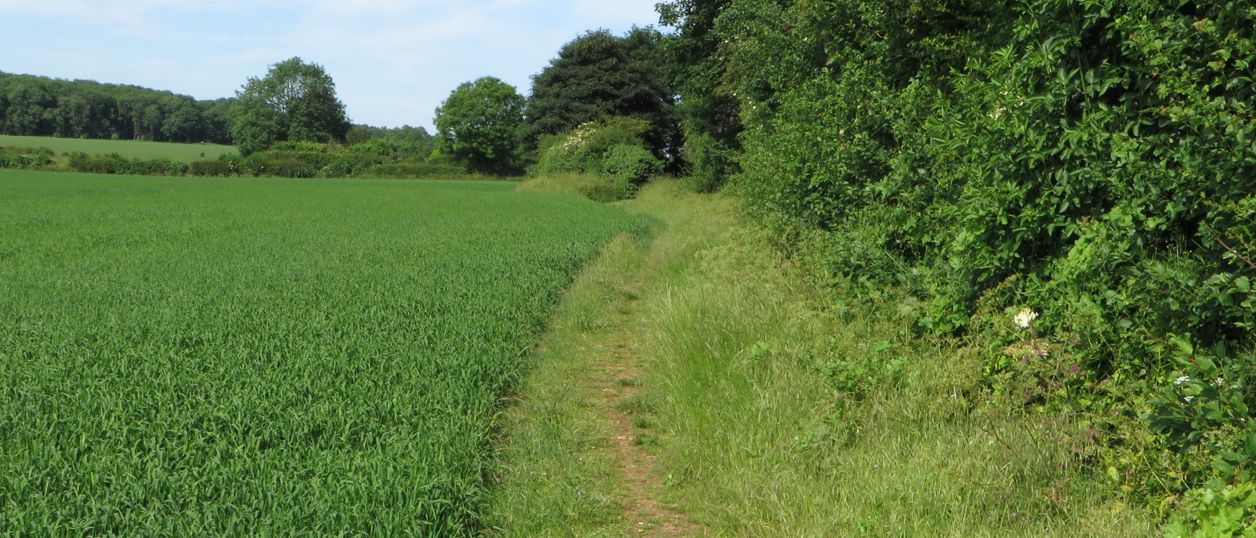
In the north-west corner of Cottisford parish, beside the old road from Oxford to Brackley, is a hamlet called Juniper Hill. Flora Thompson was born there in 1876, and as 'Lark Rise' it became one of the best-known places in English country writing. Her trilogy, Lark Rise to Candleford, follows a girl called Laura from the hamlet to the school at 'Fordlow' and on to the post office at 'Candleford Green'. All three places are real and close together, in the country six miles or so north of Bicester. None of them is a visitor attraction, and the hamlet is private houses, but you can still trace the books on the ground with care.
A hamlet on the heath
Juniper Hill was a newcomer among the villages. The Victoria County History (opens in a new tab) traces it to 1754, when the parish built two cottages on the heath for the poor at a cost of £28 7s 6d, raised by a rate on the landholders. The name came from the common juniper that once grew on the heath. The hamlet grew mostly after the open fields were inclosed in 1854, and by the end of the nineteenth century there were about 30 cottages, most of them on land ceded as squatters' rights.
The life the books describe was hard. Early in the nineteenth century the poor had kept cattle on the heath and cut furze and brushwood there, until, in the county history's words, the farmers 'usurped and sold the privilege'. The parish's population peaked at 327 in 1871, then fell to 240 in 1881 and to 169 in 1931, most of them by then at Juniper Hill. The hamlet's inn, the Fox, opened between 1852 and 1864 and appears in Lark Rise as the Waggon and Horses. A small group of Methodists met in a cottage there in the 1880s, and the county history takes the book's word for that, as it does for the farmer and the farm economy at Manor Farm in Cottisford.
Flora Timms of Juniper Hill
Flora Jane Timms was born at Juniper Hill on 5 December 1876, according to the chronology kept by her biographer John Owen Smith (opens in a new tab), and the county history records that her father was a stonemason. (The county history gives 1877; her memorial in Cottisford church and the chronology both say 1876.) From 1880 she went to the village school at Cottisford, a one-room National school built in 1856 with Eton College's help for 50 children. Eton College was lord of the manor, and Cottisford is the 'Fordlow' of the books.
At 14, in 1891, she went to work at the post office in Fringford, about three miles north-east of Bicester, and stayed until 1897. From there her life moved south. She left for a post office in Grayshott in Hampshire in 1898, married John Thompson at Twickenham in January 1903, and lived in Bournemouth, then from 1916 in Liphook, then Devon. She was writing all the while, poems and short pieces at first, and in her sixties she turned her childhood into the three books.
The books
Oxford University Press published Lark Rise in March 1939, Over to Candleford in 1941 and Candleford Green in January 1943, and the three together as Lark Rise to Candleford in April 1945. She died on 21 May 1947, aged 70. The county history, writing a dozen years later, called her books 'important social documents' for life at Juniper Hill and Cottisford in the nineteenth century. The Fringford trail leaflet makes the same point: she caught the life of a village just before the farming depression of the 1870s and 1880s, and before the great changes in health, housing and education.
They are memoir told as fiction, and the names are changed. Juniper Hill is Lark Rise, Cottisford is Fordlow and Fringford is Candleford Green. Candleford itself, the market town of the second book, is not one place: the Fringford village trail leaflet calls it a combination of Banbury, Bicester and Buckingham. The BBC's television series, first shown in 2008, moved Laura's post office job into Candleford itself, which the books do not.
Candleford Green: Fringford
Fringford is the easiest of the three to see, because the parish has published a walk round it. The Fringford Historic Village Trail, a leaflet written by Martin Greenwood for the parish council and published by Cherwell District Council, is a 1.25-mile (2km) loop of about an hour, mostly on roads, with one quarter-mile stretch that can be wet and muddy in winter. It passes the Old Forge on Main Street, a mid-eighteenth-century building that was the forge and later also the sub-post office where Flora Thompson worked from 1891 to 1897. The leaflet asks walkers to remember that most of the buildings are private homes and to look from a polite distance, and that goes for the Old Forge too.
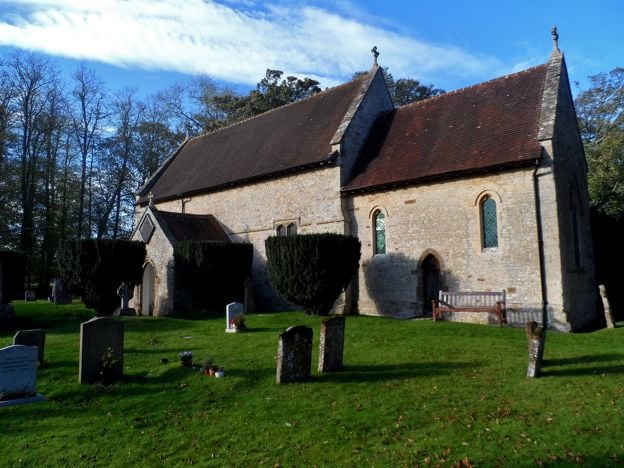
The trail also takes in the green, the church of St Michael and All Angels, which John Owen Smith photographed with a plaque to her, and the cricket ground. The ground was given to the village in 1901, after she had left, but she wrote of the rector putting village cricket on a proper footing in the 1890s. The county history confirms her time in the village: in the 1890s she was an assistant in the post office, and she described her life there in Candleford Green.
Lark Rise and Fordlow today
Juniper Hill is a cluster of private houses, and there is nothing to visit as such. Her family's house carries a plaque, which John Owen Smith photographed, but please look from the road and leave the residents in peace.
Cottisford church, where she went as a child, has a memorial plaque to her, and the school she went to was built on the hill east of the village in 1856. If you want a meal nearby, the Muddy Duck at Hethe is in the next village to the south-east; when we checked in November 2026 it opened Thursday to Sunday only, so check its days before you go. Brackley is the nearest town to the north, and Bicester to the south, where our history of the town picks up the market town that was part of her Candleford. Juniper Hill, Cottisford and Fringford are a few miles apart by country lanes, close enough to see in a morning.
Mentioned in this story
The places, sights and walks in this story, each with a page of its own: what it is, when to go and how to get there.
Places to stay near Bicester
-
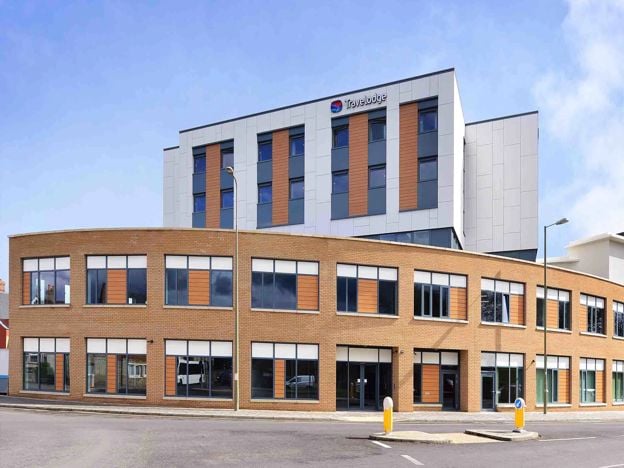
Travelodge Bicester
Hotel · Bicester
A budget chain hotel on Pioneer Square in the middle of Bicester, under half a mile from Bicester North station and within walking distance of Bicester Village, with family, accessible and pet-friendly rooms but no car park of its own.
Dog-friendly · Car-free
Verified Nov 2026
-
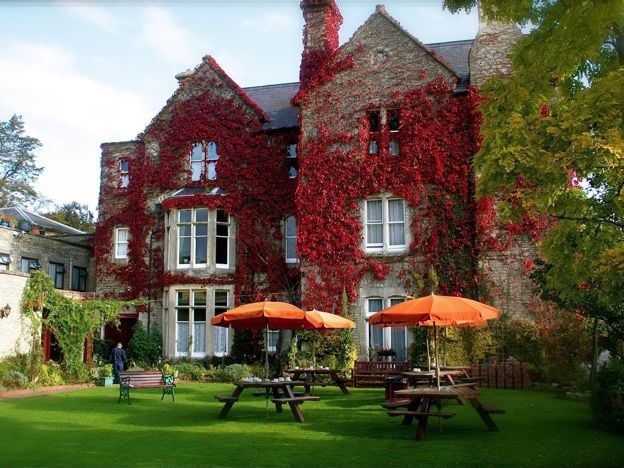
The Littlebury Hotel, Bicester
Hotel · Bicester
A family-run hotel on Kings End in Bicester since 1959, with 35 en-suite rooms, breakfast included, a lounge bar, gardens and a large car park, within walking distance of the town centre and Bicester Village.
Family-friendly · Wedding venues
Verified Nov 2026
-
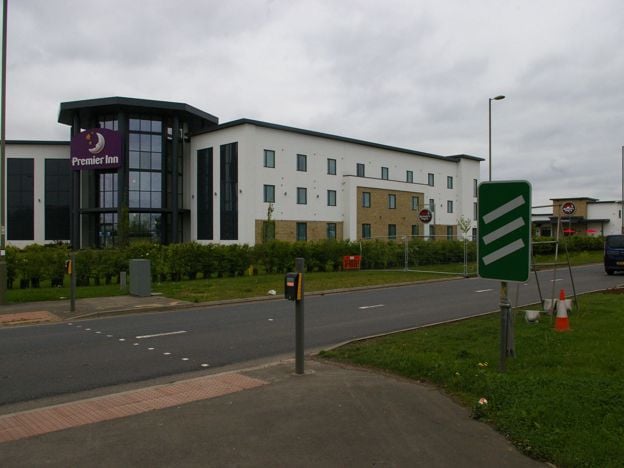
Premier Inn Bicester
Hotel · Bicester
A Premier Inn on Oxford Road, on the A41 at the southern edge of Bicester, half a mile from Bicester Village by the chain's measure, with family, accessible and Premier Plus rooms, a restaurant and a paid car park.
Family-friendly
Verified Nov 2026
Read next
-
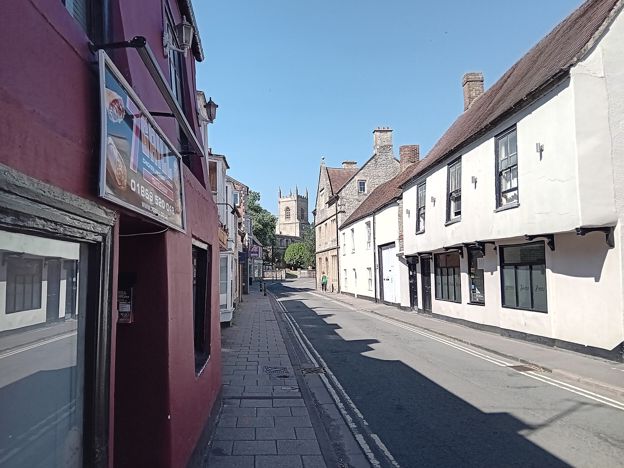
Bicester's history: from the priory and the market to the garden town
Story · History · 10 minute read
Bicester grew up by a ford over the Bure Brook, gained an Augustinian priory in the 1180s and a market in 1239 that still runs every Friday. It was a hunting town, then a garrison town, and since 2014 a garden town. The story from the record, and what of it you can still see.
-
Alchester: the Roman fortress and town under the fields south of Bicester
Story · History · 5 minute read
Just south of Bicester, under grass and plough, lies Alchester: a Roman army base dated by its gate posts to AD 44, then a walled town. The dig of 1996 to 2004, the veteran's tombstone found in its wall, and what there is to see now.
-
Bicester with children: days out for families
Story · Guides · 6 minute read
Bicester with children: the play area and skate park at Garth Park, newts at Bure Park, a climbing centre, a pool and a cinema in the town, Scramble days at Bicester Heritage, the Cold War airbase at Heyford Park and boats at Lower Heyford, with ages, prices and what to skip.