The Bicester Military Railway and the army depot it served
South east of Bicester, behind miles of fence, the army built Britain's largest military railway to feed a depot of more than 12 square miles. In 1944 it moved nearly 300,000 wagons for the invasion of Europe.
· 4 minute read
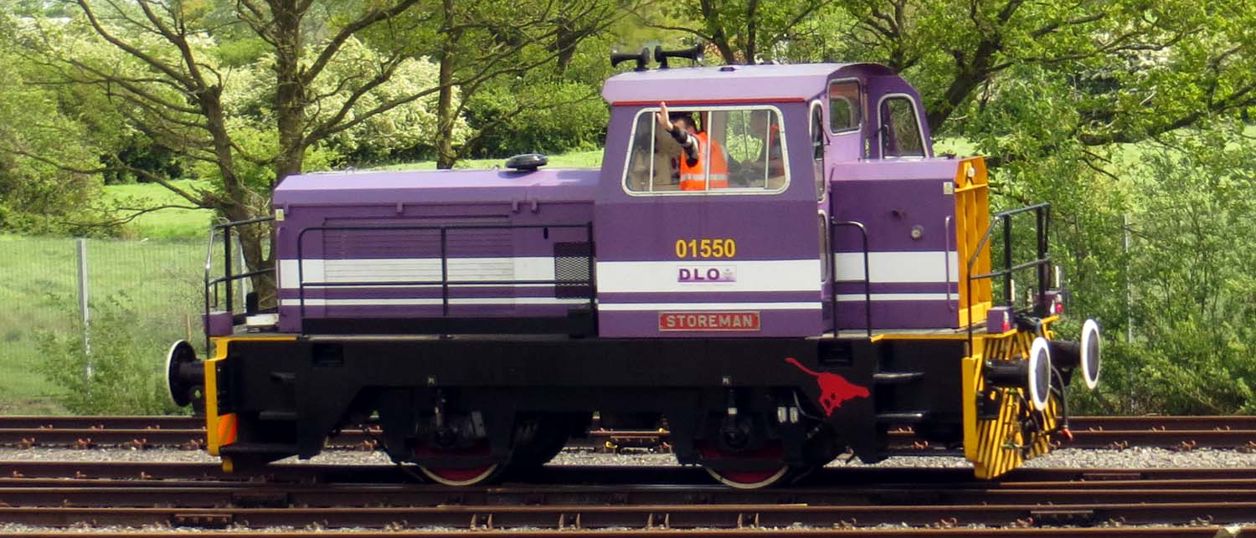
South east of Bicester, around the villages of Ambrosden and Arncott, lies the old Central Ordnance Depot, built in the Second World War as the main supply base for the British Army, and its own railway, the Bicester Military Railway. Buckinghamshire's historic environment record calls it Britain's largest military railway system.
Why here
The depot sits round two low hills, Graven Hill and Arncott Hill, three miles south east of the town. The Victoria County History says the War Office bought land from Manor, Langford and Wretchwick farms, and dates the start to 1940 in one place and 1941 in another. The local history society says building began in 1941 and the headquarters and first storehouse opened in September 1942. The stores were spread out on purpose, to limit what conventional bombing could do, and the railway was what tied the scattered sheds together.
Building the line
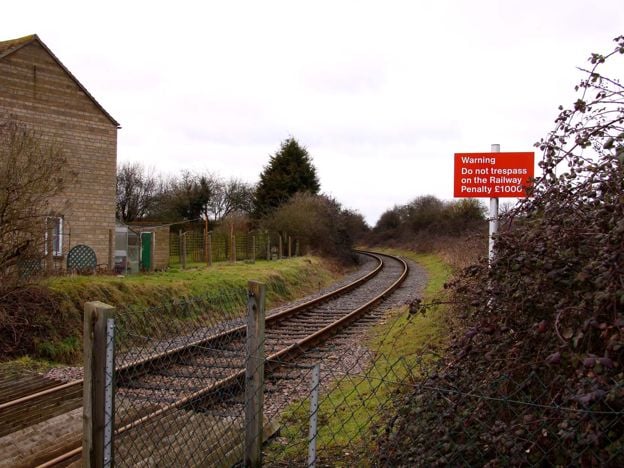
The railway was surveyed in 1941 and ready for building in August 1942, according to the Buckinghamshire record (opens in a new tab), which draws on Historic England's national record and a survey of 2011 for the Ministry of Defence. It was fed from the Oxford to Bletchley line, which had reached Bicester in 1850. When the depot was finished in 1943 it covered over 12 square miles, with nearly 50 miles of railway track.
The depot also became an important supply base for American forces under Operation Bolero. At its peak in 1944 more than 20,000 people worked there, soldiers, women of the Auxiliary Territorial Service and civilians together.
The year of D-Day
The figures for 1944 survive. Up to 17 steam locomotives worked round the clock, receiving, sorting, delivering and despatching wagons. That year the railway handled 291,554 wagons in all: 78,623 came in through the exchange sidings with the main line, 77,896 went out, and 135,034 moves were made inside the depot. The record for the depot (opens in a new tab) calls it the outstanding example in Britain of a wartime bulk storage depot.
A garrison town
The depot did not close with the war. In 1950, the county history says, the War Office decided to make Bicester a peacetime garrison town, and barracks were built. Over 600 council houses went up in the town between 1947 and 1956, 300 of them for civilians working at the depot, and in 1948 a camp for 1,000 European Voluntary Workers was set up. St George's Barracks was finished in 1958.
The railway outlived several attempts to save money on it. In January 1977 a minister told the Commons that a survey of 1968 had suggested replacing some or all of the lines with roads, and that the Army had found any big change unacceptable for military reasons. Maintaining the track had cost the Property Services Agency £103,000 in 1975 to 1976; the £48,000 spent in 1966 to 1967 was, the minister said, about £142,000 at 1975 to 1976 prices. A joint review in 1974 had found the military need for the railway substantially unaltered, so the lines stayed. The Buckinghamshire record calls the railway the depot's primary mode of transport.
The Banburyshire newsletter
Events, new places and the best of the season, about once a month. Unsubscribe at any time.
Bicester's role grew as other depots shut. In 1961 the work of Didcot and Branston moved here, and between 1980 and 1982 that of Chilwell and Ruddington near Nottingham. In April 1999 the depot was renamed the Defence Storage and Distribution Centre. In 2003 it was supplying the British force in the Gulf. The BBC reported more than a million ration packs waiting in one warehouse that year, and two and a half million items leaving the base in the first two months, many of them in containers sent by rail to the coast or to RAF Brize Norton. The local history society gives the railway then as over 41 miles of track.
Graven Hill and after
After 2011 the Ministry of Defence sold parts of the Graven Hill and Arncott sites and kept others. In March 2014 it sold 187 hectares at Graven Hill to Cherwell District Council for a self-build community of up to 1,900 homes, with the army's warehousing there expected to run until 2019. Part of the Arncott land became a prison. The Buckinghamshire record notes that the section of railway over the county boundary, in Boarstall parish, was taken up between 2011 and 2015.
The railway and the depot that remain are military land, with no public access. For the town the depot helped to grow, read our history of Bicester, and for the town's other great wartime site, RAF Bicester. The newest chapter of Bicester's growth, on the opposite side of town, is Elmsbrook.
Places to stay near Bicester
-
Travelodge Bicester
Hotel · Bicester
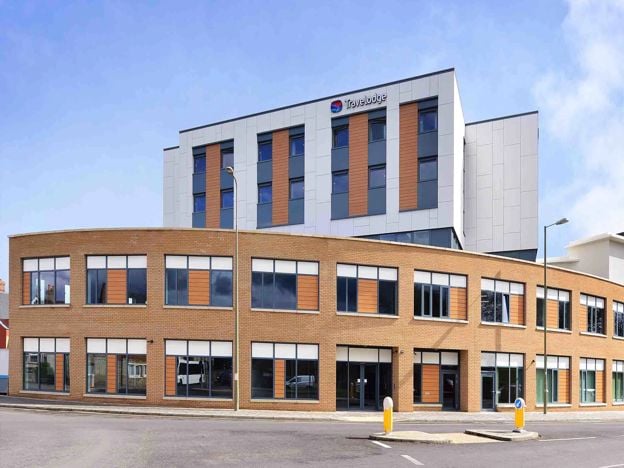
A budget chain hotel on Pioneer Square in the middle of Bicester, under half a mile from Bicester North station and within walking distance of Bicester Village, with family, accessible and pet-friendly rooms but no car park of its own.
Dog-friendly · Car-free
Verified Nov 2026
-
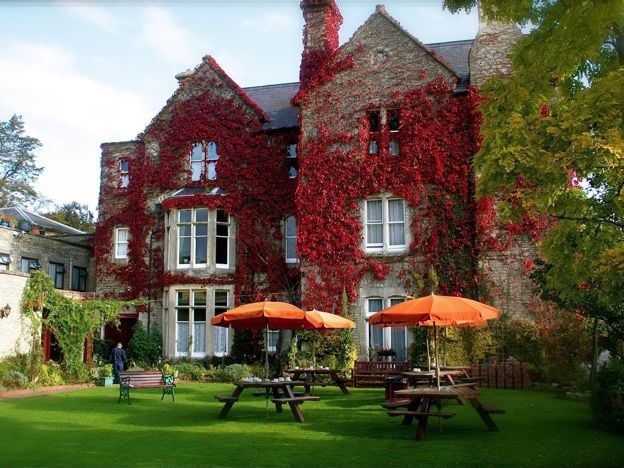
The Littlebury Hotel, Bicester
Hotel · Bicester
A family-run hotel on Kings End in Bicester since 1959, with 35 en-suite rooms, breakfast included, a lounge bar, gardens and a large car park, within walking distance of the town centre and Bicester Village.
Family-friendly · Wedding venues
Verified Nov 2026
-
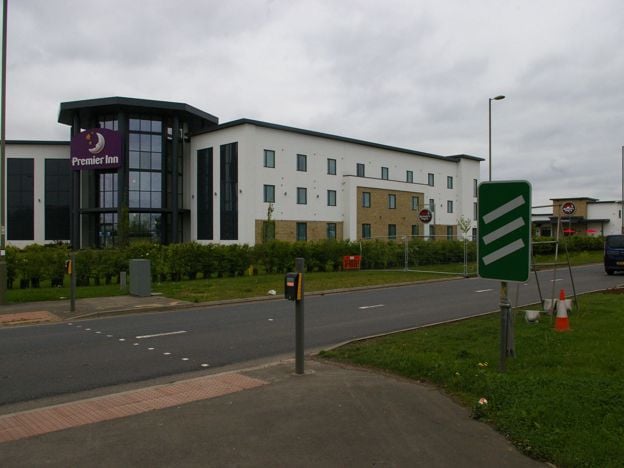
Premier Inn Bicester
Hotel · Bicester
A Premier Inn on Oxford Road, on the A41 at the southern edge of Bicester, half a mile from Bicester Village by the chain's measure, with family, accessible and Premier Plus rooms, a restaurant and a paid car park.
Family-friendly
Verified Nov 2026
Read next
-
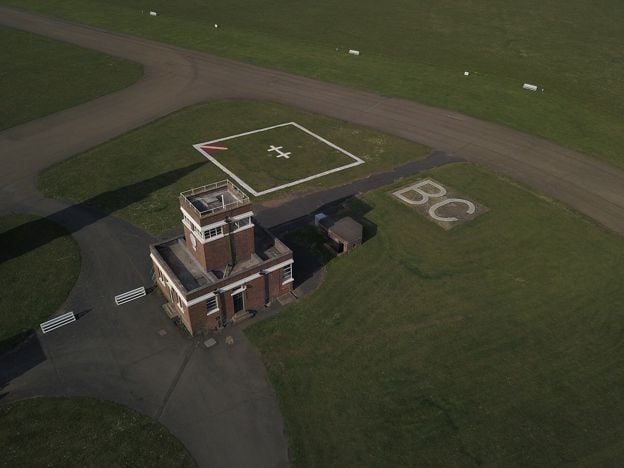
RAF Bicester: the bomber station that kept its 1920s shape
Story · History · 6 minute read
RAF Bicester opened in 1918, was rebuilt as a bomber station from 1925, trained bomber crews through the Second World War and ended as stores, gliders and an American hospital. Its hangars and bomb stores are now protected, and the site is Bicester Motion.
-
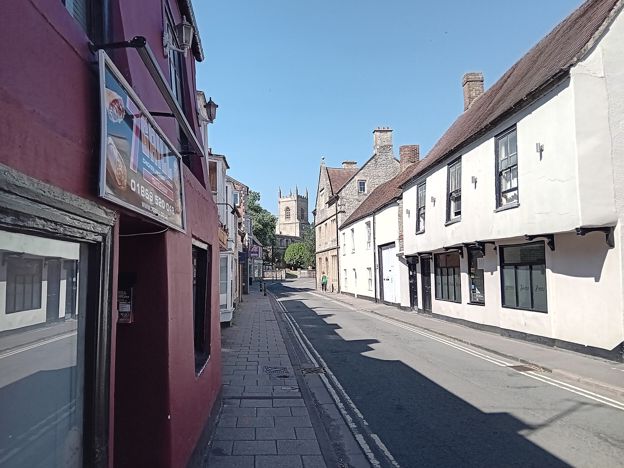
Bicester's history: from the priory and the market to the garden town
Story · History · 10 minute read
Bicester grew up by a ford over the Bure Brook, gained an Augustinian priory in the 1180s and a market in 1239 that still runs every Friday. It was a hunting town, then a garrison town, and since 2014 a garden town. The story from the record, and what of it you can still see.
-
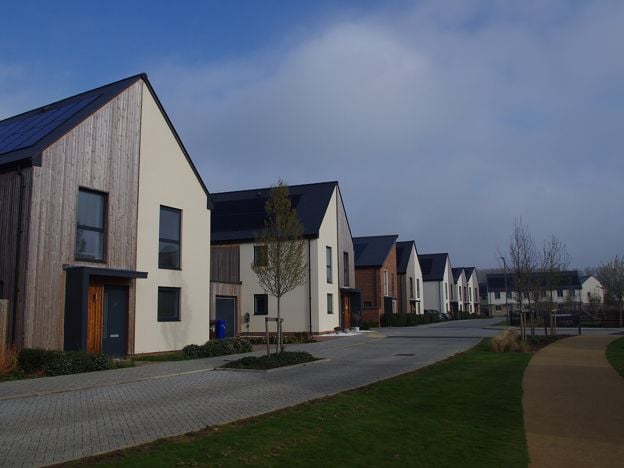
Elmsbrook and the Bicester eco-town: the story of North West Bicester
Story · History · 26 minute read
Elmsbrook is the first phase of North West Bicester, the only one of Labour's eco-towns built to the 2009 standards. This is the full story: the programme and why it failed elsewhere, the rules, who built it, what monitoring found, the later phases, and how to see it.