Alchester: the Roman fortress and town under the fields south of Bicester
A year after the Roman invasion, soldiers cut oak gate posts for a fortress on the clay south of Bicester. Their tree rings are the earliest dated timbers from Roman Britain, and the base may have been run by the future emperor Vespasian.
· 5 minute read
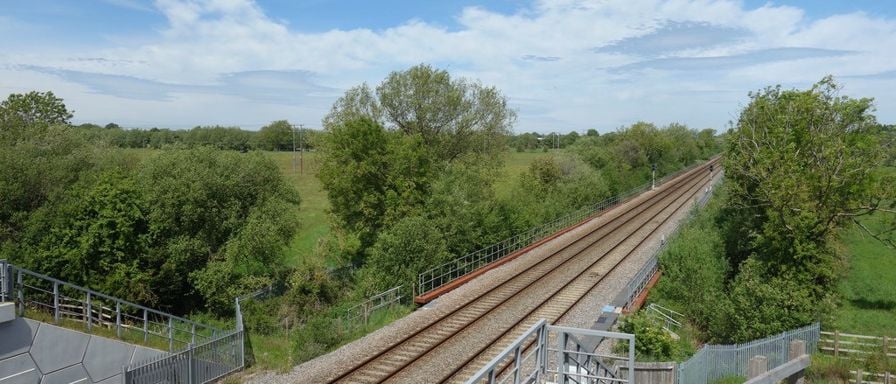
Alchester is a Roman town with nothing standing. It lies in fields on the edge of Wendlebury parish, just south of Bicester and about ten miles north of Oxford, where Akeman Street met the road north to Towcester. For centuries antiquaries knew it as a town. Excavations between 1996 and 2004 showed that the town grew out of something older and more important: one of the first bases the Roman army built after it landed in Britain in AD 43.
Gate posts from AD 44
The dig was led by Eberhard Sauer, now at the University of Edinburgh, with volunteers working first under the Oxford University Archaeological Society and later under the universities of Leicester, Oxford and Edinburgh. In 2000 the team lifted oak posts from a timber gateway. Their tree rings showed the trees were felled in the autumn of AD 44 or the spring of AD 45, and the university's project page (opens in a new tab) calls them Britain's earliest dated Roman timbers.
The gate belonged to a fortress which, with a large annexe beside it, covered 14 to 15 hectares, and which probably lay under much of the later town. Sharpened stakes were set in the approaches to the gate, which Edinburgh reads as the work of an army that expected trouble. Inside the annexe the Roman Research Trust (opens in a new tab), which helped pay for the dig, records a timber courtyard building more than 45m wide and 55m long.
Whose base?
The excavators think the fortress was probably held by the Second Augustan Legion. Its commander in the invasion years was Vespasian, who became emperor about 25 years later and ruled from AD 69 to 79. Until Alchester, no base of the invasion period was known in central southern England.
Daily life is unusually clear. The soldiers ate farm animals of local breeds, Iron Age coins circulated in the base, which suggests trade with the people around it, and flowing water was brought in as early as the AD 40s. Coriander and millet turn up here for the first time in Britain.
Half a kilometre to the south east, aerial photographs and trial trenches found a parade ground of about 1.9 hectares, with the road that led to it and part of a marching camp. Historic England scheduled them on 9 March 2017. Its list entry says the camp probably predates the fortress, links the site with Vespasian, and notes that some believe the parade ground one of the earliest known in the Roman Empire.
The veteran in the wall
On 27 August 2003 the team, digging at the town wall near the west gate, found the first pieces of an inscription. Sauer described in Current Archaeology how 19 more fragments came out over the next two and a half weeks, until they had almost the whole stone. The Roman Inscriptions of Britain (opens in a new tab) records it as a gabled tombstone of oolitic limestone, broken up and reused in the foundations of the wall just north of the gate.
It commemorates Lucius Valerius Geminus, son of Lucius, of the Pollian voting tribe, from Forum Germanorum, probably San Lorenzo di Caraglio in north west Italy. He was a veteran of the Second Augustan Legion, died aged 50, and his heir set up the stone as his will required. Edinburgh calls it the first known biography of anyone who lived and died in what is now Oxfordshire before the Middle Ages.
The date is argued over. Sauer first read the stone as early. The Roman Inscriptions of Britain dates it to AD 60 to 80 from its wording and context, and thinks it unlikely to be earlier. Either way, a veteran of that legion retiring here supports the idea that it had been stationed at Alchester. The stone belongs to the Oxfordshire Museums Service, and in 2007 it was in store at Standlake awaiting conservation, intended for the Oxfordshire Museum in Woodstock.
The Banburyshire newsletter
Events, new places and the best of the season, about once a month. Unsubscribe at any time.
From fortress to town
The Bicester Local History Society's summary of a 2022 talk by Sauer says the army left in the late 50s, and no later than AD 60. Veterans, their families and the traders who had followed the soldiers stayed on, and the base became a town. Its stone wall came much later: Sauer says it was built in haste, probably not before the late third century. Coins show people there until at least the end of the fourth century, and the latest found in the 1920s are of the emperors Honorius and Arcadius.
Four centuries of digging
The site was first noticed in print by William Camden in 1607. In 1766 the landowner, Mr Penrose, uncovered walls, doorways, mosaic cubes and a heated floor, later taken for a bath house; the Victoria County History names him as Francis Penrose of Chesterton. Railway building in 1848 cut into a cemetery of 28 burials outside the south east corner. Percy Manning and John Myers reported walls in 1892, the east gate was dug in 1926 and 1927, and a survey of plough damage followed in 1974. The Ashmolean's history of the site says an enclosure award of 1800 split it into two fields, and that the southern one has not been ploughed since.
Visiting
The town is a scheduled monument, but there are no walls to see. The southern field keeps the ridge and furrow of medieval ploughing over the Roman streets, and everything else is under the soil. The fields are farmland, and Historic England notes that most scheduled sites are not open to the public, so look from a public road or right of way and do not dig or use a metal detector. Our guide to the Alchester site has the practical details, and our history of Bicester tells the story of the market town that came after.
Mentioned in this story
The places, sights and walks in this story, each with a page of its own: what it is, when to go and how to get there.
-
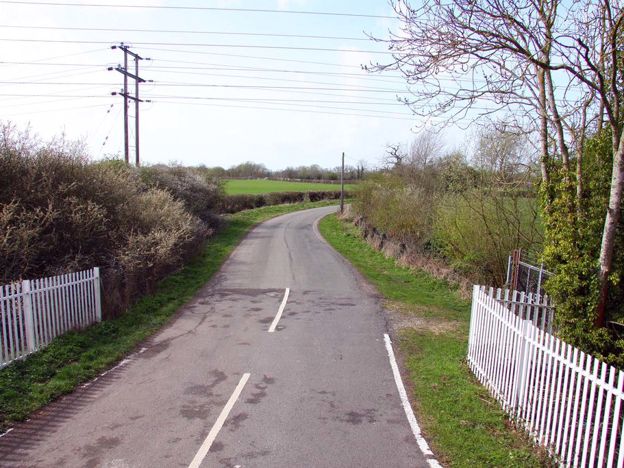
Alchester Roman Town, near Bicester
Sight · Monument · Bicester
Places to stay near Bicester
-

Travelodge Bicester
Hotel · Bicester
A budget chain hotel on Pioneer Square in the middle of Bicester, under half a mile from Bicester North station and within walking distance of Bicester Village, with family, accessible and pet-friendly rooms but no car park of its own.
Dog-friendly · Car-free
Verified Nov 2026
-
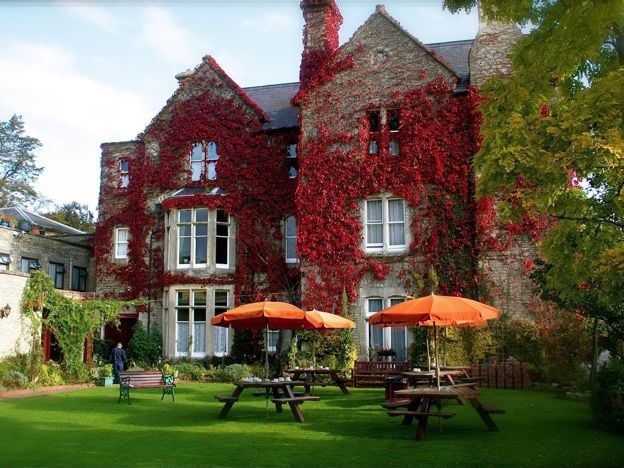
The Littlebury Hotel, Bicester
Hotel · Bicester
A family-run hotel on Kings End in Bicester since 1959, with 35 en-suite rooms, breakfast included, a lounge bar, gardens and a large car park, within walking distance of the town centre and Bicester Village.
Family-friendly · Wedding venues
Verified Nov 2026
-
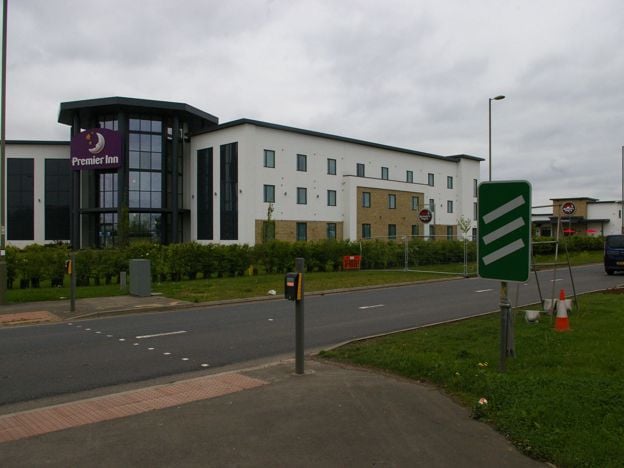
Premier Inn Bicester
Hotel · Bicester
A Premier Inn on Oxford Road, on the A41 at the southern edge of Bicester, half a mile from Bicester Village by the chain's measure, with family, accessible and Premier Plus rooms, a restaurant and a paid car park.
Family-friendly
Verified Nov 2026
Read next
-
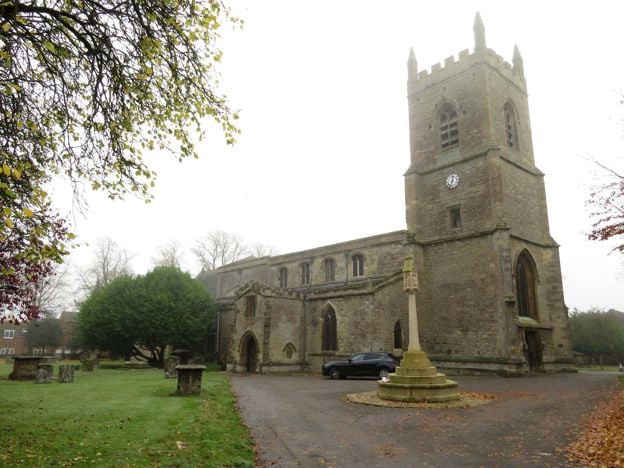
St Edburg of Bicester: the saint, the priory and the shrine that moved
Story · History · 5 minute read
Bicester's parish church and its lost priory were both dedicated to St Edburg, an Anglo-Saxon saint nobody can quite identify. Her marble shrine was carried off at the Dissolution and still stands in a church west of Oxford. What is known, what is guessed, and where to see it.
-
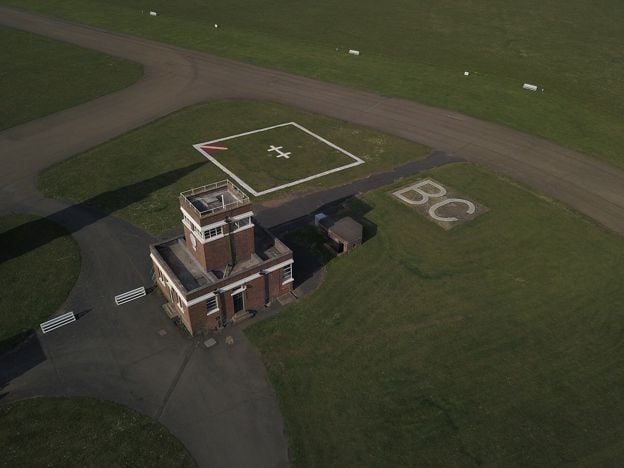
RAF Bicester: the bomber station that kept its 1920s shape
Story · History · 6 minute read
RAF Bicester opened in 1918, was rebuilt as a bomber station from 1925, trained bomber crews through the Second World War and ended as stores, gliders and an American hospital. Its hangars and bomb stores are now protected, and the site is Bicester Motion.
-
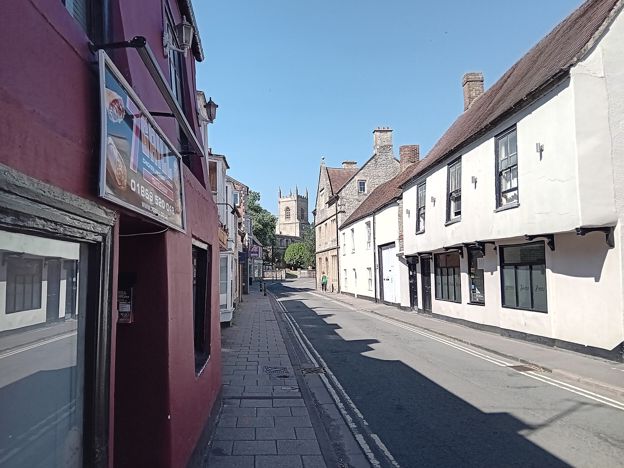
Bicester's history: from the priory and the market to the garden town
Story · History · 10 minute read
Bicester grew up by a ford over the Bure Brook, gained an Augustinian priory in the 1180s and a market in 1239 that still runs every Friday. It was a hunting town, then a garrison town, and since 2014 a garden town. The story from the record, and what of it you can still see.