Villages near Banbury: the prettiest, and the best to live in
The prettiest villages near Banbury are Great Tew and Wroxton. The best to live in are Deddington, Bloxham, Adderbury, Hook Norton and Kings Sutton, because shops, schools and trains matter more on a wet Tuesday than thatch.
· 14 minute read
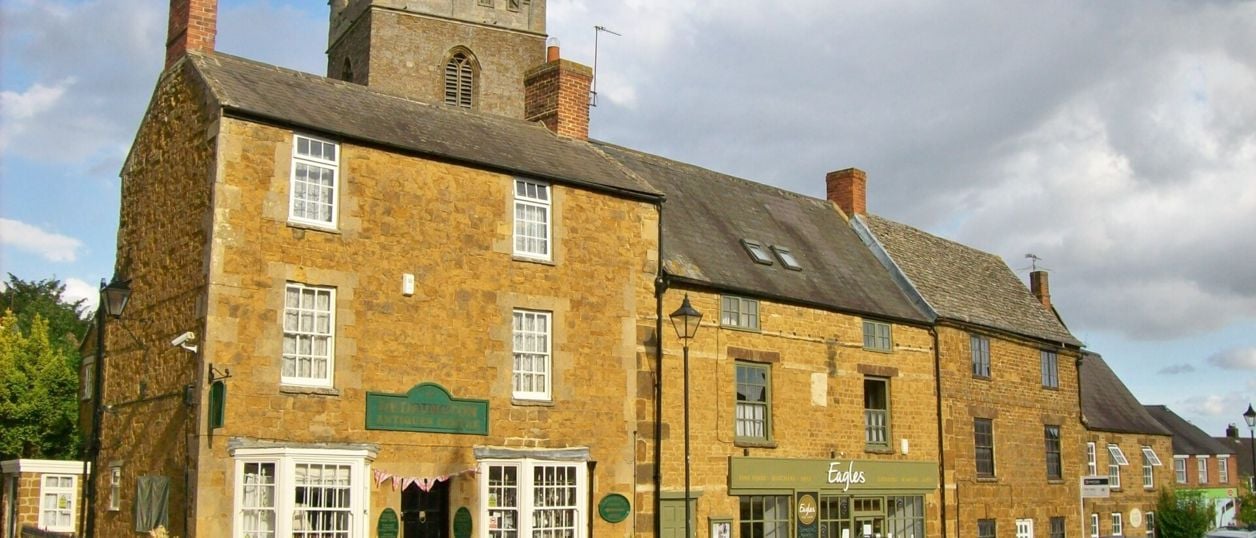
The prettiest villages near Banbury are Great Tew and Wroxton, both thatch and ironstone. The best to live in are larger places with shops, schools and a bus or a station: Deddington, Bloxham, Adderbury, Hook Norton and Kings Sutton. Few villages are both, and the sections below say why.
How we chose: this is a desk guide, written from the councils' records, the villages' own websites and timetables, and nothing here is paid for. For "prettiest" we looked for a designated conservation area, one consistent building stone and little modern infill along the main street. Those tests can be checked, but the final call is still a judgement. For "best to live in" we looked for a secondary school, a surgery, a shop, a pub and public transport to Banbury. We do not give house prices, because a village average moves quickly and misleads. HM Land Registry's price paid data (opens in a new tab) has the real sales.
The site has no regions. The groups below are the informal ones people use around here, and they overlap. Banburyshire itself was only ever a name for the country that looks to Banbury for its market.
The prettiest villages near Banbury
Great Tew is the one to see first, with Wroxton a close second and much nearer the town. Both have thatched ironstone cottages around a green or pond, and a conservation area to hold them. After those two we would go to Adderbury for its greens and church, or Ratley and Hornton for narrow lanes and no through traffic.
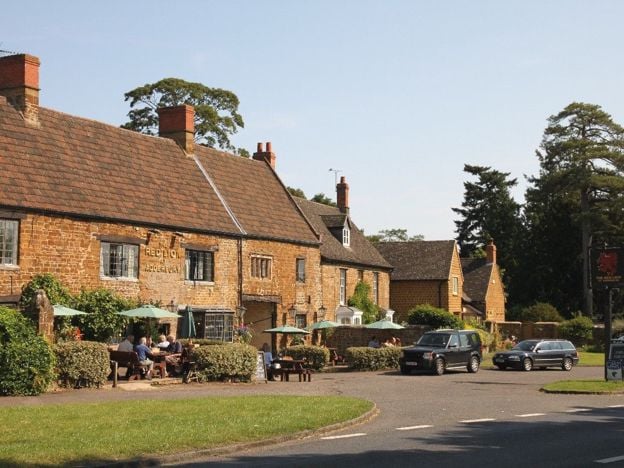
Great Tew is an estate village of thatch and Marlstone about 9 miles from Banbury, designated a conservation area in 1978. The Falkland Arms, a sixteenth-century pub with seven rooms, is on the green, and a quarry at Great Tew was still producing Marlstone when the county reviewed its building stone in 2016. The cottages belong to the estate, which lets them and gives preference to families who live or work locally. So you are unlikely to be able to buy here, whatever the photographs make you want, and there is little in the way of shops.
Wroxton, 3 miles out on the A422, has thatched ironstone cottages running down from the main road to a duck pond, the church of All Saints with a tower designed by Sanderson Miller in 1748, and a thatched Roman Catholic church. It had 542 people at the 2021 census and has a Church of England primary school. Wroxton Abbey, the Jacobean house, is not open. Both village pubs have shut, so bring lunch or go on to the hotel. It is a walk and a look rather than a day out.
Hornton and Ratley are the villages for anyone who wants the stone at its strongest. Hornton gave its name to the stone, and its conservation area was appraised in 2013. Ratley, on the ridge above Upton, has narrow lanes between ironstone cottages and sits inside the Cotswolds National Landscape. Neither is a day out on its own, so combine them with the Edge or Upton House.
The ones we would not call prettiest matter too. Bloxham and Kings Sutton have spires you can see from a long way off, but both are big working villages. North Newington and Broughton are lovely in parts but small, and Broughton is more a castle with a hamlet attached.
The best villages to live in near Banbury
Deddington, Bloxham and Adderbury are the strongest all-round choices on the Oxfordshire side, with Hook Norton the best of the western villages and Kings Sutton the only one with its own station. Each trades something: traffic, new estates or a longer school run. None has everything, so decide which of these you can least do without.
Cherwell District Council's planning papers list Adderbury, Bloxham, Bodicote, Cropredy, Deddington, Hook Norton, Milcombe, the Sibfords, Steeple Aston and Wroxton among its Category A villages, the larger group it studies village by village. That is a fair starting list, and it also tells you where new housing is most likely to be looked at, so read the council's planning register before you buy.
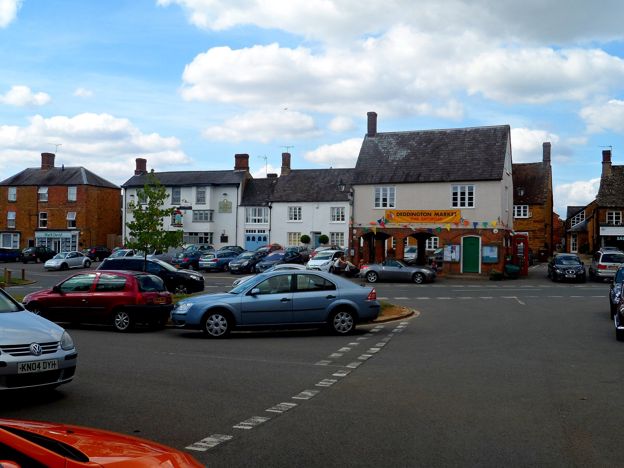
Deddington was once a borough and still has a town's bones, around a Market Place far too big for its size with a Town Hall on arches, rebuilt in 1806. The parish website lists a Co-op, a food shop, a café and pubs. The farmers' market runs on the fourth Saturday of most months. The S4 bus between Banbury and Oxford stops here, roughly hourly on weekdays. The A4260 is the drawback, because it runs through the middle.
Bloxham has a tall spire, two senior schools (the Warriner School and independent Bloxham School), a Co-op with a pharmacy, and a surgery. It is the most self-contained of the group, 3 miles from Banbury on the A361 with the 488 bus. Its Grade I church has a spire of about 60m, an east window designed by William Morris and Edward Burne-Jones, and the free Bloxham Village Museum beside it, open on summer weekend afternoons. It is a big village with a lot of modern housing, so do not expect a hamlet.
Adderbury, 3 miles south on the A4260, is a large village of red marlstone split by the Sor Brook into East and West, with a Grade I medieval church in St Mary's, pubs including the Bell and the Red Lion, and a morris tradition that fills the streets at the Day of Dance in late April. The S4 stops here too. Like Deddington it has the A4260 running through.
Hook Norton is a large ironstone village with its own brewery, a Church of England primary school, a village shop with a post office counter, and a branch of the Bloxham surgery. The county council's allocation papers list its primary among those feeding Chipping Norton School, with the Warriner School at Bloxham the other nearby choice, so check which school a particular house would get. The 488 serves it, though Banbury is about 20 minutes by car, and that is the real cost of its independence.
Kings Sutton is the rail commuter's choice, a village of about 2,300 people (2021 census) with a Grade I church under a spire of about 60m. Its station is small and unstaffed, with 23 parking spaces. It is about 5 minutes from Banbury on Chiltern and Great Western trains, but only some trains stop there, so check the timetable. The village has a primary school, a shop with a post office, and the Butchers Arms, and the nearest secondary is Chenderit School in Middleton Cheney. It is in Northamptonshire, which matters for council tax, schools and buses.
Bodicote is the one to consider if you want a village address in walking reach of Banbury's buses and shops. It is about 2 miles south of the centre with the S4 stopping there, the Plough on its High Street and a Category A label, but it sits close against the town, so it is less of a separate place than the others.
The Sibfords make the case for a smaller place with services. Sibford Gower and Sibford Ferris share a surgery, a primary school, a church and the independent Sibford School, and their conservation area was appraised in 2012. Against that, you drive to Banbury for almost everything else.
A rough guide to choosing: if you commute to London, start at Kings Sutton or within reach of Banbury station on the Grimsbury side. If you have secondary-age children and want to avoid the school run, Bloxham is hard to beat. If you do not drive, choose Deddington, Adderbury or Bodicote for the S4. If you want a pub and a shop on foot and can live with a longer drive, Hook Norton is the one. And if you want thatch, rent in Great Tew if the estate has a cottage and accept the rest of it.
Two checks before you commit. Read recent reports on the school you are counting on at Ofsted (opens in a new tab), since local reputations lag behind them. And look up the address on the government's flood risk service (opens in a new tab), especially near the Cherwell, the canal and the Sor Brook. Rail commuters should test a morning train too, because the timetable from Kings Sutton is thinner than Banbury's half-hourly service to London.
The ironstone villages
The ironstone villages are the ones west and south-west of Banbury, built of Marlstone that weathers to a golden orange-brown: Bloxham, Adderbury, Deddington, Wroxton, Hook Norton, Hornton, Broughton, North Newington, Swalcliffe and the Sibfords. This is the core of Banbury's country, and our story of Hornton stone tells how it came to be.
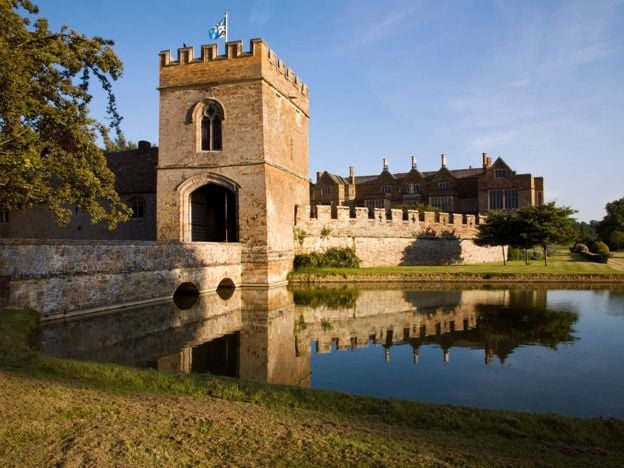
Broughton is a crossroads and a lane down to the church, with no pub at the moment, and most people come for Broughton Castle, whose season is short. North Newington, about a mile on, is a small village with one pub, a stop between Broughton and Wroxton rather than a trip of its own. Swalcliffe is a long village with an early fifteenth-century tithe barn, which opens on summer Sunday afternoons. Sibford Gower, Sibford Ferris and Burdrop form a linked conservation area, with a surgery, a primary school, the independent Sibford School and a Quaker meeting, so they are better served than their size suggests.
The canal villages
The canal villages sit on or near the Oxford Canal north and south of Banbury: Cropredy, Great and Little Bourton and Claydon to the north, and Aynho Wharf and Kings Sutton to the south. They are the choice for towpath walking and boats. Kings Sutton is by the river rather than on the canal, so Cropredy is the one for walking from the door.
Cropredy is the best known, for Cropredy Bridge, the 1644 battle and Fairport's Cropredy Convention, which fills it on the second weekend of August. Outside that weekend it is a quiet place of 736 people (2021 census) with a conservation area and the Brasenose Arms, about 4 miles from Banbury, and the walk there along the towpath is the obvious one. The marina, opened in 2013, is just north of the village.Aynho comes in two parts a mile apart: the old estate village in Northamptonshire on the hill, of 648 people at the 2021 census, known for the apricot trees on its house walls, and Aynho Wharf on the canal, where coal was being landed by 1787 and which has a boatyard. The M40 is close, which suits commuters, so listen for it before you buy.
The Edge
The Edge is the ironstone ridge north-west of Banbury that drops to the Warwickshire plain: Edgehill, Radway, Ratley, Upton and Warmington, with the Burton Dassett hills a little further on. This is the place for views and Civil War history, and much of it lies in the Cotswolds National Landscape, unlike most of Banbury's country.
The Battle of Edgehill was fought on the plain below in 1642, and the battlefield page says what you can see. Upton House is the big draw, and the tower at Edgehill, built by Sanderson Miller about a century after the battle, is now the Castle at Edgehill, a pub with Hook Norton ales and rooms. This is car country, so check the buses before you think of living here.
The Banburyshire newsletter
Events, new places and the best of the season, about once a month. Unsubscribe at any time.
Radway, under the ridge, has a free exhibition on the battle in St Peter's church, with field paths from the door. Burton Dassett has a country park on its old quarries and the ironstone church of All Saints on the slope. Go there for the view.
The Cherwell valley
South of Banbury, the River Cherwell and the canal run side by side through a line of villages: Adderbury and Deddington on the higher ground, then Clifton, Aynho, Souldern, Steeple Aston, Rousham and the Heyfords. It has a softer look than the ironstone hills, and good pubs, and its railway station is at Heyford.
Clifton has the Duke of Cumberland's Head, a pub since 1774. Steeple Aston has the Chequers, which reopened under that old name in 2026, and is on the S4 bus. Heyford station is alongside Heyford Wharf, and the county council's older Oxford Canal leaflet starts its walks and rides from the station. Check that those routes are still current before relying on them.
The North Oxfordshire Cotswolds
The North Oxfordshire Cotswolds is the rim of the hills south-west of Banbury: Chipping Norton, Great Tew, Hook Norton, the Rollrights and Long Compton. Only part of it is Cotswold country in law, since Great Tew and Hook Norton test as outside the National Landscape, as our boundary guide explains.
Chipping Norton is the town of the group, often called Oxfordshire's highest, though we found no survey behind the claim, with a theatre known for its pantomime and a market square. It is the right pick if you want Cotswold limestone and a town's services, at about 13 miles from Banbury. The Rollright Stones are close by, inside the National Landscape, with Long Compton just across the Warwickshire border. Everything beyond Chipping Norton to the west and south, Kingham and Charlbury for instance, belongs to our sister site, Cotswolds Info.
South Northamptonshire
East of the M40, the villages are quieter stone places over the county line: Sulgrave, Middleton Cheney, Chipping Warden, Chacombe, Culworth, Eydon, Thorpe Mandeville, Marston St Lawrence, Greatworth and Charlton, with Kings Sutton and Aynho in the south. They are less written about than the Oxfordshire side, and this guide will add to them as it grows.
Sulgrave has Sulgrave Manor, the house George Washington's ancestors built, and it opens on a limited season. Middleton Cheney is a big commuter village and has Chenderit School and All Saints, with its glass by William Morris's firm, Burne-Jones among the designers. Chipping Warden has the Griffin and the fields of the 1469 battle of Edgcote nearby. Canons Ashby, the Drydens' house, is at the far edge. If you are moving, note that these villages come under West Northamptonshire Council, so check which school and which services your address would use.
Mentioned in this story
The places, sights and walks in this story, each with a page of its own: what it is, when to go and how to get there.
-
Broughton Castle
Historic houses and heritage · Broughton
-
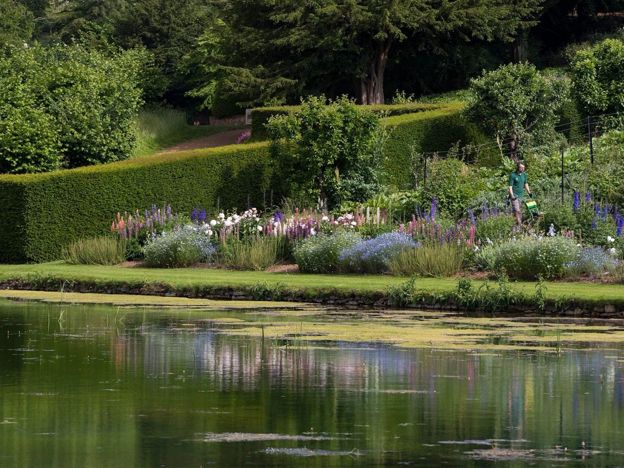
Upton House and Gardens
Historic houses and heritage
-
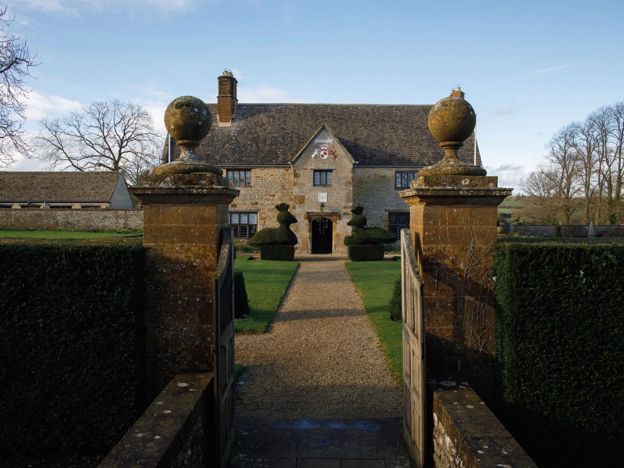
Sulgrave Manor
Historic houses and heritage · Sulgrave
-
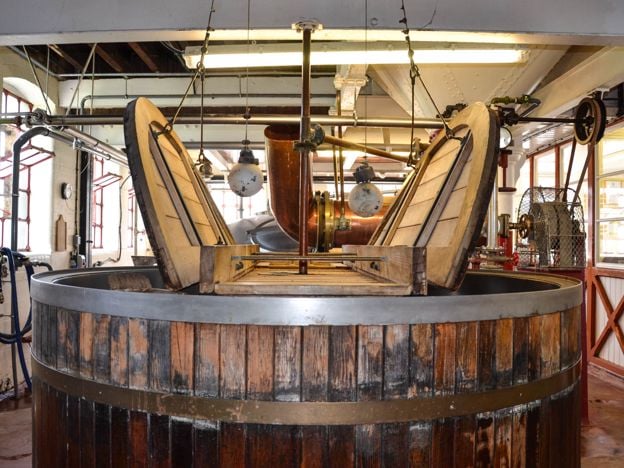
Hook Norton Brewery
Tours and experiences · Hook Norton
-
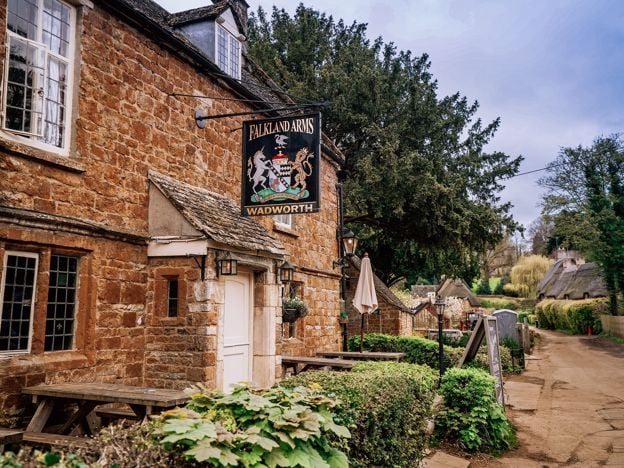
The Falkland Arms, Great Tew
Pubs · Great Tew
-
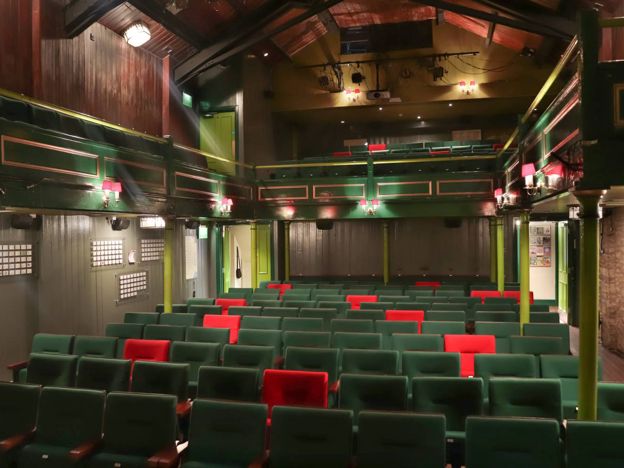
Chipping Norton Theatre
Family days out · Chipping Norton
-
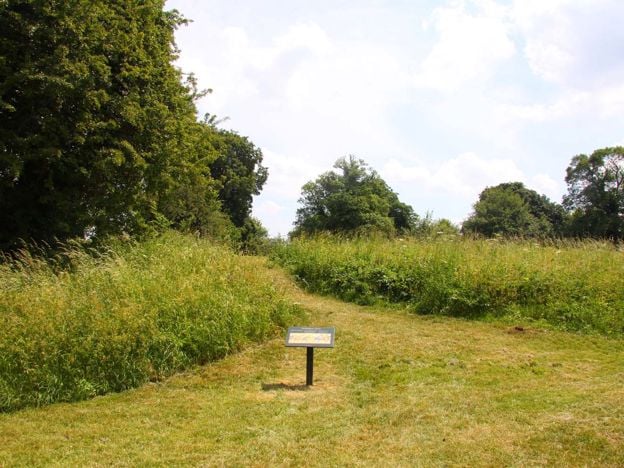
Deddington Castle
Sight · Castle or ruin · Deddington
-
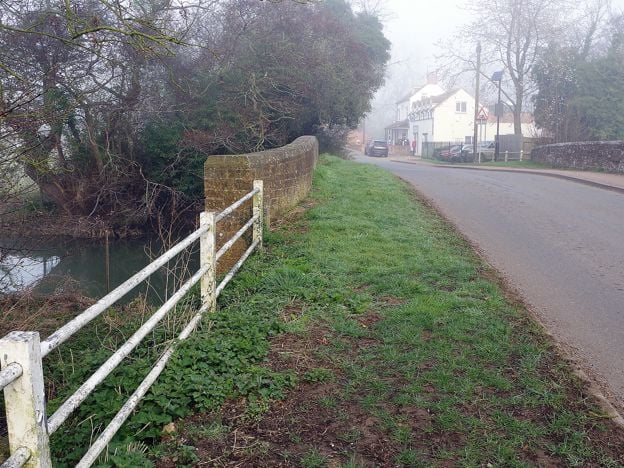
Cropredy Bridge
Sight · Bridge · Cropredy
-
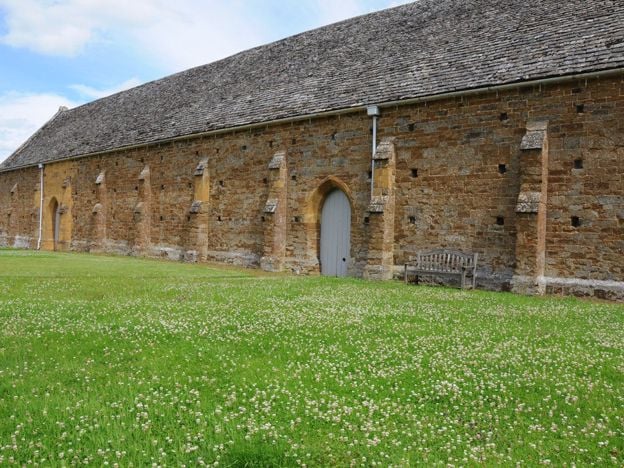
Swalcliffe Barn
Sight · Historic building
-
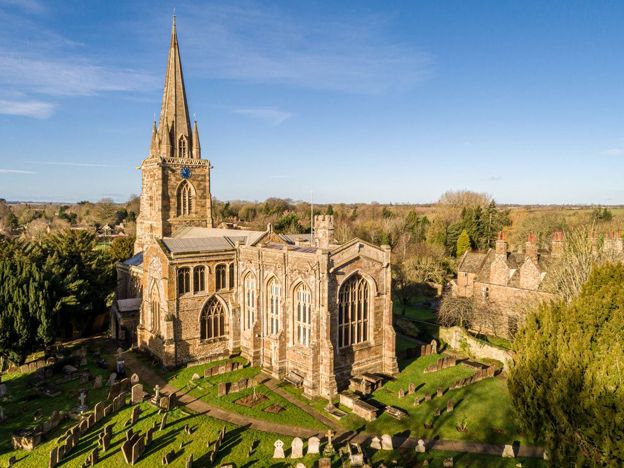
St Mary's Church, Adderbury
Sight · Church · Adderbury
-
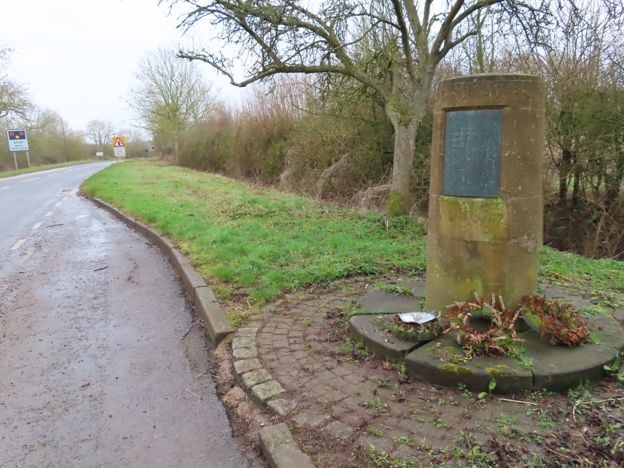
Edgehill battlefield
Sight · Monument · Edgehill and Radway
-
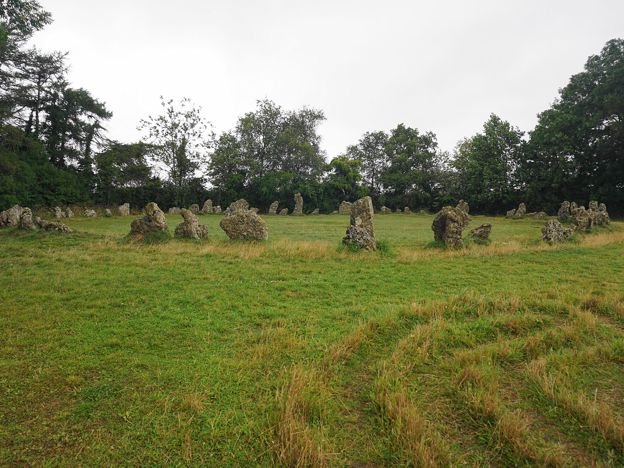
Rollright Stones
Sight · Hill fort or barrow
Places to stay near Great Tew
-
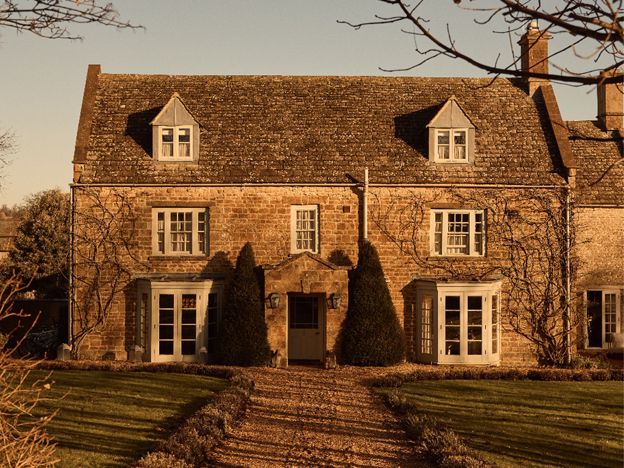
Soho Farmhouse
Hotel · Great Tew
Soho House's private members' club and hotel on 100 acres near Great Tew: 115 bedrooms and cabins, with a pool, spa and restaurants. Soho House says a day visit needs membership and a stay needs membership or Soho Friends, at £135 a year.
Dog-friendly · Family-friendly
Verified Nov 2026
-
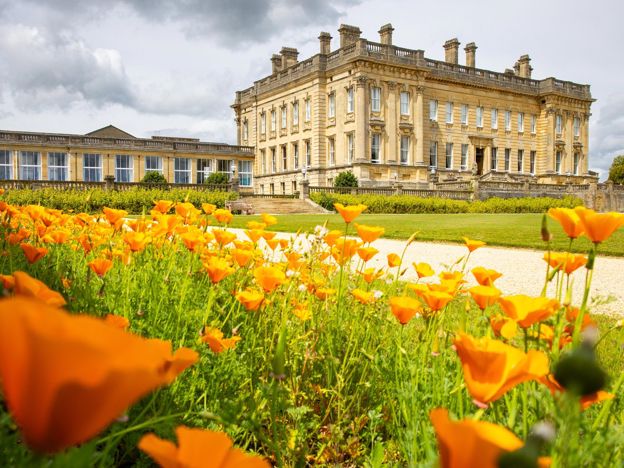
Heythrop Park
Hotel
A Warner adults-only hotel in a Grade II* listed house of the early 1700s, on 440 acres near Enstone, selling dinner, bed and breakfast breaks with nightly entertainment, a spa, a pool and an 18-hole golf course.
Verified Nov 2026
-
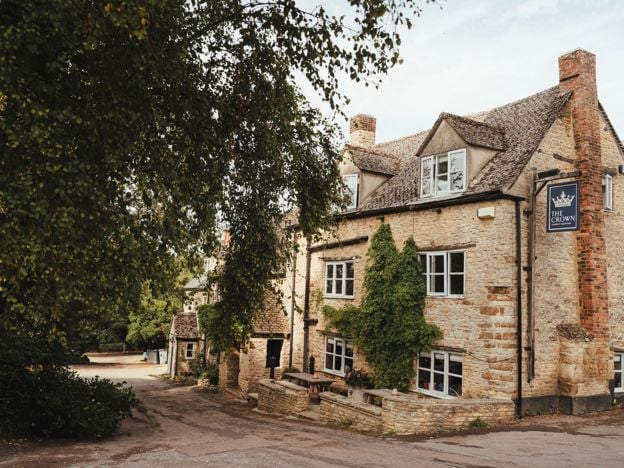
The Crown Inn, Church Enstone
Pubs
A family-run free house at Church Enstone, between Chipping Norton and Woodstock, in a Grade II building of the late 17th century, with menus that change monthly, five rooms and a cottage and studio.
Dog-friendly
Verified Nov 2026
Read next
-
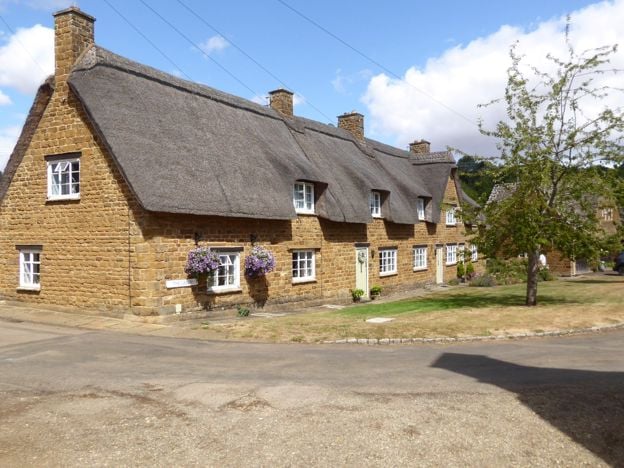
Hornton stone and the ironstone villages: why Banburyshire is brown
Story · History · 5 minute read
Hornton stone is the rusty ironstone that colours the villages around Banbury. It is a band of Jurassic rock no more than about 10m thick, quarried at Hornton and on Edge Hill for centuries. Henry Moore carved it, and steelworks ate it until 1967.
-
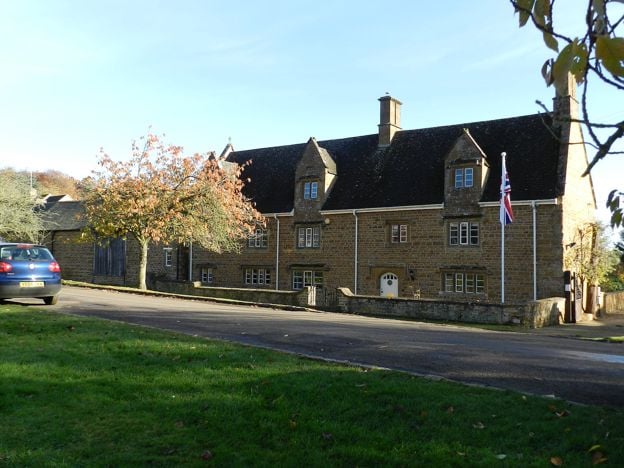
Is Banbury in the Cotswolds?
Story · Guides · 9 minute read
No. Banbury is about 5 miles outside the Cotswolds National Landscape, and it is built of rust-gold ironstone, not Cotswold limestone. Here is where the boundary runs, which villages fall inside it, and how far you have to drive for the Cotswolds.
-
The best pubs near Banbury
Story · Guides · 10 minute read
The best pubs near Banbury: Great Tew's Falkland Arms, the Hook Norton Brewery pubs, the Duke of Cumberland's Head at Clifton and the Reine Deer in the town, with which have rooms, which take dogs and which close on Mondays.