Things to do · Broughton
Broughton Castle
A moated medieval manor house near Banbury, turned into an Elizabethan mansion by the Fiennes family, tied to the opposition to Charles I and seen in Shakespeare in Love and Wolf Hall. Open on Wednesday and Sunday afternoons, April to September.
Dog-friendly · Walker-friendly
The moat and gatehouse alone justify the short drive from Banbury, and the house holds more recorded history than most. The catch is the hours: three afternoons a week at most, half the year, with no booking. See the garden first.
- Good: Free parking for paying visitors, by the church
- Good: Dogs on leads welcome in the park and gardens
- Good: Park open to walkers most days of the year
- Worth knowing: Open only Wednesdays, Sundays and bank holiday Mondays, 2pm to 5pm, in season
- Worth knowing: No advance tickets; toilets only in the car park, about 300 paces from the castle
- Worth knowing: No large bags, rucksacks, tripods or selfie sticks inside
About
Broughton Castle is a moated manor house 2.5 miles from Banbury, in the village of Broughton. It began around 1300 as the home of Sir John de Broughton and has belonged to the Fiennes family, Lords Saye and Sele, since the fifteenth century. Historic England lists the house and gatehouse Grade I. It is a family home, opened on a few afternoons a week between April and September.
The house and what to see
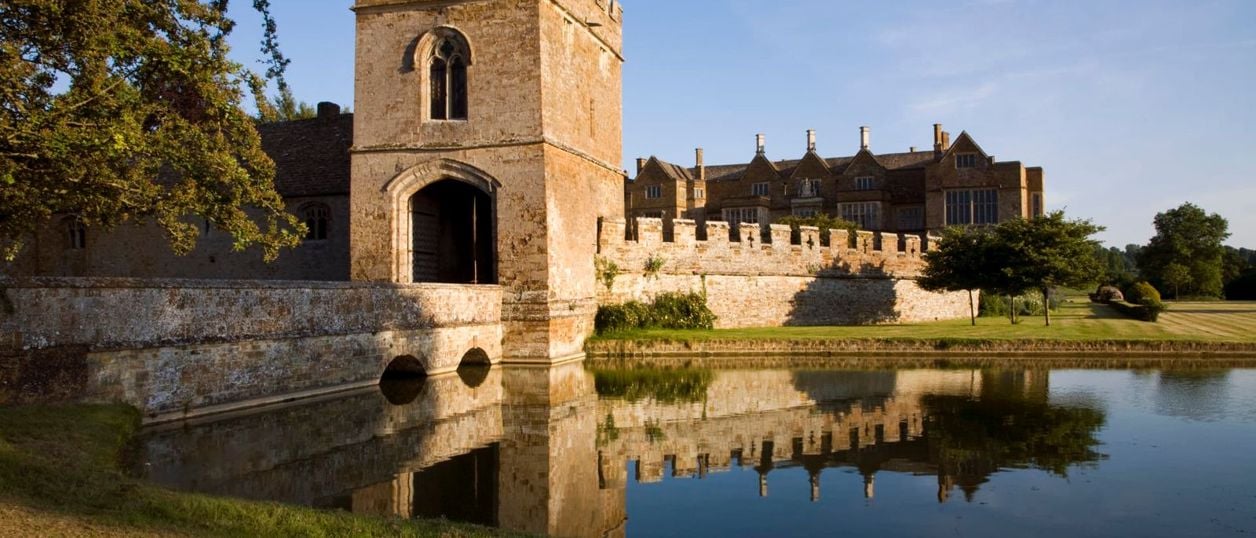
The moat, the gatehouse and the battlemented wall come first, and they are the reason it is called a castle. Sir Thomas Wykeham took a licence to crenellate in 1406, and the curtain wall is thought largely for show. Inside the house the castle's own guide takes you through a Great Hall of the fourteenth century, a Dining Room with mid-sixteenth-century linenfold panelling, the Oak Room and a long Gallery remodelled in Gothick style in the 1760s. The King's Chamber is where James I stayed in 1604, and Queen Anne's Room is named for Anne of Denmark, who stayed in 1608 and could look down into the Chapel through a squint. The Chapel was first consecrated in 1331, and the listing calls it a rare unaltered private chapel of its century.
The plaster is the thing to look up at. The Great Parlour's ceiling, dated 1599, carries the initials of Richard Fiennes and his second wife. The Ladies' Garden, laid out in the 1890s by Lady Algernon Gordon-Lennox while the castle was let, has roses in box beds in the shape of fleurs-de-lys, and the arch at the South Border may be part of the fourteenth-century entrance.
The history, and what is disputed
Much of the castle's story is on record, and some of the best-known parts are less secure than they sound.
The dates
The Victoria County History says Sir John probably began the castle, and Harry Gordon Slade's architectural history (on the castle's site) infers an earlier house that nobody has seen. William of Wykeham bought the manor in 1377 by the castle's account. Slade notes that it was formally conveyed only in 1392. Richard Fiennes then turned the medieval house into a mansion from about 1554, a date cut on the central chimney stack.
Old Subtlety and the room with no ears
William Fiennes, 1st Viscount Saye and Sele (1582 to 1662), is the castle's great character. The BCW Project says Charles I gave him the name Old Subtlety, for his skill at manoeuvring in court politics. It calls Broughton a meeting place for opponents of the King's policies during the Personal Rule, and the Victoria County History says Hampden, Pym and others came here. Saye also helped finance the Puritan settlements on Providence Island and at Saybrook in Connecticut.
The famous detail is a story. Visitor guides repeat that the plotting happened in a Council Chamber, a room 'with no ears'. The castle's history page does not mention it, nor does Slade, and an article in the Banbury Historical Society's journal, Cake and Cockhorse, says no meetings of the Providence Island Company are recorded as held at Broughton. So the visitors are on record, but the secret room is tradition.
The siege
After the Battle of Edgehill in October 1642, Royalists took the castle. Slade says the garrison held out for about a day and a half from 26 October, and a Parliamentarian account has Prince Rupert plundering the house with a warrant to demolish it. How much damage was done is unknown. The date 1655 on the gatehouse records the repairs.
Who did the plasterwork and the restoration
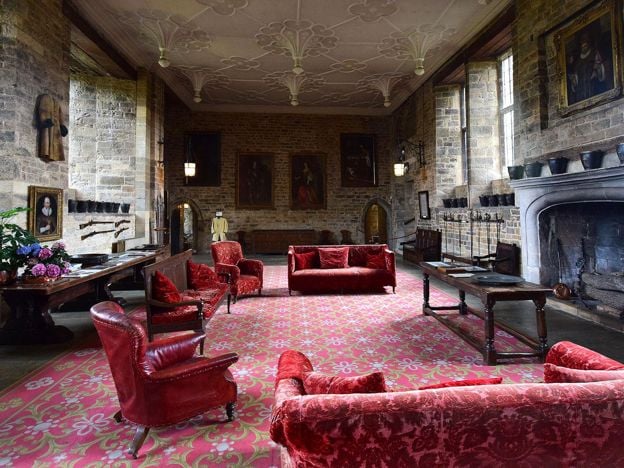
The Great Hall's eighteenth-century ceiling is credited to the architect Sanderson Miller by the listing, with a 'probably'. Slade finds the evidence strong but stylistic and circumstantial, not proof. Sources also differ on whether the Victorian restorer was George Gilbert Scott or his son.
Decay, and a sale that included the swans
The castle's history records Celia Fiennes finding 'my brother Saye's house being much left to decay and ruine', though Slade thinks it unclear whether she meant the house or the park. She is one of the candidates for the fine lady of the Banbury rhyme, without any evidence. In 1837 most of the contents went in a twelve-day sale, and the last lot was the swans on the moat. The castle's own history reckons that squandered fortune almost certainly saved the house from Victorian improvement.
On film
The castle's location hire page names Shakespeare in Love, The Madness of King George, Three Men and a Little Lady, Wolf Hall, The Crown, Mary & George and Sense & Sensibility among its productions. The Oak Room has appeared in several, and the carpet in the Gallery was made for Three Men and a Little Lady.
Visiting
Tickets are sold at the Gatehouse on arrival, by cash or card, and cannot be bought ahead. Allow for the last entry at 4.30pm. Only paying visitors may picnic in the park, and never inside the moat or beyond the black railings. The tea room is open without a ticket from 1.30pm on open days. Private groups can come by appointment all year, with a minimum charge of £400. A cycling sportive is listed for Sunday 27 June 2027.
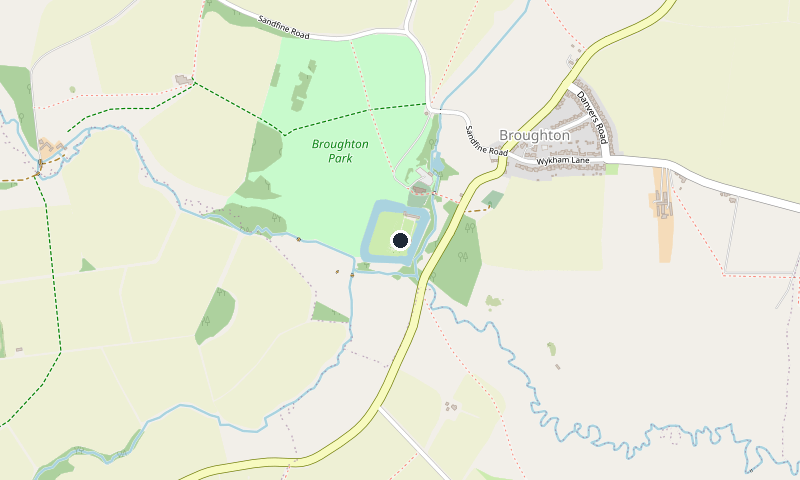
To find it, take the B4035 west from Banbury Cross towards Shipston on Stour, turn right at the crossroads by the Saye and Sele Arms in Broughton, and left into the drive at the bottom of the hill. Swalcliffe Barn is close, and The Roebuck Inn is a listed pub nearby.
Opening hours and season
Season over for 2026. 2027: 4 April to 29 September, Wed, Sun and bank holiday Mon, 2pm to 5pm; last entry 4.30pm. Garden and tea room from 1.30pm. Park open to walkers most days.
Facilities
- Car parkFree to paying visitors, on the left before the church
- ToiletsIn the car park only; accessible toilet on the Radar key scheme
- Tea roomIn the Stables, opposite the main entrance; open to all from 1.30pm on open days
- Dogs on leadsPark and gardens only
The details
- Time to allow
- The afternoon: the open day lasts three hours
- Features
- Garden or terrace · Café · Parking · Picnic area · Guided tours · Events and meetings
- History
- Begun about 1300; the Fiennes family's since the fifteenth century
- Parking
- Free to paying visitors. Enter through the main gate by the lodge and turn first left, into the car park next to the church, about 300 paces from the castle.
- Without a car
- The castle's site gives no bus or train advice. It is 2.5 miles from Banbury town centre, so a taxi from Banbury station is the practical way without a car.
Photos
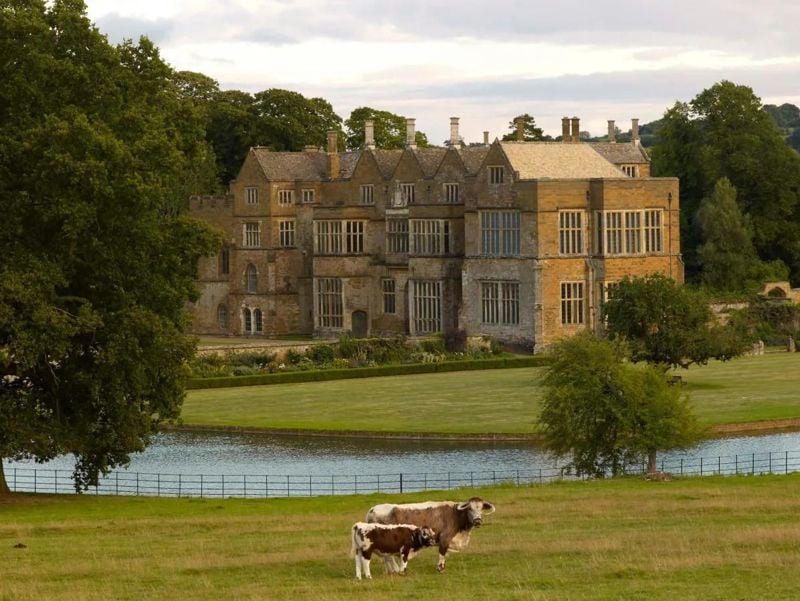
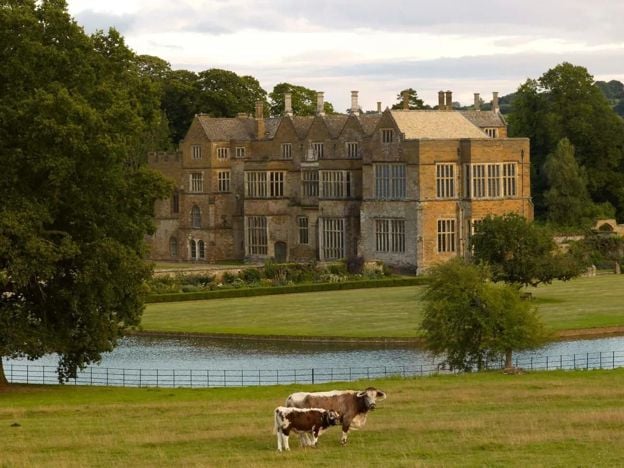
Broughton Castle across its moat and parkland 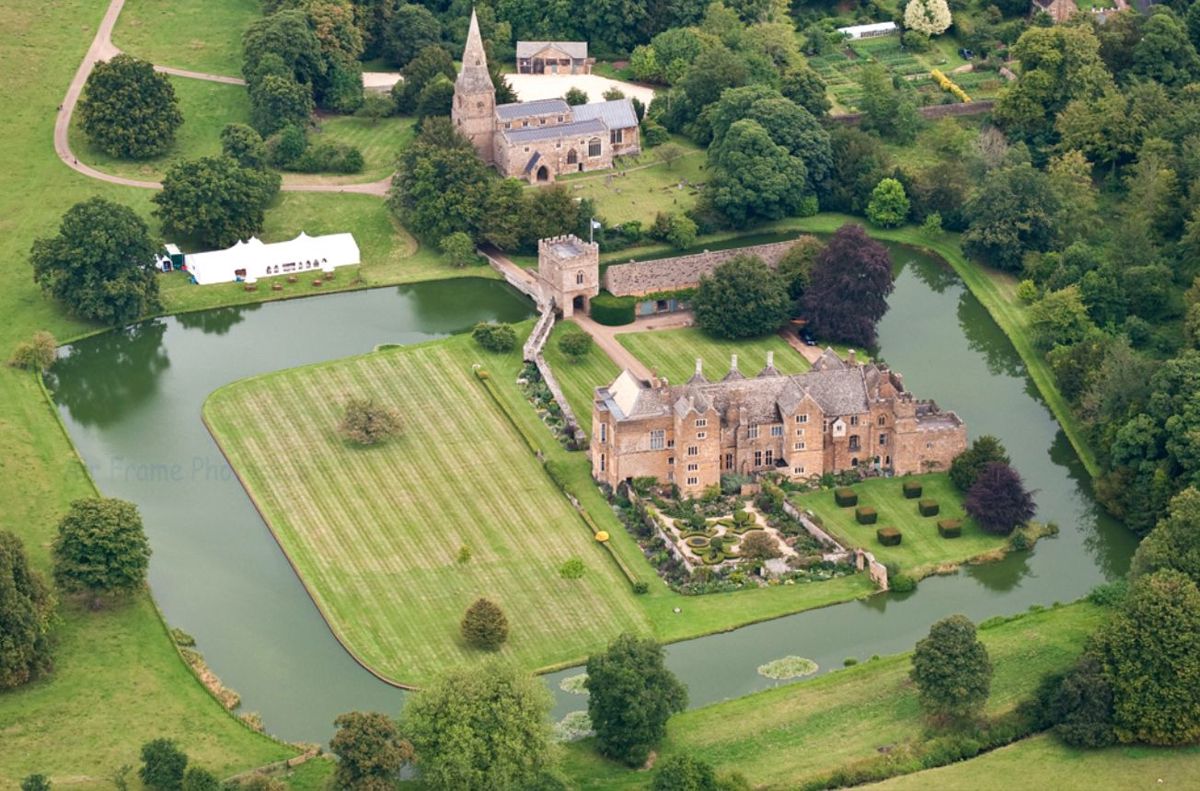
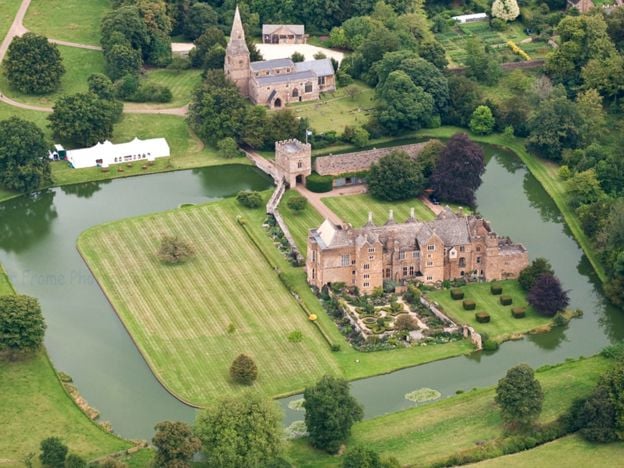
The moat, gatehouse, gardens and parish church from the air 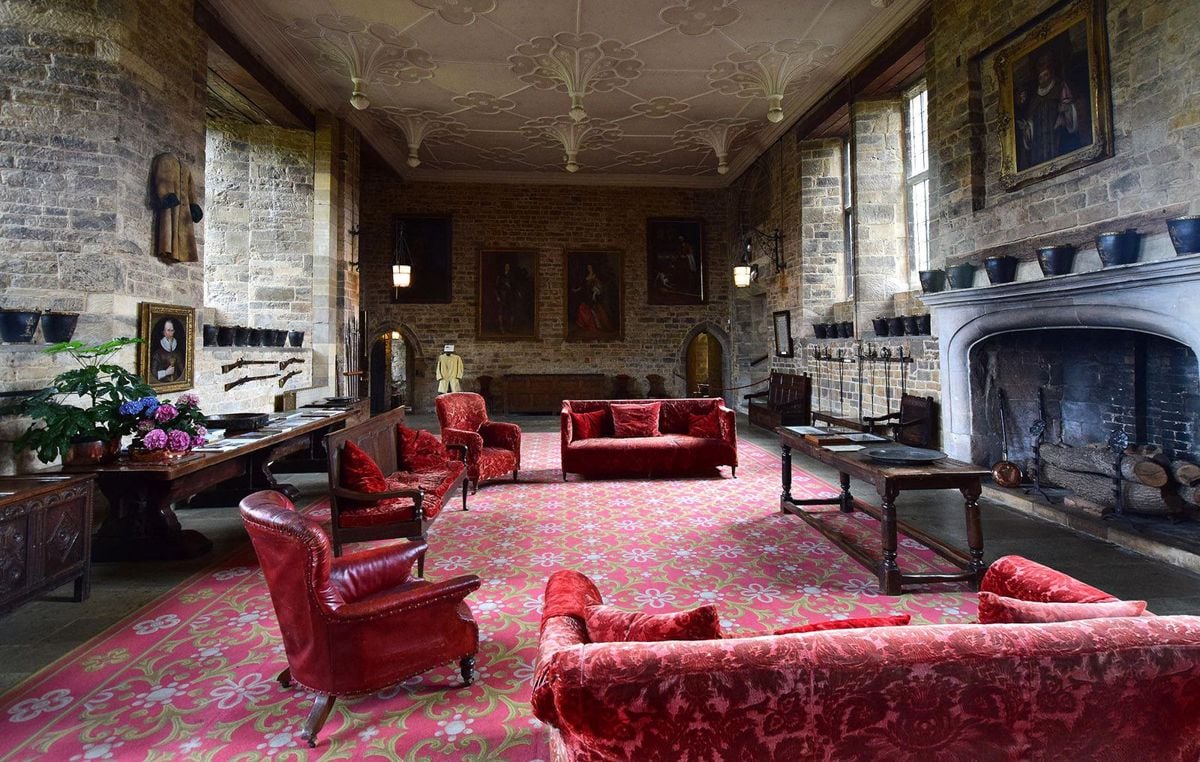
The Great Hall, with its eighteenth-century plaster ceiling 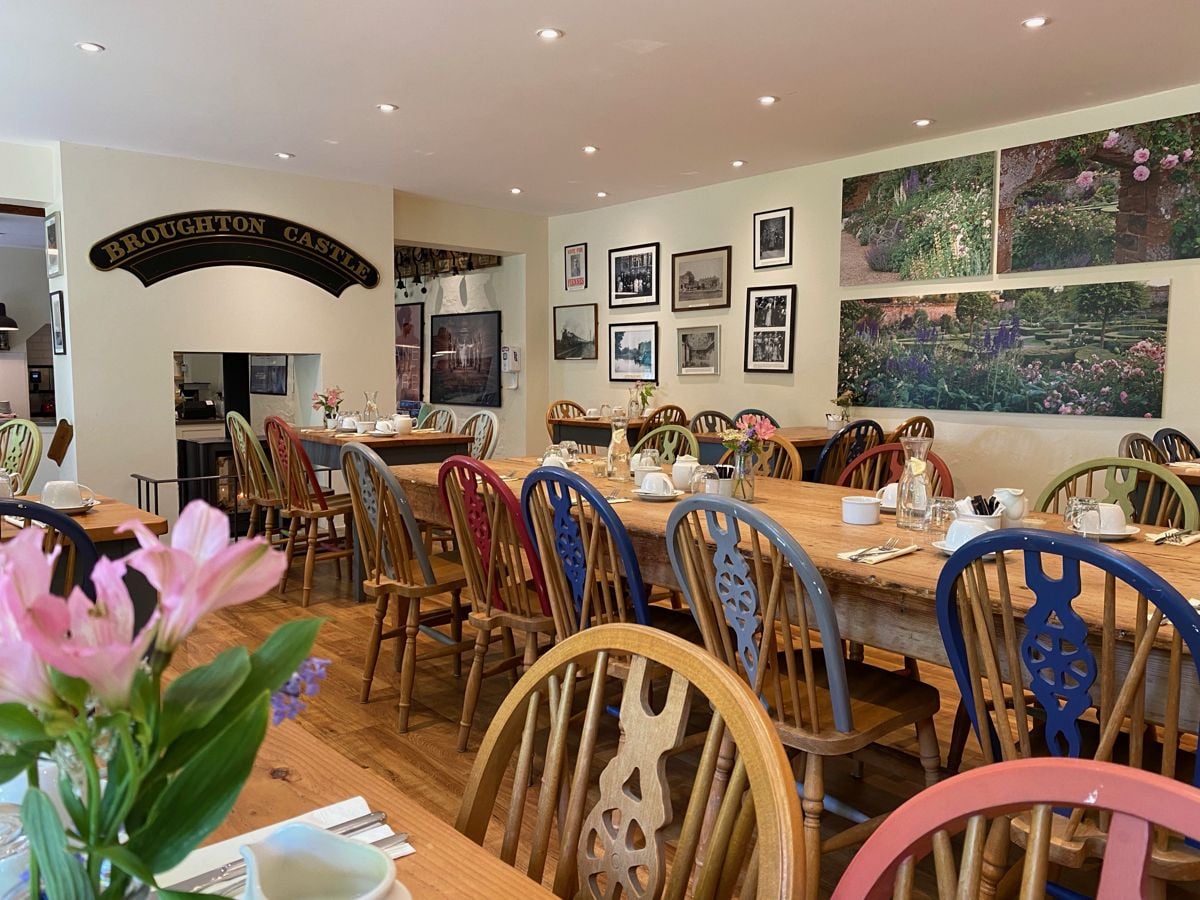
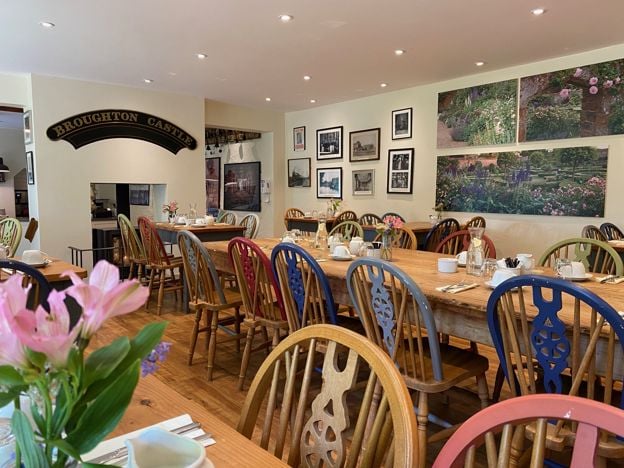
The tearoom
Location
Places to stay nearby
-
Banbury Cross Bed and Breakfast
B&B · Banbury
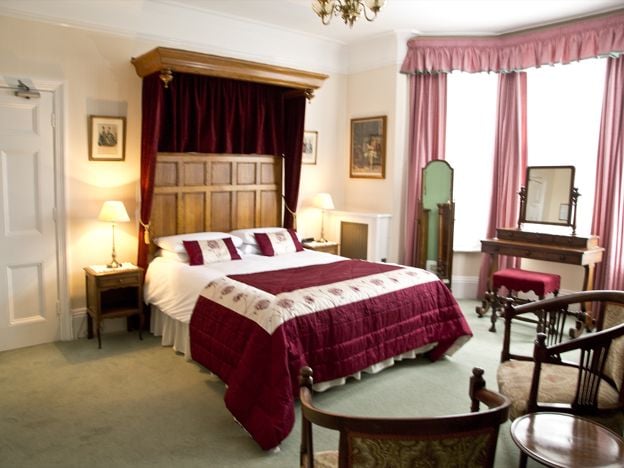
A family-run Victorian B&B on Broughton Road, Banbury, with seven bedrooms, about 370m from Banbury Cross, with free off-road parking, cooked breakfasts and rates from £77. No under-18s.
Car-free
Verified Nov 2026
-
The Wroxton Hotel
Hotel · Wroxton
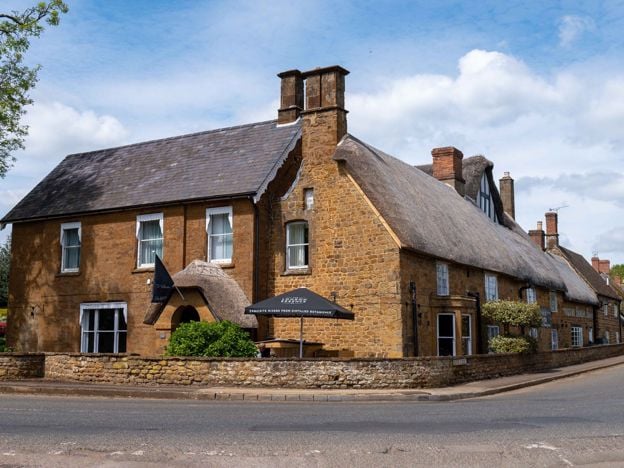
A 32-room hotel made from three adjoining stone cottages, partly dating from 1649, on the edge of thatched Wroxton, a few minutes' drive from junction 11 of the M40, with free parking and its own tea room.
Dog-friendly · Wedding venues
Verified Nov 2026
-
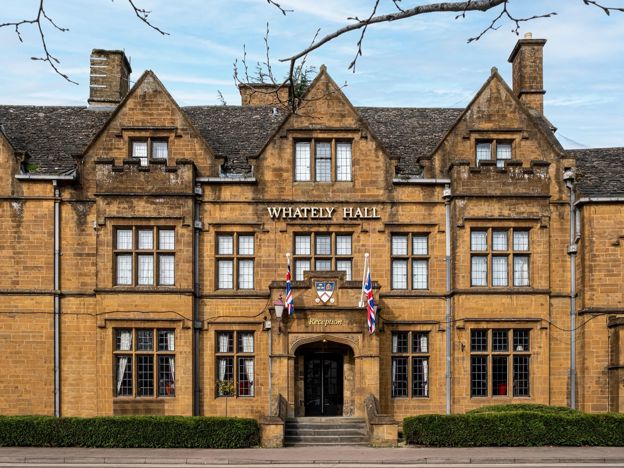
Whately Hall Hotel, Banbury
Hotel · Banbury
A Grade II listed 17th-century inn, now a 71-room hotel on Horse Fair in the middle of Banbury, with gardens, an oak-panelled restaurant and six EV chargers.
Dog-friendly · Family-friendly · Wedding venues
Verified Nov 2026
Nearby walks, places and things to do
- Banbury Cross Bed and Breakfast 3.8 km away
- The Wroxton Hotel 3.8 km away
- The Roebuck Inn, Drayton 3.9 km away
- Whately Hall Hotel, Banbury 4.2 km away
Sights nearby
-
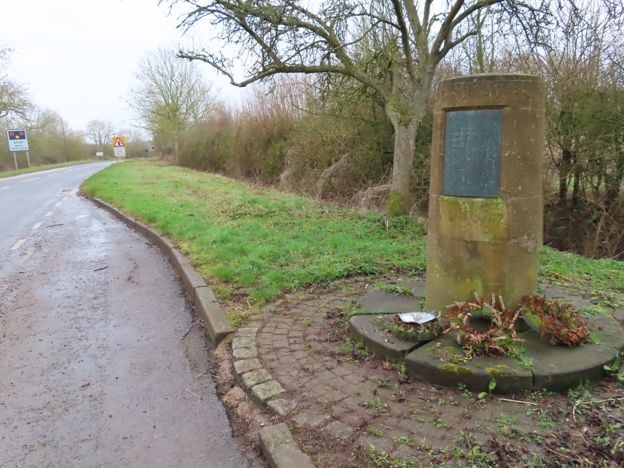
Edgehill battlefield
Sight · Monument · Edgehill and Radway
The first pitched battle of the English Civil War was fought below Edge Hill on 23 October 1642. Most of the field is now closed Ministry of Defence land, so you see it from the ridge and from a roadside memorial stone. Registered by Historic England.
-
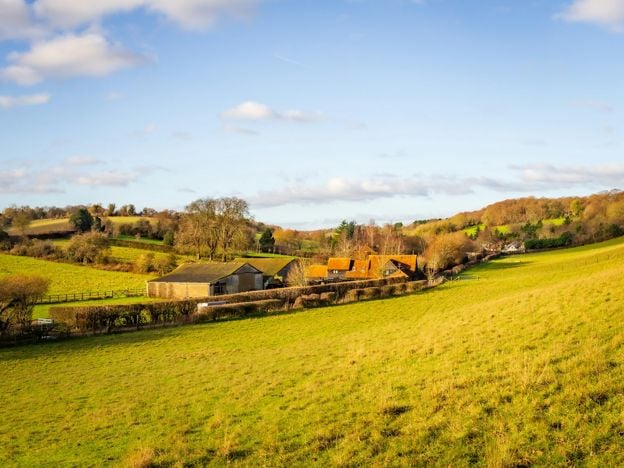
Giant's Cave, Banbury
Sight · Common or park · Banbury
A patch of old rough pasture off the Broughton Road on the edge of Banbury, called Giant's Cave and said by legend to hide a tunnel to Broughton Castle. One account calls it a late medieval quarry. It is free, and a stop on Cherwell's Banbury Fringe walk.
-
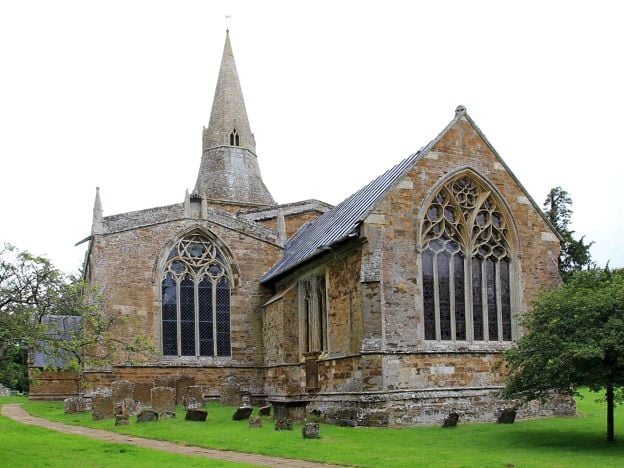
St Mary's Church, Broughton
Sight · Church · Broughton
The Grade I church in the park of Broughton Castle, built about 1300, with a rare stone chancel screen and the tombs and hatchments of the castle's owners from the fourteenth century on. Best seen on a castle open day.
-
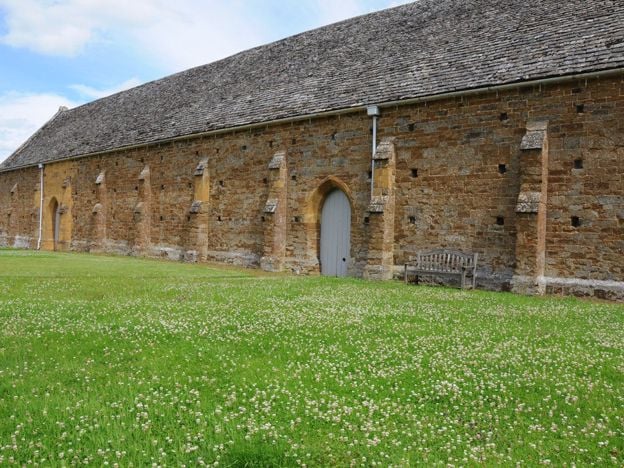
Swalcliffe Barn
Sight · Historic building
A ten-bay medieval barn of ironstone, built for New College, Oxford, in about 1401, with its medieval timber roof. Grade I and a scheduled monument, six miles west of Banbury, and open free on summer Sunday afternoons.