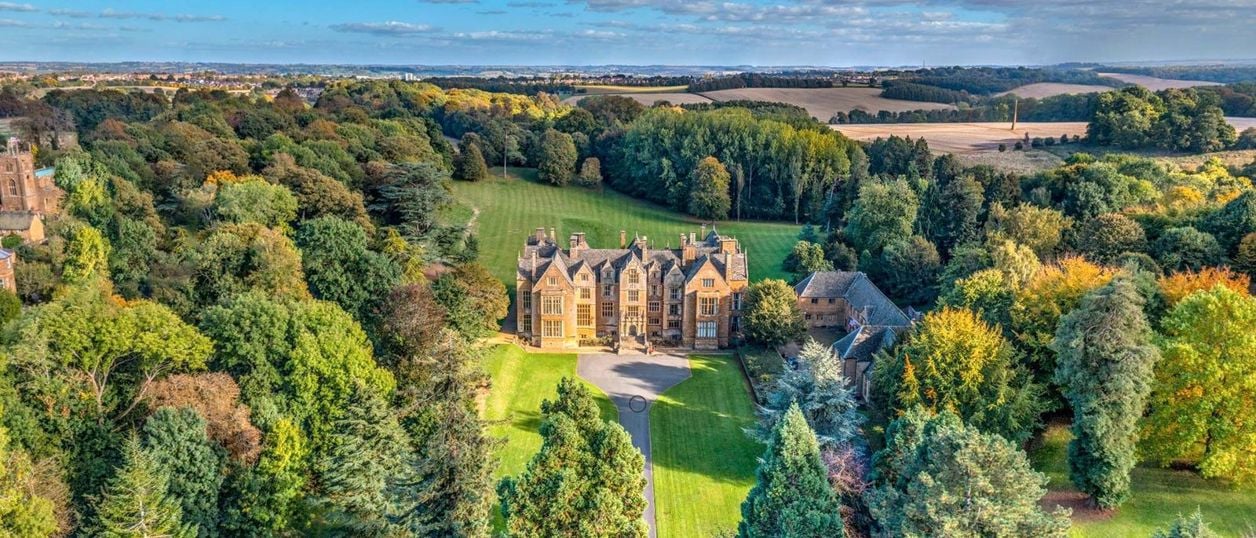
Wroxton Abbey
A Jacobean house of about 1618 west of Banbury, on the site of a medieval priory and long the home of the Norths. Grade I. It is a college and closed to visitors. It passed to an alumni-led group in 2025 to 2026, and a public footpath crosses the grounds.
Historic building
WroxtonWroxton Abbey is a Jacobean house of about 1618 beside Wroxton, just west of Banbury, built on the site of a medieval priory. It is listed Grade I and its park is registered Grade II*. It is a working college and closed to visitors, and a public footpath runs through its grounds.
What is established, as of November 2026
A good deal changed here between 2025 and 2026, so this is what each source says, as we read it on 4 November 2026:
- The house is closed. The village website says the abbey 'is not open to the public'
- There is a public footpath. The village history of February 2025 says one crosses the grounds and goes on to Drayton Arch
- The village website says the grounds can be walked. Its site says they 'remain accessible for peaceful walks', and that dogs are not permitted. The page carries no date, but it postdates the change of hands
- The college says nothing about visitors. Its own site has no visiting hours, no public access page and no phone number
- No named legal owner. No source we read says who now holds the title
Who owns Wroxton Abbey now
Fairleigh Dickinson University of New Jersey owned the abbey and its pleasure grounds from 1963, and it no longer does. It announced a preliminary agreement with a group led by its alumni on 2 May 2025, and on 24 October 2025 said it had finalised the transfer of ownership to that group. The university ran the campus until 15 May 2026, when the alumni group, through companies its members formed, took over. The village website gives the university's ownership as 1963 to 2025, and the college's own site says alumni and the Rodney L. White Foundation stepped in and that 'in May 2026 the College became independent'.
Who runs the college is clearer than who owns the land. The college's about page (opens in a new tab) says it is run by Wroxton College Educational Services Ltd, an independent charity set up by alumni. It does not say which company holds the title to the estate, and neither does the university or the village website. We have not read the Land Registry entry, so we name no owner.
More change is announced. The college says the Abbey is the English home of the Reconciliation League (opens in a new tab), an association of colleges and universities, and that the Abbey hosts one of the League's summer sessions from 2027 and its semester programmes pass to the League's administration from autumn 2027. None of these announcements mentions public access.
Can you walk in the grounds?
The footpath stands on the firmest ground. A public footpath is a legal right of way and does not depend on who owns the land, so that is the route to plan around, and an OS map will show its line. The village history says it goes on to Drayton Arch, the sham ruin built for the same estate, though on the county council's rights of way map the nearest footpath passes south of the arch.
Wider access has been by permission, and that can change. The college's old website is gone. The village history of February 2025 says the grounds may be viewed from dawn to dusk, and the village website still describes them as accessible, and that is the latest word we have. Nothing from the present college confirms or withdraws it, so ask before making a special trip for the lake and cascade.
The grounds have shut before, for tree safety work, so take care in the trees after high winds.
Contact number for Wroxton Abbey
The number listed for the college is 01295 730551, in the accreditation directory of ASIC, which names Wroxton College Educational Services Ltd. The college's own contact page, read on 11 November 2026, lists no phone: only admin@wroxton-college.ac.uk, a form and the address, Wroxton, near Banbury, OX15 6PX. Expect an office line and not a visitor service.
The story of the house
It was a priory, not an abbey, whatever the name says. Michael Belet founded a house of Augustinian canons here in 1217, and it lasted until the Dissolution in 1536. Sir Thomas Pope, founder of Trinity College, Oxford, took the lease in 1537 and passed the estate to his college. Fire destroyed the priory in the reign of James I, and Sir William Pope began the present house on the site about 1618. It was still unfinished when he died in 1631.
The North family came by marriage in 1668, when the estate passed to Lady Frances Pope, wife of Sir Francis North. They stayed until 1932. The best known of them is Frederick, Lord North, Prime Minister when Britain lost the American colonies, whose monument by John Flaxman is in All Saints Church in the village. The family gave the lease back to Trinity in 1932. In 1963 the college sold the Abbey and grounds to Fairleigh Dickinson, and the college for American students opened in 1965.
What to look for
The listing describes ironstone ashlar, an H-shaped plan and a west front of seven gables, with a porch in the form of a triumphal arch. The north wing came about 1672, Sanderson Miller remodelled the chapel in Gothic in 1747, and Baroness North added the south wing in 1858 to 1859. The carved galleries it records are inside and not on show.
The park covers about 125 hectares and comes in two layers. Tilleman Bobart laid out formal terraces and a canal in the 1720s, and from 1737 to 1751 Francis North, later Earl of Guilford, made Rococo pleasure grounds in the valley with Miller's advice. The register lists the Great Pond, the Grand Cascade (rebuilt in the late twentieth century, and dropping about 6m), a serpentine river and a three-arched Chinese bridge, and further out the dovecote of 1745 and the obelisk. We have not confirmed the present state of each.
Getting there
The village is on the A422 between Banbury and Stratford, and the Abbey's stone gate piers of 1771 are in the village. We found no public car park, so park with care and do not block the lanes down to the pond. Stagecoach's 76 and 76A from Banbury stop on the A422 at The Firs and Horley Turn: when we checked, five buses ran out from Banbury and four back from Monday to Saturday, and none on Sundays (November 2026). Banbury station is about 3 miles away.
Nearby
All Saints, in the village, holds the Pope tomb and the Flaxman monument, under a tower Miller designed. Both village pubs have shut, so for food use The Wroxton Hotel or the Roebuck Inn at Drayton. If you want to go inside a house, Broughton Castle is about 2 miles away, and Upton House is further along the A422.
Walks past Wroxton Abbey
-
Banbury Ironstone Heritage Walk
Walk · Starts in Banbury · 4 hrs · Circular
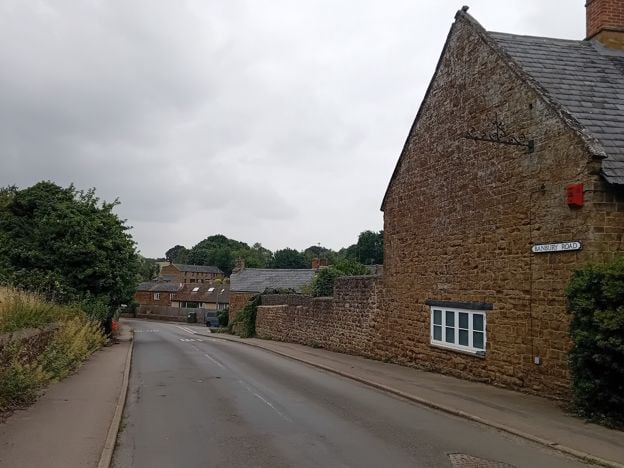
The Banbury Ironstone Heritage Walk is a 9.6-mile (15.5km) moderate circular walk from Banbury station, about four hours with 180m of climbing. It follows the canal, skirts the northern estates, reaches Wroxton and North Newington, and ends at Banbury Cross.
-
North Newington and Wroxton Circular
Walk · Starts in North Newington · 2 hrs · Circular
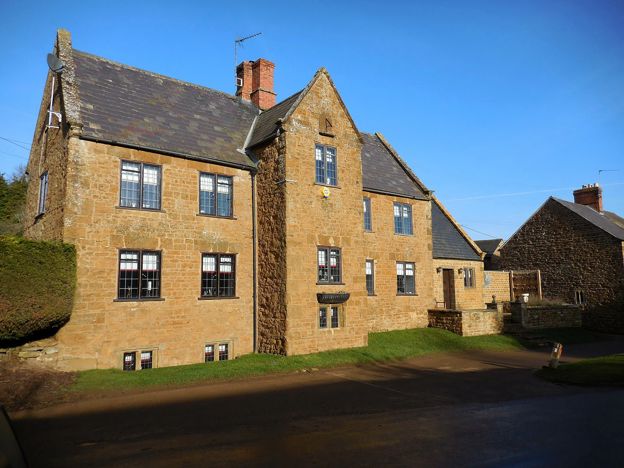
A 3.3-mile (5.3km) circular walk from Main Street, North Newington, taking about two hours of moderate walking. It follows field paths to the Sor Brook, climbs past the Wroxton Obelisk into Wroxton and returns over the fields.
-
Broughton Road to Wroxton Obelisk Circular
Walk · Starts in Broughton · 2 hrs · Circular
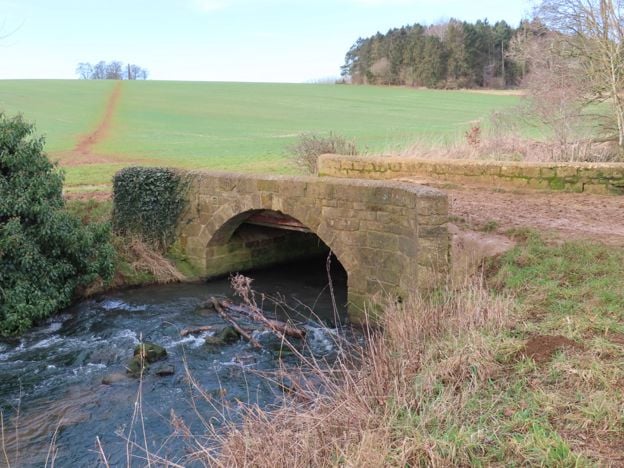
A 4.5-mile (7.3km) circular walk from the car park on Broughton Road, about two hours of moderate walking on field paths. It crosses the Sor Brook, climbs to the Wroxton Obelisk and returns by the other bank. It does not go through Broughton or past the castle.
Stay and eat near Wroxton Abbey
-
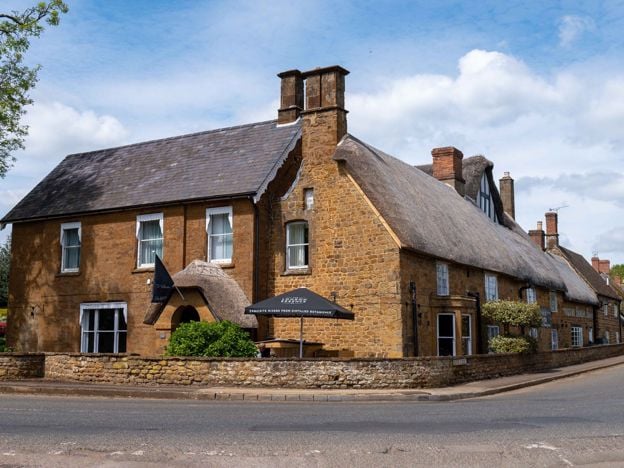
The Wroxton Hotel
Hotel · Wroxton
A 32-room hotel made from three adjoining stone cottages, partly dating from 1649, on the edge of thatched Wroxton, a few minutes' drive from junction 11 of the M40, with free parking and its own tea room.
Dog-friendly · Wedding venues
Verified Nov 2026
-
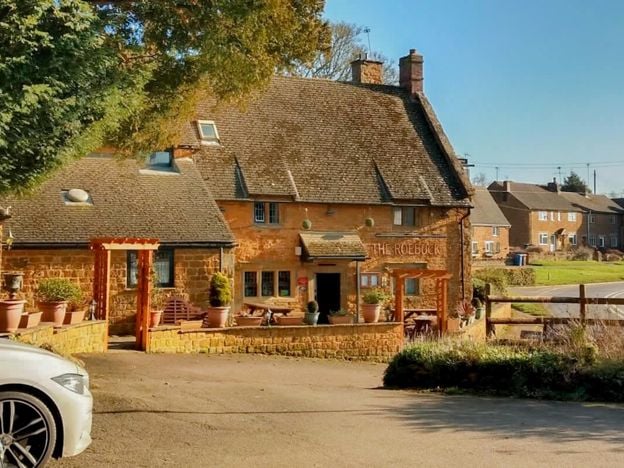
The Roebuck Inn, Drayton
Pubs
A Hook Norton pub in a late 17th-century listed building on the A422 at Drayton, just outside Banbury, with a south-facing courtyard, a modern British menu, a car park and dogs welcome.
Dog-friendly
Verified Nov 2026
-
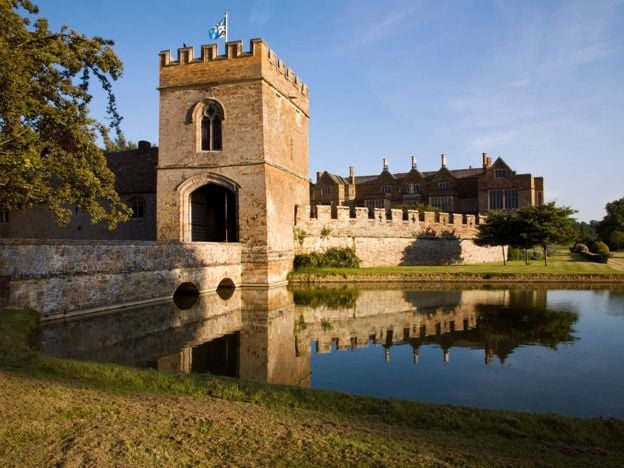
Broughton Castle
Historic houses and heritage · Broughton
A moated medieval manor house near Banbury, turned into an Elizabethan mansion by the Fiennes family, tied to the opposition to Charles I and seen in Shakespeare in Love and Wolf Hall. Open on Wednesday and Sunday afternoons, April to September.
Dog-friendly · Walker-friendly
Verified Nov 2026
Stories about Wroxton Abbey
-
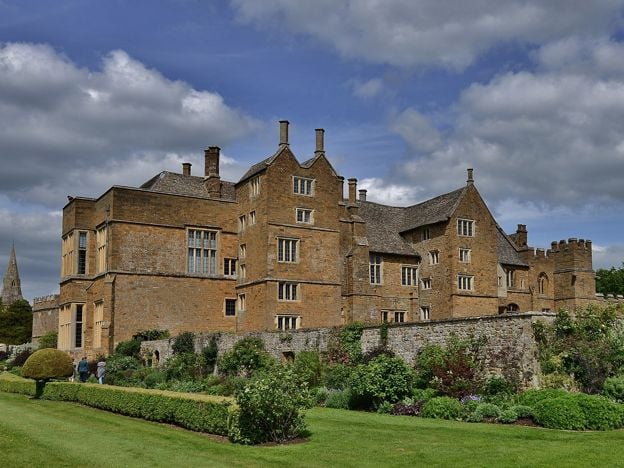
Castles and historic houses near Banbury: which to pick
Story · Guides · 12 minute read
Broughton Castle, Upton House, Sulgrave Manor, Canons Ashby, Farnborough Hall, Compton Verney, Chastleton, Stowe and Charlecote Park: which suits whom, which days combine them, what opens in winter, and which to skip.
-
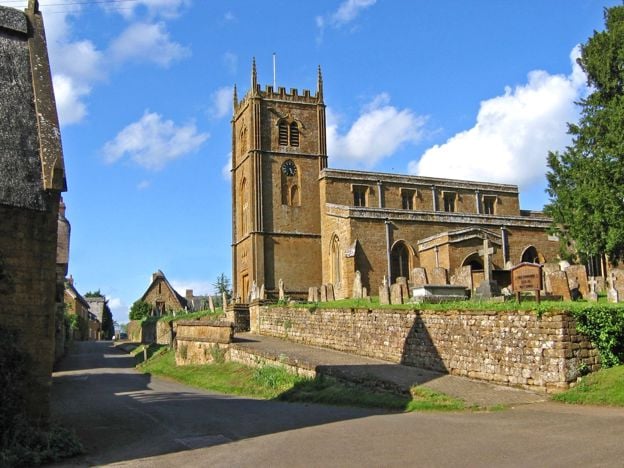
Wroxton Abbey and Lord North: the prime minister who lost America
Story · Strange Things · 5 minute read
Wroxton Abbey was never an abbey, its owners only ever leased it, and the prime minister who lost America lies blind and buried in the village church. Add a Gothic dovecote, a monument to three wives and a thatched Catholic church built by a man who changed his name.
More sights to see
-
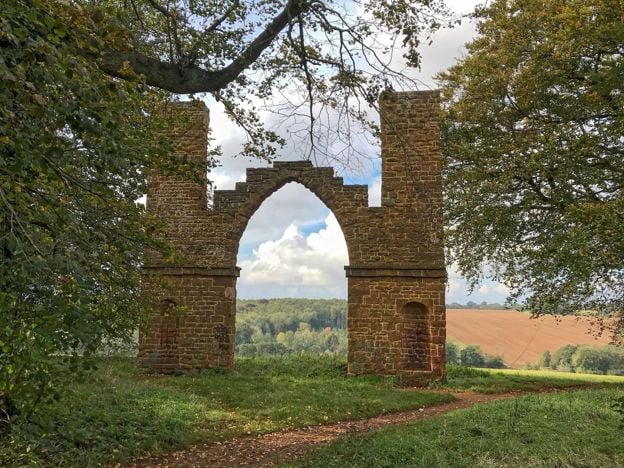
Drayton Arch
Sight · Historic building
A ruined Gothic arch between two thin turrets, built about 1750 as a sham ruin to Sanderson Miller's design for the Wroxton Abbey estate. Grade II*, in fields near Drayton, and reached by a public footpath from Wroxton.
-
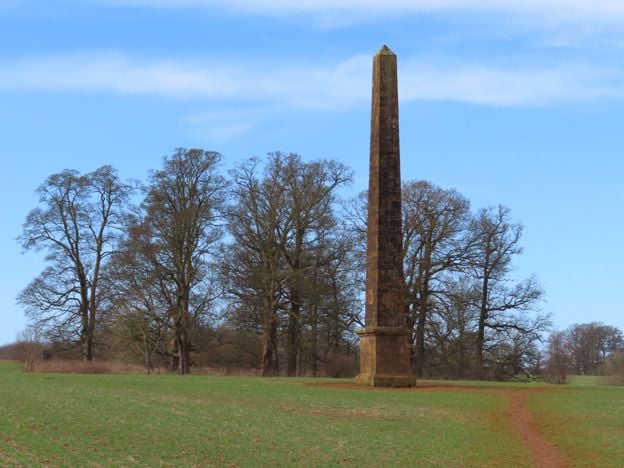
Wroxton Obelisk
Sight · Monument · Wroxton
A tall ironstone obelisk in the fields south-east of Wroxton Abbey, west of Banbury, marking a visit by Frederick, Prince of Wales, in 1739. Part of the eighteenth-century landscape, and Grade II*. On farmland, beside a public footpath.
-
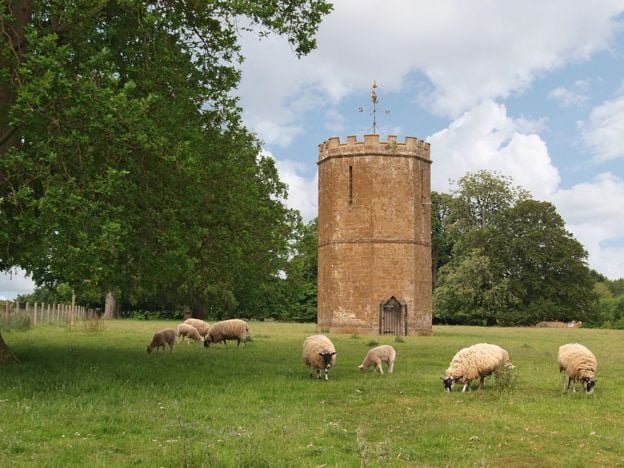
Wroxton Dovecote
Sight · Historic building · Wroxton
A Gothic dovecote of 1745 by Sanderson Miller in the park of Wroxton Abbey, west of Banbury, built both to house pigeons and to look like a small castle from the house. Ironstone, polygonal and Grade II*. In the Abbey's park, so seen from a distance.