The Civil War in Banburyshire: Edgehill, Cropredy and Banbury's sieges
A town famous for its puritans spent the Civil War as a Royalist fortress. It came out of it with plague, burials at four times the normal rate, and its castle sold for stone.
· 7 minute read
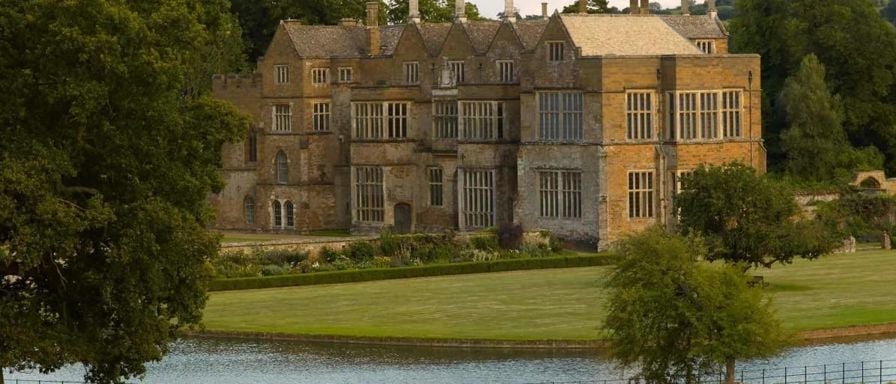
Banbury sat on the front line of the English Civil War from start to finish. The first great battle was fought eight miles away at Edgehill in October 1642, and the town's castle then held out for the King for three and a half years, through two sieges, in the middle of largely Parliamentarian country. In June 1644 the King beat Sir William Waller at Cropredy Bridge, a few miles north. The town's own losses were severe, and the castle did not survive the peace.
A puritan town, and a contested castle
No town looked less likely to end up a Royalist fortress. Banbury's name was a byword for puritanism by the early 1600s, and in 1600 a group of its aldermen had pulled down the town's crosses. The local grandee was William Fiennes, Viscount Saye and Sele, of Broughton Castle, about two and a half miles south-west of the town, who the History of Parliament records (opens in a new tab) resisting the Forced Loan in 1626 and Ship Money in the 1630s. His son Nathaniel sat for Banbury in 1640.
What the town held was less a matter of opinion than of guns. The Victoria County History (opens in a new tab) records six pieces of ordnance in the castle in the summer of 1642, claimed by both Lord Brooke for Parliament and the Earl of Northampton for the King. Northampton came with a force, the defenders retreated into the castle, and after a parley the guns were handed over and he took them off to Warwick.
Edgehill and a single shot
Edgehill was fought on Sunday 23 October 1642, between Radway and Kineton, on ground the Royalist army had come down to from the ridge. Each side had about 12,000 men, by the Battlefields Trust's figures. Prince Rupert's cavalry broke the Parliamentarian left and chased it to Kineton, and many stopped to attack the baggage train. The infantry fought until the light failed, with Essex's foot gaining ground. It is often called a draw, but Glenn Foard's survey for the Battlefields Trust (opens in a new tab) argues the King gained the real advantage. Essex fell back to Warwick, and the road to London and the towns of Banbury and Oxford lay open.
Banbury was the first to pay. On 26 October the King summoned the castle. Its garrison of about 1,000 men surrendered, reportedly after a single shot, and about half of them then joined the King. Broughton Castle was besieged and taken too. The ghosts came later, and they have a story of their own.
Three and a half years as a Royalist outpost
The Compton family held Banbury from then on: Spencer Compton, Earl of Northampton, as governor from 1642 to 1643, then his son James, then Sir William Compton. The garrison rode out to intercept Parliamentary troops, raised levies, sent money and food to the King at Oxford and held prisoners in the castle. Townspeople were jailed or executed as spies.
Parliament's attempts were brief. Northamptonshire forces entered the town on 21 December 1642 and left two days later. A force was beaten at Middleton Cheney on 6 May 1643, in a fight lasting no more than half an hour, in which, as a talk to the Banbury Historical Society put it, every man shifted for himself. Essex in September 1643 and Cromwell in March 1644 came into the town, and neither attacked the castle.
Cropredy Bridge, 29 June 1644
The one battle in the town's direct orbit was almost an accident of the road. By late June 1644 Waller had followed the King's army to Banbury, and on 29 June the two armies marched north on either side of the River Cherwell, watching each other. Charles sent dragoons ahead to hold the bridge at Cropredy, and hurried, and his army strung out.
Waller saw his chance at the gap. He sent John Middleton over Cropredy Bridge with horse and foot, while about 1,000 Parliamentarian horse crossed at Slat Mill Ford to the south, to split the Royalist army and cut off its rear. It went wrong quickly. Middleton's horse pushed on towards Hays Bridge, at Wardington, leaving their foot behind, and the King, who had got as far as Hays Bridge, turned back. The Earl of Cleveland's cavalry drove the Parliamentarians back towards Cropredy Bridge and took 11 of their guns, and the Earl of Northampton's brigade threw back the horse that had crossed at Slat Mill. Two Parliamentarian infantry regiments then stopped the King's men crossing the bridge, which is why the armies ended the day facing each other across the river.
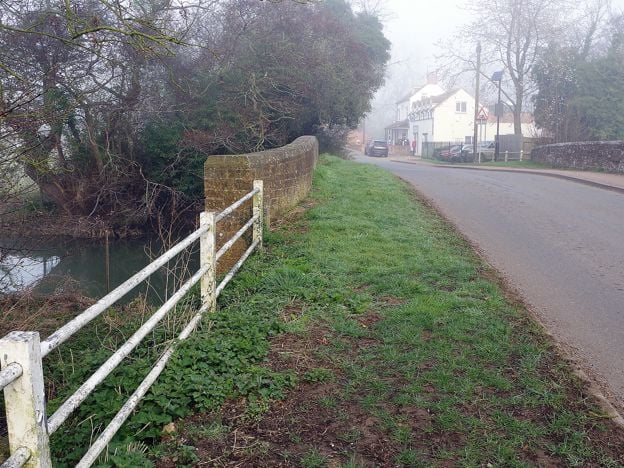
The result mattered more than the size. In the weeks that followed, part of Waller's army mutinied and over half his men deserted, and the King was free to go after the Earl of Essex. The bridge you see in Cropredy is not the one they fought over. It was rebuilt in 1937, in concrete faced with Hornton stone, and the county history (opens in a new tab) records its inscription: 'From Civil War Good Lord deliver us'. Writing in 1972, it also noted weapons and armour from the battle in the church's north aisle (we could not confirm what is on show today), and a village tradition that the brass lectern was hidden in the Cherwell on the eve of the fight. That last part is tradition and not record.
The first siege, 1644
The castle's hardest time overlapped with Cropredy. Parliamentary blockades of the roads began on 19 July 1644, and on 25 August Colonel John Fiennes entered the town with about 3,500 men. Sir William Compton had about 400 inside. The besiegers built batteries and siege works and tried an assault on 23 September, which failed. Royalist relief attempts on 20 and 23 October also failed, and on 25 October the Earl of Northampton's approach lifted the siege, about 14 weeks after the blockade began.
What this meant for the town shows in the register. Burials in the parish averaged 73 a year from 1632 to 1641. They rose to 254 in 1643, 299 in 1644 and 212 in 1645, then fell to 26 in 1647. At least 161 plague victims were buried between March and November 1644. Most of the aldermen and burgesses fled, and the town's government collapsed until the castle fell.
The second siege, and the end of the castle
The second siege began in January 1646, directed by the Committee of Both Kingdoms, with Colonel Edward Whalley commanding the besiegers. Compton refused the first summons, on 18 March. The garrison finally surrendered on 8 May 1646, after mortars and heavy guns arrived and news came that the King had gone over to the Scottish army on 6 May. With that, the county history says, the main impact of the war on Banbury came to an end.
The castle's end came from the town itself. In 1648 the inhabitants petitioned for it to be pulled down so its stone and timber could repair the damage. It was bought for £2,000 (opens in a new tab) and demolished at once, so thoroughly that by 1685 the site was gardens and closes. The war's last local echoes were a Leveller rising in May 1649, when about 200 men under William Thompson posted a declaration in Banbury and were scattered, and a rally of Commonwealth troops here before Worcester in August 1651.
The Banburyshire newsletter
Events, new places and the best of the season, about once a month. Unsubscribe at any time.
What to see, and in what order
Do not go looking for the castle, as nothing stands above ground. This is a history you read off the landscape, so take it in the order it happened, by car.
Start on the Edge Hill ridge, above Radway, for the view over the field. The core of the battlefield is inside a Ministry of Defence depot and closed, as our Edgehill battlefield page explains. Upton House and the Castle at Edgehill are on the same ridge. Then come to Banbury, and go to the museum for the town's history. In Parsons Street, Ye Olde Reine Deer Inn has the Globe Room, dated 1637, so it was already standing when the war began, though the county history admits nobody knows why it has that name. Finish at Cropredy, north of the town, and walk onto the bridge. If there is time, Broughton Castle has the Fiennes side of the story. Check its opening days before you go.
The Battlefields Trust has published a Battlefields Trail leaflet (opens in a new tab) linking Edgehill and Cropredy by footpath, cycle route and road. Its maps date from the early 2000s, so check paths on a current map before you set out.
Mentioned in this story
The places, sights and walks in this story, each with a page of its own: what it is, when to go and how to get there.
-
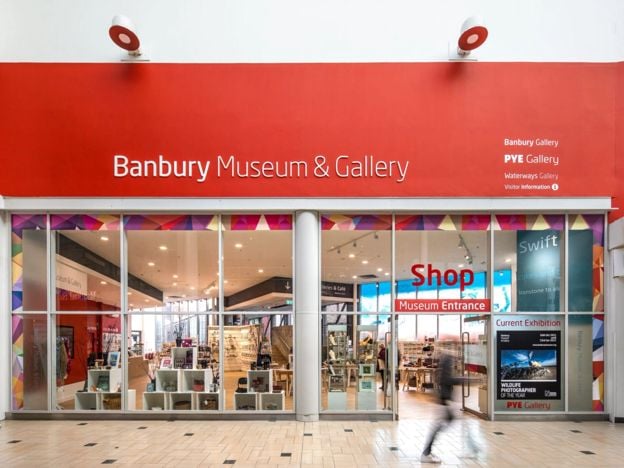
Banbury Museum and Gallery
Museums and galleries · Banbury
-
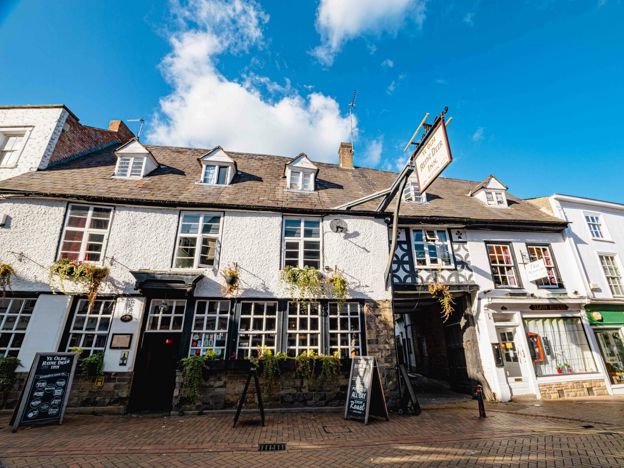
Ye Olde Reine Deer Inn, Banbury
Pubs · Banbury
Places to stay near Banbury
-
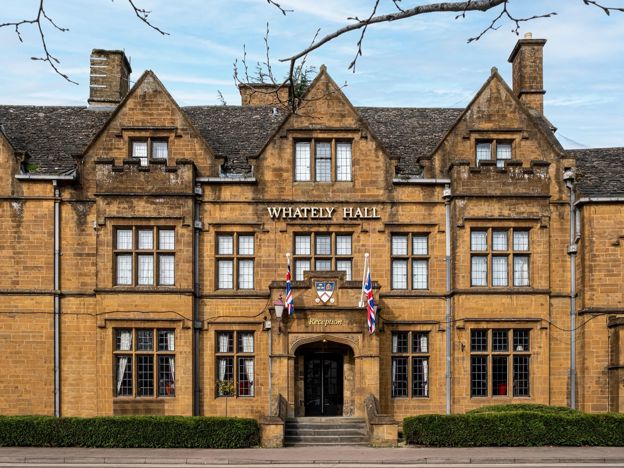
Whately Hall Hotel, Banbury
Hotel · Banbury
A Grade II listed 17th-century inn, now a 71-room hotel on Horse Fair in the middle of Banbury, with gardens, an oak-panelled restaurant and six EV chargers.
Dog-friendly · Family-friendly · Wedding venues
Verified Nov 2026
-
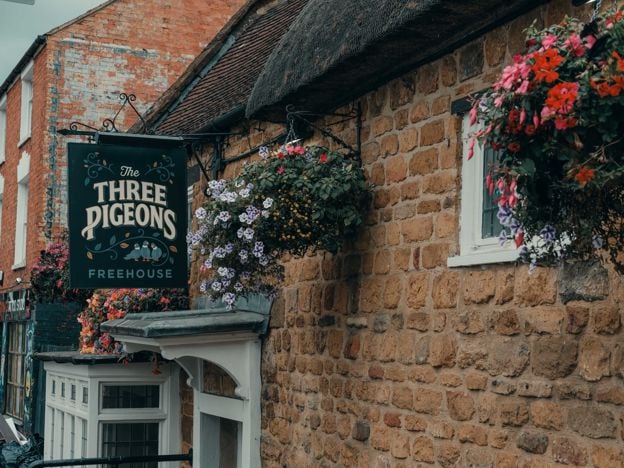
The Three Pigeons, Banbury
Pubs · Banbury
A Grade II listed 17th-century inn, partly thatched, on Southam Road, Banbury, with real ales and ciders, a courtyard, Smash Cow street food from Thursday to Saturday and three en-suite rooms.
Dog-friendly · Car-free
Verified Nov 2026
-
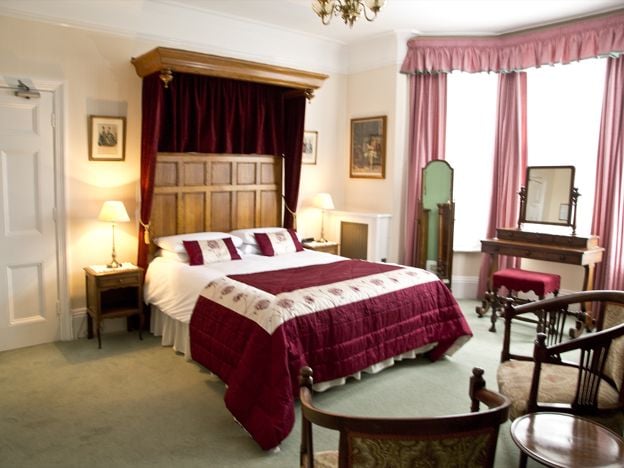
Banbury Cross Bed and Breakfast
B&B · Banbury
A family-run Victorian B&B on Broughton Road, Banbury, with seven bedrooms, about 370m from Banbury Cross, with free off-road parking, cooked breakfasts and rates from £77. No under-18s.
Car-free
Verified Nov 2026
Read next
-
The Edgehill ghosts: the battle that was fought again in the sky
Story · Strange Things · 6 minute read
In January 1643 a London pamphlet said the Battle of Edgehill was being fought again in the night sky, and that officers sent by the King had seen it. The pamphlet is real. We cannot trace the claim that a royal commission's report survives as a state record.
-
Banbury Cross: the lost crosses and the fine lady
Story · History · 7 minute read
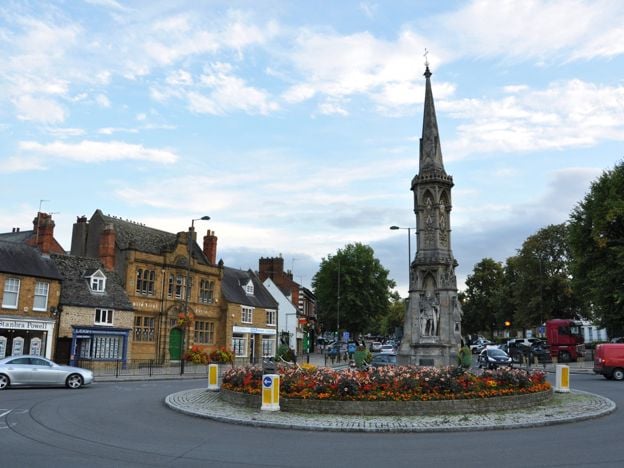
The Banbury Cross of the rhyme is gone. Banbury's own aldermen had the High Cross pulled down on 26 July 1600. The cross you can see dates from 1859 and stands somewhere else, and nobody has ever shown who the fine lady was.
-
Hornton stone and the ironstone villages: why Banburyshire is brown
Story · History · 5 minute read
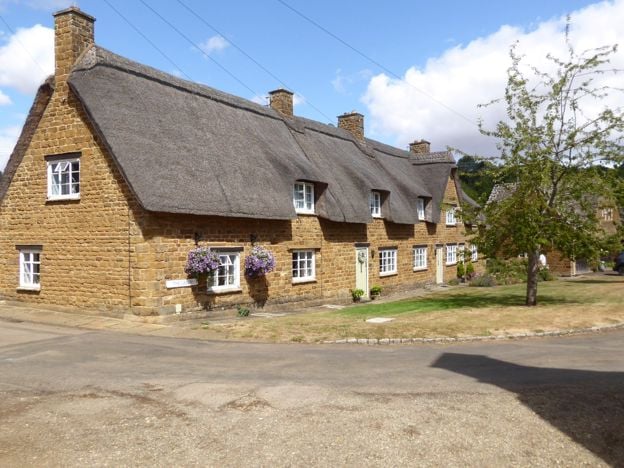
Hornton stone is the rusty ironstone that colours the villages around Banbury. It is a band of Jurassic rock no more than about 10m thick, quarried at Hornton and on Edge Hill for centuries. Henry Moore carved it, and steelworks ate it until 1967.