Banbury Cross: the lost crosses and the fine lady
The town's most famous landmark was torn down by its own leading citizens in 1600. A sworn account of that morning survives, and it is better than the rhyme.
· 7 minute read
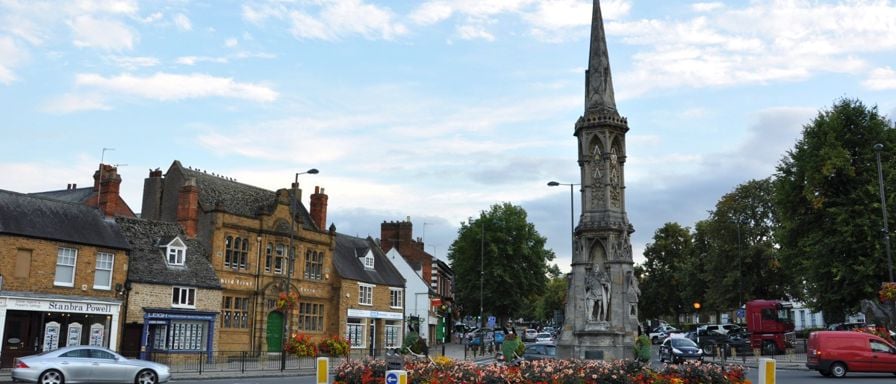
The Banbury Cross you can see today is not the one in the rhyme. It was built in 1859 on the Horse Fair. The town's medieval High Cross stood about a quarter of a mile away at the Market Place, and Banbury's own aldermen had it pulled down soon after dawn on 26 July 1600. The fine lady has never been identified.
The morning of 26 July 1600
The best account of that day was given under oath. Matthew Knight, a Banbury shopkeeper and alderman, answered questions in a case in the court of Star Chamber, and the historian Paul Harvey published his evidence in the Banbury Historical Society's journal in 1967 (opens in a new tab).
Knight was standing at his shop door soon after dawn when he saw two masons start to cut away the block at the foot of the cross. He told them to stop, and they went off, leaving their tools. He then went to find three other senior aldermen to help him prevent it. When he came back, the masons had returned and were levering up the base of the shaft with iron bars, with his namesake William Knight encouraging them.
Around the cross stood Richard and Thomas Wheatley, Henry Shewell, some borough officers with staves and at least 100 other people, not all of whom approved. As Matthew Knight arrived the shaft came down. Shewell, he said, cried out:
'God be thanked, their god Dagon is fallen down to the ground.'
Dagon was the god of the Philistines, whose idol fell before the Ark in the Bible. Shewell then smashed the carvings into small pieces. Knight, afraid of a riot, told the people who objected to go home, and the crowd broke up. The Bread Cross, the town's other market cross, came down the same day or a little earlier.
Many retellings give the crowd as 40 and the words as 'Dagon the deluder of the people'. We have found no source for either. The deposition says at least 100, with the figure altered from 150.
Why they did it
The Victoria County History puts it plainly: the crosses were destroyed in 1600 (opens in a new tab) as objects of 'superstitious veneration'. By the early seventeenth century, it says, the name Banbury had become a byword for puritanism. A passage crossed out of Knight's evidence names one offender: John Traford of Grimsbury, who used to take off his hat when he passed them.
There was politics in it too. The Star Chamber case, brought by George Blinco, was about William Knight and four other leading members of the corporation, all apparently related, misusing their position. Harvey thought those five were probably among the people making Banbury a byword. The satirist Richard Brathwait's verse about a Banbury puritan who hanged his cat on Monday for killing a mouse on Sunday dates from about 1616.
A London Jesuit, Antony Rivers, wrote in 1601 or 1602 that the Archbishop of Canterbury had ordered the culprits to rebuild the cross. There is no evidence that they did. Between 1618 and 1621 the poet Richard Corbet saw only the bases, and compared them to 'old stumps of trees'. Banbury then had no principal cross for 259 years.
What the High Cross looked like
Knight's evidence is the fullest description. The High Cross was of stone, on eight steps, with the lowest step about 7m long on each side. On top stood a block carrying a tall shaft, with a crucifix and other carvings at its head. People sat on the steps and laid out their wares on market days, and public proclamations were made there. A town bye-law of 1558 had the corporation process to the market cross to make its proclamation on fair days, which ties the cross to the fairs as well as the market.
John Leland, who came through between 1535 and 1543, called it 'a goodly cross with many degrees about it'. A will of 1478 left money to repair a stone cross that was probably the same one. The name High Cross is recorded from 1548 and Market Cross from 1558. Harvey showed that these were two names for one cross.
Three crosses, and where they stood
Banbury had at least three, and the Victoria County History sets them out (opens in a new tab). The High Cross stood in or beside the Market Place, probably at the southern end of Cornhill. The Bread Cross was a stone market cross with a slate roof, where Butchers Row meets the High Street, first mentioned in 1441 and named for the bakers who probably had stalls there beside the butchers. The White Cross marked the western edge of the borough in 1554. By 1606 it was only 'the great stone called the White Cross', and it may have been no more than a worn base.
None of them stood on the Horse Fair. The county history finds no evidence of a medieval cross there at all. The Victorian monument is where it is because Alfred Beesley, writing his history of the town in 1841, believed the principal cross had stood there. The belief lasted: when trees were planted on the Horse Fair in 1885, the street's oldest resident asked to plant the corner one, because that, he said, was where the original cross had been.
The cross you can see
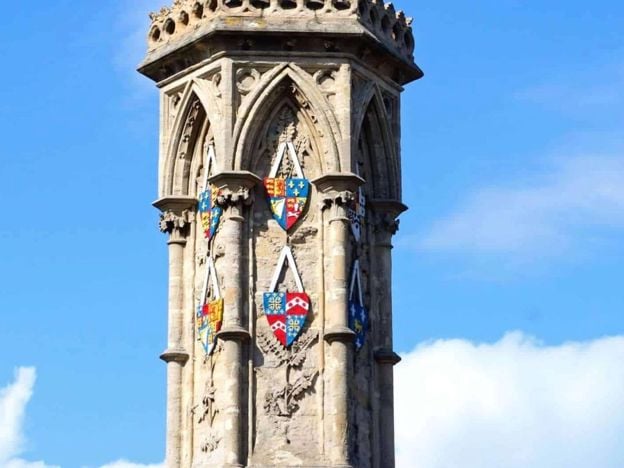
The present Banbury Cross commemorates the marriage of Victoria, the Princess Royal, to the Crown Prince of Prussia. The Historic England listing (opens in a new tab), which we read through its copy on British Listed Buildings, gives it as Grade II*, by J. Gibbs of Oxford, in limestone, in the style of an Eleanor Cross. It dates the work to 1858, the year Gibbs's design was chosen; the cross itself went up in 1859. It is not one of the true Eleanor Crosses, only built after their pattern. The figures of Queen Victoria, Edward VII and George V were added in 1914, and the listing names Boulton and Sons as the carvers. Practical details for a visit are on the Banbury Cross page.
The rhyme came much later
The rhyme proves nothing about the medieval cross, because it first appears in print well over a century after the cross fell. The Victoria County History gives the earliest recorded version as about 1744, with others by about 1780 and 1784. Early seventeenth-century writers, who made plenty of jokes about Banbury, do not mention it.
The first versions are not about a lady. The Victoria County History sets them out. In the verse of about 1744 the rider goes to Banbury Cross to see what Tommy can buy, and the answer is bread, cake and a pie. One of about 1780 buys a pony for a little girl called Nancy. The version in Gammer Gurton's Garland of 1784 has an old woman on the horse, already with rings on her fingers and bells on her toes. The fine lady first appears in 1797. Later collections sometimes put Coventry or Shrewsbury in Banbury's place, but every eighteenth-century version names Banbury.
Who was the fine lady
Nobody knows, and every answer you will read is a guess. Queen Elizabeth I and Lady Godiva are the usual candidates. The local one is Celia Fiennes, the traveller, whose brother was the third Viscount Saye and Sele of Broughton Castle, on the strength of a supposed reading 'a Fiennes lady'. No evidence has been found for any of them, and the lady herself is not in the rhyme until 1797.
The most attractive idea is a custom more than a person. The Banbury Historical Society's journal described the Horse Fair in 1974 as the traditional scene of May Day festivities and 'the Riding of the Lady on the White Horse'. The journal offers that as tradition, and we have not found a record of it earlier than the rhyme.
The Banburyshire newsletter
Events, new places and the best of the season, about once a month. Unsubscribe at any time.
The Fine Lady statue
The bronze near the cross is modern and owes nothing to any historical lady. The Princess Royal unveiled it on 27 April 2005. It was designed by Artcycle Ltd and cast in bronze, on a plinth of local Hornton stone, with the rhyme on its base.
It stands on South Bar, across the road from the cross. The Public Statues and Sculpture Association (opens in a new tab) credits the figure and base to Andy Edwards, Julian Jeffery and Carl Payne, and the horse, a Welsh cob, to Denise Dutton. It says the statue was conceived for the Golden Jubilee of 2002 and paid for by the people of Banbury, and that raising the money took three more years. She is shown as the Queen of the May. Banbury FM's account of the design counts thirteen flowers in her crown, one for each month of the old year.
Seeing it all on foot
Everything here is in the town centre and free to look at. Nothing of the medieval crosses survives above ground, so go for the places and do not expect ruins. Start in the Market Place and look along Cornhill, where the High Cross probably stood. Go on to Butchers Row, where the journal recorded in 1974 an aluminium plaque to the Bread Cross on the wall of the Coach and Horses Inn, the first of three planned for the crosses' sites. Then walk up the High Street to the Horse Fair for the Victorian cross, with the Fine Lady across the road on South Bar.Banbury Museum and Gallery is the place to go on from there for the town's history, and the Banbury guide has the rest of the day.
Places to stay near Banbury
-
Whately Hall Hotel, Banbury
Hotel · Banbury
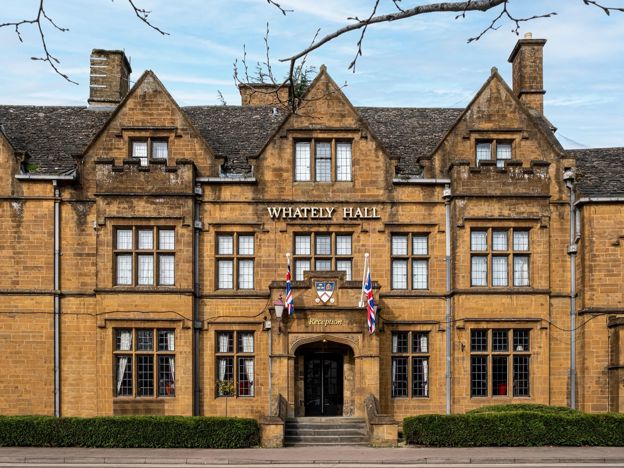
A Grade II listed 17th-century inn, now a 71-room hotel on Horse Fair in the middle of Banbury, with gardens, an oak-panelled restaurant and six EV chargers.
Dog-friendly · Family-friendly · Wedding venues
Verified Nov 2026
-
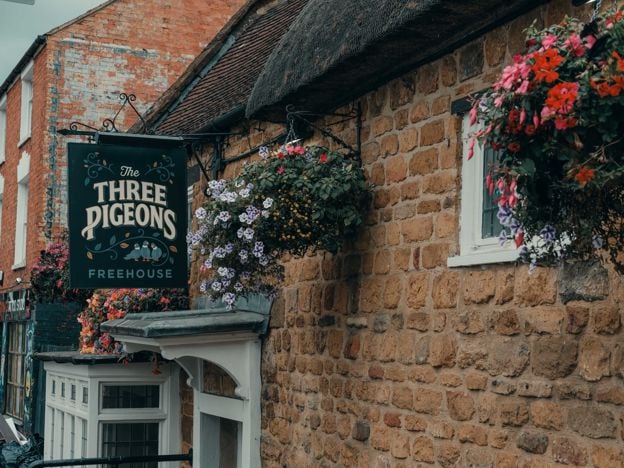
The Three Pigeons, Banbury
Pubs · Banbury
A Grade II listed 17th-century inn, partly thatched, on Southam Road, Banbury, with real ales and ciders, a courtyard, Smash Cow street food from Thursday to Saturday and three en-suite rooms.
Dog-friendly · Car-free
Verified Nov 2026
-
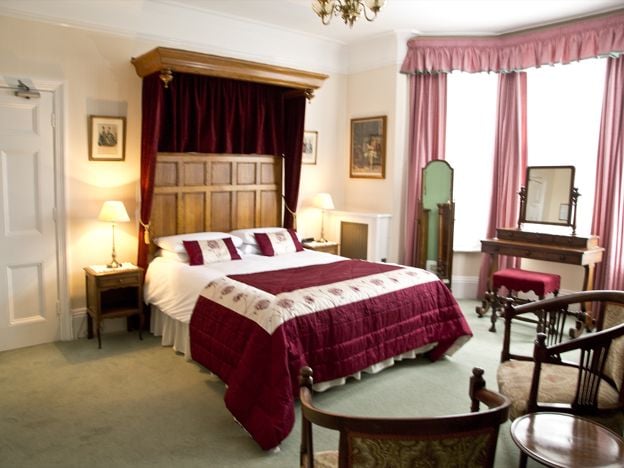
Banbury Cross Bed and Breakfast
B&B · Banbury
A family-run Victorian B&B on Broughton Road, Banbury, with seven bedrooms, about 370m from Banbury Cross, with free off-road parking, cooked breakfasts and rates from £77. No under-18s.
Car-free
Verified Nov 2026
Read next
-
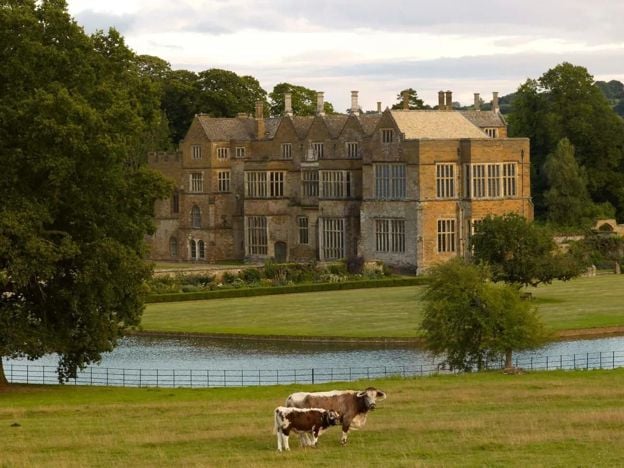
The Civil War in Banburyshire: Edgehill, Cropredy and Banbury's sieges
Story · History · 7 minute read
Banburyshire saw the Civil War's first great battle at Edgehill in 1642, a Royalist win at Cropredy Bridge in 1644 and two sieges of Banbury Castle. By 1648 the castle had been pulled down. Banbury lost hundreds of its people, and this is how it happened.
-
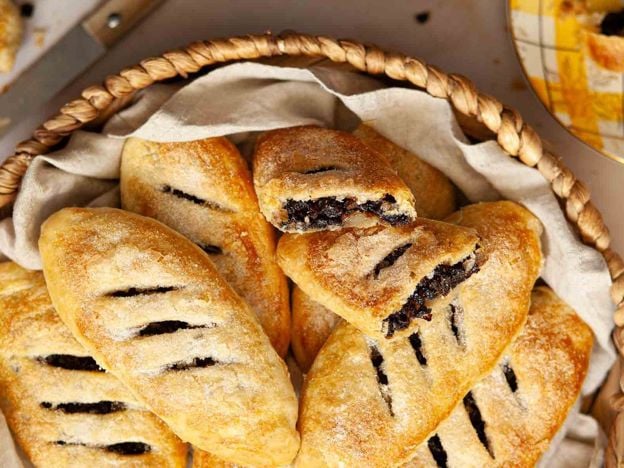
The original Banbury cake: its history and Gervase Markham's recipe
Story · History · 6 minute read
Banbury cakes are spiced currant cakes known by 1610. The oldest printed recipe we have found, in Gervase Markham's household book, was a yeasted dough. This is what the records show, what they do not, and a recipe worked from his method, with the later puff pastry version.
-
Hornton stone and the ironstone villages: why Banburyshire is brown
Story · History · 5 minute read
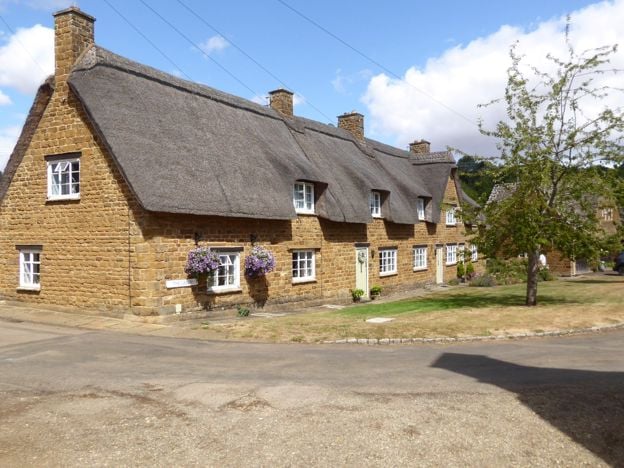
Hornton stone is the rusty ironstone that colours the villages around Banbury. It is a band of Jurassic rock no more than about 10m thick, quarried at Hornton and on Edge Hill for centuries. Henry Moore carved it, and steelworks ate it until 1967.