Churches near Banbury worth seeing
Bloxham for length, Adderbury for strength, Kings Sutton for beauty: the old rhyme names three spires within 5 miles of Banbury, and they are only the start. Here are the churches with something to see, what to look for in each, and which ones you can count on finding open.
· 9 minute read
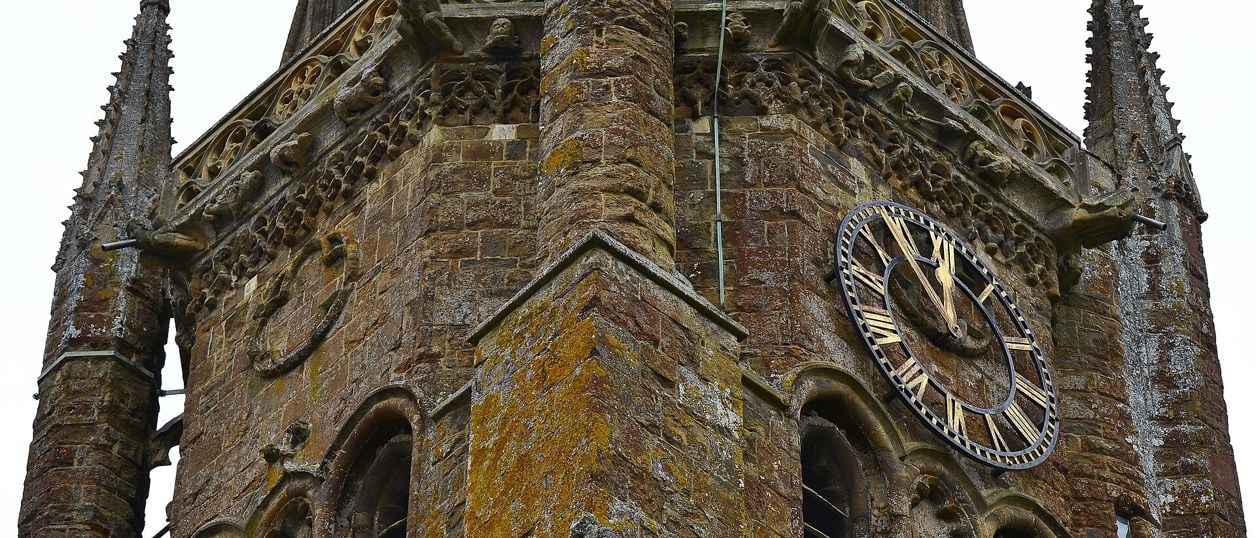
The churches most worth seeing near Banbury are the three spires of the old rhyme: St Mary's at Bloxham, St Mary's at Adderbury and St Peter and St Paul at Kings Sutton. Add All Saints at Burton Dassett, built up a hillside, St Peter's at Hook Norton for its carved Norman font, and St Mary's at Broughton for its wall paintings, and you have the best of the churches round the town.
How we chose: every church here has something specific to see, by its Historic England list entry, the Victoria County History or its parish's own guide, and most are listed Grade I. We have not been inside them for this page. We say a church is open only where its own page or the National Churches Trust says so. Many village churches are open in daylight and many are not, so check before a special trip.
The three spires: Bloxham, Adderbury and Kings Sutton
The local rhyme runs 'Bloxham for length, Adderbury for strength, Kings Sutton for beauty'. All three are Grade I, within about 5 miles of Banbury, and a morning's drive takes in the lot. Adderbury and Bloxham are about 2.5 miles apart.
St Mary's, Bloxham. The 'length' is the tower and spire, about 60m, mostly fourteenth century and seen for miles across the A361. Above the west doorway the twelve apostles line the hood-mould, with the Last Judgement carved over them in the early fourteenth century. Inside, the east window of 1869 is Morris & Co work, designed by William Morris and Edward Burne-Jones, and the Milcombe Chapel holds the marble monument to Sir John Thornycroft, who died in 1725, shown reclining on one elbow in his periwig. The National Churches Trust lists it as open daily from 10am to 5.30pm, March to October. The free village museum next door opens on weekend and bank holiday afternoons from Easter to the end of October.
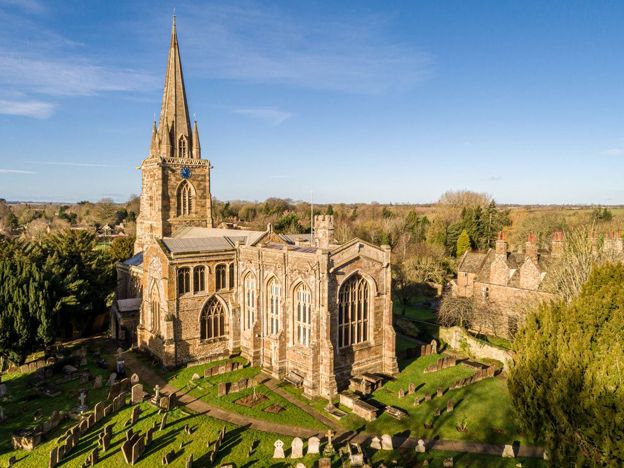
St Mary's, Adderbury. Cruciform, with its tower and spire of the late thirteenth or early fourteenth century, and a chancel that New College, Oxford, paid for between 1408 and 1419, with Richard Winchcombe as chief mason. The Victoria County History calls the chancel a notable example of Perpendicular architecture. Outside, a carved frieze runs round the aisles, with medieval musicians and grotesques on the north side, and it is the thing to look up at before you go in. Its page says it is open every day from 9.30am to 5pm.
St Peter and St Paul, Kings Sutton. The 'beauty' is a crocketed spire of about 1370, about 60m high, and the parish calls it one of the finest spires in the country. Inside are a plaster monument to Thomas Langton Freke, who died in 1769, showing the Resurrection with an angel trampling a skeleton, and a large stone font: the parish council's history says the stone was found under an earth mound outside the porch in 1923. Legend links the font to St Rumbold, said to have been born here in 662, and nobody can prove it. The church is open in daylight and welcomes walkers and dogs, and the village has its own station, the next stop south of Banbury.
St Mary's, Banbury: the classical church by the Cross
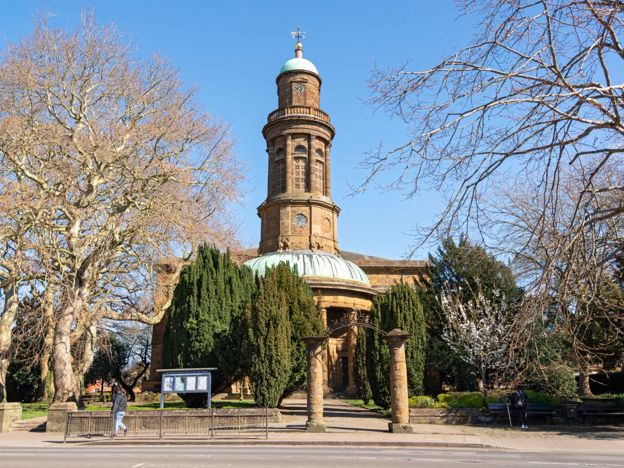
St Mary's in Banbury is the opposite of the village churches: a classical building of the 1790s by S. P. Cockerell, round-towered, behind a semicircular portico on Horse Fair. The town pulled its large medieval church down after surveyors found the tower pressing on the piers, and some of the masonry, says the Victoria County History, came down only with gunpowder. The new church opened in 1797 without its tower, which was finished by 1822.
Inside, Arthur Blomfield remodelled it in the 1860s and 1870s, with wall paintings and glass by Heaton, Butler and Bayne. Look for the Arctic window to Admiral Sir George Back and an organ of 1765 built for the old church. The parish publishes no fixed visiting hours, so ring the office on 01295 276045, or go to one of its concerts.
West of Banbury: Broughton, Hook Norton and Burton Dassett
The ironstone country west of the town has three churches with things you will not see elsewhere, and two of them sit next to a reason to come anyway.
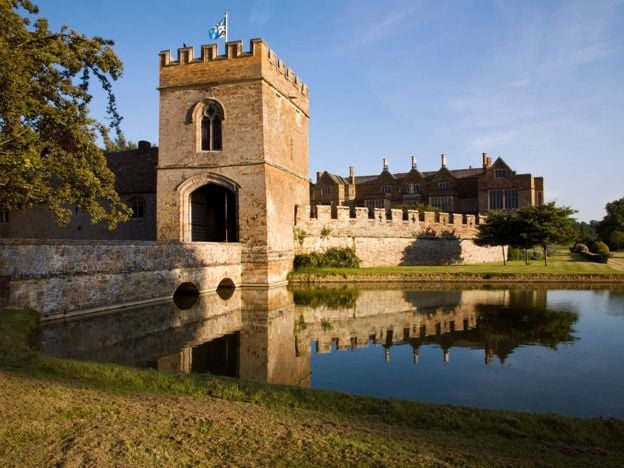
St Mary's, Broughton. Beside the car park of Broughton Castle, Grade I and ironstone like the house, mostly fourteenth century with a broach spire. It has fragments of fourteenth-century wall paintings and tomb effigies, one thought to be Sir John of Broughton, who began the castle. On a castle open afternoon in summer it is the obvious first stop.
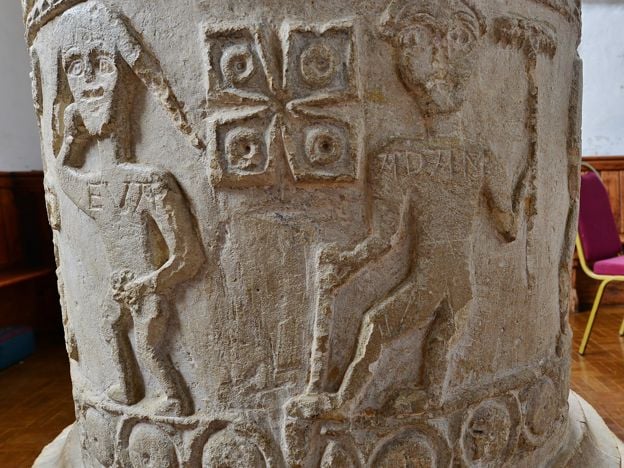
St Peter's, Hook Norton. Grade I, and the reason is its Norman tub font, carved with Adam and Eve alongside signs of the zodiac including Sagittarius and Aquarius. The village history group also points to the big Norman chancel and the wall painting of St Peter and St Paul either side of the window over the chancel arch, and the church keeps the village's old fire engine, last used in 1896. Hook Norton's brewery is at the other end of the village.
All Saints, Burton Dassett. Known locally as the Cathedral in the Hills, and built into the slope so that the floor climbs from the tower to the altar. It grew from the twelfth century to the fifteenth, and has remains of wall paintings of the thirteenth and fourteenth centuries. Look for the carved pillars, with a Green Man and strange beasts, and the monument of 1603 to John Temple in the north transept. The National Churches Trust lists it as open every day from just after 8am until just before dark, and a listed holy well stands nearby.
North of Banbury: Cropredy, Radway and Byfield
North of the town, two churches tell the Civil War and a third is worth the stop on the road to Daventry. None has published opening hours that we could find.
St Mary the Virgin, Cropredy. Grade I and mostly fourteenth century, in squared ironstone, down a lane in the middle of Cropredy. Look for the fragments of a painted Last Judgement over the chancel arch, a thirteenth-century chest with decorative ironwork and a rare pre-Reformation brass eagle lectern. The story goes that the lectern was hidden in the river during the Civil War, and accounts of how long it stayed there differ. The bridge where the royalists won in 1644 is a short walk away.
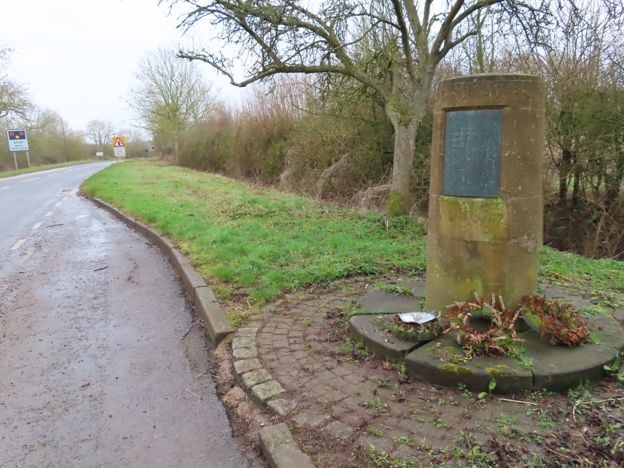
St Peter's, Radway. A church of 1866 at the foot of Edge Hill, and the place to start on the Edgehill battlefield. A free permanent exhibition at the back tells what the battle of 1642 did to local people. The church holds the damaged effigy of Captain Henry Kingsmill, killed in the battle, and a memorial to Sanderson Miller, who built the sham castle on the ridge. See Edgehill and Radway.
Holy Cross, Byfield. Grade I, of the fourteenth and fifteenth centuries, with a recessed spire on its west tower. The list entry picks out stained glass by Kempe of 1897 and 1902 and a six-sided seventeenth-century pulpit. It is on the A361 on the way to Badby Woods, so treat the inside as a bonus.
The Banburyshire newsletter
Events, new places and the best of the season, about once a month. Unsubscribe at any time.
South and east: Deddington, Aynho, Sulgrave and Brackley
The churches to the south and east each carry one good story, and they pair with a village or a house worth the trip.
St Peter and St Paul, Deddington. An ironstone church whose medieval tower and spire fell in March 1634. During the Civil War the King took four of its five bells to Oxford to be made into artillery, says the Victoria County History. The contract to finish the new tower came only in 1683, and its statues of the two saints seem to have been salvaged from the old steeple. Deddington's castle banks are a few minutes' walk away.
St Michael's, Aynho. It looks like two buildings because it is: a medieval tower, and a classical church rebuilt from 1723 to 1725 by Edward Wing, with its box pews, pulpit and eighteenth-century west gallery still inside. We could not confirm when it is open. See Aynho.
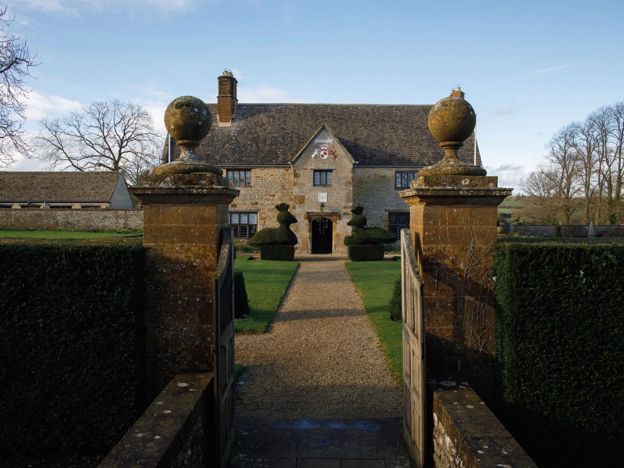
St James the Less, Sulgrave. The church of the Washingtons. It keeps an oak pew with Elizabethan moulding used by the manor's owners, thrown out in 1885 and returned in 1924, and in front of it, under a Hornton stone slab, lie Lawrence Washington, his wife and their eldest son. The village's history pages describe the west door as Saxon. Pair it with Sulgrave Manor, and see Sulgrave Manor and the Washingtons.
St Peter's, Brackley. The town's only Grade I building, by its own account, with an ornate late Norman south doorway and a thirteenth-century west tower picked out by the list entry. We could not confirm its hours. See Brackley.
Chipping Norton: a wool church
Chipping Norton's St Mary's is the wool church of this part of the world, about 30 minutes south-west of Banbury. Historic England dates its nave to about 1485 and the parish to about 1450, with a tall clerestory that fills it with light, and Historic England's list entry calls the two-storey south porch a rare hexagonal structure. Inside are the wool merchants' brasses, mostly fifteenth century, and the alabaster tomb with effigies of Richard Croft, who died in 1502, and his wife, who died in 1509. We could not find regular opening hours.
Visiting churches near Banbury
Plan a church day round the few that publish their opening. Adderbury opens daily from 9.30am, Burton Dassett from just after 8am to dusk, Kings Sutton in daylight, and Bloxham daily from March to October by the National Churches Trust. For the rest, look for the notice at the door or the parish's page, and remember these are working churches: keep away from services, weddings and funerals.
The best one-day route is the three spires in the morning, Bloxham, Adderbury and Kings Sutton, with lunch at the Butchers Arms in Kings Sutton (ring to check food times), then Deddington on the way back. On a summer afternoon, Broughton's church and castle fit together, and from May to late September Swalcliffe Barn, a medieval tithe barn of about 1401, opens free on Sunday and bank holiday afternoons. Hornton stone and the ironstone villages explains why so many of these churches are brown.
Mentioned in this story
The places, sights and walks in this story, each with a page of its own: what it is, when to go and how to get there.
-
Broughton Castle
Historic houses and heritage · Broughton
-
Sulgrave Manor
Historic houses and heritage · Sulgrave
-
St Mary's Church, Banbury
Sight · Church · Banbury
-
St Mary's Church, Adderbury
Sight · Church · Adderbury
-
Edgehill battlefield
Sight · Monument · Edgehill and Radway
-
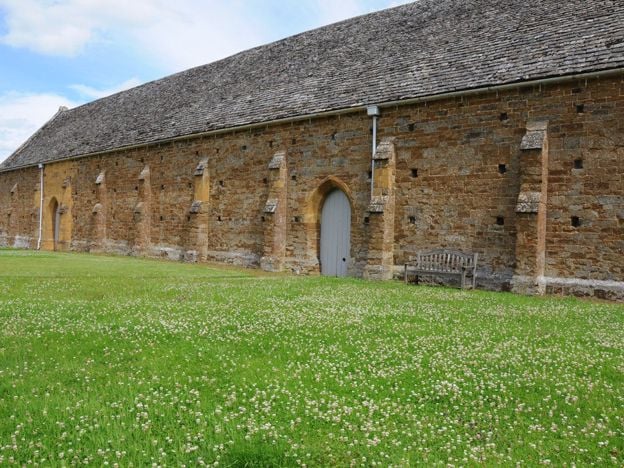
Swalcliffe Barn
Sight · Historic building
Places to stay near Bloxham
-
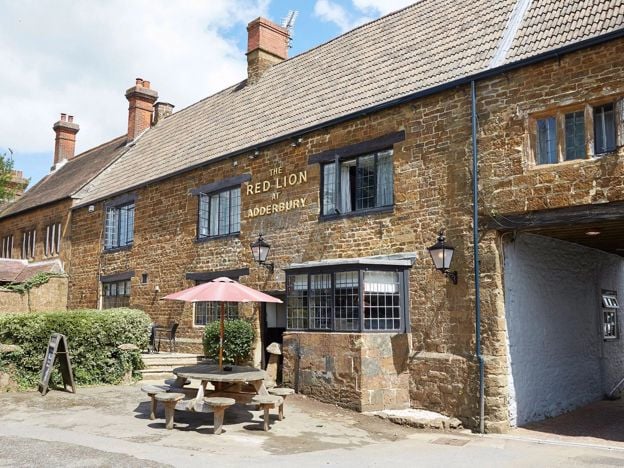
The Red Lion, Adderbury
Pubs · Adderbury
A Grade II listed Greene King pub and inn on The Green at Adderbury, serving food from breakfast to 9pm every day, with a car park, a beer garden and rooms.
Dog-friendly · Family-friendly
Verified Nov 2026
-
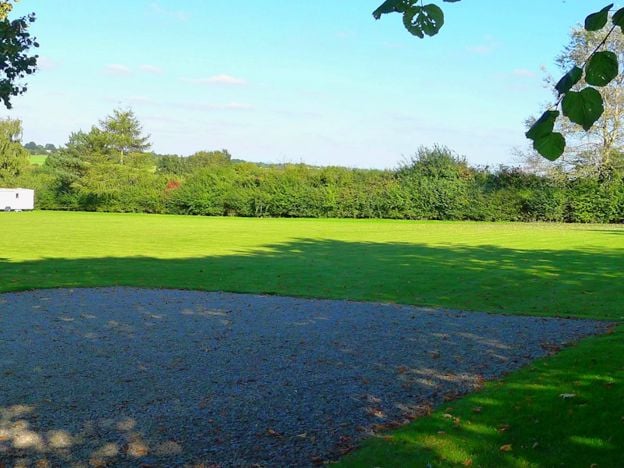
Newton Grove, South Newington
Camping
A small, off-grid Caravan and Motorhome Club Certificated Location on 1.8 acres near South Newington, for club members only, with hardstandings and grass pitches, dog-friendly and without hook-ups.
Dog-friendly
Verified Nov 2026
-
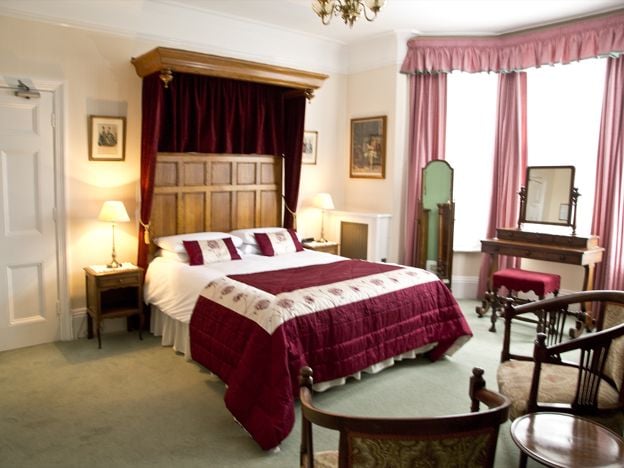
Banbury Cross Bed and Breakfast
B&B · Banbury
A family-run Victorian B&B on Broughton Road, Banbury, with seven bedrooms, about 370m from Banbury Cross, with free off-road parking, cooked breakfasts and rates from £77. No under-18s.
Car-free
Verified Nov 2026
Read next
-
Hornton stone and the ironstone villages: why Banburyshire is brown
Story · History · 5 minute read
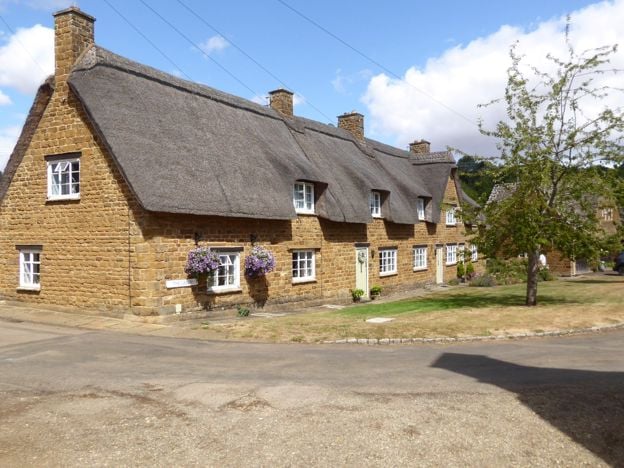
Hornton stone is the rusty ironstone that colours the villages around Banbury. It is a band of Jurassic rock no more than about 10m thick, quarried at Hornton and on Edge Hill for centuries. Henry Moore carved it, and steelworks ate it until 1967.
-
Sulgrave Manor and the Washingtons: George Washington's ancestral home
Story · History · 8 minute read
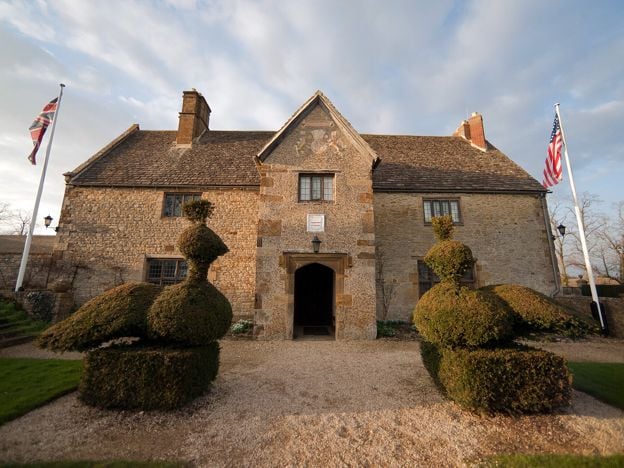
Sulgrave Manor is George Washington's ancestral home, built by his ancestor Lawrence Washington. But George never lived there, and the claim about its arms and the American flag is a legend. How it was built, lost, bought back for peace in 1914 and run today.
-
The Civil War in Banburyshire: Edgehill, Cropredy and Banbury's sieges
Story · History · 7 minute read
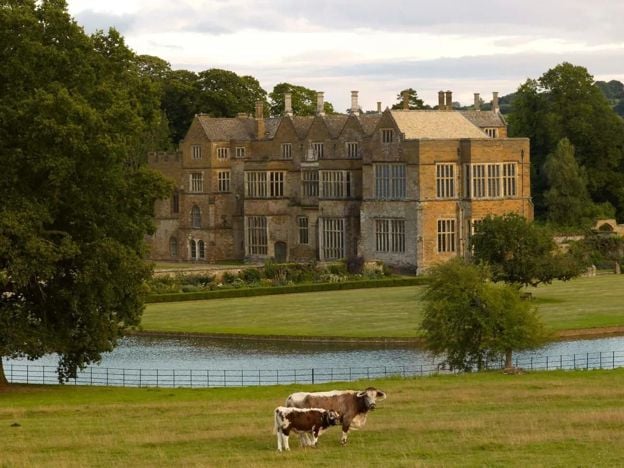
Banburyshire saw the Civil War's first great battle at Edgehill in 1642, a Royalist win at Cropredy Bridge in 1644 and two sieges of Banbury Castle. By 1648 the castle had been pulled down. Banbury lost hundreds of its people, and this is how it happened.