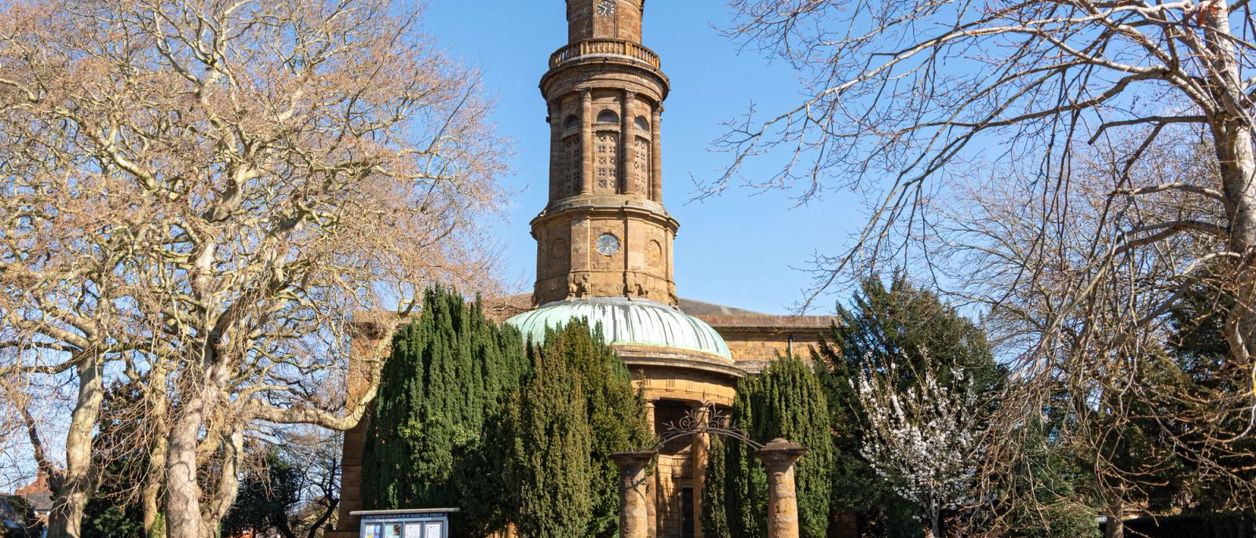
St Mary's Church, Banbury
A round-towered classical church on Horse Fair in Banbury, built after the medieval church was brought down, in part with gunpowder. Grade I, by S. P. Cockerell. Open most mornings.
Church
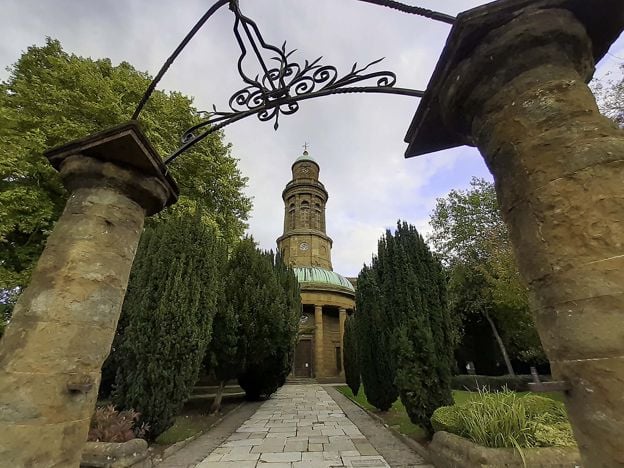
BanburySt Mary's is the big classical church on Horse Fair in Banbury, near the Cross. Samuel Pepys Cockerell designed it, and it opened in 1797 in place of a large medieval church. Historic England lists it Grade I. Look for the round tower above its semicircular portico.
The story of St Mary's
The town built this church because it decided the old one was failing. The medieval building was cruciform and large, with a mid-fifteenth-century central tower. The Victoria County History traces the worry back to 1724, when its pillars were called too slender. In 1789 surveyors reported that the tower was pressing down on the piers.
After further advice from James Wyatt and from Cockerell, the town obtained an Act of Parliament in 1790 for an entirely new church. By 1793 the old one was gone, and the same history says some of the masonry could only be brought down with gunpowder.
The new church opened on 6 September 1797 without its tower or portico, and for a time the tower wore a temporary thatch. Work resumed in 1818 under C. R. Cockerell, the bells were rehung in 1820, and the church was complete by 1822.
The Victorian interior
Arthur Blomfield remodelled the inside in the 1860s and 1870s, with stained glass and wall paintings by Heaton, Butler and Bayne. In 1874 the chancel was raised to full height and given an apse, and the parish says the cancelli, the low screens, were modelled on those at San Clemente in Rome. Further alterations in 2002 extended the chancel to make a stage and added access and toilets.
What to look for
The building's shape is the first thing to take in: a nave with a gallery on three sides, a rusticated ground floor outside and a semicircular Doric portico below the tower. Inside, the parish's own history picks out details most visitors would miss:
- The Arctic window, a memorial to Admiral Sir George Back
- The stained glass in the gallery windows: 30 scenes from the life of Jesus above, 10 parables below
- The organ, built in 1765 by Byfield, Wilcox and Knight for the old church and much altered since
- The Lamp of Brotherhood, which came from Monte Cassino in 1964
- Memorials from the 1580s to the 1820s, recorded in the listing
The tenor bell was cast in 1667 and kept its inscription when the bells were recast into a ring of ten and rehung in 1930, after the old ring had become unsafe.
Two stories the parish does not back
An attribution of the organ to the maker Snetzler has been repeated, and the parish says there is no evidence for it. Jonathan Swift gave Gulliver a family with Banbury tombstones, and the parish notes that no ancient tombstones survive to support that.
Visiting St Mary's
St Mary's is a working church. The parish says it is open most days from 10am to 12 noon, unless welcomers are unavailable, so ring the parish office on 01295 276045 before making a special trip. The church hosts concerts through the year, and when we checked, Christmas concerts were listed for December 2026 on the parish's booking pages. A concert is a good way to see the building in use. On Remembrance Sunday the parade comes here from the Town Hall before a wreath-laying in People's Park.
Getting there
St Mary's is on Horse Fair, OX16 0AA, on foot from the High Street and Banbury Cross. Drivers should use a town car park: see our guide to parking in Banbury.
Nearby
The Cross and the Fine Lady are both a few minutes away, and People's Park is close by. Banbury Museum and Gallery covers the town's wider story. For a contrast in church building, the medieval St Mary's at Adderbury is a short drive south.
Walks past St Mary's Church, Banbury
-
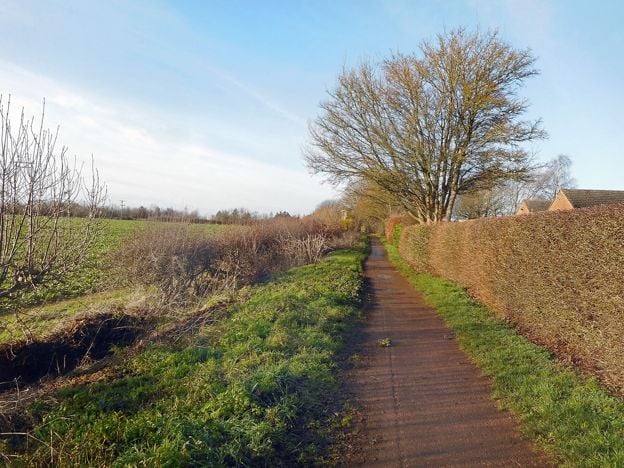
Banbury Fringe Circular Walk
Walk · Starts in Banbury · 5 hrs · Circular
A 10.6-mile (17.1km) waymarked circular walk round the edge of Banbury, moderate and about five hours: the Oxford Canal south to Bodicote, the Salt Way past Crouch Hill, field and wood paths by Giant's Cave, and an old ironstone railway back to the canal.
-
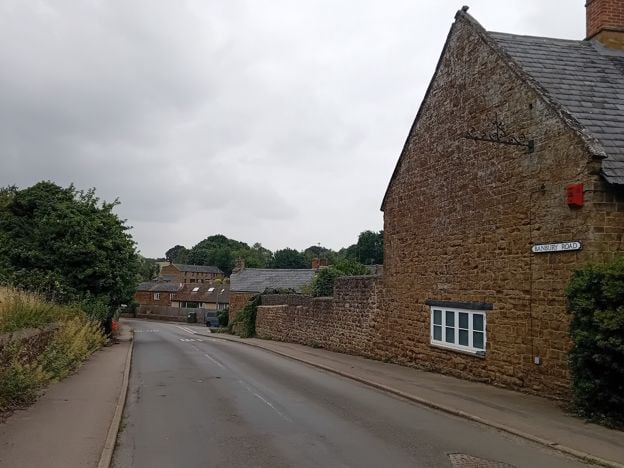
Banbury Ironstone Heritage Walk
Walk · Starts in Banbury · 4 hrs · Circular
The Banbury Ironstone Heritage Walk is a 9.6-mile (15.5km) moderate circular walk from Banbury station, about four hours with 180m of climbing. It follows the canal, skirts the northern estates, reaches Wroxton and North Newington, and ends at Banbury Cross.
-
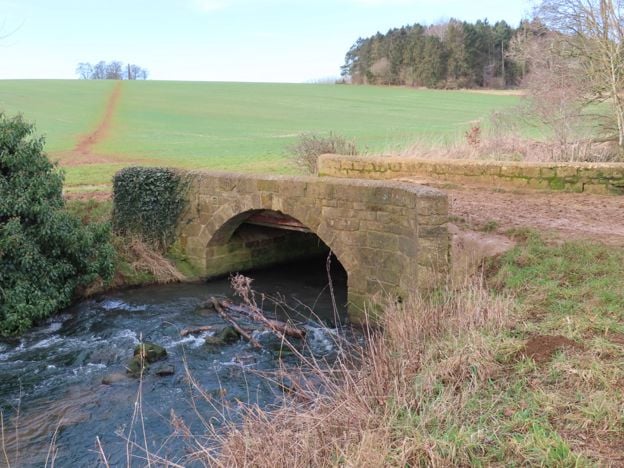
Broughton Road to Wroxton Obelisk Circular
Walk · Starts in Broughton · 2 hrs · Circular
A 4.5-mile (7.3km) circular walk from the car park on Broughton Road, about two hours of moderate walking on field paths. It crosses the Sor Brook, climbs to the Wroxton Obelisk and returns by the other bank. It does not go through Broughton or past the castle.
Stay and eat near St Mary's Church, Banbury
-
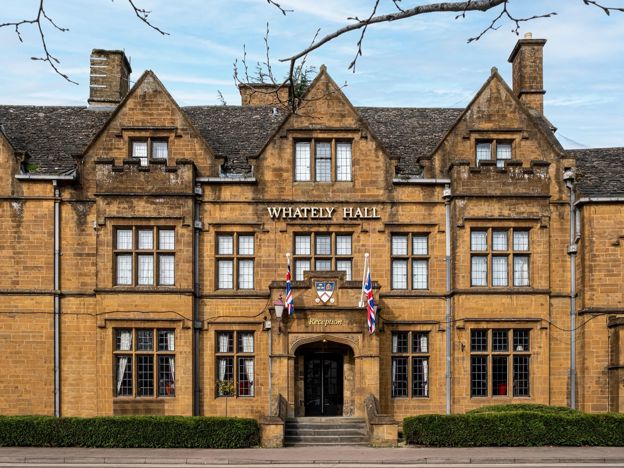
Whately Hall Hotel, Banbury
Hotel · Banbury
A Grade II listed 17th-century inn, now a 71-room hotel on Horse Fair in the middle of Banbury, with gardens, an oak-panelled restaurant and six EV chargers.
Dog-friendly · Family-friendly · Wedding venues
Verified Nov 2026
-
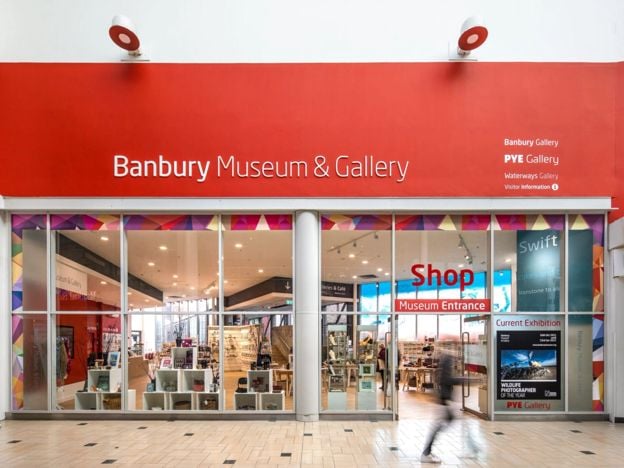
Banbury Museum and Gallery
Museums and galleries · Banbury
Banbury's free town museum, on the Oxford Canal with an entrance in Castle Quay: Bronze Age finds, a cannon from Banbury Castle, plush cloth and a canal gallery, with paid touring exhibitions and a canalside café.
Family-friendly · Rainy days · Car-free
Verified Nov 2026
-
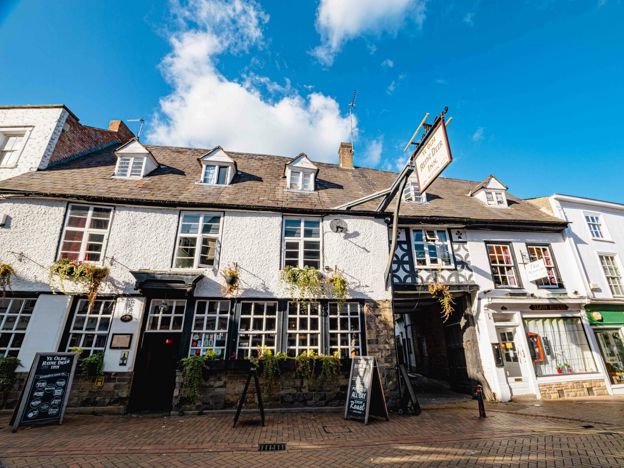
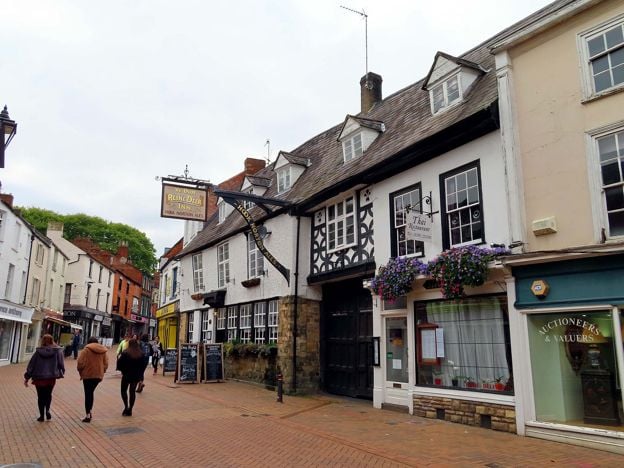
Ye Olde Reine Deer Inn, Banbury
Pubs · Banbury
A Parsons Street pub that dates itself to 1570 and calls itself Banbury's oldest, a Hook Norton house with the panelled Globe Room of the 1630s, serving food every day from noon to 9pm.
Car-free
Verified Nov 2026
Stories about St Mary's Church, Banbury
-
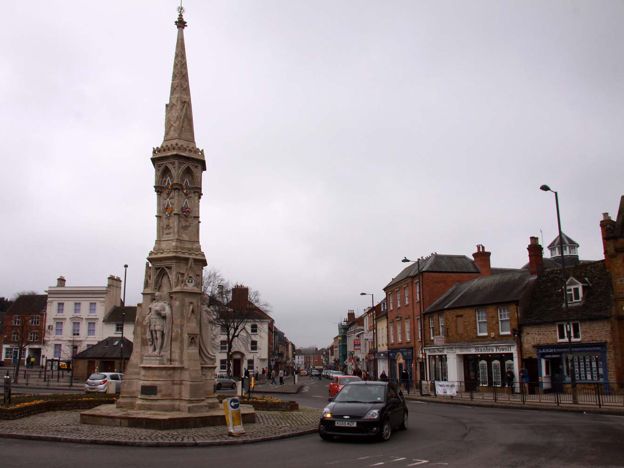
Banbury heritage walk: a self-guided town centre route
Story · Guides · 6 minute read
A self-guided heritage walk round Banbury town centre: the Fine Lady, the Cross, St Mary's, Parsons Street, the Market Place and the canal. It is under a mile (1.3km) and free, taking about an hour with stops, or two with the museum.
-
Banbury's ghosts: Father Bernard, the Cavalier and the tunnels
Story · Strange Things · 5 minute read
Banbury's best ghost lives in a hotel by the Cross: a priest said to have died of fright in 1687 when a servant rang the alarm as a joke. There is a Cavalier at the Reine Deer and tunnels under everything. What the stories say, how they differ, and what the record shows.
-
Banbury's puritans: the 'Banbury man', the roaring boy and the zealots
Story · History · 7 minute read
By 1614 'a Banbury man' meant a puritan, and writers mocked the town's zeal. Its people pulled down their crosses, a vicar preached twice every Sunday and was called the roaring boy, and the Quakers came next. What the record shows, and what was a joke.
More sights to see
-
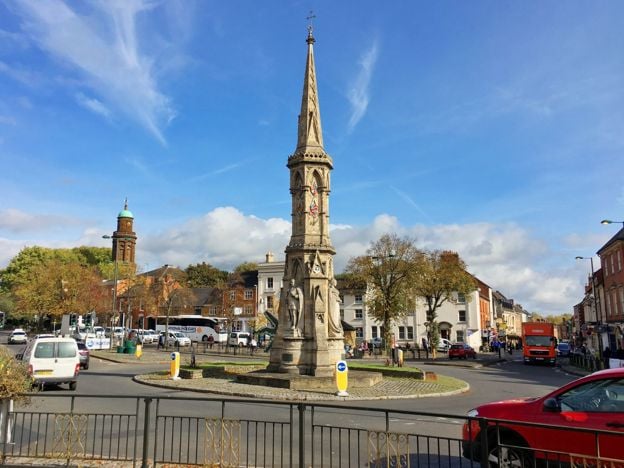
Banbury Cross
Sight · Monument · Banbury
The cross of the nursery rhyme stands at the top of Banbury High Street, but it is a Victorian monument of 1858 to 1859, put up about 250 years after the town's medieval crosses were pulled down. Grade II*, free and seen from the street at any time.
-
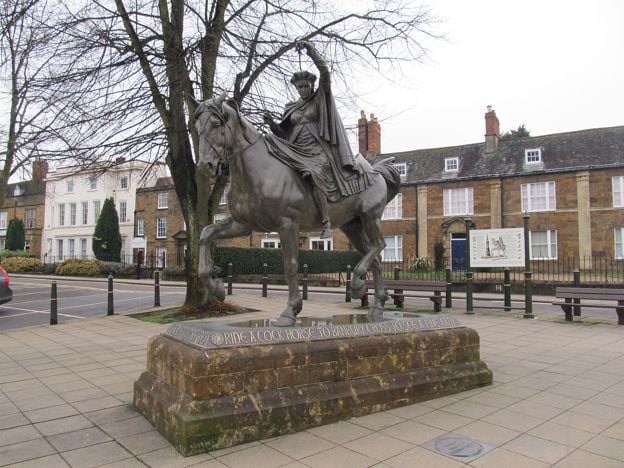
Fine Lady statue, Banbury
Sight · Monument · Banbury
A bronze of the rhyme's fine lady on her white horse, on a Hornton stone plinth where South Bar meets West Bar in Banbury. The people of the town paid for it, and the Princess Royal unveiled it in 2005. Free to see at any time.
-
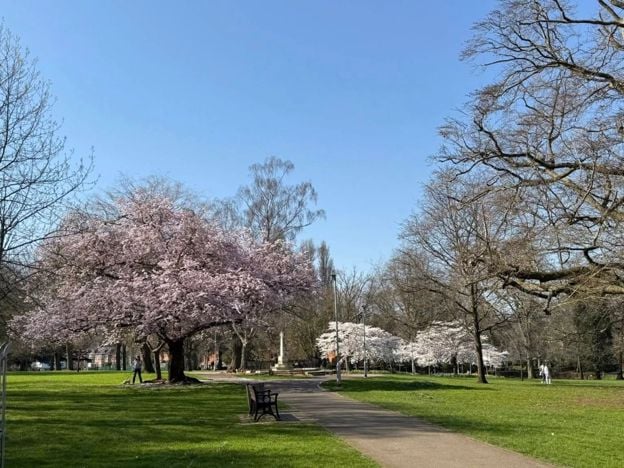
People's Park, Banbury
Sight · Common or park · Banbury
Banbury's town centre park, opened in 1919 to mark the peace, with an aviary of budgies and cockatiels, a walled garden, rose garden, bowling green, tennis, a play area and a café. Free, and run by the town council.