Sulgrave Manor and the Washingtons: George Washington's ancestral home
A Northampton wool merchant built it, his descendants lost it, and two countries bought it back to mark a century of peace. The stars and stripes on the porch are real. The story that they became the flag is not.
· 8 minute read
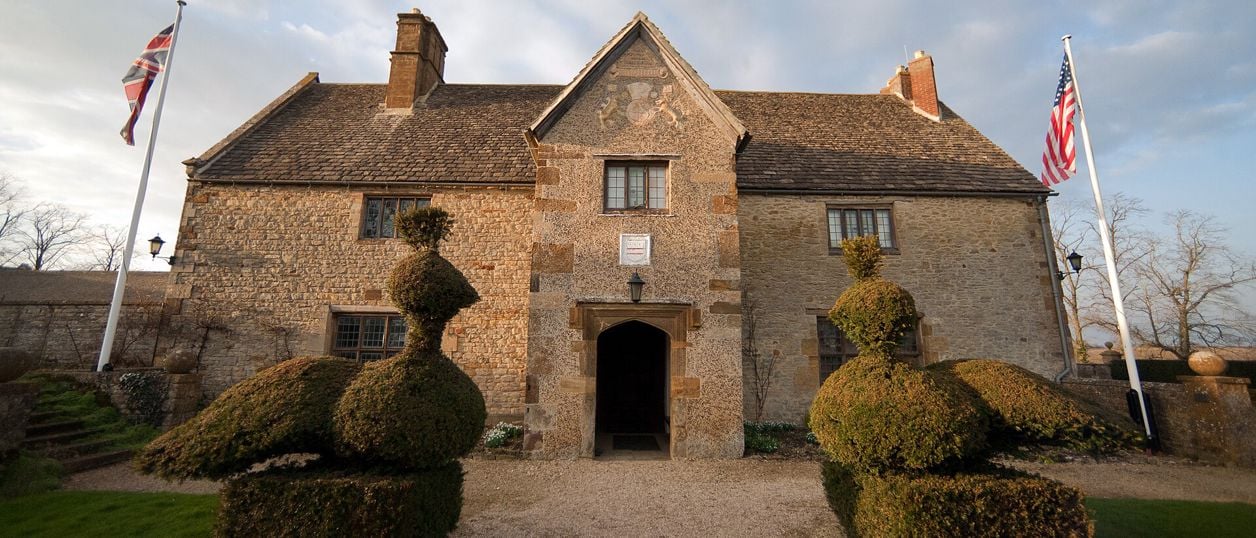
Sulgrave Manor is George Washington's ancestral home in the strict sense of the words. His ancestor Lawrence Washington built it in the sixteenth century, and the family's arms are still on the porch. But George never lived here, the house left the wider family 73 years before he was born, and the best-known claim about it, that its carved stars and bars gave America its flag, has no evidence behind it. What is left is a better story than the myth: an English wool merchant's house, a line of descendants who lost it, and two countries that bought it back in the name of peace.
Lawrence Washington, the wool merchant who built it
The record starts with a man from Northampton. Lawrence Washington was a wool merchant, and the town's lists of mayors have him in office in 1532 and again in 1545. When Henry VIII dissolved St Andrew's Priory at Northampton, which held Sulgrave, the Crown sold the manor on, and Historic England records that Lawrence acquired it in 1539.
He built between about 1540 and 1560, according to the same listing. The manor's own site says 1539, which is the purchase, not the finished house. The parish's history has it begun about 1539 and complete about 1560. He had his family's arms carved in the spandrels of the porch, the triangles either side of the arch. Lawrence died in 1584 (some accounts say 1583), and he lies in the church of St James the Less in Sulgrave, with his wife Amee Pargiter and their eldest son Robert, under a slab of Hornton stone.
From Sulgrave to the Potomac
The Washingtons did not keep the house for long. By 1610 it had gone to a relative, Lawrence Makepeace, a grandson of the builder in the words of the Historic England listing. Other accounts call him a nephew or a cousin of the family who sold, and the parish's history has him taking over only after Robert's death in 1619. Sources agree on the outcome: the Washington name had left the manor before the family moved towards America.
The line runs on through Robert's son Lawrence and his son, also Lawrence, who was rector of Purleigh in Essex until Puritans ejected him in 1643. His son John came over on a small trading ship, the Sea Horse of London, reaching the Potomac late in 1656 by the National Park Service's account, and stayed. George, born in 1732, was John's great-grandson, through John's son Lawrence and Lawrence's son Augustine. That puts George seven generations from the man who built Sulgrave. In 1659 the manor was sold, and the listing says it then had no further connection with the Washingtons.
What George Washington knew
He knew little, and he said so. In December 1791 Sir Isaac Heard, Garter King of Arms in London, wrote to the President with an abstract of his grandfather's will and questions about his family. Washington had to ask relations for the facts, and when he replied in May 1792 he called family history a subject to which he had paid little attention. His own account put the emigrants' arrival about 1657 and said they came from the north of England.
The arms and the flag: the record
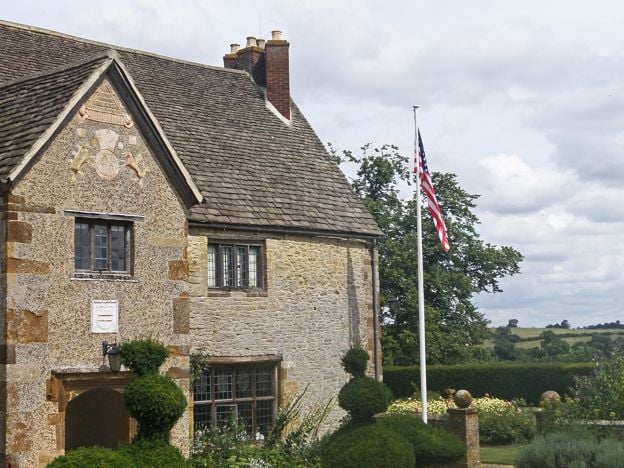
The arms are real, and you can stand in front of them. They show two red bars and three red stars, or mullets in the language of heraldry, on white, and George Washington used the same arms. Historic England records them in the spandrels of the porch, and in plaster above.
The flag has its own record, and Sulgrave is not in it. The Continental Congress resolved on 14 June 1777 that the flag would have 13 stripes and 13 stars. The nearest thing to a designer's claim is a bill from Francis Hopkinson, a signer of the Declaration, who asked Congress in 1780 to pay him for the flag and other devices. The Board of Treasury disputed the bill, and most historians credit him all the same, according to the Smithsonian's National Postal Museum. We found no paper of the time that mentions Washington's arms.
The arms and the flag: the legend
The story that the arms inspired the Stars and Stripes seems to come from a work of fiction. The English poet Martin Tupper wrote a verse play, Washington: A Drama in Five Acts, for the centenary of 1876, in which Benjamin Franklin credits the design to Washington's arms. A children's magazine, St. Nicholas, spread it further, as flag histories by John Vile and Marc Leepson tell it. Sulgrave's own parish history of 1995 says the arms are 'widely believed' to have inspired the flag. Travel writers still repeat it.
Mount Vernon's encyclopedia calls it an enduring myth and finds no discernible evidence for it. There is one real descendant of the design: the flag of the District of Columbia, adopted in 1938, which does use the Washington arms on purpose. If you hear that the flag began on this porch, enjoy the resemblance and leave it there.
The other tale told about the porch deserves the same care. High in the gable are the Royal Arms of Elizabeth I, and the parish history passes on a tradition that Elizabeth hid here in 1554 and that the arms were the reward. The same history calls that 'enticing conjecture', which is the right tone.
Who ran it after the Washingtons
For more than 250 years Sulgrave was somebody else's house and then barely a house at all. The buyer in 1659 was Edward Plant of Kelmarsh, by the parish's account, and in 1673 it went to the Reverend Moses Hodges. His son John added the Queen Anne wing about 1700, and the family's descendants kept it until the first half of the nineteenth century. Long before that it had become a farm, part of it had been pulled down, and it was described as a common farmhouse. The Hely-Hutchinsons bought it about 1840, and their relations the Reynell-Packs held it until 1914.
1914: a house bought for a peace
The second life of Sulgrave began with a date. The Treaty of Ghent had ended the war between Britain and the United States in December 1814, and committees on both sides of the Atlantic, formed in 1911, looked for a way to mark a hundred years of peace. The British committee settled on the Washingtons' old home, and in January 1914 it paid £8,400 for the house, raised by public subscription. The parish history gives £12,000 as the sum raised, which may include more than the purchase, and we found no account that settles it. The National Society of the Colonial Dames of America sent a portrait of Washington and $2,500 the same year.
The timing could hardly have been worse. War broke out in Europe that August, and the work waited. Sir Reginald Blomfield and Harold Clifford-Smith then took on the restoration, stripping out later additions, and the house opened on 21 June 1921. The Marquess of Cambridge, Queen Mary's brother, presided, and spoke of a centre of 'friendship and goodwill between the British and American peoples'. A further £8,500 went on the work, the Colonial Dames endowed the house in 1924, and Blomfield rebuilt the missing part of the front in 1929, by the parish's date.
What you see today
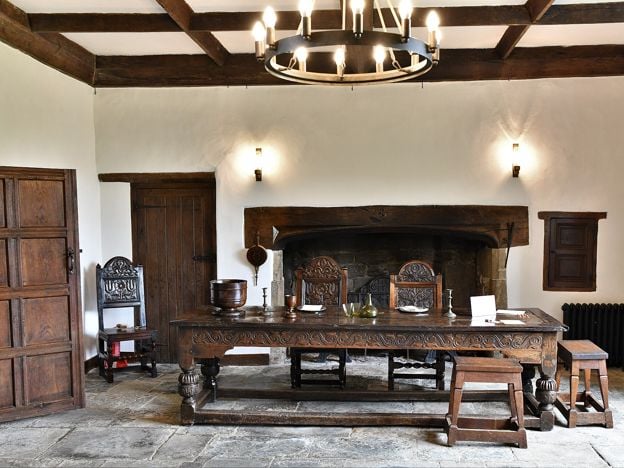
Only part of what you see is Lawrence's. The porch and the core of the house are Tudor, the north east wing belongs to John Hodges, and the left half of the centre is Blomfield's 1920s work. The arms in the Great Hall's windows are reproductions, because the originals are at Fawsley Church and Weston Hall. Knowing that makes the place more interesting: this is a sixteenth-century house as an Anglo-American committee wished to see it a century ago.
The manor's collections are what bring George himself into it, since he has no part in the building's own story. They include things he owned and his black velvet coat, shown in the exhibition George Washington: Relics and Representations, with items on display for the first time in 2026. Allow time for Blomfield's garden too, on the Register at Grade II, and walk to the church for the pew and the slab. Sulgrave Manor's page has the opening times, prices and access, and our guide to castles and houses near Banbury shows how to fit it into a day with Canons Ashby or others.
The Banburyshire newsletter
Events, new places and the best of the season, about once a month. Unsubscribe at any time.
How Sulgrave stands now
Sulgrave is run by the Sulgrave Manor Trust, a charitable company registered in 1991 that follows the board set up in 1921. You will read in American sources that the house is jointly owned by Britain and the United States. The records we read show something plainer: a small independent charity, which its website says has been chaired since January 2023 by Carole Souter, with two American-linked sources of support. Its accounts for 2025 show the Colonial Dames giving £58,482 and the Friends of Sulgrave Manor £261,631, £72,974 of it for the endowment, and the Colonial Dames keep a representative on the board.
The same accounts, approved in June 2026, show total income of £460,046 against spending of £341,900, an average of 10 staff, and an investment fund worth about £2.7 million, with a general fund down to £105,745. Visitor numbers rose, the trustees say, without giving a figure. They plan an endowment campaign and an extension to the garden, and the Trust is lead partner in America250UK, the British programme for the 250th anniversary of the Declaration of Independence.
So 2026 is a big year for a small place. A one-day conference on Anglo-American relations came here on 21 May, and the 2026 season ran on just three days a week, Sundays to Tuesdays, from March to September. The house is now closed to day visitors for the winter and reopens in March, though events such as a candlelit Christmas tour go on through the winter. It is still the place to come for the Washingtons' English story, as long as you leave the flag out of it.
Mentioned in this story
The places, sights and walks in this story, each with a page of its own: what it is, when to go and how to get there.
-
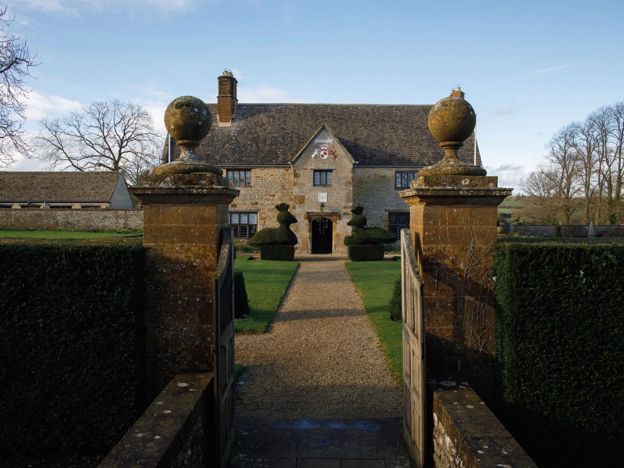
Sulgrave Manor
Historic houses and heritage · Sulgrave
-
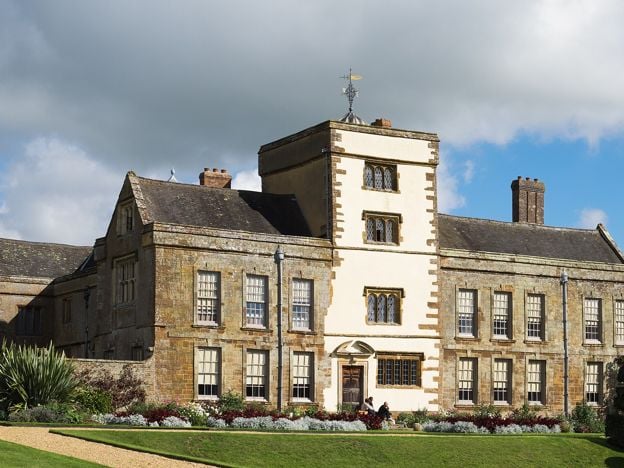
Canons Ashby
Historic houses and heritage
Places to stay near Sulgrave
-
The Paisley Pear, Brackley
Inn · Brackley
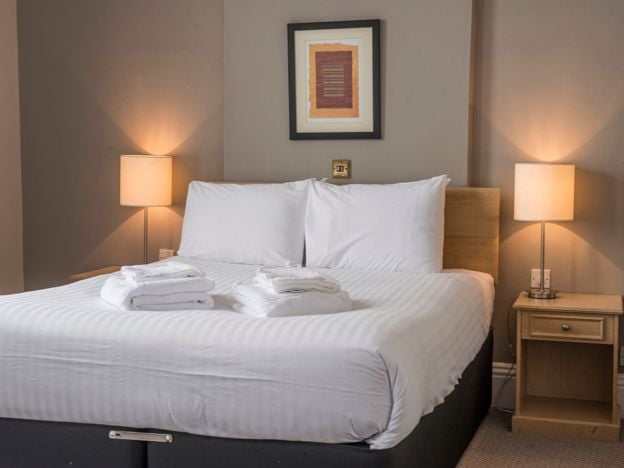
A Marston's pub with a 46-room lodge on Northampton Road, Brackley, about 6.5 miles by road from Silverstone. It opens at 6.30am on weekdays and serves food from breakfast to 9pm or later, with a car park and electric car charging.
EV charging
Verified Nov 2026
Read next
-
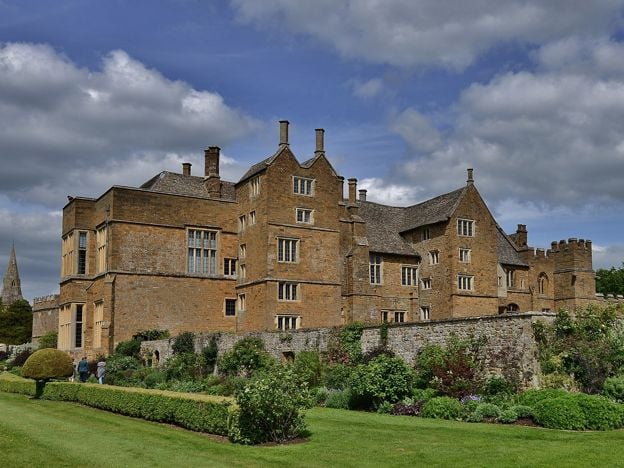
Castles and historic houses near Banbury: which to pick
Story · Guides · 12 minute read
Broughton Castle, Upton House, Sulgrave Manor, Canons Ashby, Farnborough Hall, Compton Verney, Chastleton, Stowe and Charlecote Park: which suits whom, which days combine them, what opens in winter, and which to skip.
-
The Civil War in Banburyshire: Edgehill, Cropredy and Banbury's sieges
Story · History · 7 minute read
Banburyshire saw the Civil War's first great battle at Edgehill in 1642, a Royalist win at Cropredy Bridge in 1644 and two sieges of Banbury Castle. By 1648 the castle had been pulled down. Banbury lost hundreds of its people, and this is how it happened.
-
Hornton stone and the ironstone villages: why Banburyshire is brown
Story · History · 5 minute read
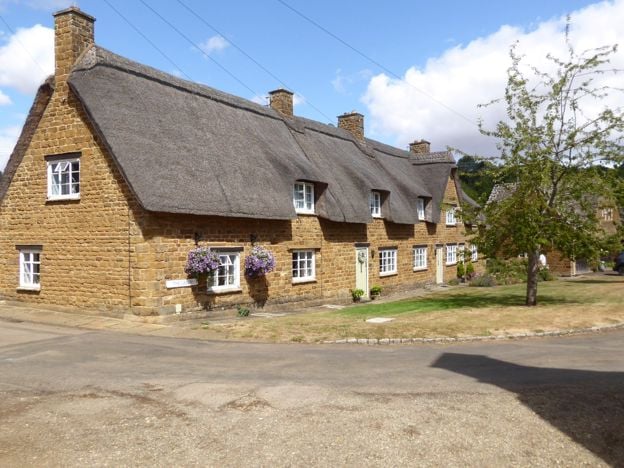
Hornton stone is the rusty ironstone that colours the villages around Banbury. It is a band of Jurassic rock no more than about 10m thick, quarried at Hornton and on Edge Hill for centuries. Henry Moore carved it, and steelworks ate it until 1967.