Banbury's ghosts: Father Bernard, the Cavalier and the tunnels
Every old Banbury building seems to have a ghost or a tunnel to Broughton Castle. The stories are good, and they are stories, and some of the history behind them is stranger than the ghosts.
· 5 minute read
Banbury does not have many ghosts, but the ones it has are well told. Nearly all of them live in two old inns in the middle of the town, and nearly all of them come with tunnels. This is what the stories say, where they come from, and how they sit against the record. None of it is evidence of anything walking, and the people who tell them mostly know that.
Father Bernard at the Three Tuns
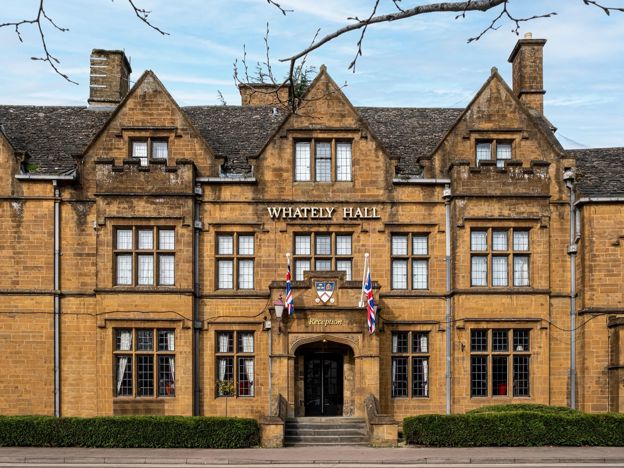
The town's favourite ghost belongs to Whately Hall, the hotel by the Cross. It began as the Three Tuns inn, and the hotel's own history (opens in a new tab) says it was built by Charles Stokes in the mid seventeenth century, with its licence on record from 1677.
The hotel tells the story like this. In the seventeenth century the sitting room of what is now suite 52 was a secret meeting place for Catholic clergy, with a hidden passage from a cupboard down to another room, out through the Harness Room and to a well behind the building. On 6 September 1687 a member of staff, John Heuston, came back drunk from the cattle mart and pulled the alarm cord during a meeting as a joke. In the rush down the dark, narrow passage Father Bernard was so frightened that his heart stopped, and he died at the bottom of the stairs. Heuston, the hotel adds, died by stabbing, it is thought when the others found out. Father Bernard has walked the passages ever since, looking for the prankster.
The details shift with the teller. Richard Holland's Oxfordshire Ghost Stories, as Dark Oxfordshire summarises it (opens in a new tab), has a lookout on the ground floor pulling a cord to ring a bell upstairs, and Father Bernard as an old man with a weak heart. A local post by Lock29 in 2020 (opens in a new tab) has him die in a fall on a hidden staircase, and says he smiles, laughs and sings as he goes. The hotel's last sighting is from 1913, when a guest and his wife saw the cupboard door open on a robed figure, and it admits he has been quiet lately.
What the record says about 1687
The date is the interesting part. The hotel's own history says King James II visited the inn on 2 September 1687 and slept in the room that is now the bedroom of suite 52, four days before the prank in the same suite. James II was a Catholic king, and in April 1687 he had issued a Declaration of Indulgence allowing Catholics to worship in public. That makes 1687 an odd year for Banbury's Catholics to need a lookout and a secret stair.
None of that disproves a ghost, but it does make the date look like a later addition. A hidden Catholic chapel would fit better in the years before, when, the county history says, Banbury's name had become a byword for puritanism, as our story of Banbury's puritans explains.
The Cavalier at the Reine Deer
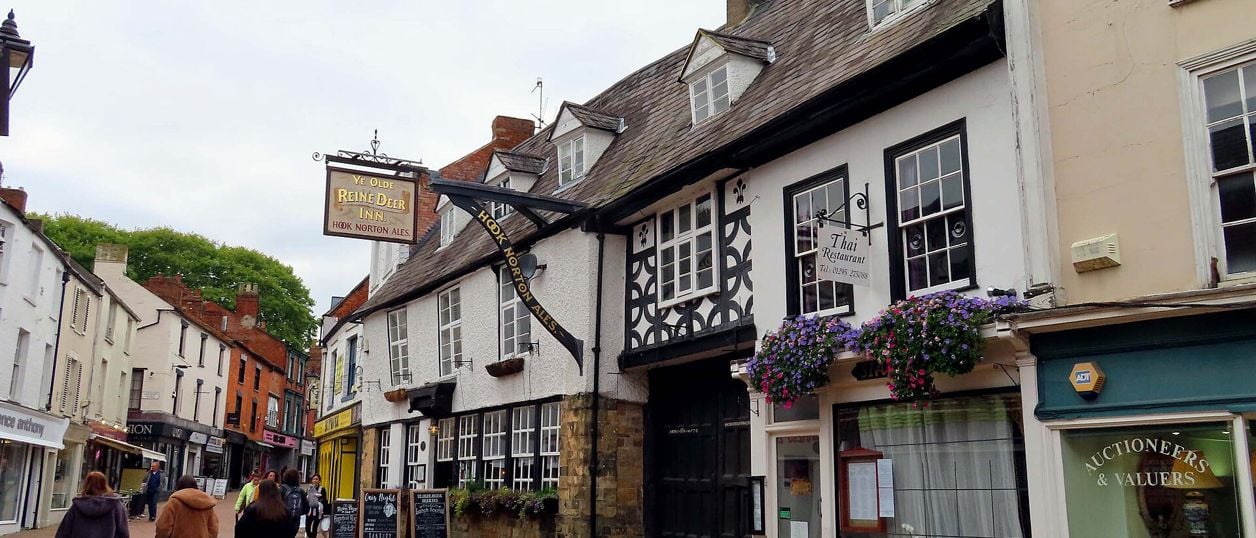
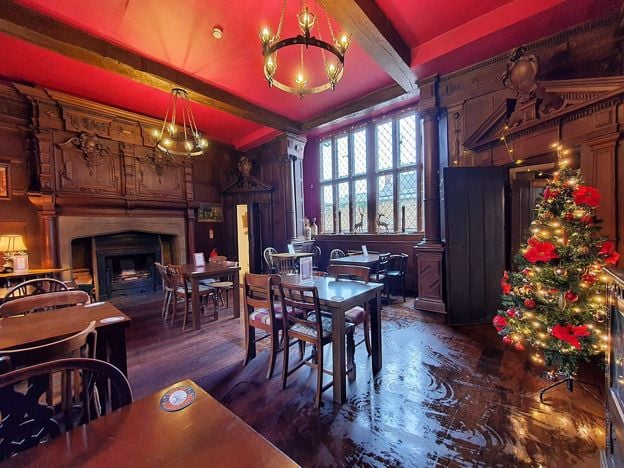
Banbury's other haunted inn is Ye Olde Reine Deer Inn on Parsons Street. Its ghost is a Cavalier in a plumed hat and lace ruffles, said by Lock29's post to walk the upper floors and the Globe Room, though nobody seems to have reported him for years.
The setting is real. The Victoria County History dates the panelled Globe Room to 1637, added to an inn the Knight family had probably owned since about 1590, so it was already standing when the Civil War began. Its panelling was sold to a London firm in 1912 and bought back for the town in 1964. The pub tells the story that Oliver Cromwell planned the Battle of Edgehill in the room. We have found no record of that, and the county history admits nobody even knows why it is called the Globe Room.
Tunnels to Broughton Castle
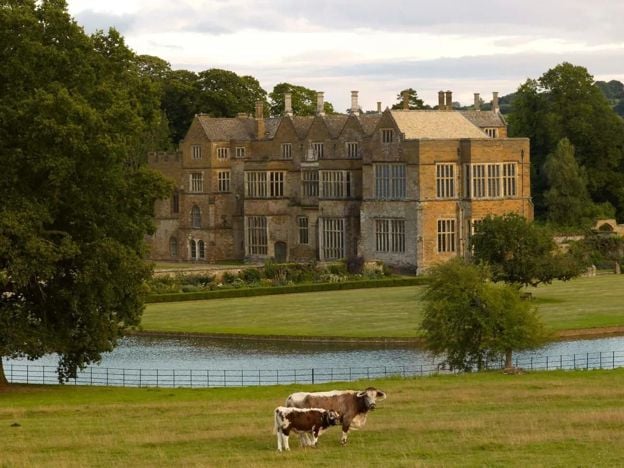
Banbury's real obsession is tunnels. Whately Hall's history says its well leads to a tunnel system, by a cast iron ladder, that reaches St Mary's or St John's church and the Cross, and is rumoured to go as far as Broughton Castle, about two and a half miles away. On the Broughton Road, the old pasture called Giant's Cave is said to hide the other end of a tunnel to the castle, though one account calls it a late medieval quarry.
Nobody has produced a map, a survey or a photograph of any of them. Old buildings have cellars, drains and blocked doorways, and over time those become tunnels in the telling.
Gulliver in the churchyard
One of Whately Hall's claims has more behind it than you might expect. It says Jonathan Swift stayed at the inn while writing Gulliver's Travels and took his hero's name from a tombstone in the churchyard. We have found no record of the stay. But Swift's book does mention Banbury: in the publisher's note at the front, the publisher says he has seen several tombs and monuments of the Gullivers in the churchyard at Banbury. That is fiction too, but it is fiction Swift wrote down himself.
The Banburyshire newsletter
Events, new places and the best of the season, about once a month. Unsubscribe at any time.
The ghost everyone has heard of
The best-documented ghosts near Banbury are not in the town at all. A London pamphlet of January 1643 said the Battle of Edgehill was being fought again in the night sky, and our story of the Edgehill ghosts sets out what can be traced. For the town's two haunted inns, you can simply go for a drink or a meal and look at the rooms: the Globe Room is the reason to visit the Reine Deer, haunted or not.
Mentioned in this story
The places, sights and walks in this story, each with a page of its own: what it is, when to go and how to get there.
-
Whately Hall Hotel, Banbury
Hotel · Banbury
-
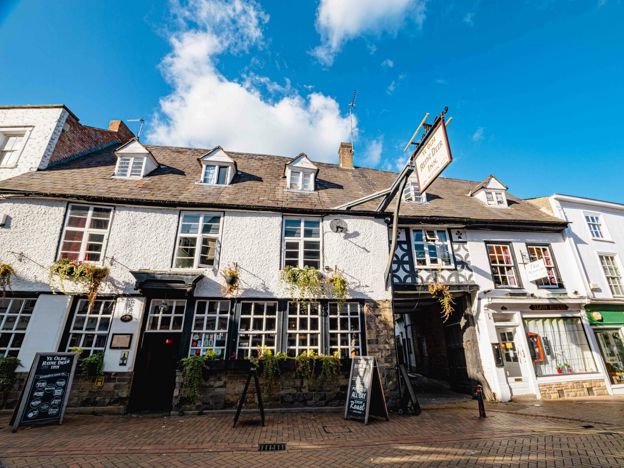
Ye Olde Reine Deer Inn, Banbury
Pubs · Banbury
-
Giant's Cave, Banbury
Sight · Common or park · Banbury
-
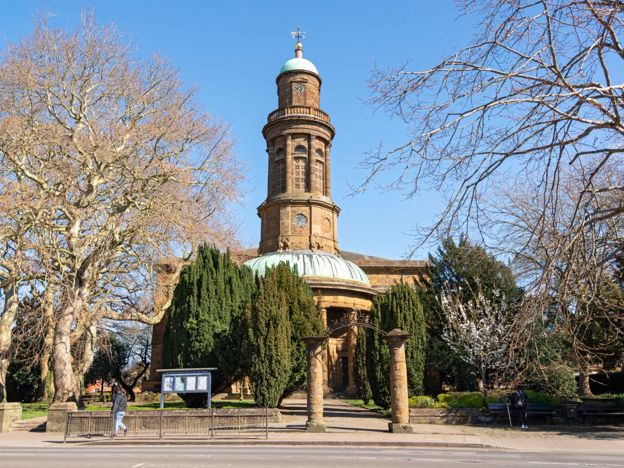
St Mary's Church, Banbury
Sight · Church · Banbury
-
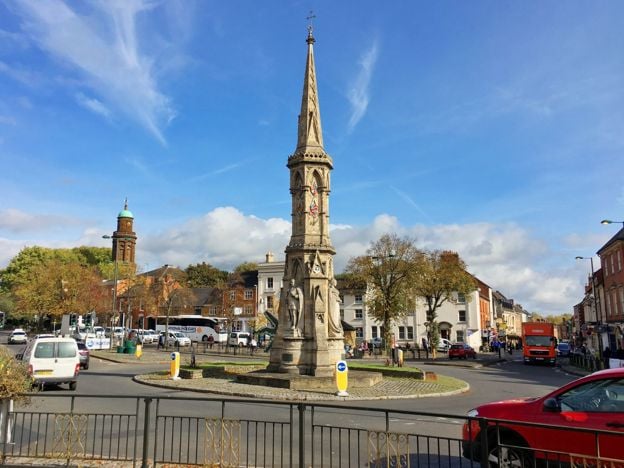
Banbury Cross
Sight · Monument · Banbury
Places to stay near Banbury
-
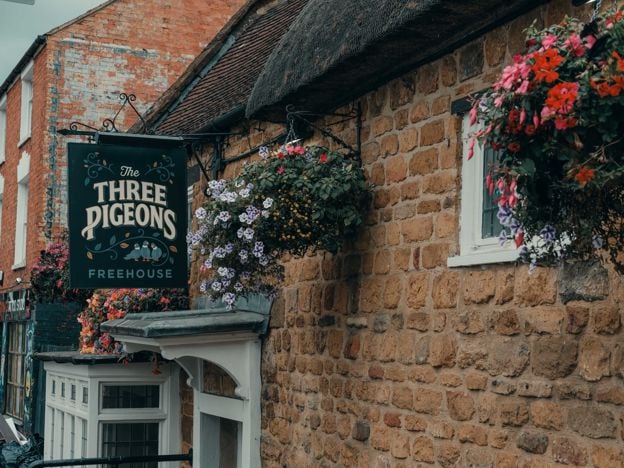
The Three Pigeons, Banbury
Pubs · Banbury
A Grade II listed 17th-century inn, partly thatched, on Southam Road, Banbury, with real ales and ciders, a courtyard, Smash Cow street food from Thursday to Saturday and three en-suite rooms.
Dog-friendly · Car-free
Verified Nov 2026
-
Banbury Cross Bed and Breakfast
B&B · Banbury
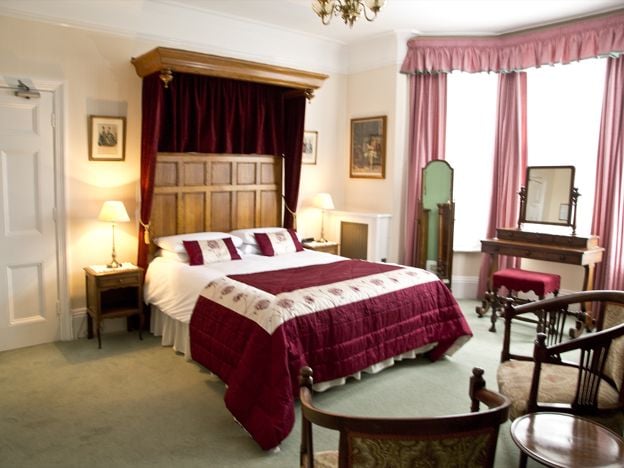
A family-run Victorian B&B on Broughton Road, Banbury, with seven bedrooms, about 370m from Banbury Cross, with free off-road parking, cooked breakfasts and rates from £77. No under-18s.
Car-free
Verified Nov 2026
-
The Wroxton Hotel
Hotel · Wroxton
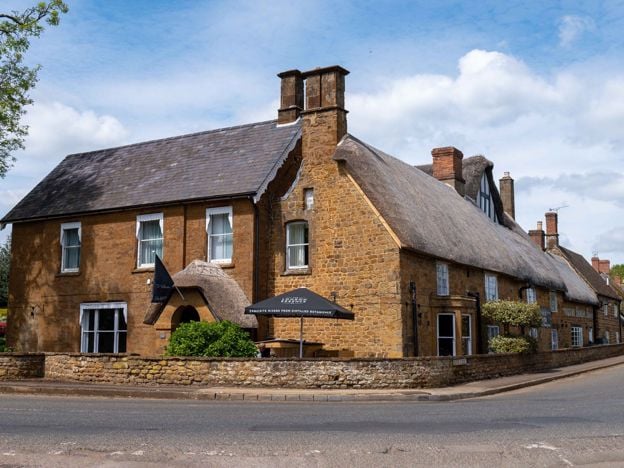
A 32-room hotel made from three adjoining stone cottages, partly dating from 1649, on the edge of thatched Wroxton, a few minutes' drive from junction 11 of the M40, with free parking and its own tea room.
Dog-friendly · Wedding venues
Verified Nov 2026
Read next
-
The Edgehill ghosts: the battle that was fought again in the sky
Story · Strange Things · 6 minute read
In January 1643 a London pamphlet said the Battle of Edgehill was being fought again in the night sky, and that officers sent by the King had seen it. The pamphlet is real. We cannot trace the claim that a royal commission's report survives as a state record.
-
Strange Banburyshire: ghosts, witches, lost horses and sham ruins
Story · Strange Things · 6 minute read
The odd corners of the country round Banbury: a ghost battle in the sky over Edgehill, a witch who turned a king to stone at Rollright, a lost red horse, a three-day saint, a priest said to have died of fright, and ruins built to look ruined. Each one told with what is on record.
-
The Civil War in Banburyshire: Edgehill, Cropredy and Banbury's sieges
Story · History · 7 minute read
Banburyshire saw the Civil War's first great battle at Edgehill in 1642, a Royalist win at Cropredy Bridge in 1644 and two sieges of Banbury Castle. By 1648 the castle had been pulled down. Banbury lost hundreds of its people, and this is how it happened.