Banbury's puritans: the 'Banbury man', the roaring boy and the zealots
In the early seventeenth century Banbury was England's byword for godly zeal, and its neighbours made a running joke of it. The joke had something real behind it, a handful of determined men and a vicar who preached for hours.
· 7 minute read
In the early seventeenth century Banbury was one of the best known puritan towns in England, and much of what the rest of the country knew about it was a joke. Playwrights and poets used 'a Banbury man' to mean a puritan, a translator slipped 'zeal' into a description of the town, and a satirist had a Banbury puritan hang his cat. The Victoria County History, which collects all of this, says plainly that by the early seventeenth century the town's name had become synonymous with puritanism.
The reputation was earned by a small number of people, over a short time. This is what the record shows about them, and where the jokes took over.
A schoolmaster and a maypole
The story starts with Thomas Bracebridge. He gave up a fellowship at Magdalen College, Oxford, in 1575 to run a school near Banbury, and by 1586, the county history's account of the churches (opens in a new tab) says, he preached in Banbury every Sunday. John Dod, the minister at Hanwell, gave a weekly lecture in the town at the same time. Between them they made Banbury a place where sermons were the main event of the week.
Not everyone wanted that. The town fought over its maypole in 1588 and 1589. Bracebridge's chief opponent, John Danvers of Calthorpe, was accused of recusancy and of preferring 'dancing or some other like pastime' to church, and he complained in turn that Anthony Cope and others were trying to abolish the town's customary pastimes. In 1590 Bracebridge was deprived of his living for 'some matters of ceremonies'. Ninety-five parishioners petitioned Lord Burghley on his behalf, which tells you how far his following ran. He died in Banbury in 1593.
The morning the crosses fell
The act that fixed the town's name came on 26 July 1600, when William Knight and a group of aldermen had the High Cross pulled down, with the Bread Cross on the same day or soon after, as objects of what the county history calls superstitious veneration. Our story of the crosses tells that morning from the sworn evidence. One of the men there, Henry Shewell, shouted that their god Dagon had fallen.
The same group had other quarrels. The county history notes the claim, made in the Star Chamber case that followed, that their disputes drove people from the country round to prefer other markets. Around 1610 some residents went further and smashed the statues on the walls of the parish church. These were a small group of leading men and not the whole town, but they were the ones the country heard about.
William Whately, the roaring boy
The man who made puritan Banbury a settled thing was William Whately, vicar from 1610 to 1639. He had heard William Perkins lecture at Cambridge, and he had already been presented in 1607, while lecturer, for failing to pray for the bishops. His curate Ralph Taylor was charged with refusing to wear the vestments or to use the Prayer Book at all services.
Whately preached twice every Sunday, and his voice and preaching style earned him the name the roaring boy of Banbury. When fire swept through the town in March 1628, starting in a malt-house, he drew the moral in a long sermon. His book A Bride-Bush, of 1619, argued that adultery or long desertion dissolved a marriage, and he took the view back when the Court of High Commission challenged it. The Oxford antiquary Anthony Wood, no friend to puritans, judged that he 'laid such a foundation of faction' in the town.
The local grandee was William Fiennes of Broughton Castle. The History of Parliament's Vivienne Larminie, in an essay she titled with the joke itself (opens in a new tab), shows him leading Banbury's resistance to the Forced Loan in 1626 and inspiring its refusal of Ship Money in the 1630s. The Fiennes story follows that thread into the Civil War.
What the jokes said
The rest of England had a good deal of fun with all this. The county history's introduction to Banbury (opens in a new tab) gathers the evidence:
- in 1610 the English translation of William Camden's Britannia called the town famous for its 'cheese, cakes, and zeal', though the Latin original mentions only the cheese
- in 1614 Ben Jonson's Bartholomew Fair used 'a Banbury man' for a puritan from the town, and in a masque of 1621 he wrote of 'the loud pure wives of Banbury'
- in about 1616 Richard Brathwait's verse told of a Banbury puritan who hanged his cat on Monday for killing a mouse on Sunday
- between 1618 and 1621 Richard Corbet mocked the broken crosses and Whately's long prayers and sermons
- in 1635 a Lieutenant Hammond noted an inn called the Altarstone, named after a supposed Roman altar in its wall, and remarked that 'they do make no conscience to translate an altar to a sign'
The phrase outlived the men. Jonathan Swift was still using 'a Banbury saint' as a sneer in 1719. Other jokes ran alongside. 'Banbury glosses', meaning twistings of the truth, were in use by 1530, so people were laughing at the place before it ever got religion, and 'as wise as the mayor of Banbury' was recorded in 1660.
How far it was true
The jokes exaggerate, but the record bears out the core of them. Banbury did have an unusually zealous group at its head, it did pull down its crosses, and its vicar did preach twice a Sunday and get into trouble for it. Larminie points out that Banbury, a borough with a single seat from 1554, kept sending members to Parliament who promoted the 'hotter sort' of Protestantism and opposed the Crown's money-raising.
What the jokes miss is the argument. The maypole fights and the 95 signatures for Bracebridge show a town divided, and in 1640 some inhabitants were petitioning Parliament against a 'wicked vicar at Banbury', John Howes, who had suppressed the preaching. When the Civil War came, this puritan town spent most of it under a Royalist garrison, which our Civil War story tells. In August 1644 the parish church was used as a vantage point against the castle, and its steeple was reported destroyed.
The Quakers, and the end of it
The next wave was more radical still. John Camm and John Audland held meetings in 1654 at what the county history records as 'a place called the Castle adjoining Banbury'. In 1655 Anne Audland was imprisoned after interrupting a service in the parish church, and Richard Farnsworth was imprisoned in the town too. A first meeting house opened in 1657, behind the Flower de Luce Inn, and the site of the present one was bought in 1664. Quakerism, Larminie notes, split the town's pious elite.
After 1660 the borough set about distancing itself from its puritan past. The Presbyterian vicar Samuel Wells, put in by the House of Lords in 1648, was ejected in 1662. The medieval church where Whately had roared was itself pulled down in the 1790s, some of it with gunpowder.
The Banburyshire newsletter
Events, new places and the best of the season, about once a month. Unsubscribe at any time.
What you can see now
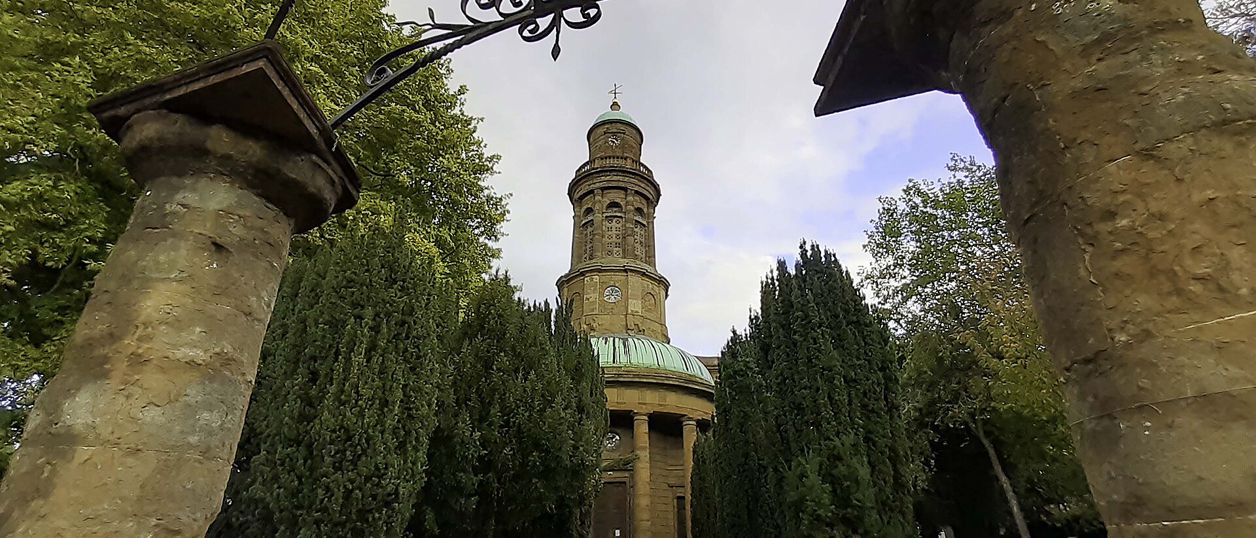
Little of puritan Banbury stands, so come for the places and the stories. St Mary's Church on Horse Fair is the classical church that replaced the medieval one. The Banbury Cross is a Victorian replacement for the crosses of 1600, on a different site. Banbury's Quakers kept the meeting house site they bought in 1664, the county history says, but we have not confirmed what a visitor can see there now. For the town's story in one place, go to Banbury Museum and Gallery, which is free to enter, though some exhibitions charge.
Then drive out to Hanwell, where John Dod preached, and on to Broughton Castle for the Fiennes side of the story. Check the castle's opening days before you go.
Mentioned in this story
The places, sights and walks in this story, each with a page of its own: what it is, when to go and how to get there.
-
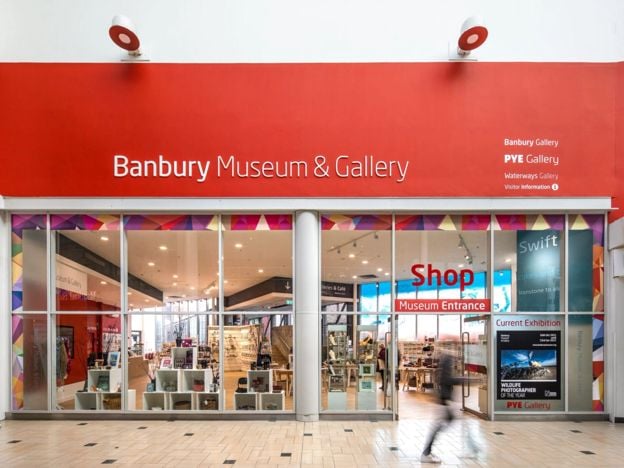
Banbury Museum and Gallery
Museums and galleries · Banbury
Places to stay near Banbury
-
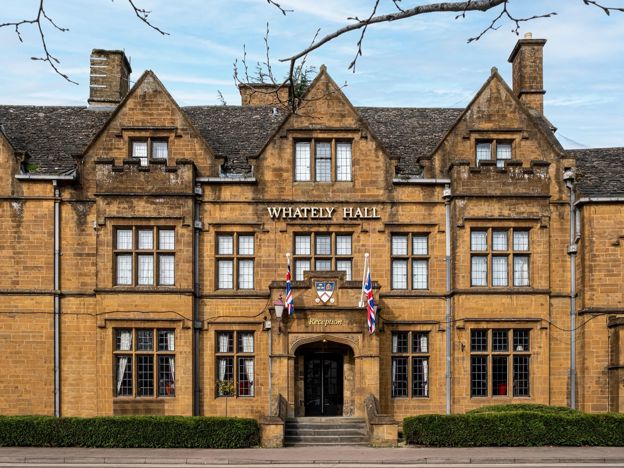
Whately Hall Hotel, Banbury
Hotel · Banbury
A Grade II listed 17th-century inn, now a 71-room hotel on Horse Fair in the middle of Banbury, with gardens, an oak-panelled restaurant and six EV chargers.
Dog-friendly · Family-friendly · Wedding venues
Verified Nov 2026
-
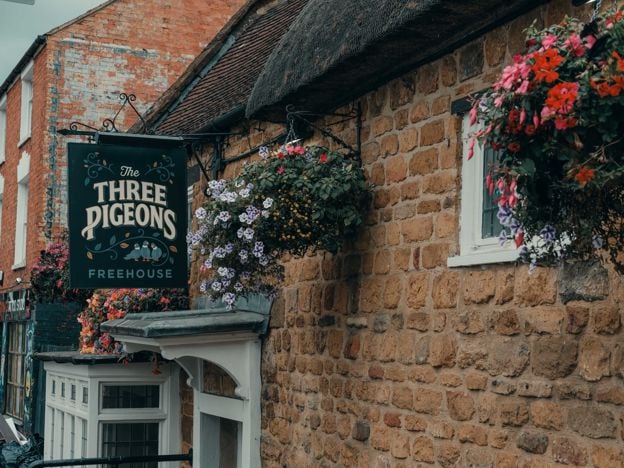
The Three Pigeons, Banbury
Pubs · Banbury
A Grade II listed 17th-century inn, partly thatched, on Southam Road, Banbury, with real ales and ciders, a courtyard, Smash Cow street food from Thursday to Saturday and three en-suite rooms.
Dog-friendly · Car-free
Verified Nov 2026
-
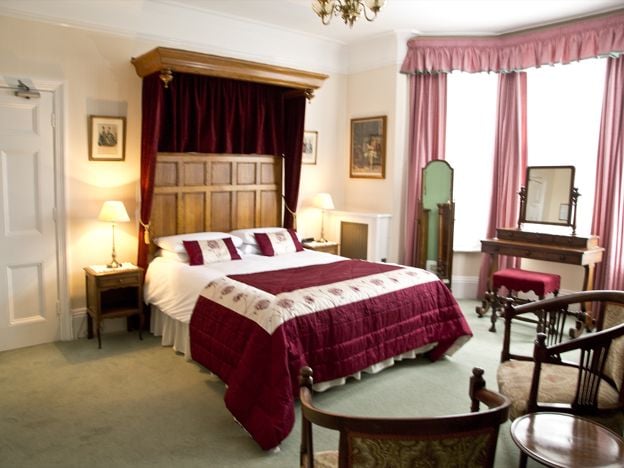
Banbury Cross Bed and Breakfast
B&B · Banbury
A family-run Victorian B&B on Broughton Road, Banbury, with seven bedrooms, about 370m from Banbury Cross, with free off-road parking, cooked breakfasts and rates from £77. No under-18s.
Car-free
Verified Nov 2026
Read next
-
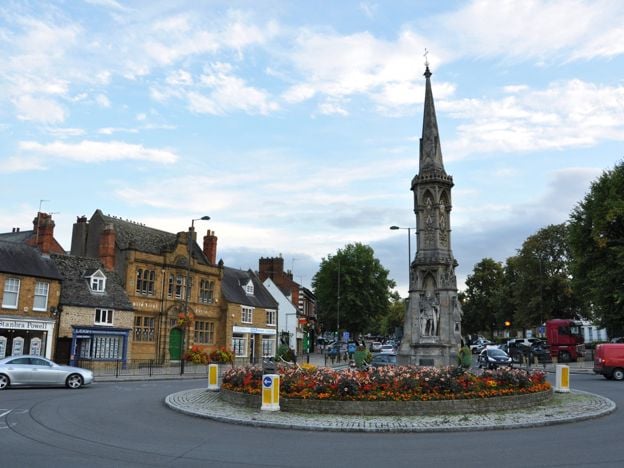
Banbury Cross: the lost crosses and the fine lady
Story · History · 7 minute read
The Banbury Cross of the rhyme is gone. Banbury's own aldermen had the High Cross pulled down on 26 July 1600. The cross you can see dates from 1859 and stands somewhere else, and nobody has ever shown who the fine lady was.
-
The Civil War in Banburyshire: Edgehill, Cropredy and Banbury's sieges
Story · History · 7 minute read
Banburyshire saw the Civil War's first great battle at Edgehill in 1642, a Royalist win at Cropredy Bridge in 1644 and two sieges of Banbury Castle. By 1648 the castle had been pulled down. Banbury lost hundreds of its people, and this is how it happened.
-
The Fiennes family of Broughton Castle: one moated house since 1448
Story · History · 8 minute read
The Fiennes family has held Broughton Castle, near Banbury, since a marriage in 1448. In that time one lord was killed by Cade's rebels, one at Barnet, one plotted against Charles I in the house, and later ones sold the contents and sold the swans. The family still lives there.