The ironstone railways of Banburyshire: Wroxton, Hook Norton and Edge Hill
The rust-coloured rock that built the villages was also a low-grade iron ore. From 1899 to 1967 three railways carried it off to the steelworks, and one of them killed its own engineer on an inspection run.
· 7 minute read
The brown stone of the villages round Banbury is marlstone, and marlstone is a low-grade iron ore. Our story of Hornton stone tells how it was used for building. This is the other story, of the ore dug out by the million tons in the twentieth century and the railways built to take it away. There were three that mattered: a busy private line from Wroxton to Banbury, a narrow gauge tramway at Hook Norton, and a light railway on Edge Hill that hardly carried anything.
Hook Norton and the Welsh steelworks
The first came from a long way off. By the late 1890s the Brymbo Steel Company, near Wrexham, was running out of local ore, and by 1899, the Narrow Gauge Railway Museum records (opens in a new tab), it had bought ironstone fields at Hook Norton. It expected more than a million tons, enough for about 13 years.
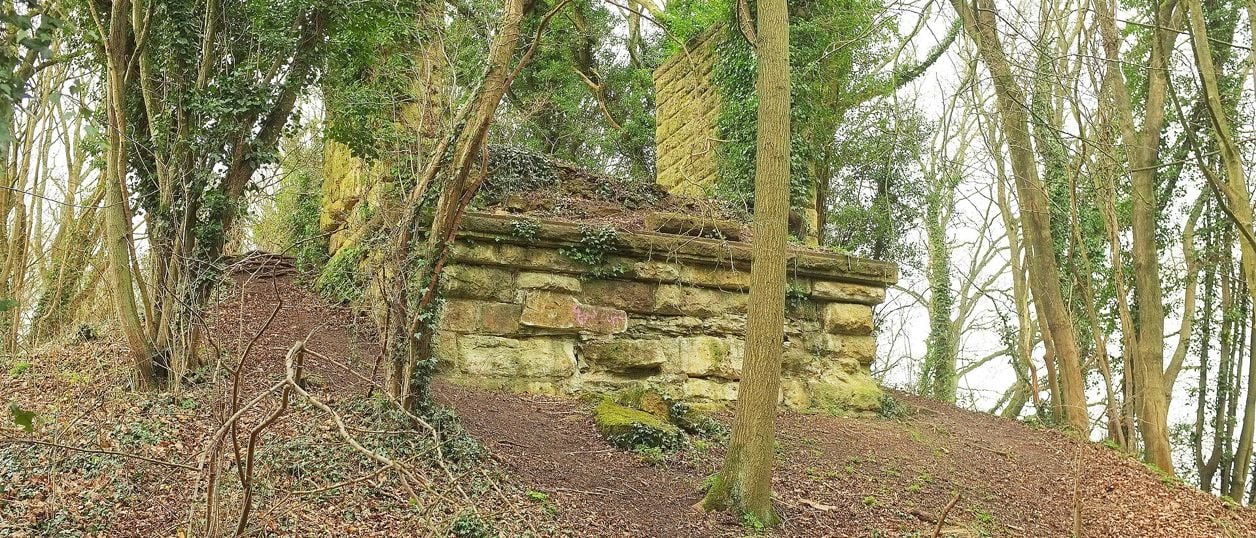
Brymbo was 132 miles away, so the ore was roasted in kilns on site to cut the weight before it travelled. A narrow gauge tramway, which the museum calls the largest two-foot system in the ironstone industry, kept the kilns fed. At the kilns the ore was loaded into standard gauge wagons on the Banbury and Cheltenham line, the railway whose viaduct piers still stand east of the village. The county history notes that Samuelson's, the Banbury engineering firm, built the viaduct at Hook Norton.
The quarries ran for almost 50 years. One locomotive bought in 1942 had a longer life than the quarries: Russell, built by Hunslet in 1906 and bought from the Welsh Highland Railway. It was sold on to Fayle's Tramway in 1946. The quarries closed in June 1946, when imported richer ore became cheaper, and the plant was scrapped and the land sold in 1948.
Wroxton and the line to Banbury
The big one was at Wroxton. In June 1917 Baldwin's and Brymbo set up the Oxfordshire Ironstone Company, and the county history (opens in a new tab) records it as lessee at Wroxton from that year, on land Christ Church and Trinity College leased to it as it was needed. The ore went to South Wales and to Brymbo.
It needed a railway, and it got a good one. A Wroxton history written for the village, by Maureen Woollacott (opens in a new tab), says the line to the main line at Banbury was built by a gang of German prisoners of war and working by 1919, with signal boxes, level crossings and telecommunication links, and was thought at the time the finest ironstone railway in the country. In 1953 its single track was doubled.
The village history has the details only people who worked there would know. The small four-wheeled engines at the quarry end had girls' names and the larger six-wheeled ones at the Banbury end had boys' names. Steam ran alone until the first diesel arrived in 1961. Output was about 60,000 tons in 1923 and about 30,000 tons a week in the Second World War, when Italian prisoners and Polish immigrants joined the workforce. In 48 years there were two deaths.
Digging and putting back
The method left the land fit to farm. The county history describes the company working about 40m at a time, preparing a third, digging a third and putting back a third to its old level, at about 30,000 tons of ore an acre. It employed 135 to 140 men in 1963, and had employed 200 at the height of the steel boom.
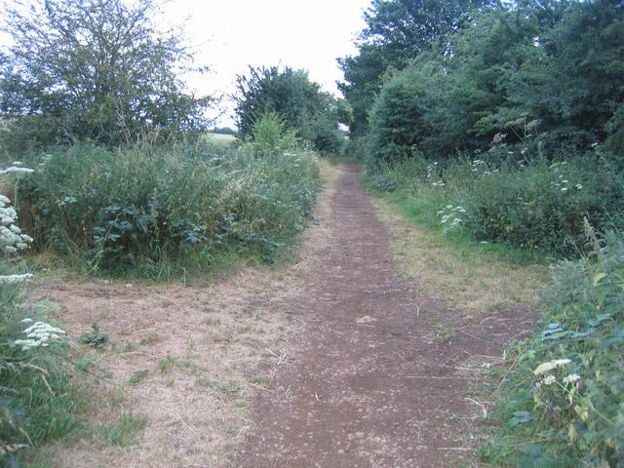
The end came slowly. The village history puts the best year at 1956 and says that by 1959 the works was on a three-day week. It closed in 1967, and the track was gone by the middle of 1968. You can still follow the course of the line on foot: the Banbury ironstone heritage walk crosses it twice between Banbury and Wroxton.
The Edge Hill Light Railway
The third line is the strangest. During the First World War the owners of the Stratford-upon-Avon and Midland Junction Railway promoted a line to the ironstone on Edge Hill, and Warwickshire Railways' account (opens in a new tab) tells what followed. A public inquiry sat at Banbury town hall in November 1917, the plan was cut from 11 and a quarter miles to five and a half, and the order was made on 17 July 1918. The engineer was Holman F Stephens, the specialist in cheap light railways, though he later stood down.
The line ran from a junction near Burton Dassett about two and a quarter miles to the foot of the hill, then up a cable-worked incline, about half a mile at a gradient given as 1 in 9 or 1 in 6, to a short line along the top. It had two second-hand engines from the London, Brighton and South Coast Railway. Construction dragged, and the incline was only finished in the summer of 1922.
It never paid its way. On 10 October 1922, during a directors' inspection, a runaway rake of wagons fatally injured Edgar Ferguson, the 74-year-old consulting engineer. Regular traffic seems to have ended that year, and the last recorded load left on 27 January 1925. The engines were scrapped in 1946 by Friswell's of Banbury. The company was wound up in November 1957.
The Banburyshire newsletter
Events, new places and the best of the season, about once a month. Unsubscribe at any time.
What you can see
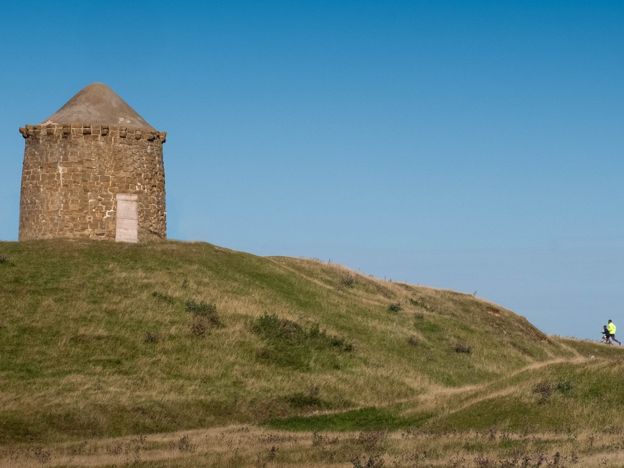
The quarries are mostly farmland again. At Hook Norton the viaduct piers are the clearest railway relic, seen from the Swerford road, and the Hook Norton guide says where to stand. On Edge Hill, our Edgehill guide and viewpoint page cover the ridge, and the old quarry ground at Burton Dassett Hills Country Park shows what ironstone digging did to a hillside. The quarries at Hornton and on Edge Hill are private ground, not open to visitors.
Mentioned in this story
The places, sights and walks in this story, each with a page of its own: what it is, when to go and how to get there.
-
Burton Dassett Hills Country Park
Parks and gardens · Burton Dassett
-
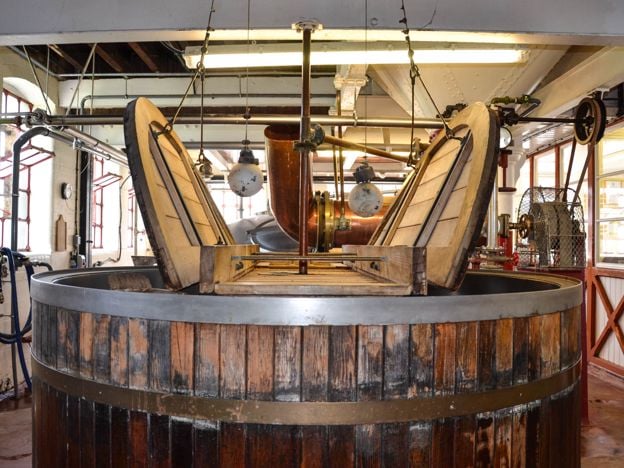
Hook Norton Brewery
Tours and experiences · Hook Norton
-
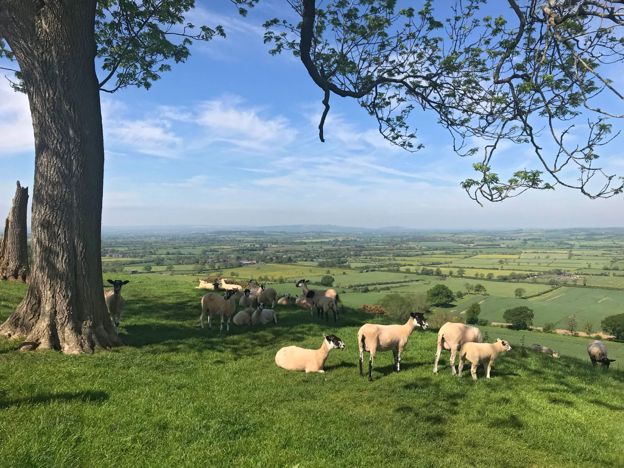
Edge Hill viewpoint
Sight · Viewpoint · Edgehill and Radway
-
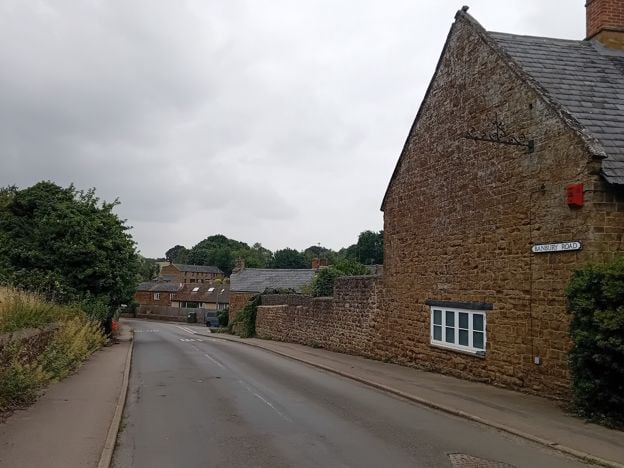
Banbury Ironstone Heritage Walk
Walk · Starts in Banbury · 4 hrs · Circular
Places to stay near Wroxton
-
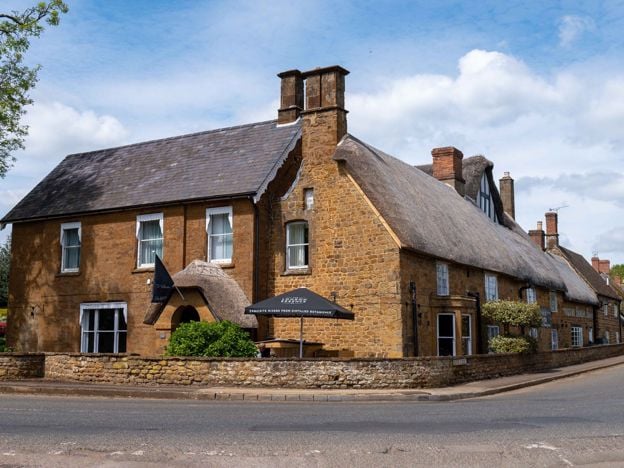
The Wroxton Hotel
Hotel · Wroxton
A 32-room hotel made from three adjoining stone cottages, partly dating from 1649, on the edge of thatched Wroxton, a few minutes' drive from junction 11 of the M40, with free parking and its own tea room.
Dog-friendly · Wedding venues
Verified Nov 2026
-
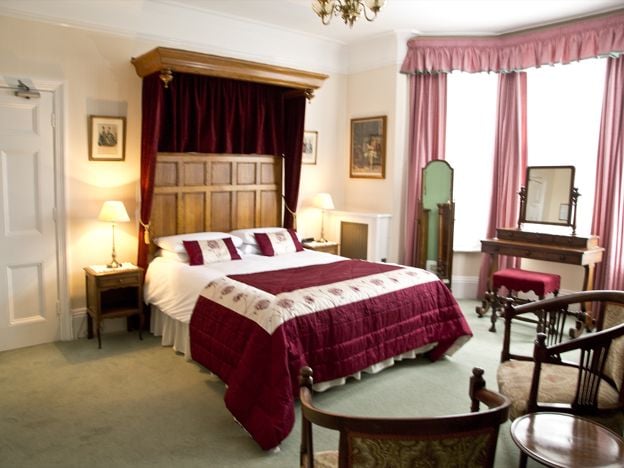
Banbury Cross Bed and Breakfast
B&B · Banbury
A family-run Victorian B&B on Broughton Road, Banbury, with seven bedrooms, about 370m from Banbury Cross, with free off-road parking, cooked breakfasts and rates from £77. No under-18s.
Car-free
Verified Nov 2026
-
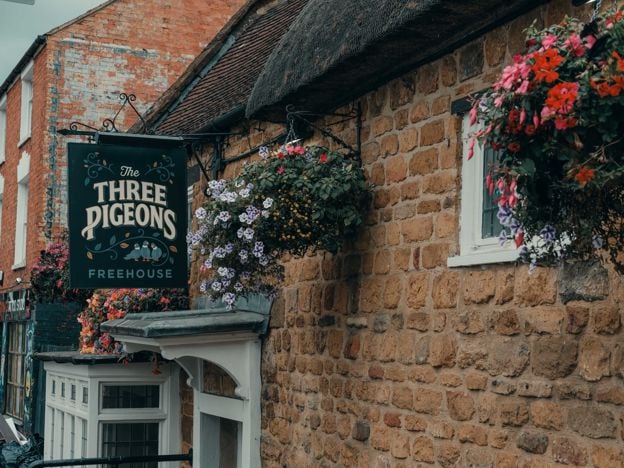
The Three Pigeons, Banbury
Pubs · Banbury
A Grade II listed 17th-century inn, partly thatched, on Southam Road, Banbury, with real ales and ciders, a courtyard, Smash Cow street food from Thursday to Saturday and three en-suite rooms.
Dog-friendly · Car-free
Verified Nov 2026
Read next
-
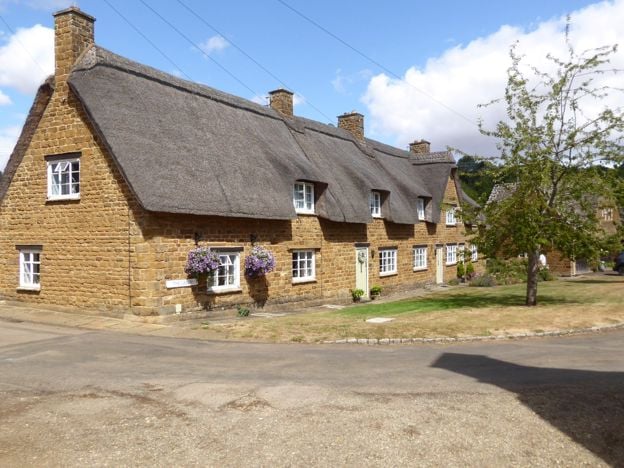
Hornton stone and the ironstone villages: why Banburyshire is brown
Story · History · 5 minute read
Hornton stone is the rusty ironstone that colours the villages around Banbury. It is a band of Jurassic rock no more than about 10m thick, quarried at Hornton and on Edge Hill for centuries. Henry Moore carved it, and steelworks ate it until 1967.
-
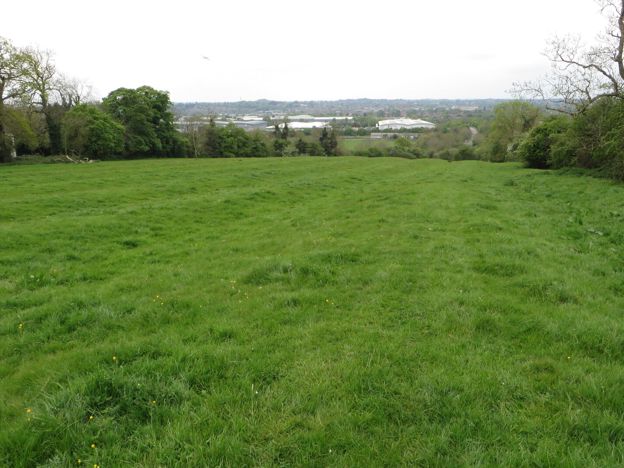
Banbury's First World War munitions factory: National Filling Factory No 9
Story · History · 5 minute read
National Filling Factory No 9, east of Banbury, filled shells from April 1916 and employed about 2,000 people at its height. The M40 now cuts through it. About three quarters of its plan survives as earthworks, protected as a scheduled monument, on private land.
-
Alcan in Banbury: the aluminium works that made a market town industrial
Story · History · 6 minute read
In 1931 the Northern Aluminium Company opened a works on the Southam Road, and Banbury stopped being only a market town. It rolled sheet for wartime aircraft behind a decoy factory, employed over 3,000 at its height, became Alcan and closed in 2009.