Banbury's First World War munitions factory: National Filling Factory No 9
Beside the M40 at Banbury lie the grassed-over blast walls of a factory that filled shells with lyddite and later mustard gas. Historic England counts it one of only two First World War lyddite filling factories that still show the whole filling process.
· 5 minute read
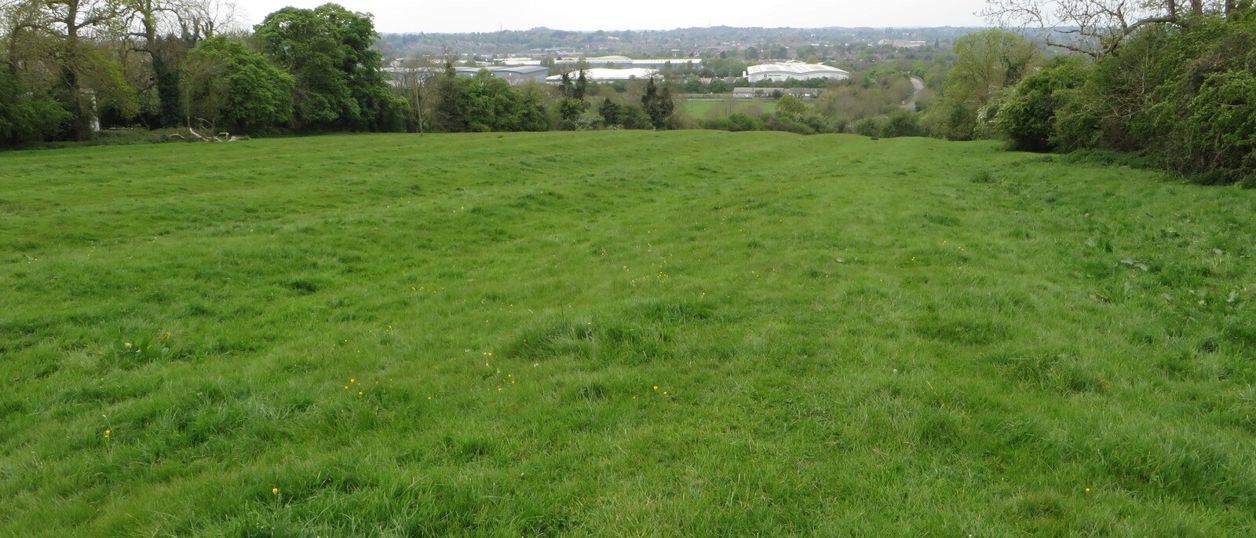
National Filling Factory No 9 was a First World War shell-filling works just east of Banbury, in fields between Grimsbury and Overthorpe, on the Northamptonshire side of the county boundary. It ran from April 1916 and closed in 1924. The M40 now cuts it in two, and what survives is a scheduled monument on private land. The way to see it is on a guided tour.
Why Banbury got a shell factory
The Ministry of Munitions conceived the national filling factories in 1915. Banbury's was one of the earliest purpose-built by the ministry. The Northamptonshire Historic Environment Record (opens in a new tab) says it was commissioned in November 1915, with Herbert Bing responsible for building and running it. The Office of Works drew up the plans, and the contract went in January 1916 to Messrs Willet of Sloane Square in London. The first lyddite was run on 25 April 1916.
That is about five months from commission to first filling. Unit No 1 was designed to fill 100 tons of lyddite a week, and a second unit to the south, built within a year or so, doubled that. The two together covered 132 acres. Lyddite is a high explosive based on picric acid, and at the site the earthworks of the picric acid stores can still be picked out.
How a filling factory worked
The factory was built to limit an explosion. Filling houses were wooden sheds on concrete foundations, set apart and surrounded by earth banks called traverses, so that a blast in one shed would not set off the next. A survey in the Banbury Historical Society's journal (opens in a new tab) in 1987 says each filling house had four workers, two men and two women. Shells moved between them on hand-pushed wooden trolleys along a narrow-gauge tramway, which passed through the banks between concrete portals. Standard-gauge sidings around the edge brought materials in and took shells out, on more than 3 miles of track linked to the London and North Western Railway.
The figures for the workforce vary, as they do for most wartime factories. The Historic Environment Record gives over 1,400 local people in 1916, about a third of them women, and about 2,000 at the peak. The 1987 survey says 2,000, 500 of them women. Banbury Museum says the factory supplied the front line with nearly four million shells. A notice of 30 May 1917 said all the shells used by the British batteries in the battle on the Italian front came from No 9.
From lyddite to mustard gas
Demand for lyddite fell by September 1917, when the army moved to TNT. Sections of the factory then took on naval mines and shrapnel shells, and early in 1918 part of it was given over to filling chemical shells with mustard gas. All types of shell and mortar bomb passed through in the end, including high explosive and anti-aircraft rounds.
The danger, and the canary babies
The survey of 1987 says a serious explosion in 1917, in a department called the Can Wash House, injured several workers badly and killed one. It calls that the only fatal accident in the four years of filling. Peacetime was worse: five people died during the breaking-down work that followed.
The longer harm was to the body. Workers handling these chemicals were known locally as canaries because of their yellowed skin. Babies born to some of them were yellow too, and the BBC's World War One at Home series told the Grimsbury part of that story under the title Canary Babies (opens in a new tab). The yellowing faded, but similar work elsewhere caused toxic jaundice, which could kill.
After the war
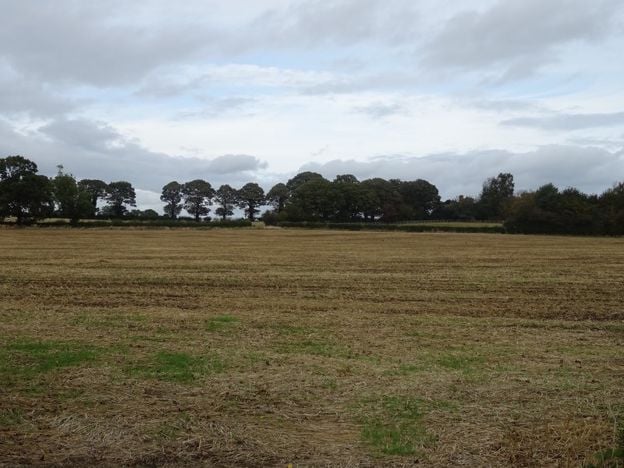
Messrs Cohen of London bought the factory about 1919 and used it to break up surplus ammunition until 1924. It has stood derelict since, and is now grazing land. Sections are believed to have been burnt on purpose to remove explosive residues, which may have helped form the mounds seen today. A rubbish dump of the 1920s or 1930s partly covers the northern end.
It was not quite finished as a target. The site served as a training area for the Regular Army and the Home Guard in the Second World War, and the 4th/7th Dragoon Guards left a stripped-down Covenanter tank there for target practice. A lone German raider dropped five bombs behind the Bowling Green Inn in 1940, on a night of full moon. People at the time blamed moonlight on some greenhouses. The 1987 survey thinks it more likely the Germans believed the factory was still in use, and neither explanation can be proved.
The Banburyshire newsletter
Events, new places and the best of the season, about once a month. Unsubscribe at any time.
What survives
About 75% of the plan of the factory survives. Historic England scheduled the remains of Unit No 1 as a monument on 21 June 2012, list entry 1409811. The M40 took the western side and most of Unit No 2. What is left includes the earth traverses, with brick-revetted ends and concrete cores, concrete floor slabs, tramway and siding earthworks, and the storage magazines in the field to the south-east. Medieval ridge and furrow also survives between the stores and the tramway lines. Historic England's scheduling calls it one of only two First World War lyddite filling factories that keep evidence of the complete process, and Home Front Legacy, a project on First World War remains, adds that it is the only one of the two to be scheduled.
Seeing the site
Do not go on your own. The site is private grazing land and a protected monument. The way in is the guided tour run by Banbury Museum and Gallery. The museum's page (opens in a new tab) last listed a tour on Saturday 11 October 2025, at £20 a person, booked in advance, in morning and afternoon sessions, meeting on the approach road to the Evergreen Inn on Overthorpe Road (OX17 2XA). When we checked in November 2026 the museum listed no later tour, so ask the museum about the next one. It warns of rough ground, stiles and gates, and says good mobility and stout footwear are essential, so it will not suit wheelchair users or anyone unsteady on their feet.
We know of no public viewpoint. If the tour is not running, the museum in the town is the place to go, and the Banbury guide and our things to do in Banbury have the rest of the day.
Places to stay near Banbury
-
Whately Hall Hotel, Banbury
Hotel · Banbury
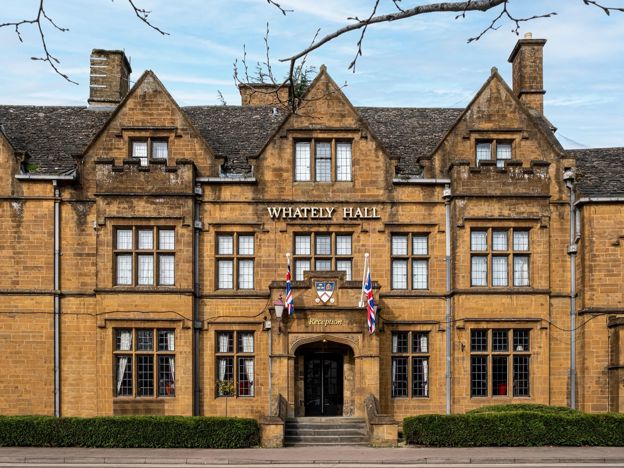
A Grade II listed 17th-century inn, now a 71-room hotel on Horse Fair in the middle of Banbury, with gardens, an oak-panelled restaurant and six EV chargers.
Dog-friendly · Family-friendly · Wedding venues
Verified Nov 2026
-
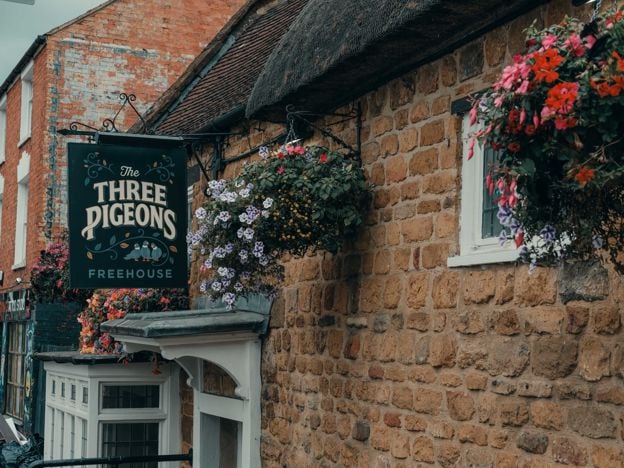
The Three Pigeons, Banbury
Pubs · Banbury
A Grade II listed 17th-century inn, partly thatched, on Southam Road, Banbury, with real ales and ciders, a courtyard, Smash Cow street food from Thursday to Saturday and three en-suite rooms.
Dog-friendly · Car-free
Verified Nov 2026
-
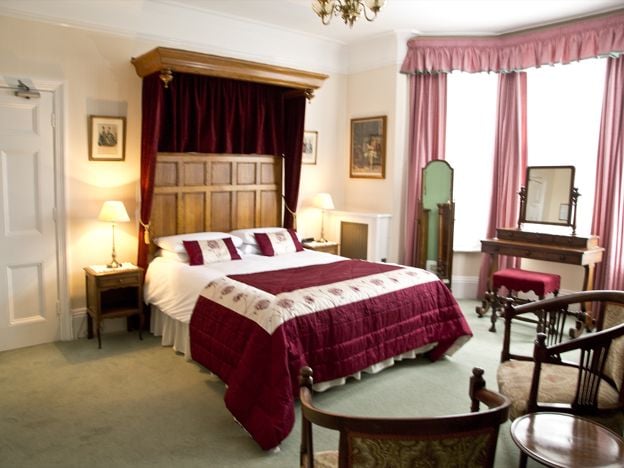
Banbury Cross Bed and Breakfast
B&B · Banbury
A family-run Victorian B&B on Broughton Road, Banbury, with seven bedrooms, about 370m from Banbury Cross, with free off-road parking, cooked breakfasts and rates from £77. No under-18s.
Car-free
Verified Nov 2026
Read next
-
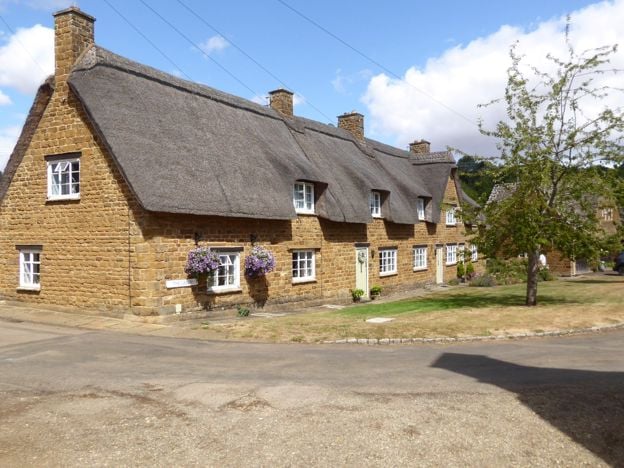
Hornton stone and the ironstone villages: why Banburyshire is brown
Story · History · 5 minute read
Hornton stone is the rusty ironstone that colours the villages around Banbury. It is a band of Jurassic rock no more than about 10m thick, quarried at Hornton and on Edge Hill for centuries. Henry Moore carved it, and steelworks ate it until 1967.
-
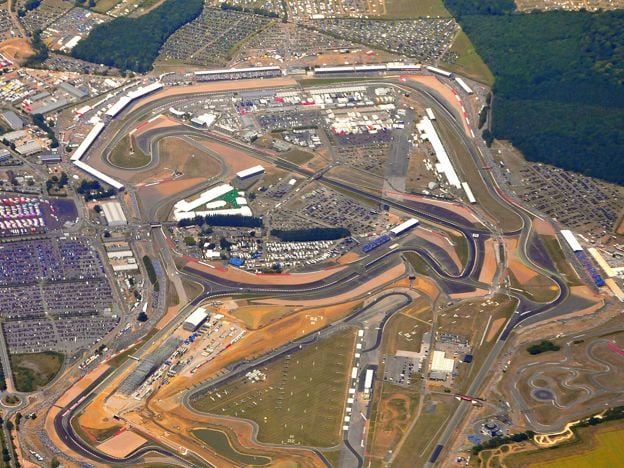
Motorsport Valley: how Formula One settled around Banbury
Story · History · 19 minute read
Motorsport Valley is the cluster of racing firms around Silverstone and Banbury. It grew from a wartime airfield, post-war engineers and people leaving one team to start another. This is the history of Formula One in the region, who is where in 2026, and how to see it.
-
Alcan in Banbury: the aluminium works that made a market town industrial
Story · History · 6 minute read
In 1931 the Northern Aluminium Company opened a works on the Southam Road, and Banbury stopped being only a market town. It rolled sheet for wartime aircraft behind a decoy factory, employed over 3,000 at its height, became Alcan and closed in 2009.