Alcan in Banbury: the aluminium works that made a market town industrial
A Canadian aluminium firm chose a north Oxfordshire market town in 1929, with the borough council's help, and for 70 years the town's working life turned round it. An art deco office and a set of aluminium gates are what is left.
· 6 minute read
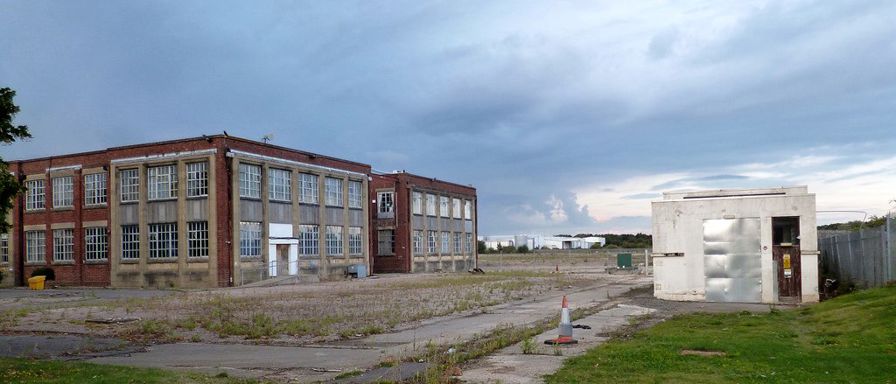
Until 1931 Banbury lived on its markets, its farm machinery works and its brewery. Then the Northern Aluminium Company opened a works on the Southam Road, north of the town, and within 20 years almost a quarter of Banbury's working people were in aluminium. The firm became Alcan in 1960 and the works closed in 2009. What it left is a listed office building, a set of gates and a war memorial garden.
Why Banbury
The choice was helped along. The company bought land in 1929 in the hamlet of Hardwick, north of the town, and the Victoria County History (opens in a new tab) records that the borough corporation stepped in to secure the purchase when negotiations seemed to be failing. A 2010 talk to the Sibfords Society by Richard Hartree, reported on the society's site (opens in a new tab), put the site at 40 acres and said the council wanted a major production company in the town.
It was something new for Banbury. The county history notes that the planning began in the late 1920s and brought an industry 'completely independent of agriculture', at a time when the old trades were going. The Britannia Works, the town's big agricultural machinery firm, closed in 1933.
Rolling Canadian metal
The works opened in 1931 with 200 staff. Its job was to remelt, alloy and roll imported Canadian pig aluminium into sheet, at 250 tons a month to begin with and 310 from 1932. The company belonged to a Canadian group, Aluminium Ltd, which explains the name it took in 1960, Alcan Industries Ltd.
It grew quickly. In 1935 a plant for aluminium paste pigment was built and the extrusion department moved in from West Bromwich. A tube-drawing department followed in 1936. Historic England's listing (opens in a new tab) says the site grew to almost its present size between 1935 and 1938. The factory was designed by Wallis, Gilbert and Partners, the architects of the Hoover Building in Ealing.
Aluminium for the war, and a decoy
The Second World War made the works matter nationally. Sheet for the aircraft industry became its chief product, and the listing reports that in the early years of the war the plant made 60% of the metal needed for aircraft manufacture. Hartree's talk put the rise in output at about fivefold.
A works that important was a target. The factory was hidden under camouflage paint, and a plywood decoy factory was built nearby as a false target for bombers. Hartree told the Sibfords Society that the decoy took a direct hit and was quickly repaired, which we have from the report of his talk and no other source.
The research side came too. Aluminium Laboratories Ltd opened a Banbury branch opposite the works in 1936, and the Ministry took it over in 1939 for its light metals control work. After the war it became a research laboratory, was enlarged to three times its size in 1954, and by 1965 employed 60 graduates and 200 other staff.
A works town
For a generation Banbury was an aluminium town. In the early 1950s, the county history says, 24% of its working people were in aluminium processing, against 13% in shops and distribution. The listing puts the company's workforce at more than 3,000 at the height of production, and calls it the first modern industry in Banbury. Other firms followed it to the town after the war, and the county history lists Automotive Products, which arrived in 1962 and later employed more than 1,700, and General Foods, which moved from Birmingham in 1965.
The long ending
The works kept modernising, with new furnaces, rolling mills and presses that needed fewer people, and Hartree's talk described rounds of rationalisation in the 1980s and 1990s. The research went first. Alcan shut its Banbury Technical Centre in 2003, and former staff set up an independent firm, Innoval Technology, the same year, the firm says (opens in a new tab). Later planning records give the site to other aluminium companies. The report of Hartree's talk says the factory finally closed its gates in 2009.
The rolling works have been demolished. War Memorials Online (opens in a new tab) gives the address of the company's memorial as an Amazon depot on the Southam Road.
The Banburyshire newsletter
Events, new places and the best of the season, about once a month. Unsubscribe at any time.
What is listed
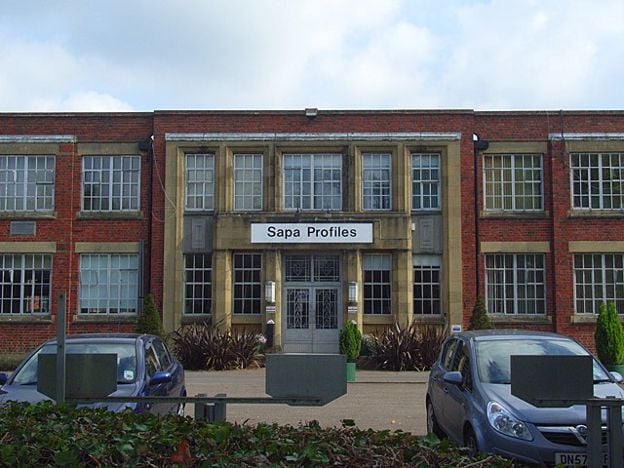
Three pieces survive together under one Grade II listing of 10 July 2008. The office building was designed by Gilbert Gardner of Oxford and built in two phases, in 1936 and 1937, of red brick and stone with aluminium panels, windows and rainwater goods. It was a showcase for the metal: inside are an aluminium revolving door, a double staircase with aluminium balustrades, and aluminium skirting boards, fingerplates and door furniture. The listing places it among the first buildings fitted with aluminium windows.
The gates, of 1931, are the last intact part of the original factory, with the company's art deco roundel and the initials NAC. They were later moved beside the memorial garden, away from the lorries at the site entrance. The memorial itself, to employees who died in the Second World War, is a round pond with a hexagonal island and a stepped plinth carrying their names.
The buildings are private. You can see the office front from the Southam Road, but there is no visitor access, and we have not confirmed the current state of the memorial garden.
Places to stay near Banbury
-
Whately Hall Hotel, Banbury
Hotel · Banbury
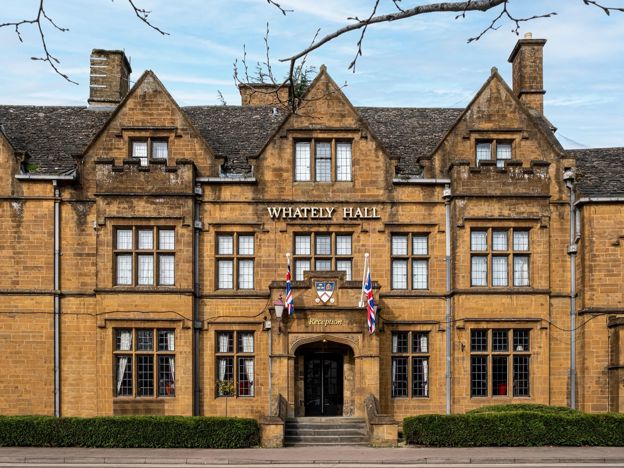
A Grade II listed 17th-century inn, now a 71-room hotel on Horse Fair in the middle of Banbury, with gardens, an oak-panelled restaurant and six EV chargers.
Dog-friendly · Family-friendly · Wedding venues
Verified Nov 2026
-
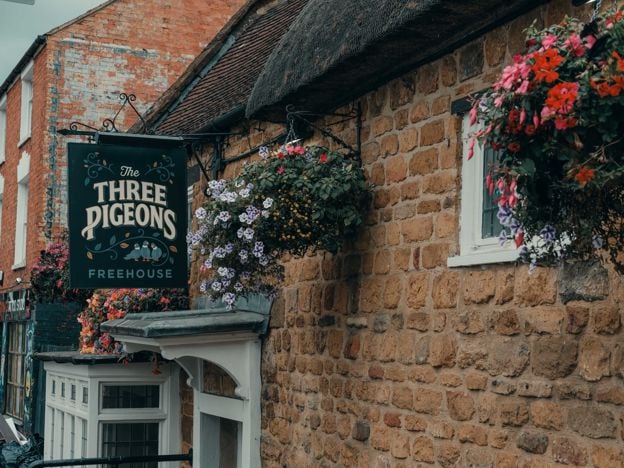
The Three Pigeons, Banbury
Pubs · Banbury
A Grade II listed 17th-century inn, partly thatched, on Southam Road, Banbury, with real ales and ciders, a courtyard, Smash Cow street food from Thursday to Saturday and three en-suite rooms.
Dog-friendly · Car-free
Verified Nov 2026
-
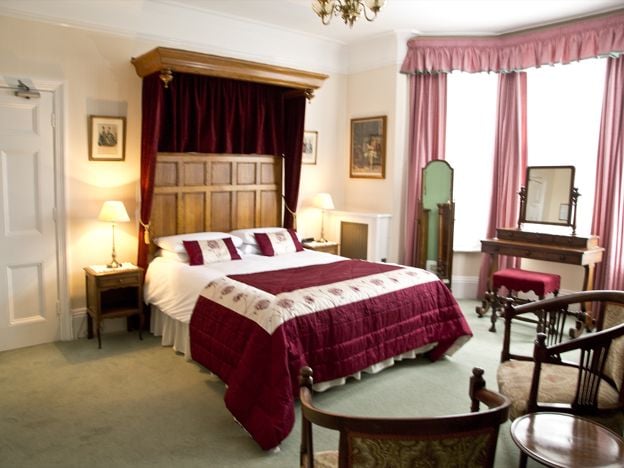
Banbury Cross Bed and Breakfast
B&B · Banbury
A family-run Victorian B&B on Broughton Road, Banbury, with seven bedrooms, about 370m from Banbury Cross, with free off-road parking, cooked breakfasts and rates from £77. No under-18s.
Car-free
Verified Nov 2026
Read next
-
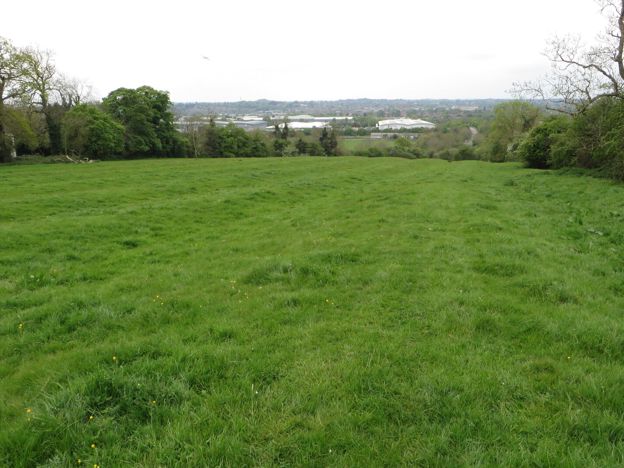
Banbury's First World War munitions factory: National Filling Factory No 9
Story · History · 5 minute read
National Filling Factory No 9, east of Banbury, filled shells from April 1916 and employed about 2,000 people at its height. The M40 now cuts through it. About three quarters of its plan survives as earthworks, protected as a scheduled monument, on private land.
-
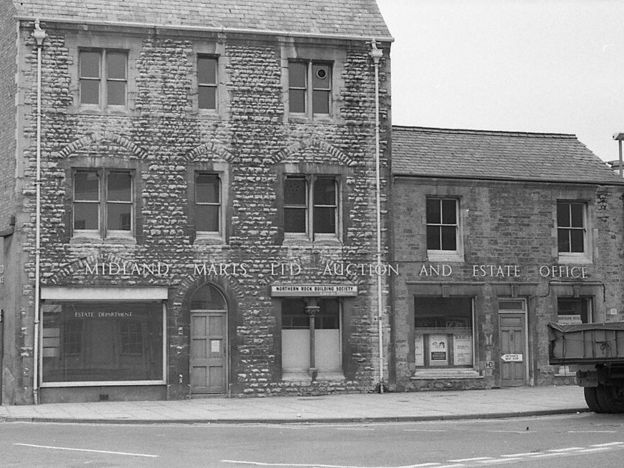
Banbury cattle market: the biggest in England, and how it closed
Story · History · 6 minute read
From the mid 1920s Banbury's livestock sales moved off the streets to a market at Grimsbury, and by the 1960s it was the largest stock market in England. It closed on 4 June 1998, after BSE and a failed move to the M40. What it was, and what stands on the site now.
-
Motorsport Valley: how Formula One settled around Banbury
Story · History · 19 minute read
Motorsport Valley is the cluster of racing firms around Silverstone and Banbury. It grew from a wartime airfield, post-war engineers and people leaving one team to start another. This is the history of Formula One in the region, who is where in 2026, and how to see it.