Fawsley and the Knightleys: a lost village, a secret press and 500 years
A church alone in a landscape park, a hall that became a hotel, and the bumps of a village emptied for sheep. Fawsley is one family's story, and a hard one for the people they moved.
· 7 minute read
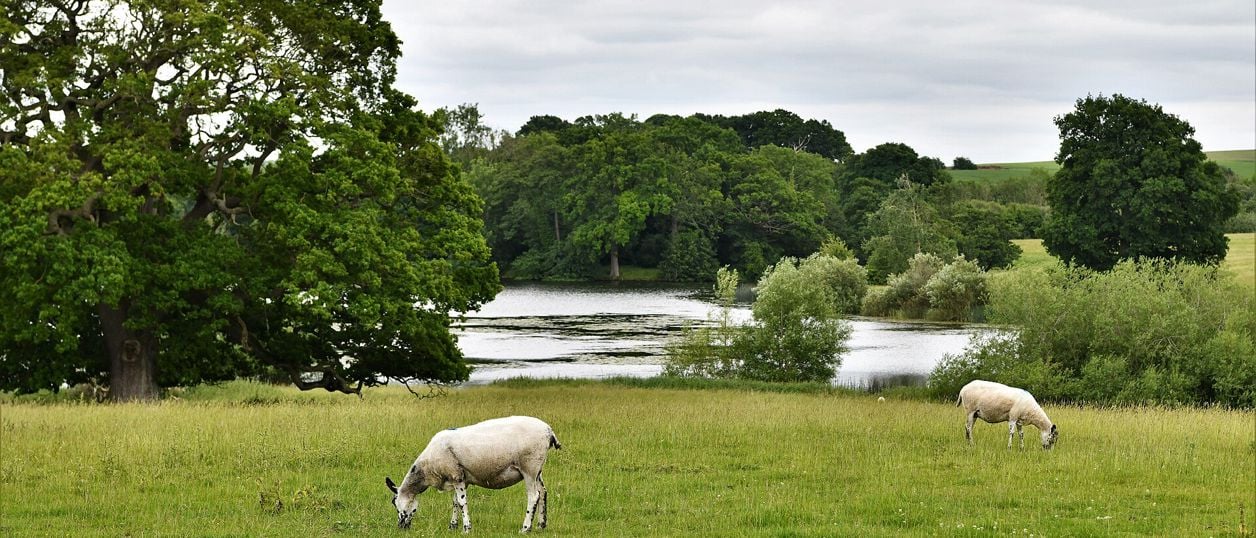
Fawsley, in the hills south of Daventry, is a church in a field. It stands on its own in a landscape park, looking across a lake to a Tudor hall, with no village round it. The village was there once, and the family who removed it, the Knightleys, owned Fawsley for about 500 years. Their tombs fill the church.
A lawyer buys a manor
The Knightleys came from Staffordshire. Historic England's register entry for the park (opens in a new tab) says Richard Knightley, a Staffordshire lawyer, bought the manor in 1416, and that the family kept it until the 1930s. The Gage family, who inherited it, tell the story in their own history of the estate (opens in a new tab) and trace the name to the village of Knightley in Staffordshire.
Fawsley was already old. It is in Domesday, and the county's Historic Environment Record calls it a late Saxon royal manor, though the site of that manor has not been found.
The village cleared for sheep
What the Knightleys did next is the part of the story that is hardest to like. The register entry says Richard Knightley reportedly evicted his tenants in the early fifteenth century and turned the parish over to sheep. The Historic Environment Record (opens in a new tab) gives the numbers. In 1377 about 90 people lived at Fawsley. By 1524 there were seven taxpayers, and by 1547 the parish was pasturing about 2,500 sheep. In about 1729 only four houses were left, scattered in the fields, and by 1741 a map shows the village entirely gone.
Little of it can be seen on the ground. A survey in 1964 found no settlement earthworks worth measuring, and a recent topographical survey found no clear settlement earthworks along its route either, though ridge and furrow in the park marks the edge of the old fields, and there is a large fishpond that probably belonged to the village. Landscaping round the hall may have removed the rest.
The hall
The house is the Knightleys' monument. The register dates the surviving early work to the house begun by Richard Knightley, who died in 1534: a five-bay hall, a parlour with an oriel window, a kitchen, a bakehouse and a long brewhouse range. The Gage history credits Sir Edmund Knightley with the great hall in 1537. Later generations added to it. Francis Smith of Warwick is credited with the north range of 1732, Thomas Cundy altered it in 1815 and Anthony Salvin extended it in 1867 and 1868.
Elizabeth I came in 1575, as the guest of Sir Richard Knightley, according to the Gage history.
A secret press, 1588
That same Sir Richard sided with the puritans, and in 1588 he took a serious risk. The Marprelate tracts were a series of anonymous satires on the Elizabethan bishops, printed on a secret press that kept moving to stay ahead of the authorities. The Gage history says the first was printed at East Molesey in Surrey in October 1588, and that in November the press moved to Sir Richard's house at Fawsley, where the second, the Epitome, was printed. The Dictionary of National Biography gives the same account. He was imprisoned for allowing it.
Banbury's own puritans were the talk of England at the time, and our story of Banbury's puritans gives that side.
The church and the tombs
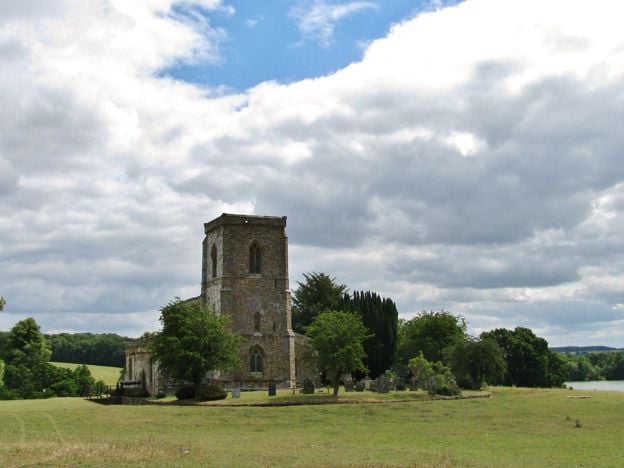
The church is older than the hall by perhaps two centuries, and its Grade I listing (opens in a new tab) dates it to the thirteenth, fourteenth and sixteenth centuries, with a chancel rebuilt in 1690. The listing calls its brasses, wall monuments and tomb chest with effigies to the Knightleys, from the sixteenth to the nineteenth centuries, an outstanding series.
The best is the tomb of Sir Richard Knightley, who died in 1534, and his wife. The National Churches Trust's page (opens in a new tab) says it was carved by Richard Parker of Nottingham, in alabaster that keeps its original paint, with a procession of their sons and daughters along the sides. Look too for the box pews made with sixteenth-century linenfold panels, the Flemish glass roundels and, in the north aisle, the heraldic glass of the Washington family, brought from Sulgrave in 1830. Our Sulgrave story explains who they were.
You reach the church across a field, and cross a ha-ha by a small bridge to a small door. The trust says it is open daily from 9.30am to 5pm, and may close in bad weather to keep the mud out. That is the church's own information, so check before a special trip.
The end of the Knightleys
The family lasted into the twentieth century. Lancelot Brown was working on the park in 1763, the register says, when he was reported to be laying out the ground and making a large piece of water, and he stayed a night in 1775. The last of the line, Sir Rainald Knightley, was made Baron Knightley in 1892 and died childless in 1895. His widow, Louisa, stayed in the house until her death in 1913, and the contents were auctioned in 1914. The estate passed to the Gages of Firle Place in Sussex, descended from Sir Rainald's sister, who still own the land.
The hall did badly. The register says it was abandoned after 1913 and lost its roof in 1966. It was sold in 1975, restored, and opened as a hotel in 1998.
The Banburyshire newsletter
Events, new places and the best of the season, about once a month. Unsubscribe at any time.
Visiting Fawsley
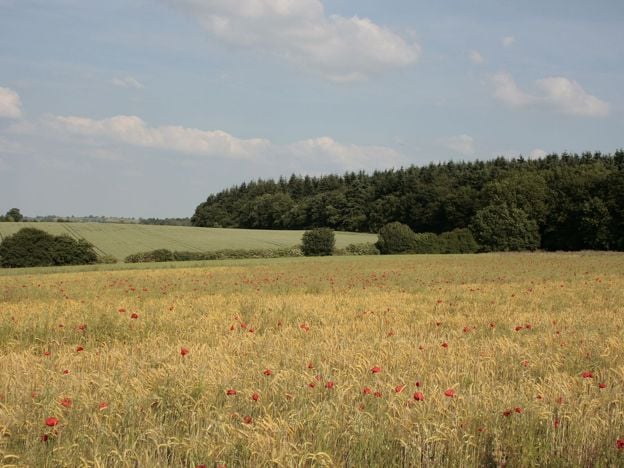
The church is the reason to come, with the park around it. Fawsley is a short drive from Badby, and the walk from Badby Woods to Fawsley is the way to arrive on foot, through the bluebell wood the abbot of Evesham was allowed to impark in 1245 and 1246, now Badby Woods. The hall is a private hotel, and we have not checked what it offers non-residents.
Mentioned in this story
The places, sights and walks in this story, each with a page of its own: what it is, when to go and how to get there.
-
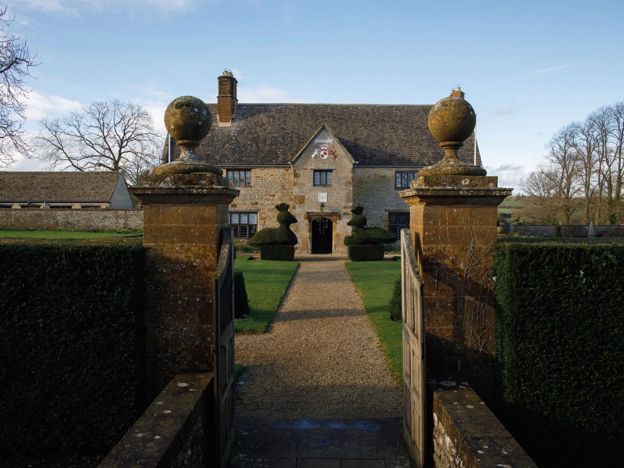
Sulgrave Manor
Historic houses and heritage · Sulgrave
-
Badby Woods and Fawsley
Walk · Starts in Badby · 1 hr, 30 mins · Circular
Read next
-
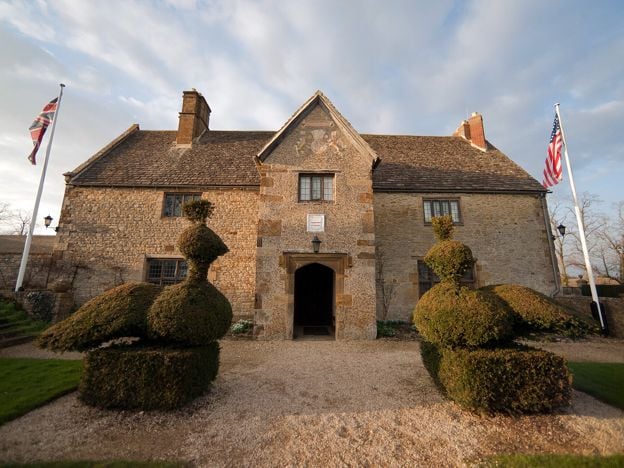
Sulgrave Manor and the Washingtons: George Washington's ancestral home
Story · History · 8 minute read
Sulgrave Manor is George Washington's ancestral home, built by his ancestor Lawrence Washington. But George never lived there, and the claim about its arms and the American flag is a legend. How it was built, lost, bought back for peace in 1914 and run today.
-
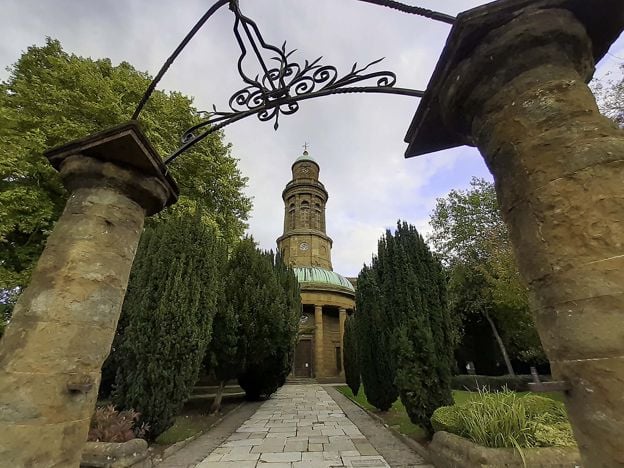
Banbury's puritans: the 'Banbury man', the roaring boy and the zealots
Story · History · 7 minute read
By 1614 'a Banbury man' meant a puritan, and writers mocked the town's zeal. Its people pulled down their crosses, a vicar preached twice every Sunday and was called the roaring boy, and the Quakers came next. What the record shows, and what was a joke.
-
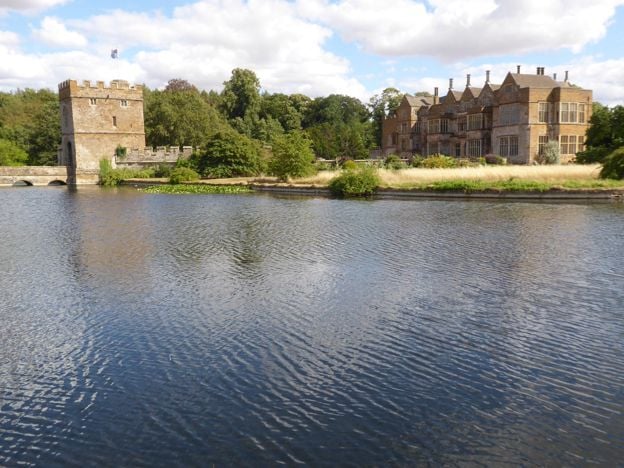
The Fiennes family of Broughton Castle: one moated house since 1448
Story · History · 8 minute read
The Fiennes family has held Broughton Castle, near Banbury, since a marriage in 1448. In that time one lord was killed by Cade's rebels, one at Barnet, one plotted against Charles I in the house, and later ones sold the contents and sold the swans. The family still lives there.