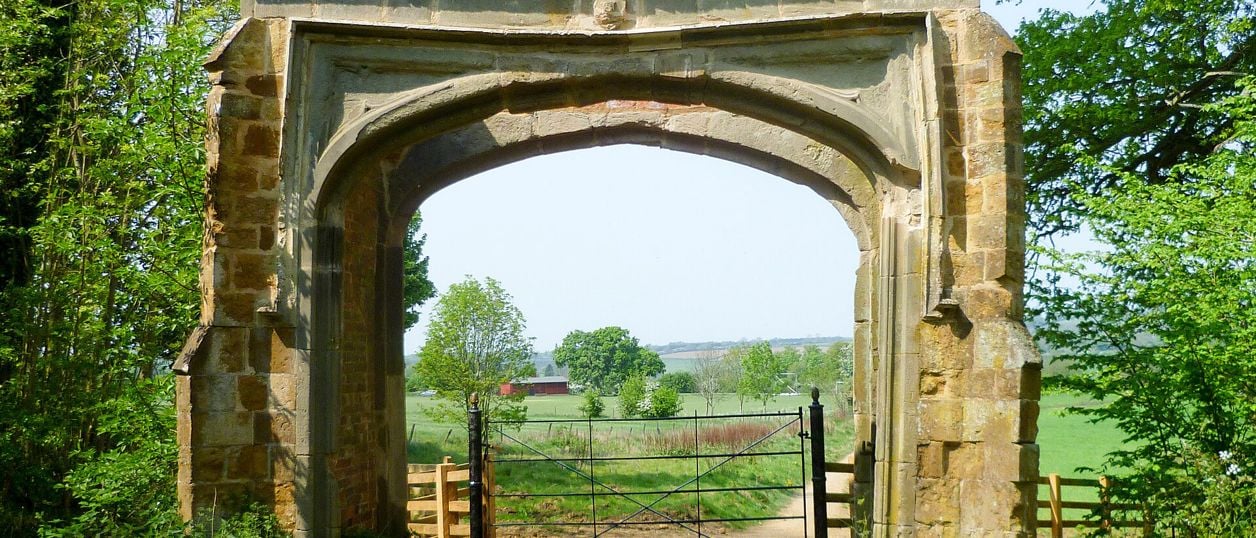
DeFacto, CC BY-SA 4.0, via Wikimedia Commons
Badby Woods
An ancient bluebell wood at Badby, Northamptonshire, on the Fawsley estate: woodland for over 700 years, a deer park from 1246 and now an SSSI. Free and private, on permissive paths. Bluebells usually peak from late April into early May, and parking is for about 12 cars.
Wood
BadbyBadby Woods are about 47 hectares of ancient oak and hazel on the Fawsley estate, on the south-east side of Badby, about 13 miles from Banbury Cross in a straight line. The wood has stood for over 700 years, is protected as a Site of Special Scientific Interest and is famous locally for its bluebells.
When the bluebells flower at Badby Woods
As a rule, the bluebells here are at their best from late April into the first days of May, and the date moves with the spring. Nationally, the Woodland Trust gives an average first flowering of 9 April (records from 2001 to 2025), with most flowering through April, earlier in the warmer south and earlier after a mild spring. Badby's own clock is the Bluebell Teas (opens in a new tab), held at the village hall on the first Sunday in May and the bank holiday Monday. The parish says the bells should be in full bloom by then, while admitting that nature does not always cooperate, and that you should usually still see some along the paths.
So do not plan around one fixed date. As a rough guide of ours, after a warm March go in the third week of April, and after a cold one wait for May. The county council's leaflet of 2003 says May and June, which looks late against everything else we read. The Woodland Trust's Nature's Calendar map shows what is flowering nearby before you set out. A weekday morning gives you the quietest paths and the easiest parking.
These are native bluebells, named in the SSSI citation. Scent is the quick test: native flowers smell strong and sweet, and the Spanish and hybrid kinds much less. Keep to the paths and do not pick. The Woodland Trust says a patch can take more than five years to establish, and that digging up wild bulbs without the landowner's permission is illegal.
Who owns and looks after Badby Woods
Badby Woods belong to the Fawsley Estate and are private land that the estate opens to visitors. They are not National Trust, Woodland Trust or Forestry England property, whatever some listings suggest. The estate manages them under a Forestry Commission-approved plan, with Natural England involved because of the SSSI. We could not find an estate website or a named contact, so the parish's page on the wood (opens in a new tab) is the best public source.
That page says the woods are open to all visitors, but it also records what that rests on. The only public right of way in the wood is the Knightley Way, which runs round its edge. Everything else is a permissive path, which the estate allows but does not have to keep open. In early 2007 the estate began felling sycamore and some larch and clearing the edges of the rides under a Woodland Grant Scheme. From the week of 9 September 2024 it began about six weeks of forestry work under a 10-year management plan, with signs and some routes closed, and said it fully intended to maintain and improve access by permissive paths. Expect more work during that plan, and follow any signs you meet.
The story of Badby Woods
The wood is older than most of the records. Canute's confirmation of Badby and Newnham to Evesham Abbey about 1018 is the start of the paper trail, and Domesday's woodland at Badby is likely to be this one. Abbot Roger Norreys built a moated grange just beyond the trees in 1189. In 1246 Henry III gave the abbey free warren in the wood and leave to make a deer park, for hunting and for food. The park pale, the bank that kept the deer in, still runs round much of the wood.
After the Dissolution, Henry VIII granted Badby in 1542 to Sir Edmund Knightley and his wife, Ursula. The Knightleys had owned neighbouring Fawsley since 1416, and the wood became the northern part of their park. In 1442 the wood and park together already came to nearly 700 acres. Sir Richard Knightley entertained Elizabeth I at Fawsley in 1575. In 1763 Capability Brown was reported to be laying out the ground and making a large piece of water, though the county's Historic Environment Record notes that lakes were already there. Rides radiate through the wood from Hazley Knob at its centre.
The family's long run ended in the twentieth century. The contents of Fawsley Hall were auctioned in 1914 and estate land was sold in auctions in 1921 and 1932, the last baronet died in 1938, and Fawsley Hall was sold in 1975 and opened as a hotel in 1998. Today the wood belongs to the Fawsley Estate, and we have not established who stands behind that name.
What to look for in Badby Woods
Look down first. The citation lists bluebell, wood anemone, wood sorrel and yellow archangel in the richer parts, and bramble and creeping soft-grass elsewhere. George Baker recorded yellow archangel here in 1822, and it is still here. County rarities have included wood horsetail, blinks, hairy wood-rush and wood melick, and a small marsh on the northern boundary holds greater tussock sedge and marsh valerian. The parish says golden rod and lesser butterfly orchid, noted by Baker, have not been recorded recently.
Above that, the canopy is mainly pedunculate oak over coppiced hazel, the kind of woodland the citation calls unusual in Northamptonshire now. Sweet chestnut and sycamore grow in parts. Look too for the woodland banks, the bracken glades and the stream. The citation mentions nuthatch, redstart, wood warbler and tree pipit, with badger setts and plenty of common butterflies, though that record dates from 1985 and we cannot say which birds still breed.
The ruin you can see from the paths is the Dower House, which is on private land, so look from the wood and do not cross to it. It began as a hunting or park lodge in the early sixteenth century, was extended later that century, and is reputed to be the oldest standing brick building in Northamptonshire. Its last recorded occupant died there in 1703 or 1704, and it was a ruin by the time Buckler drew it in 1815. It is Grade II listed and scheduled.
Visiting Badby Woods
Entry is free and there is no ticket, gate or published opening time. There are no toilets, café or staff on site that we could find. The village hall's teas are the only refreshments in season. Paths start from the arch, and the wood is worth a visit all year, but it is not a place for wheelchairs: the parish says there is no realistic disabled access. The soil is clay, so wear boots after rain.
On dogs, we can find no published rule from the estate. People do walk dogs here. Treat it as you would any wildlife site, with your dog on the path and close to you, and on a lead through the bluebells and from March to the end of July, when birds are nesting. Wood warblers and tree pipits, both named in the citation, nest on or near the ground. South of the wood the Knightley Way crosses the Fawsley parkland, so use a lead around any stock.
Parking and getting to Badby Woods
Drive to Badby on the A361, about 15 miles and about half an hour from Banbury through Byfield, turn into the village and take Chapel Lane towards Everdon. About 370m on, the parish says about 12 cars can park off the road. From there a rough track leads to the arch, and you enter beside it. The arch was under repair in 2024. Beyond those 12 spaces you are on a narrow road, so be ready to go elsewhere and do not block a gateway or drive.
On a bluebell weekend, plan on that space being full. The county council's leaflet asks visitors to park instead at the picnic area on the A361, about 450m north of the village, and walk in by the footpath, or at Fawsley, where paths lead north to the wood along the Knightley Way. Stagecoach's 200 bus from Banbury and Daventry calls at Badby roughly hourly, Monday to Saturday, but we found no Sunday journeys, so the Sunday of the Teas needs a car or a taxi. See our guide to the buses before relying on it.
Walks through Badby Woods
The Knightley Way (opens in a new tab) is the one route with a legal right behind it. It starts by St Mary's Church in Badby, skirts the wood and crosses the park to Fawsley. The county council's leaflet builds a southern circular of 2.3 miles (3.7km) on it, from near Fawsley Hall to the village and back, about an hour and a quarter. For the permissive paths, take the arch and follow the rides. We describe no fixed route inside the wood, because the estate can change them.
Near Badby Woods
Badby is at the end of the lane, with its church and the village hall teas. Fawsley lies beyond the wood, with its lakes, the Hall and the isolated church of St Mary that holds the Knightley tombs. Byfield, about 4.5 miles south west, has a Grade I church and Boddington Reservoir. For a pub on the road home to Banbury, try the Griffin Inn at Chipping Warden, and for a house to pair with the wood, Canons Ashby, which is a National Trust property. For another free outing on the same side of the county, the view from Edge Hill is about 14 miles west, and Spiceball Country Park is the wild corner closer to Banbury.
Walks past Badby Woods
-
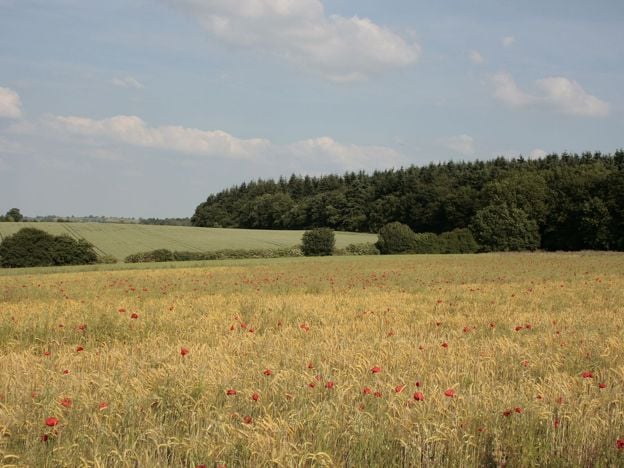
Badby Woods and Fawsley
Walk · Starts in Badby · 1 hr, 30 mins · Circular
A 2.9-mile (4.7km) circular walk from Fawsley across the old deer park to the edge of Badby Woods and up to Badby church, moderate and about an hour and a half, with about 120m of climbing. It follows the county council's Southern Circular and the Knightley Way.
Stay and eat near Badby Woods
-
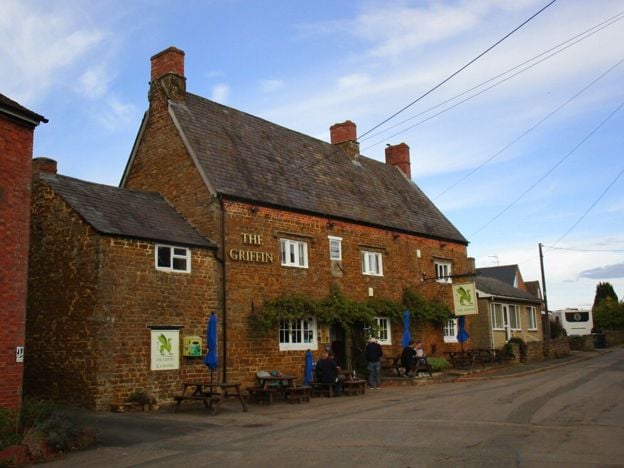
The Griffin Inn, Chipping Warden
Pubs
A Marston's village local at Chipping Warden, north-east of Banbury, with cask ales, a beer garden, a car park with accessible spaces, electric car charging and live sport.
Dog-friendly · EV charging
Verified Nov 2026
-
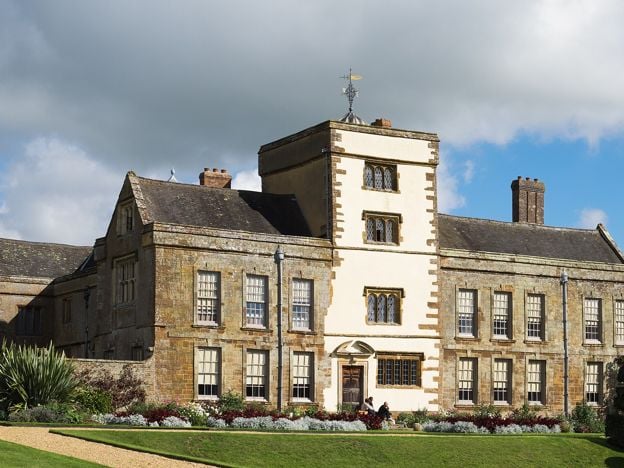
Canons Ashby
Historic houses and heritage
The Dryden family's Elizabethan manor house in south Northamptonshire, with painted rooms, Jacobean plasterwork and terraced gardens, beside the surviving church of a medieval priory. National Trust, north east of Banbury.
Dog-friendly
Verified Nov 2026
Stories about Badby Woods
-
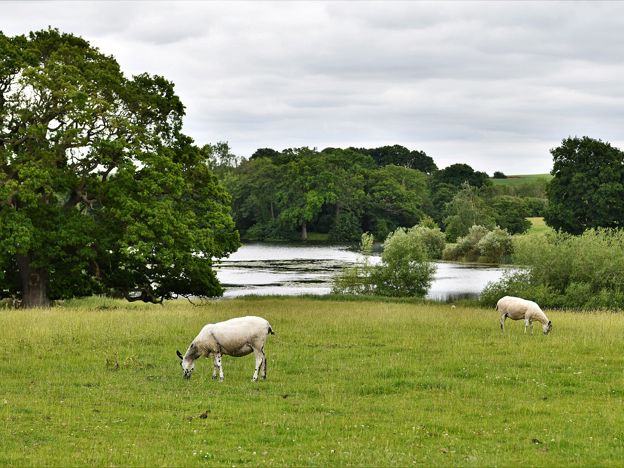
Fawsley and the Knightleys: a lost village, a secret press and 500 years
Story · History · 7 minute read
The Knightleys bought Fawsley, near Daventry, in 1416 and cleared its village for sheep. They built a Tudor hall, hid a puritan press in 1588 and held the estate for about 500 years. The village is gone, and the church stands alone in the park with their tombs.
-
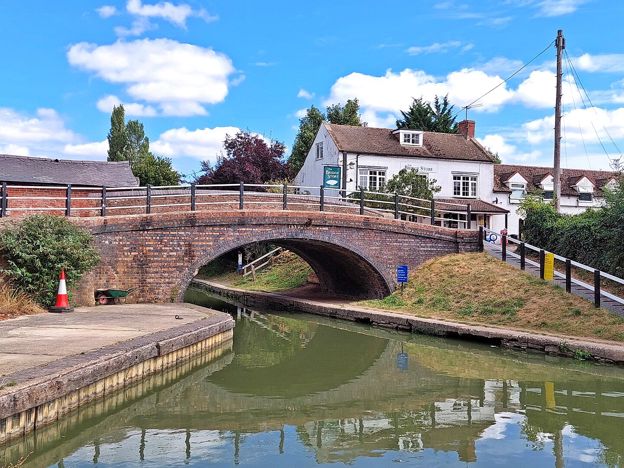
Walks near Banbury
Story · Guides · 8 minute read
Walks near Banbury: the towpath to Cropredy, the Ironstone Heritage Walk from the station, short circles round Wroxton and Adderbury, the Edgehill ridge, Badby's bluebell wood and the parish walks at Great Tew, Hook Norton and Kings Sutton, with distances, stiles and parking.
More sights to see
-
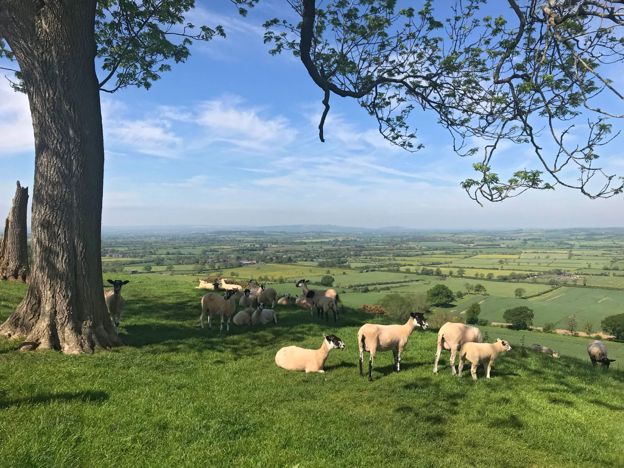
Edge Hill viewpoint
Sight · Viewpoint · Edgehill and Radway
The long view from the top of Edge Hill, north-west of Banbury, across the plain where the Battle of Edgehill was fought in 1642. There is no signed viewpoint: the ridge road, the footpaths and the garden of a 1740s sham castle are how you see it.
-
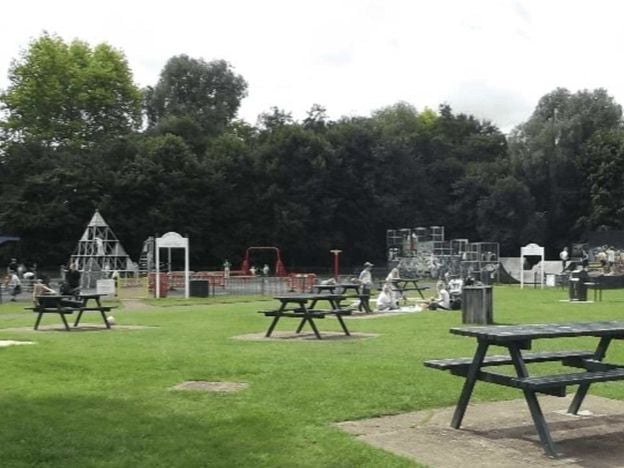
Spiceball Country Park, Banbury
Sight · Common or park · Banbury
Banbury's largest park, 26 acres split by the River Cherwell with the Oxford Canal along one edge: play area and skate ramps on the town side, woodland walks and nature trails across the wooden bridges. Free, with free parking on Grimsbury Green.
-
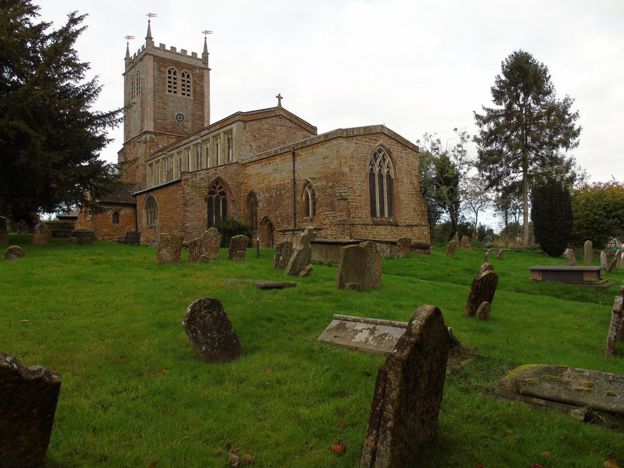
St Mary's Church, Badby
Sight · Church · Badby
Badby's Grade II* ironstone church on the hill above the greens, with a tower rebuilt after the old one fell in 1705, glass with the arms of Evesham Abbey, and the start of the Knightley Way opposite. Open every day, 10am to 4pm.