Bicester's ghosts: the White Lady, the Cavalier and M.R. James
Bicester's ghosts are mostly Civil War ghosts, with a few monks and one magician. Its best ghost story, though, was written by M.R. James, who sent his narrator to a Christmas in Bicester in 1837.
· 5 minute read
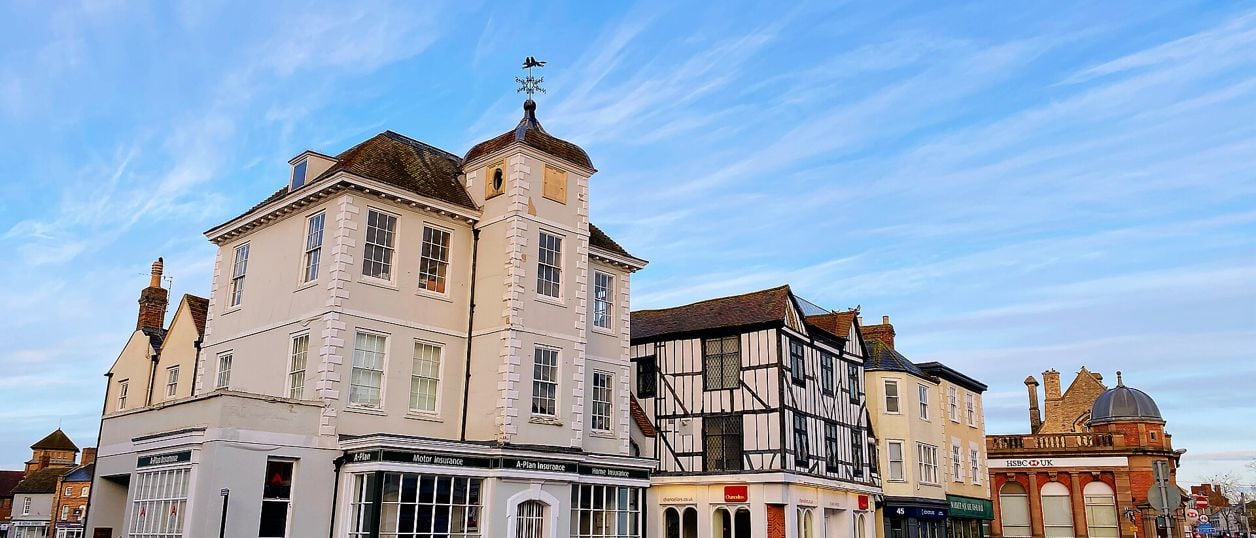
Bicester's ghost stories are told rather than recorded. Most of them come down to us through the town's local history society, which has run ghost walks, and through two or three folklore books. They are mostly about the Civil War, when both armies came through the town, and about the priory that stood beside the church until 1536. None of them is evidence of anything, and the people who tell them mostly say so. This is what the stories say and where they come from.
The White Lady of Rookery Pond
The best known is the White Lady. In the version told at a Bicester Local History Society (opens in a new tab) talk by Pete Chivers in December 2012, she searches for treasure hidden in the Civil War. Dark Oxfordshire (opens in a new tab), which lists Roger Long's Curious Oxfordshire (2008) among its sources, fills in the rest. The family of Bicester House were away fighting for the King and had left a woman in charge. When Parliament's soldiers came, she threw the valuables into Rookery Pond. The soldiers searched, found nothing and killed her, and she walks the grounds and the streets nearby on the anniversary of her death.
The war part is real. The Victoria County History records Royalist forces in and around Bicester in 1643 and 1644, Prince Rupert there on 14 June 1643, and Sir William Waller making the town his headquarters in July 1644, when Parliament levied £60 on it. Nobody has found a record of the woman, the treasure or the murder. The pond has been filled in, and the Victoria County History records that Bicester House was much enlarged in the 1780s and rebuilt again after a fire about 1820.
The Crockwell Cavalier
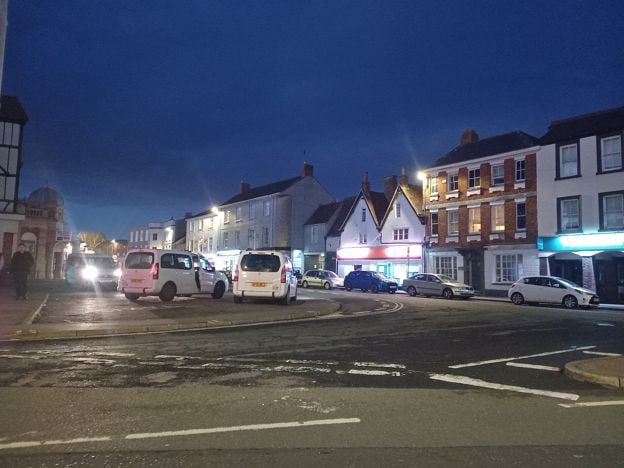
The second Civil War ghost keeps to the old Crock Well, at the junction of St John's Street and Queen's Avenue, according to the 2012 talk, and shows himself to courting couples. Long suggests he was a Cavalier who fell down the well while running from Parliament's men. Dark Oxfordshire says the well was concreted over in the late nineteenth or early twentieth century after several near-fatal accidents. The name is older than any war: John Dunkin's history of 1816 found a Walter de Crockwell in the priory's records in 1211.
Monks, a toll house and Sheep Street
The same talk records apparitions of monks near the site of the priory, which was suppressed in 1536 and pulled down the next year, as our story of St Edburg tells. It adds an Edwardian lady at the Old Toll House in North Street, unexplained goings-on in two shops in Sheep Street, one of which a paranormal society declared the most haunted premises in the town, and the claim that many of the town's pubs are haunted. Sid Hedges's book about the town, Bicester Wuz a Little Town, records two sightings of his own.
The cunning man who flew to Kirtlington
James Jagger lived in Bicester in the late eighteenth century, a cunning man who was said to find lost things and catch thieves. His stories were written down by John Dunkin in 1826 and retold in Christine Bloxham's Folklore of Oxfordshire (2005), and Dark Oxfordshire summarises them. In 1793, the tale goes, he tried to raise a devil, and a hairy horned creature came for him. Dunkin, telling the tale, adds that it was a prank by a man called Charles Parkins wearing a bull's hide.
Jagger kept his reputation. The story goes that, asked to find a silver clasp for the landlady of the Rose and Crown, he set a basin of water in a passage, shut himself in another room, and the clasp fell into the basin. Walking home afterwards, the tale continues, he was seized by something unseen and carried over the rooftops, and was found next morning near Kirtlington, about five miles to the south west. He said demons like donkeys with panniers had dragged him through the hedges.
The Banburyshire newsletter
Events, new places and the best of the season, about once a month. Unsubscribe at any time.
A Christmas in Bicester, 1837
The finest ghost story set in Bicester is fiction, and it never names the town. M.R. James's The Story of a Disappearance and an Appearance, collected in A Thin Ghost and Others in 1919, is told in letters of December 1837 from a man who has come to "B----" to help search for his missing uncle. He stays at the King's Head, hears the organ fail twice in the Christmas hymn at church, and watches a Punch and Judy show in the market place that turns into something much worse. The uncle is found in a chalk pit.
Dark Oxfordshire reports that James's manuscript, in Cambridge University Library, names the town as Bicester, and reads the King's Head as the King's Arms on the Market Square and the church as St Edburg's. The same site found three quarries north of the town on nineteenth-century maps, but thinks James had no particular pit in mind. Of all the ghosts on this page, this is the one you can be sure of meeting: the story is in print and free to read online.
Ghosts beyond the town
The 2012 talk went on to the villages: three ghosts at Weston Manor in Weston-on-the-Green, among them a nun called Mad Maud, Hopcroft's Holt as a haunt of the highwayman Claude Duval, and a car that vanishes near Souldern. The society has run ghost and foul deeds walks round Bicester; check its site for any that are coming up. For more of the region's ghosts, read Banbury's ghosts and the story of the phantom battle at Edgehill.
Mentioned in this story
The places, sights and walks in this story, each with a page of its own: what it is, when to go and how to get there.
-
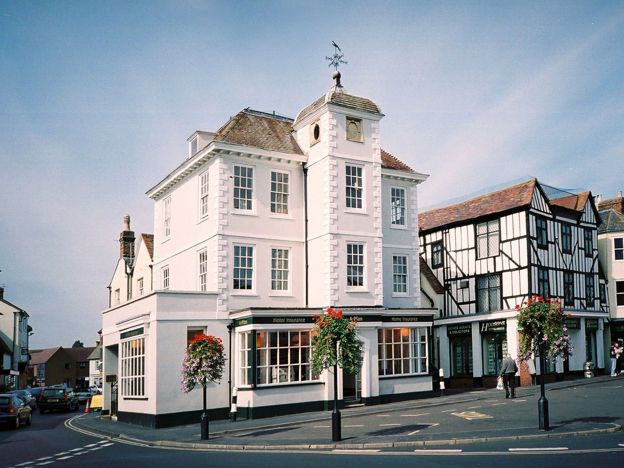
Bicester Market Square
Sight · Historic building · Bicester
-
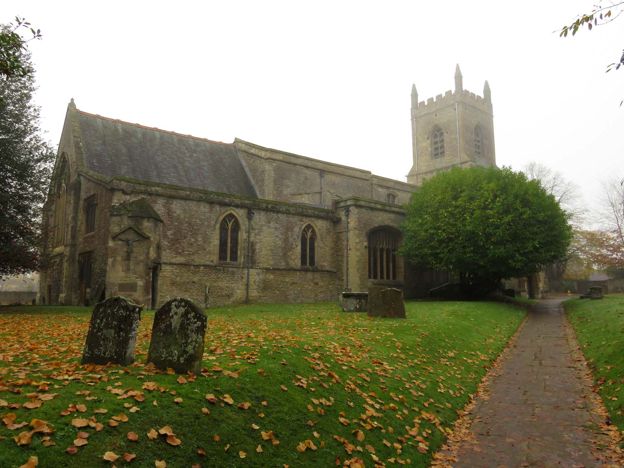
St Edburg's Church, Bicester
Sight · Church · Bicester
Places to stay near Bicester
-

Travelodge Bicester
Hotel · Bicester
A budget chain hotel on Pioneer Square in the middle of Bicester, under half a mile from Bicester North station and within walking distance of Bicester Village, with family, accessible and pet-friendly rooms but no car park of its own.
Dog-friendly · Car-free
Verified Nov 2026
-
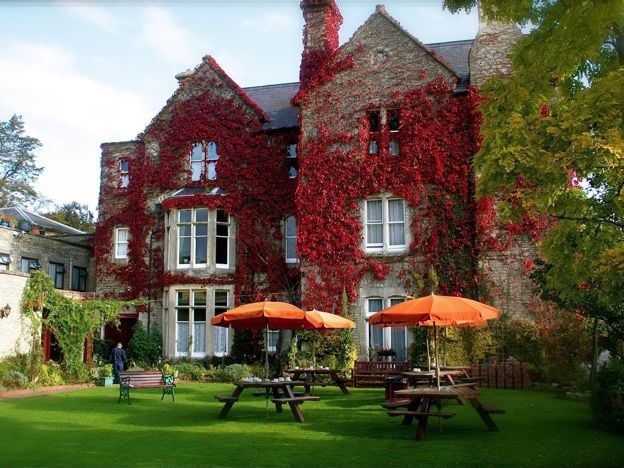
The Littlebury Hotel, Bicester
Hotel · Bicester
A family-run hotel on Kings End in Bicester since 1959, with 35 en-suite rooms, breakfast included, a lounge bar, gardens and a large car park, within walking distance of the town centre and Bicester Village.
Family-friendly · Wedding venues
Verified Nov 2026
-
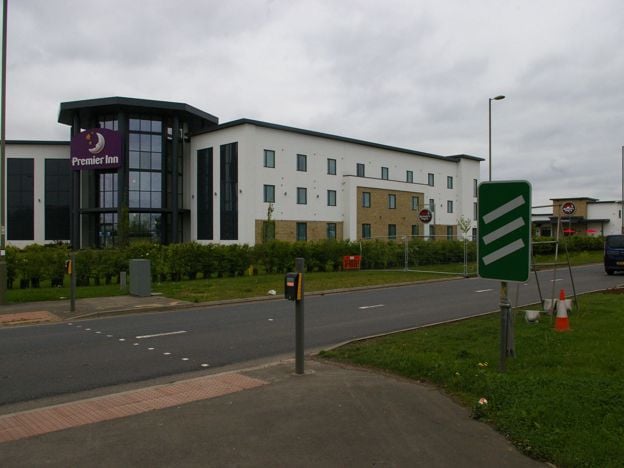
Premier Inn Bicester
Hotel · Bicester
A Premier Inn on Oxford Road, on the A41 at the southern edge of Bicester, half a mile from Bicester Village by the chain's measure, with family, accessible and Premier Plus rooms, a restaurant and a paid car park.
Family-friendly
Verified Nov 2026
Read next
-
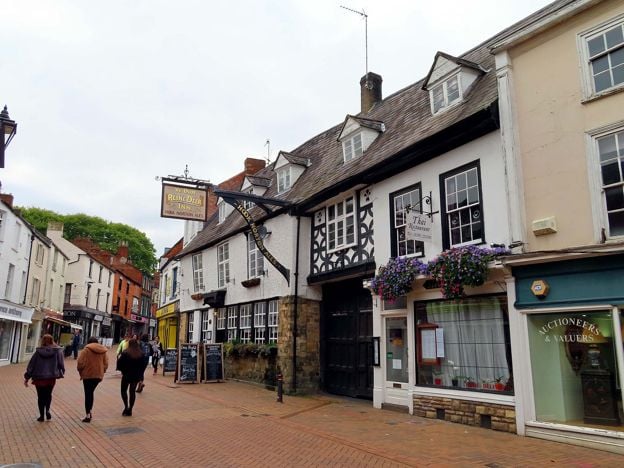
Banbury's ghosts: Father Bernard, the Cavalier and the tunnels
Story · Strange Things · 5 minute read
Banbury's best ghost lives in a hotel by the Cross: a priest said to have died of fright in 1687 when a servant rang the alarm as a joke. There is a Cavalier at the Reine Deer and tunnels under everything. What the stories say, how they differ, and what the record shows.
-
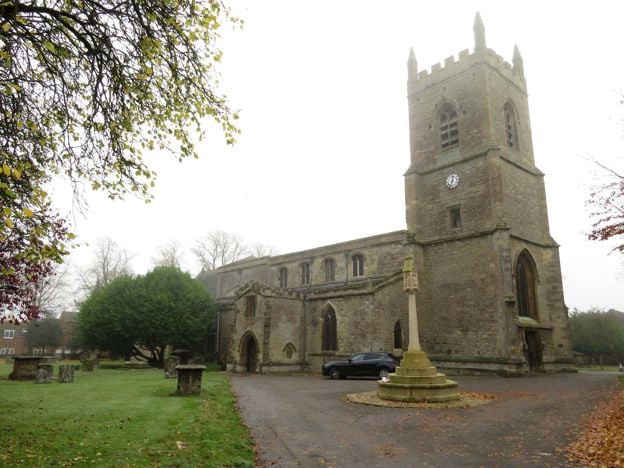
St Edburg of Bicester: the saint, the priory and the shrine that moved
Story · History · 5 minute read
Bicester's parish church and its lost priory were both dedicated to St Edburg, an Anglo-Saxon saint nobody can quite identify. Her marble shrine was carried off at the Dissolution and still stands in a church west of Oxford. What is known, what is guessed, and where to see it.
-
Strange Banburyshire: ghosts, witches, lost horses and sham ruins
Story · Strange Things · 6 minute read
The odd corners of the country round Banbury: a ghost battle in the sky over Edgehill, a witch who turned a king to stone at Rollright, a lost red horse, a three-day saint, a priest said to have died of fright, and ruins built to look ruined. Each one told with what is on record.