Kings Sutton: the spire, the three-day saint and the lost spa
A village south of Banbury with one of England's great spires, a saint's story told for a thousand years, and a well where fashionable people once took the waters. Only the spire is easy to see.
· 6 minute read
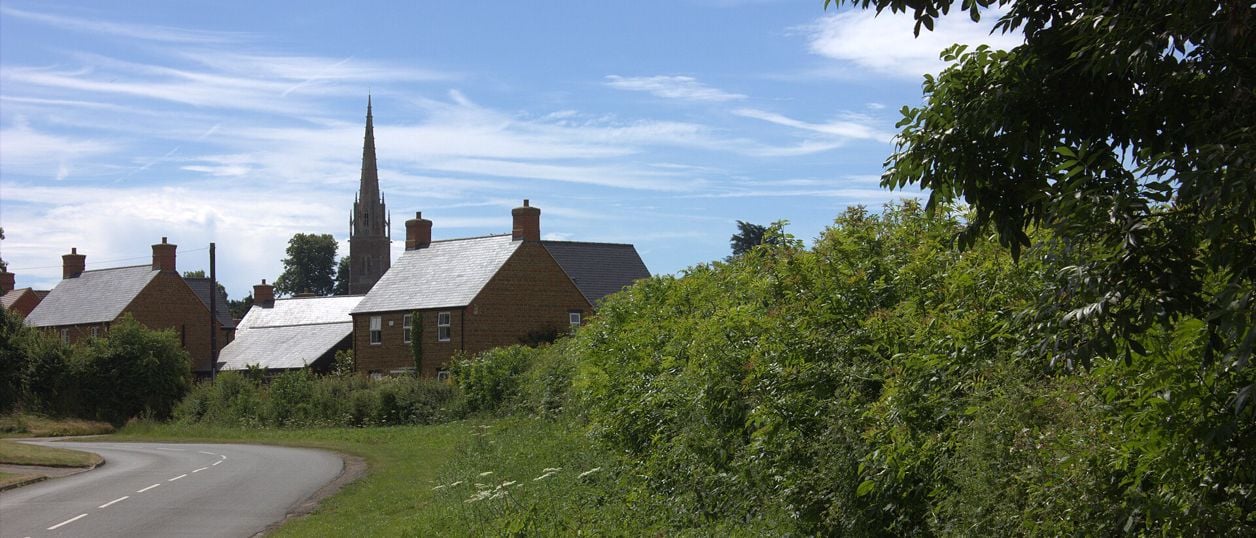
Kings Sutton is a village on the Northamptonshire side of the Cherwell, a few miles south-east of Banbury, and most people know it only as a station or a spire seen from the train. The spire is worth knowing. So are two older stories attached to the parish: an infant saint said to have been born here, and a spa that drew fashionable visitors for about a century. One of these is architecture, one is legend and one is a set of ruins on private land.
The spire
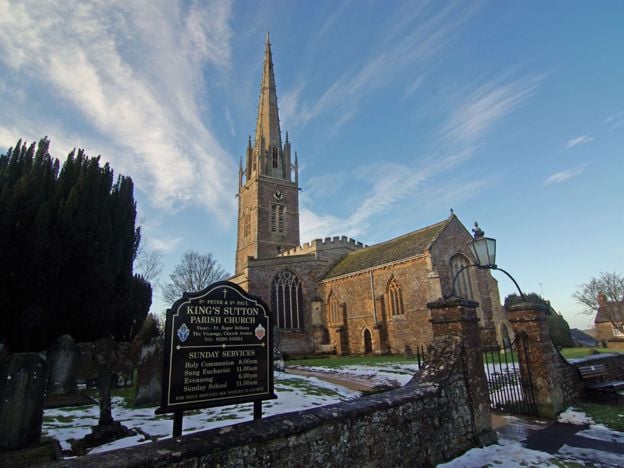
St Peter and St Paul is listed Grade I, and Historic England's entry (opens in a new tab) describes what makes the spire special. At each corner of the tower a pair of crocketed pinnacles is joined to the octagonal spire by small flying buttresses, the spire has two-light openings framed by more pinnacles, and a band of fleur-de-lys runs round it near the top. Below them, the stops of the bell openings are carved as figures with musical instruments.
The dates are not settled. The listing puts the tower in the early fifteenth century, while the National Churches Trust's entry, supplied by the church, dates the spire to about 1370. The parish council's leaflet (opens in a new tab) gives the height as about 60m, and quotes Nikolaus Pevsner calling it 'the finest spire in a county of spires'. The trust's entry calls it the tallest in Northamptonshire.
Inside, the listing picks out Norman blank arcading in the chancel, twelfth-century round piers, roofs of about 1500 with carved bosses, and a plaster monument of the Resurrection to Thomas Langton Freke, who died in 1769. George Gilbert Scott restored the church around 1866.
St Rumbold, the three-day saint
The oldest story is a legend. An eleventh-century Latin life of St Rumwold, or Rumbold, tells of a royal baby born in a meadow at Sutton who cried out three times at birth 'Christianus sum', I am a Christian, asked to be baptised and died on his third day. His body went to Brackley and then to Buckingham, where his shrine drew pilgrims until the Reformation. R. P. Hagerty's study of the legend (opens in a new tab) in Records of Buckinghamshire notes that even the earliest manuscript gets its history wrong, making Penda of Mercia a Christian and the Northumbrian king a pagan.
The parish keeps the tradition. Its leaflet says St Rumbold is held to have been baptised in the church's Romanesque font, which was found under a mound in the churchyard in 1923, and that the church's origins are reputed to go back to 662, the year tradition gives for the baptism. There is no record behind the legend, but the font is real and the church is open in daylight, so you can see the bowl the story is told about.
Astrop spa
The spa is the forgotten part. Astrop is a hamlet of the parish, and in the seventeenth century a spring there was found to have medicinal properties. Northamptonshire's Historic Environment Record (opens in a new tab) dates the discovery to about 1657 and the building of a spa, with the water enclosed in a well, to 1664.
The gentry came. Celia Fiennes, the traveller whose brother lived at Broughton, rode here on one of her journeys and wrote that Astrop had a steel water much frequented by the gentry, with some alum in it, so not as strong as Tunbridge Wells. She was not impressed by the upkeep: the well ran fast, she said, nobody took much care of it, and there was no basin for the water to run out of. There were lodgings round about for the company, and a little place called Sutton.
An account of 1740, the record says, lists a house with palisades, a gravel walk, a garden house, a tea room, a dancing room, a kitchen and a shop, and there were public balls. A new well was opened in 1749, about half a mile from the old spa. The parish leaflet says the spa flourished with a regular season for about a hundred years before places like Leamington became more fashionable.
How the spa faded
By 1761 the Northampton Mercury was reporting the spa in decline, and by 1771 its buildings were in poor condition. The record says its popularity had gone by about 1800. By 1913 the tea room, dancing room and kitchen had disappeared and the rest was in ruins.
What survives is the well head. St Rumbald's Well (opens in a new tab), about 70m south of Astrop House, is listed Grade II: an eighteenth-century limestone niche with a keystone and pilasters, two stone tanks fed by running water, and a sunken area reached by four steps. The record notes that the well was dedicated to the saint, though Hagerty points out that the spring's link with St Rumbold is not certainly ancient. The well stands in Astrop Park, and the path local people once used to fetch water from it was closed in the 1860s, when the road was moved out of the park. As part of that deal a replica well head, also listed Grade II, was built beside the new road with water piped to it from the spring, so that is the one you can see. We found nothing that confirms public access to the original.
The Banburyshire newsletter
Events, new places and the best of the season, about once a month. Unsubscribe at any time.
Visiting
Come for the church. It stands on The Square in Kings Sutton, and the trust lists it as open in daylight hours. The village has a station on the line between Banbury and Oxford, so this is one of the few places in this guide you can reach easily by train, and the walk from Kings Sutton station goes out from it. Check the parish's footpath map before you go looking for Astrop: the Victorian replica well head stands by the road, but do not expect to reach the original well in the park. Aynho, across the river, makes a good pairing.
Places to stay near Kings Sutton
-
The Pig Place, Adderbury
Camping · Adderbury
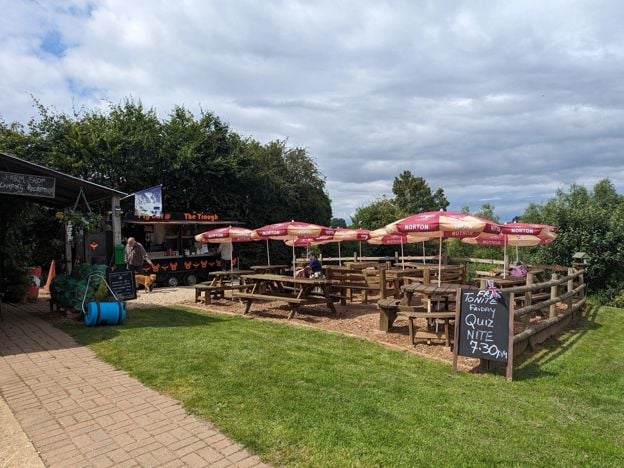
A rustic, adults-only campsite beside Nell Bridge Lock on the Oxford Canal near Adderbury, with dogs free, off-lead space, pitches from £12, and a café, bar and music in summer. No showers.
Dog-friendly · Walker-friendly
Verified Nov 2026
-
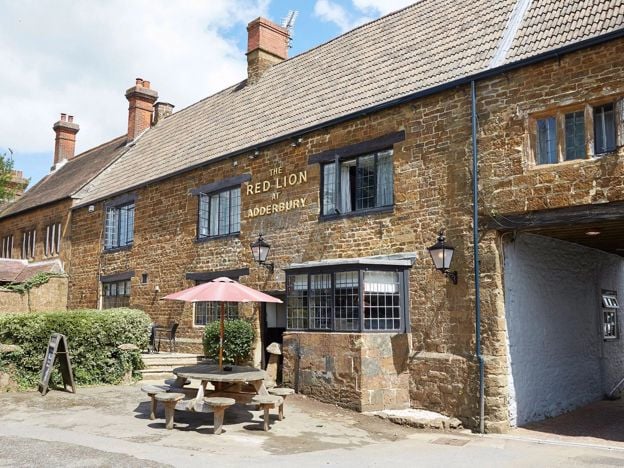
The Red Lion, Adderbury
Pubs · Adderbury
A Grade II listed Greene King pub and inn on The Green at Adderbury, serving food from breakfast to 9pm every day, with a car park, a beer garden and rooms.
Dog-friendly · Family-friendly
Verified Nov 2026
-
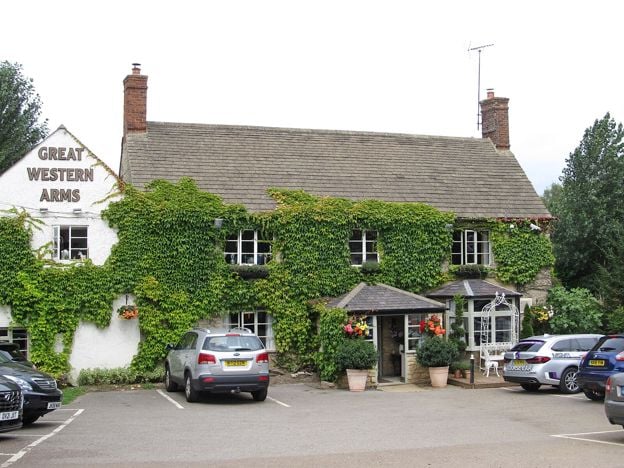
The Great Western Arms, Aynho
Pubs · Aynho
A Hook Norton pub with four rooms between the Oxford Canal and the old Aynho station, about 15.5 miles by road from Silverstone. It sells itself as a base for the circuit, Bicester Village and Blenheim Palace. A small place, so rooms for a race weekend will not last.
Verified Nov 2026
Read next
-
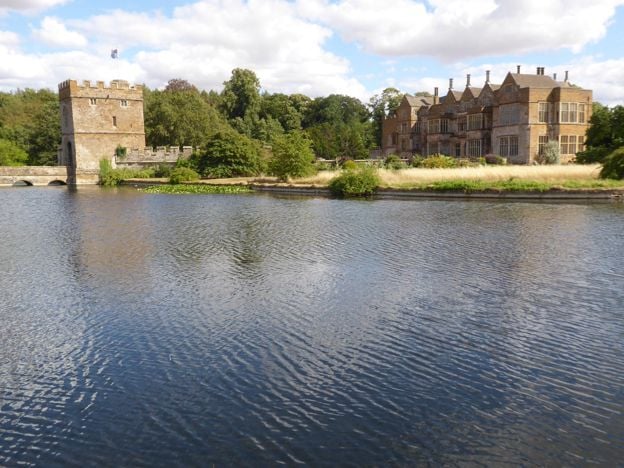
The Fiennes family of Broughton Castle: one moated house since 1448
Story · History · 8 minute read
The Fiennes family has held Broughton Castle, near Banbury, since a marriage in 1448. In that time one lord was killed by Cade's rebels, one at Barnet, one plotted against Charles I in the house, and later ones sold the contents and sold the swans. The family still lives there.
-
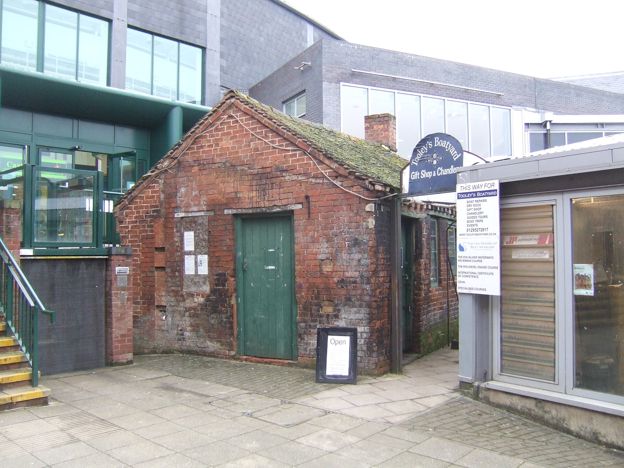
How the Oxford Canal came to Banbury, and stopped there for 12 years
Story · History · 7 minute read
The Oxford Canal was planned in a Banbury inn in 1768, and the first coal boats reached the town on 30 March 1778. Then the money ran out, and Banbury was the end of the line for almost 12 years. How it happened, who paid, and what is left to see.
-
Strange Banburyshire: ghosts, witches, lost horses and sham ruins
Story · Strange Things · 6 minute read
The odd corners of the country round Banbury: a ghost battle in the sky over Edgehill, a witch who turned a king to stone at Rollright, a lost red horse, a three-day saint, a priest said to have died of fright, and ruins built to look ruined. Each one told with what is on record.