How the Oxford Canal came to Banbury, and stopped there for 12 years
Banbury's gentry planned it, a prime minister pushed it through Parliament, and for 12 years every boat on it turned round in Banbury. The old wharf arms are filled in, probably under the bus station.
· 7 minute read
The Oxford Canal was planned in Banbury, mostly paid for by Oxford and engineered by James Brindley, and it reached the town on 30 March 1778 with an inaugural load of 200 tons of coal. Then it stopped. For almost 12 years Banbury was the southern end of the line, and every boat that came down from Coventry turned round here. The best account of all this is Brian Roberts's article for the Banbury Historical Society (opens in a new tab) in 1995, and most of what follows is his.
A meeting at the Three Tuns
On 13 April 1768 the Mayor of Banbury, John Pain, received a visitor: Sir Roger Newdigate, member of Parliament for Oxford University, who owned coal mines near Coventry. Newdigate had already promoted a canal north from Coventry, and he wanted support for one south to Oxford. They talked about Brindley's idea of a Grand Cross of canals joining the Trent, Mersey, Severn and Thames.
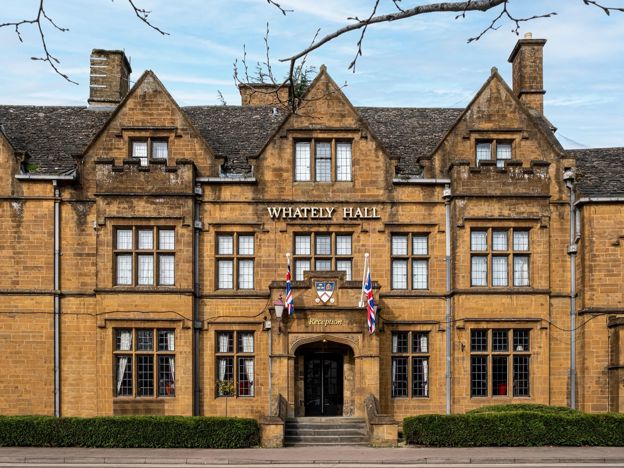
Six months later, on 25 October 1768, Newdigate chaired a meeting at the Three Tuns in Banbury, the inn that is now Whately Hall. He showed plans drawn by Brindley himself, and local nobility and gentry subscribed £50,400 at that one meeting. Parliament was petitioned for a bill on 29 November. Viscount Saye and Sele, of Broughton Castle, reported on it, and it received royal assent on 21 April 1769, a year after Newdigate's first visit.
The Act split the work three ways. A committee for the Coventry end met in Coventry, one for the Oxford end met in Oxford, and the central committee met in Banbury. The first meeting of the company's proprietors was held in Banbury on 12 May 1769, where £100 shares were issued. About 60% went to people from Oxford. Brindley and Newdigate took 20 each, and the Duke of Marlborough took 50.
Digging south
Work went quickly at first. With 700 men employed, 10 miles from Coventry were open by March 1771, and the canal reached the hill at Napton in 1774. Then, like most canals, it ran out of money. Brindley had died in 1772, and others carried on his line.
A second Act was needed to raise more, and here Banbury had a friend in a high place. Frederick, Lord North, was the town's member of Parliament, a shareholder in the canal and Prime Minister. Roberts credits him with moving the second Act swiftly through Parliament, and it passed on 20 March 1775. The canal reached Fenny Compton by May 1776 and Cropredy by October 1777.
30 March 1778
The boats came in on 30 March 1778. Roberts describes an inaugural load of 200 tons of coal arriving at Banbury Wharf amid much celebration, and Newdigate was well pleased: his mines near Coventry now had a regular market in Banbury. The 64 miles from Coventry had cost £205,000.
The Victoria County History adds what the canal meant to the town's trade. Coal for the surrounding country was one of its main loads, and it linked Banbury's plush weavers to their raw materials in Coventry. Finished webbing and horse cloths went out to Birmingham, Walsall, Bristol and Glasgow.
Twelve years at the end of the line
There was no money left to go on. In 1780 tolls raised almost £7,000, but more than 40% went on interest. The way south was only agreed in 1782, when four canal companies met at Coleshill, and the third Act did not pass until 11 April 1786.
The new engineer, Robert Whitworth, took the cheapest options, dredging and straightening the River Cherwell in places and designing 38 of the 79 bridges as the cheapest possible kind. Those are the lift bridges the South Oxford Canal is still known for. A Banbury brewer, James Barnes of Austin's Brewery in North Bar, supervised the work, and the canal basin at Oxford opened on 1 January 1790, almost 12 years after the line had stopped at Banbury.
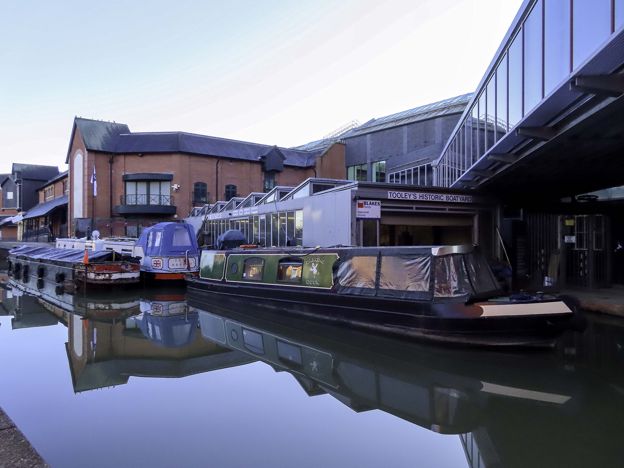
All that time Banbury was a terminus, with two winding holes where boats could turn. Roberts points out that nobody knows exactly how the basin looked in those years, because there are no pictures and no surveyed map until 1881. That map shows the two winding holes, more than 450m of wharves, a coal yard of one and a half acres belonging to the canal company, warehouses and stables.
Tooley's and the boatbuilders
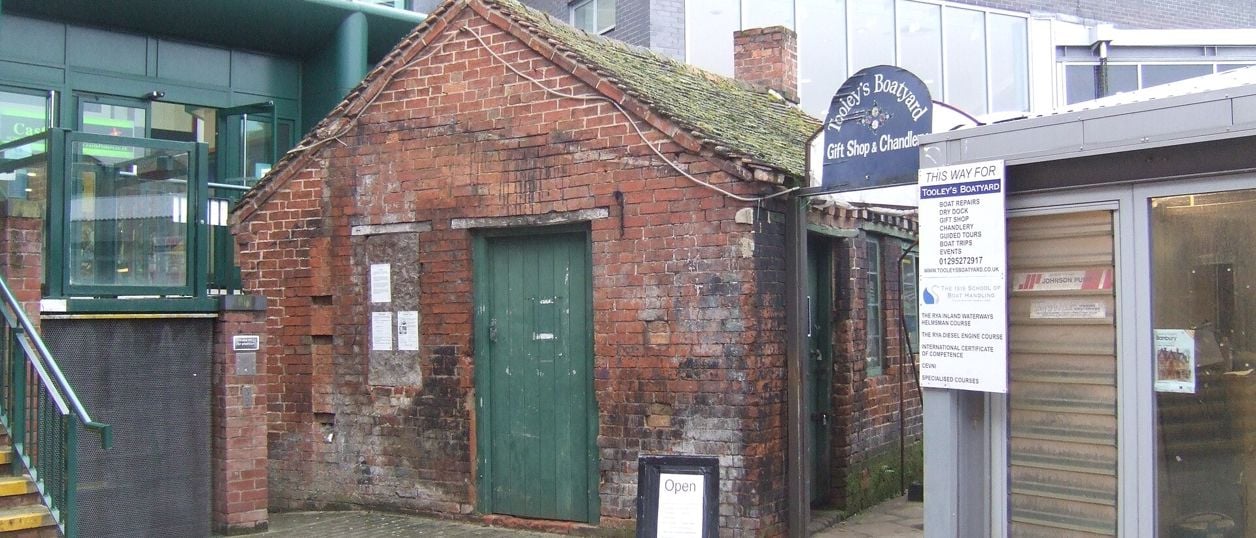
One piece of the old terminus is still working. A boatbuilding yard opened at the end of Factory Street in 1790, the county history says, and built boats until commercial traffic on the canal ended. Roberts lists its tenants: probably a Mr Evans first, then Thomas Cotton, Benjamin Roberts from 1837 to 1864, the Neale family and W J A Chard until 1900, and then two generations of Tooleys, George and Bert, for most of the twentieth century. The yard itself now dates its forge to 1778, and the county history and Roberts give 1790 for the boatyard, so the two dates may describe different parts of the site.
In 1938, Roberts writes, the yard adapted a narrowboat called Cressy for Tom Rolt, and his journey from Banbury in 1939 became the book Narrow Boat. The Canal & River Trust's history of the Oxford Canal (opens in a new tab) credits that book with starting the Inland Waterways Association and the campaign to save the canals, at a time when commercial traffic was declining, though it carried on into the 1960s.
The Banburyshire newsletter
Events, new places and the best of the season, about once a month. Unsubscribe at any time.
What is left to see
The two wharf arms are filled in. Castle Wharf ran along the old castle moat and Banbury Wharf along the edge of the Cherwell's flood plain, and in 1995 Roberts wrote that their walls were probably still there, buried under the bus station. The Castle Quay development was being planned around Tooley's at the time, and the yard survived it.
Start at Tooley's Historic Boatyard, a scheduled monument that still works as a boatyard, with its forge, a small museum on the yard's history and guided tours run by Tooley's Boatyard Trust. Check its listing for opening times. Banbury Museum and Gallery is next door. Then walk north along the towpath on the canal walk to Cropredy, the way the first coal boats came in, or read our guide to the canal near Banbury for boat trips and moorings.
Mentioned in this story
The places, sights and walks in this story, each with a page of its own: what it is, when to go and how to get there.
-
Whately Hall Hotel, Banbury
Hotel · Banbury
-
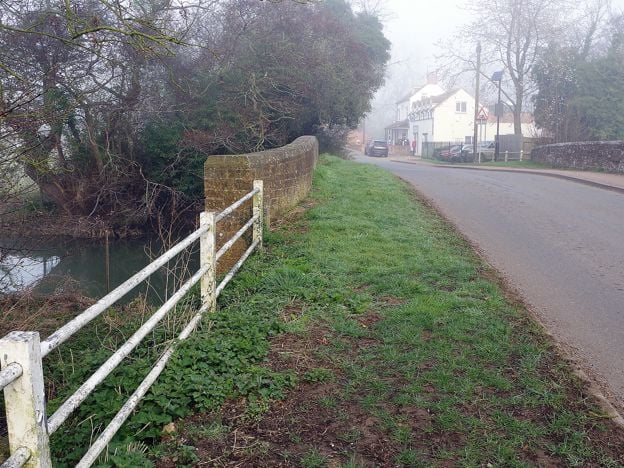
Cropredy Bridge
Sight · Bridge · Cropredy
Places to stay near Banbury
-
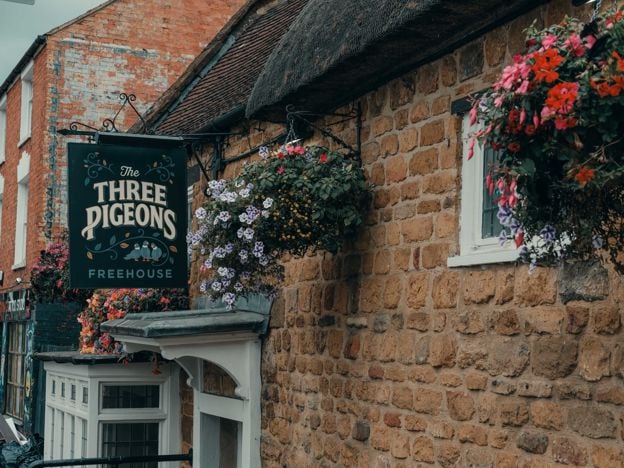
The Three Pigeons, Banbury
Pubs · Banbury
A Grade II listed 17th-century inn, partly thatched, on Southam Road, Banbury, with real ales and ciders, a courtyard, Smash Cow street food from Thursday to Saturday and three en-suite rooms.
Dog-friendly · Car-free
Verified Nov 2026
-
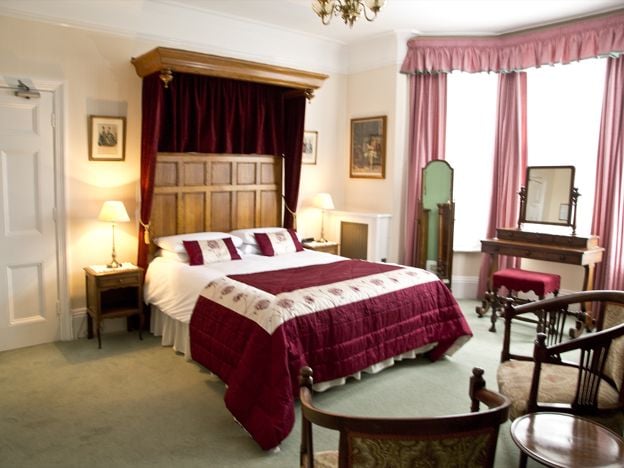
Banbury Cross Bed and Breakfast
B&B · Banbury
A family-run Victorian B&B on Broughton Road, Banbury, with seven bedrooms, about 370m from Banbury Cross, with free off-road parking, cooked breakfasts and rates from £77. No under-18s.
Car-free
Verified Nov 2026
-
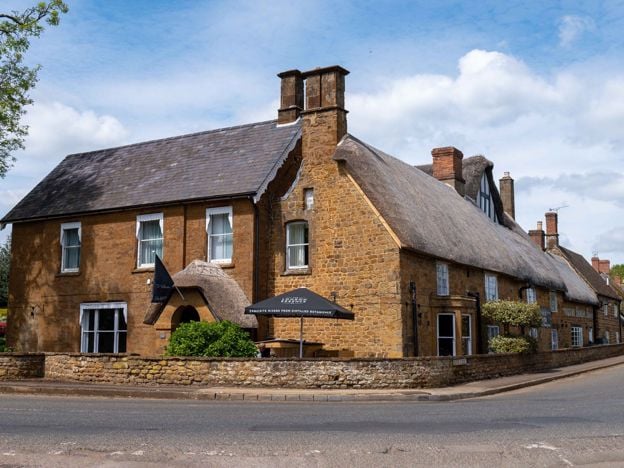
The Wroxton Hotel
Hotel · Wroxton
A 32-room hotel made from three adjoining stone cottages, partly dating from 1649, on the edge of thatched Wroxton, a few minutes' drive from junction 11 of the M40, with free parking and its own tea room.
Dog-friendly · Wedding venues
Verified Nov 2026
Read next
-
The Oxford Canal near Banbury
Story · Guides · 9 minute read
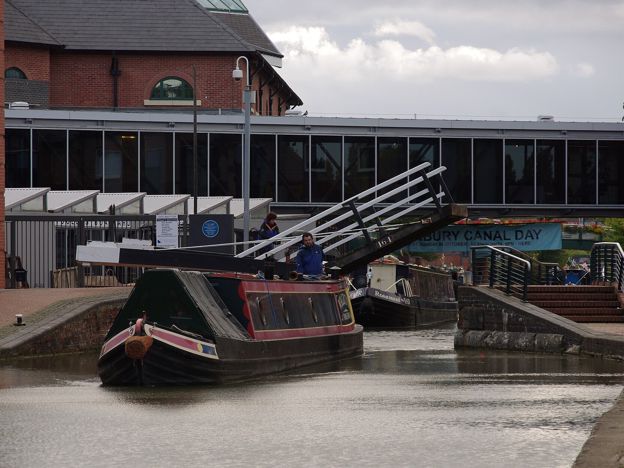
The Oxford Canal near Banbury: Tooley's Boatyard and the free museum in town, the towpath north to Cropredy, Aynho Wharf and its odd lock to the south, boat trips and day boats, canalside pubs, and what low water has done to the summers.
-
Wroxton Abbey and Lord North: the prime minister who lost America
Story · Strange Things · 5 minute read
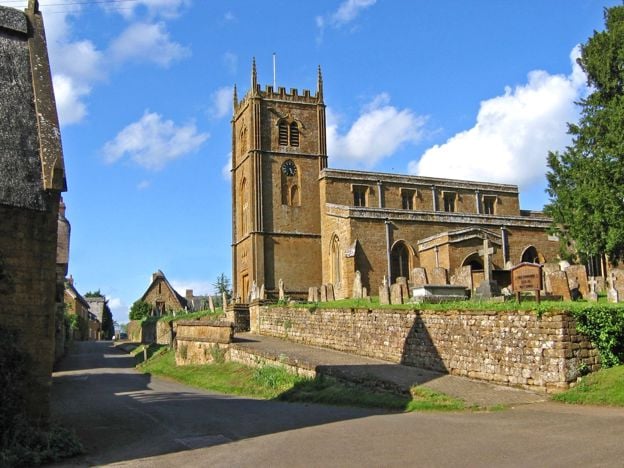
Wroxton Abbey was never an abbey, its owners only ever leased it, and the prime minister who lost America lies blind and buried in the village church. Add a Gothic dovecote, a monument to three wives and a thatched Catholic church built by a man who changed his name.
-
Banbury cattle market: the biggest in England, and how it closed
Story · History · 6 minute read
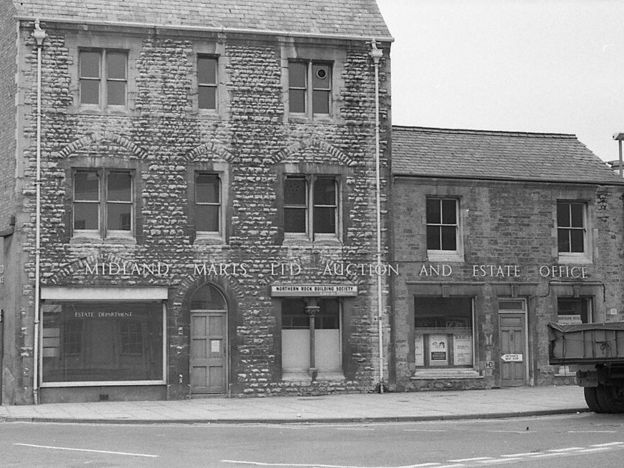
From the mid 1920s Banbury's livestock sales moved off the streets to a market at Grimsbury, and by the 1960s it was the largest stock market in England. It closed on 4 June 1998, after BSE and a failed move to the M40. What it was, and what stands on the site now.