How the Banbury cake disappeared from Banbury
The most famous thing with Banbury's name has no maker in the town. It took a demolition in 1968 and a line on the company register in 2026, and the records explain only part of it.
· 8 minute read
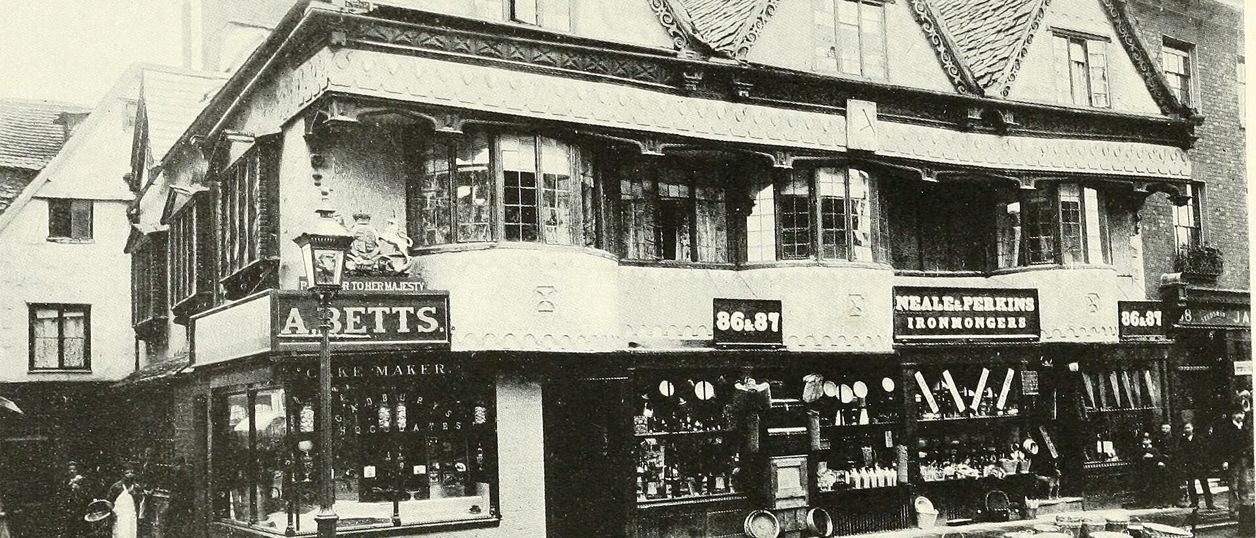
We know of no local seller of Banbury cakes now. That was the position when we checked in November 2026, and it is an odd end for a cake that once reached India in air-tight tins and still gives the town's history journal half its title.
It did not happen in one go. The famous shop went in 1967 and 1968. The cake outlived it by more than half a century, in the hands of one family and at the last, it seems, one baker. This is what the records show about both endings, and where they stop. For the older history and a recipe, read our story of the original Banbury cake.
Five makers and a railway platform
At least five makers were active in the town in the 1890s, according to John Langley's memories of late Victorian Banbury (opens in a new tab), printed by the Banbury Historical Society in 1966. E.W. Brown of the Original Cake Shop in Parsons Street was the chief of them. Brown's at one time sold cakes on the station platforms at three for sixpence, until the Great Western Railway opened refreshment rooms and took that trade over, still with Brown's cakes. Two Betts brothers baked in the High Street and a Mr Claridge further along Parsons Street, and Levi Tearle sent his cakes round the fairs in specially made baskets.
One such basket survives. The Museum of English Rural Life in Reading holds a willow basket for selling Banbury cakes (opens in a new tab), dated 1880 to 1900, and its record calls it one of two known examples of the type.
The trade went a good deal further than the fairs. The Society's 1967 notice of the shop records a substantial trade with India by 1841, and cakes still arriving there fresh in air-tight tins almost a century later. Alan Davidson's Oxford Companion to Food also has the shop sending considerable numbers to India in the nineteenth century. We have found no figures for any of it.
Fifty seats and a mural
The shop's last big investment came after the war, and Simon Townsend's 2010 article for the Society (opens in a new tab) tells it best. Wilfrid Brown came back from military service in 1946 and set about enlarging the place. The family already owned the two properties next door. His Oxford architect, T Lawrence Dale, took in number 13 for about 50 seats and gave the queue at the counter room to stand indoors, and the new fire grates were cut from Hornton stone. The work finished in July 1948 and made the national press.
The showpiece was a mural by Brian Thomas, who went on to windows and murals at St Paul's Cathedral and Westminster Abbey. It runs through the town's past with more confidence than accuracy, Townsend notes, down to a Roman amphitheatre Banbury never had. It closes on the point of the whole exercise: the town matters 'because that is where they make BANBURY CAKES'.
Closed in May 1967, gone by autumn 1968
Less than 20 years later it was over. The shop closed in May 1967 after what the Society called possibly three centuries of trading, and its notice in the journal (opens in a new tab) named this the end of a national institution. That year Wilfrid Brown sold the building and the property around it to Banbury Estates Ltd, part of a London development company, Courtenay Investments. No source we have found says why.
Jeremy Gibson's report on the public inquiry (opens in a new tab) is the fullest account of what followed. He was the Society's secretary and on the side of keeping the building, so read it with that in mind. The developers said they meant to keep the shop and replace the rest with new units, though their permission let them pull down the rear wing that housed the bakery. They then said the shop itself was in too poor a state to restore economically. It was listed Grade II, which brought a six-month pause.
The borough and county councils spent most of that time on the money. The site was valued at over £10,000, the developers put restoration at £20,000 to £40,000, and a preservation order might have left the borough having to buy it. Attempts to get a ministry grant failed and the councils decided against. The ministry asked for more time, the developers refused, and demolition began. The Mayor, Mrs P Colegrave, and the Council for the Preservation of Rural England pressed for an order, which came on 8 April 1968, after the roof was off and most of the windows destroyed.
The inquiry sat on 15 May. Evidence was given that the former owner had apparently neglected the building for many years, leaving severe decay in the timbers. The Minister agreed it ought to be kept if that were feasible, but it stood open to the weather and neither the owners nor the councils would restore it, so the order was not confirmed. By autumn, Gibson wrote (opens in a new tab), nothing remained of what he called a disgraceful tale. He blamed the councils' fear of the rates as much as the developers. We have read his account, not the inspector's report.
Today's 12 Parsons Street is a Japanese restaurant, Zushi, on the food hygiene record for October 2025. We have found no plaque.
The cake outlived the shop
Short histories tend to stop at 1968, which misses the rest of the story. In 2010 Townsend thanked Philip Brown, Wilfrid's youngest son, who still made the original cakes, on sale at Banbury Museum, Café Quay and elsewhere in the country. A company, Brown's Original Banbury Cakes Limited, had been registered in December 1998. We do not know where the bakery was.
Banbury FM reported in February 2025 (opens in a new tab) that Philip Brown was 76 and had made the cakes since he was 12, which would take him back to about 1960, when the shop was still trading. It had the cakes on sale at the museum and in village shops. It also said that only he knew the recipe, and that he was looking for an artisan baker to take it on. In the same report an air fryer maker, Ninja, listed the Banbury cake as an endangered dish that might be gone within a few years. That was publicity, not research, and it now looks generous.
Companies House records the end of the company (opens in a new tab). An application to strike it off the register was filed on 7 January 2026, the first gazette notice followed on 20 January, and it was dissolved on 7 April. News sites picked this up later that month, one with the word collapse in its headline and a row about tax policy around it. The record reads differently. This was a voluntary strike-off, and the recent filings show no liquidation. Nothing we have read has Philip Brown saying why, and nothing ties the decision to tax or costs.
So there are things we cannot tell you:
- when the last batch was baked, since a company's dissolution does not prove when its baker stopped
- what has happened to the recipe, or whether anyone took it on (reports repeat a family claim that it dates from the thirteenth century, for which we have found no support, and the first record of the cakes we can stand behind is from 1610)
- when the other makers of the 1890s stopped, and why
- why Wilfrid Brown sold in 1967
If you know any of these, the correction link at the foot of this page reaches the editor.
Why Eccles and Chorley cakes are still on the shelf
Eccles began much as Banbury did, with town shops. Foods of England (opens in a new tab) has James Birch selling from a corner shop in Eccles from about 1793, and his former apprentice William Bradburn taking over the old premises as 'The Only Old Original' shop, a boast Banbury would recognise. Bradburn's has gone too, according to a history published in 2002 (opens in a new tab).
The difference is what came next. The Edmonds family have baked Eccles cakes since the 1930s and became Lancashire Eccles Cakes Limited (opens in a new tab) in 1978. Their bakery is on Hyde Road in Ardwick, about 5 miles (8km) from Eccles, and the firm says it bakes up to 30 million cakes a year and is stocked nationwide. The Eccles cake survived by leaving Eccles: in 2020 Manchester's Finest (opens in a new tab) reported Albert Street Bakery's claim to make the only ones actually made there.
The Chorley cake, a flatter currant cake in plain shortcrust pastry, joined the same firm's range in 2024, so one Manchester bakery now makes both.
Our reading, and it is no more than that: Lancashire's cake grew into a firm that could outlast any shop or any one baker, while Banbury's went from at least five makers to, as Banbury FM told it in 2025, one man with a recipe nobody else knew. Secrecy alone does not explain it, because Banbury cake recipes have been in print since 1615. Nobody has studied this that we can find.
Who bakes them now
We can name no commercial baker with its own website selling Banbury cakes in 2026, in the town or elsewhere. The nearest thing to a revival we have found is Banbury Cake Week, run by Banbury BID in August 2024, when local bars and eateries paid tribute with new creations such as ice creams, puddings and cocktails, and Polly Talbot Waller of Great Bourton won the first Bake Off (opens in a new tab). We found no report of a later one. For now it is a home baker's cake.
The Banburyshire newsletter
Events, new places and the best of the season, about once a month. Unsubscribe at any time.
What you can still do
Bake one. Our story of the original cake has two recipes, a yeasted one worked from Gervase Markham's method of 1615 and the puff pastry version most people picture. Both are our own workings.
Go to Banbury Museum and Gallery, which is free. Its gallery pages list no cake objects by name, and we have not confirmed what it holds, so ask at the desk or before you travel. The Banbury Gallery does cover the town's commercial past, the museum sold Philip Brown's cakes as recently as 2025, and its shop stocks the annual editions of Cake and Cockhorse.
Look for the mural. It came off the wall when Brown sold up and stayed rolled in his house until it went to Cherwell District Council in 1976, was restored, and hung in the shopping centre. Townsend reported it on display in Castle Quay in 2010. We have not confirmed it is still there, so ask at the museum, whose shop and welcome centre are in Castle Quay.
Walk Parsons Street, knowing there is nothing of the shop to see. Ye Olde Reine Deer Inn at number 47 is an old building that did survive. The 1967 notice tells of a county gentleman who walked into Brown's back room and demanded a pint of ale, and was told coldly that there was a tavern across the road. It does not say which. Our list of things to do in Banbury covers the rest of the day.
Mentioned in this story
The places, sights and walks in this story, each with a page of its own: what it is, when to go and how to get there.
-
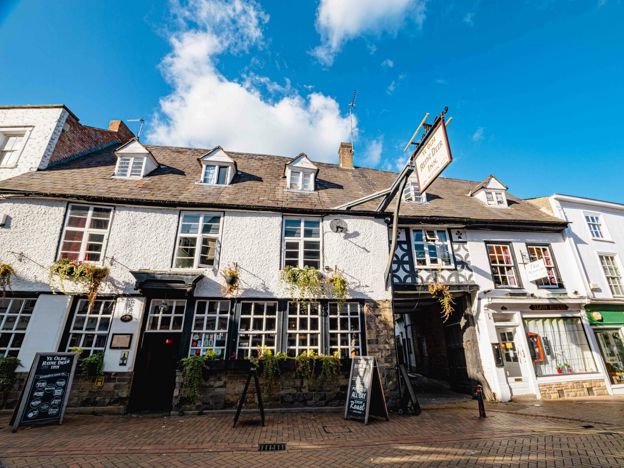
Ye Olde Reine Deer Inn, Banbury
Pubs · Banbury
Places to stay near Banbury
-
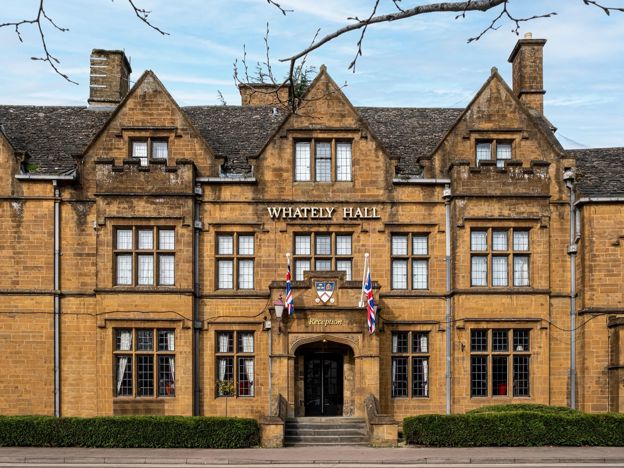
Whately Hall Hotel, Banbury
Hotel · Banbury
A Grade II listed 17th-century inn, now a 71-room hotel on Horse Fair in the middle of Banbury, with gardens, an oak-panelled restaurant and six EV chargers.
Dog-friendly · Family-friendly · Wedding venues
Verified Nov 2026
-
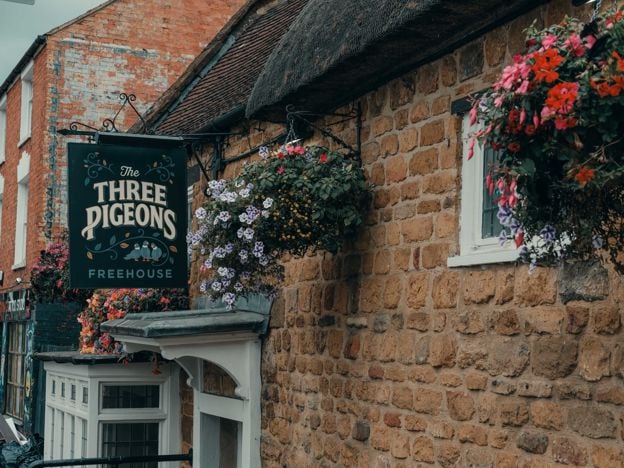
The Three Pigeons, Banbury
Pubs · Banbury
A Grade II listed 17th-century inn, partly thatched, on Southam Road, Banbury, with real ales and ciders, a courtyard, Smash Cow street food from Thursday to Saturday and three en-suite rooms.
Dog-friendly · Car-free
Verified Nov 2026
-
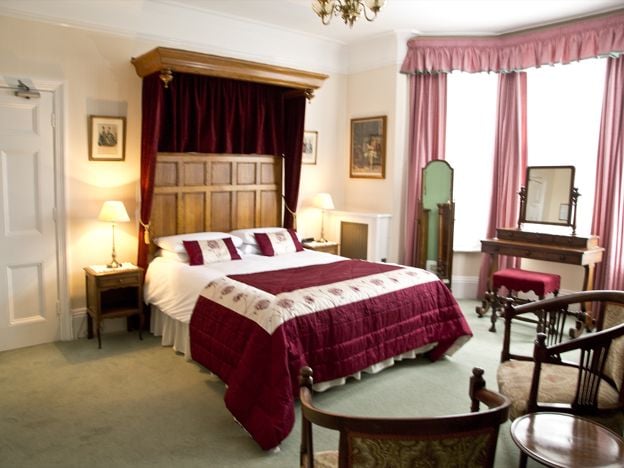
Banbury Cross Bed and Breakfast
B&B · Banbury
A family-run Victorian B&B on Broughton Road, Banbury, with seven bedrooms, about 370m from Banbury Cross, with free off-road parking, cooked breakfasts and rates from £77. No under-18s.
Car-free
Verified Nov 2026
Read next
-
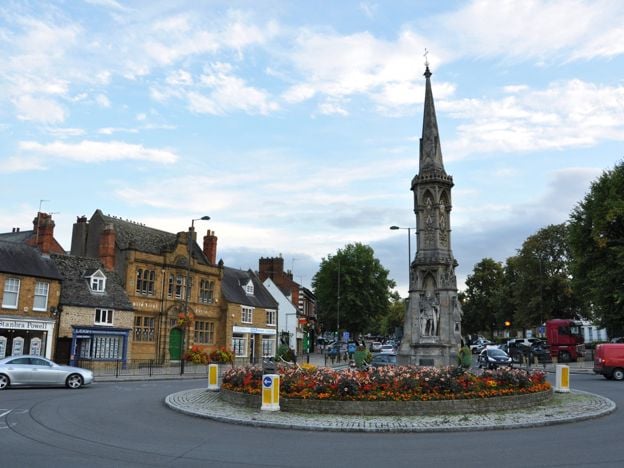
Banbury Cross: the lost crosses and the fine lady
Story · History · 7 minute read
The Banbury Cross of the rhyme is gone. Banbury's own aldermen had the High Cross pulled down on 26 July 1600. The cross you can see dates from 1859 and stands somewhere else, and nobody has ever shown who the fine lady was.
-
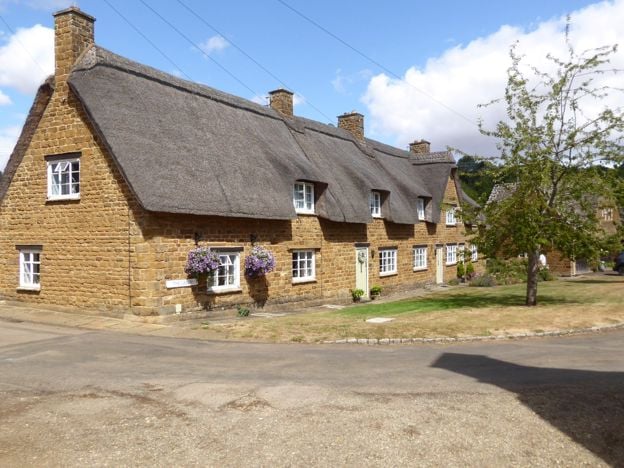
Hornton stone and the ironstone villages: why Banburyshire is brown
Story · History · 5 minute read
Hornton stone is the rusty ironstone that colours the villages around Banbury. It is a band of Jurassic rock no more than about 10m thick, quarried at Hornton and on Edge Hill for centuries. Henry Moore carved it, and steelworks ate it until 1967.
-
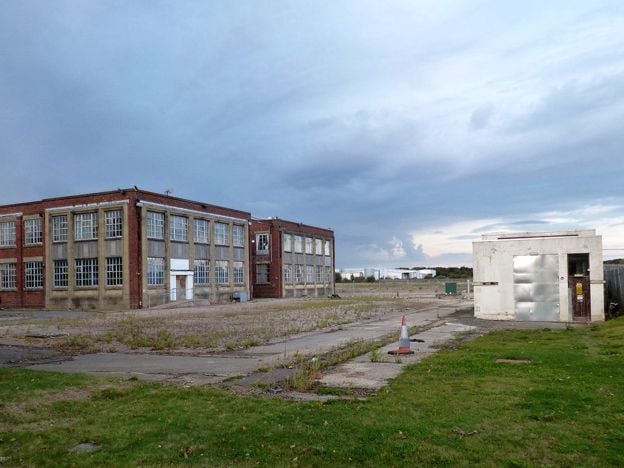
Alcan in Banbury: the aluminium works that made a market town industrial
Story · History · 6 minute read
In 1931 the Northern Aluminium Company opened a works on the Southam Road, and Banbury stopped being only a market town. It rolled sheet for wartime aircraft behind a decoy factory, employed over 3,000 at its height, became Alcan and closed in 2009.