Heyford Park: what became of RAF Upper Heyford
Its bomb stores have held fireworks, its runways cars and its alert shelters a Hollywood battle. More than thirty years after the last jets left, the old airbase above the Cherwell is a village, a monument and a business park, and it may yet become a town.
· 8 minute read
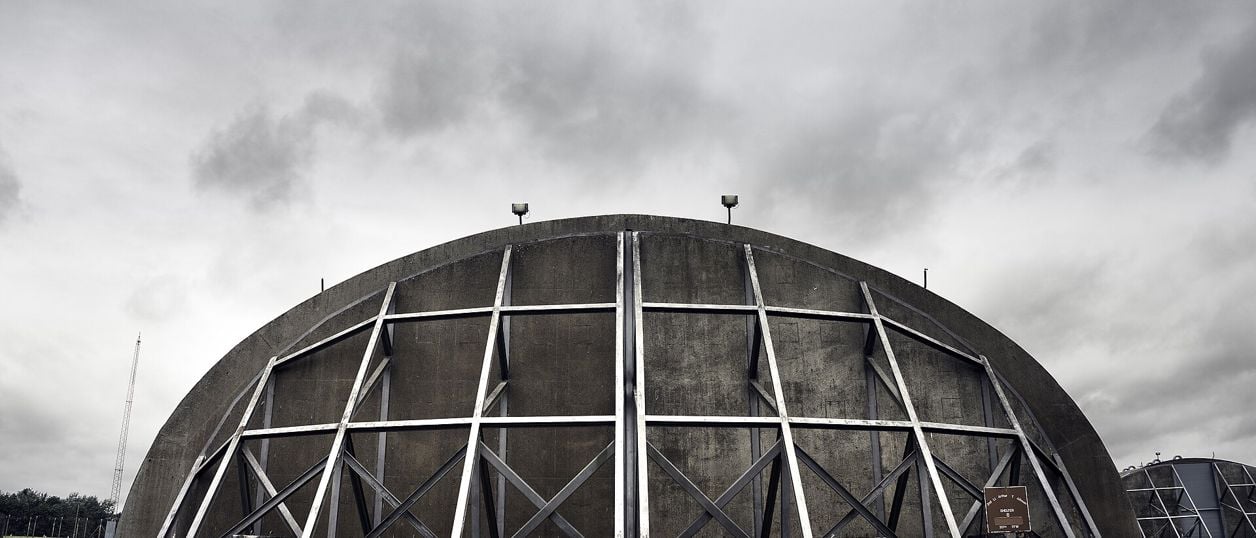
RAF Upper Heyford stopped flying in December 1993, and the story of its bombers and F-111s is told in our history of the airbase. This is the story of what came after: three decades in which a nuclear airbase on the plateau above the Cherwell became a store, a film set, a business park and a protected monument, while its old service housing grew into Heyford Park, a new village with a school, a hotel and more than a thousand new homes.
Surplus to requirements
Closure was announced in May 1993, and in September 1994 the Ministry of Defence confirmed it would dispose of the base, according to Cherwell District Council's conservation area appraisal (opens in a new tab) of 2006. The district and county councils were in talks with the ministry from the start. The problem, as the appraisal puts it, was how to keep a redundant airbase secure and maintained while the planning system settled its future, and how to replace the civilian jobs lost when the Americans went home.
Early in 1995 the council adopted guidance on temporary uses for the land and buildings, and revised it several times. In October 1996 the ministry formed a joint venture with the North Oxfordshire Consortium, made up of Wimpey Homes, Taywood Homes and Persimmon Homes, which then ran the site. Asked by Banbury's MP, Tony Baldry, how the taxpayer would get best value, the defence minister John Spellar said in a written answer in July 1997 (opens in a new tab) that the arrangement followed an extensive assessment of commercial proposals.
Fireworks, cars and data
The temporary uses were stranger than most. By the time the appraisal was written, Heyford House held offices and there was an innovation centre. The bomb stores held fireworks, the runways and hard standings held cars, and the hardened aircraft shelters held data. Police trained in some of the buildings, and some of the old service housing had people living in it again. Most of this ran on short temporary permissions.
Cars and cameras outlasted the rest. The 2022 permission for the next phase of Heyford Park set aside 20.3 hectares of hard standing for car processing and 76.6 hectares for filming, with three buildings for filming and heritage activities. The filming is the best known. In 2018 Forces News reported (opens in a new tab) that Warner Bros had shot a large fight scene for Wonder Woman in the quick reaction alert area and some of the hangars. The developer now markets the airfield (opens in a new tab) to film and television crews, and says more than 100 businesses work there, in spaces from hangars to offices and industrial units. The airfield is reached through a staffed gate, Gate 7, and only people who work on site may go in.
Fifteen years of argument
The bigger question was how many homes, if any, the base should take. The review of the Oxfordshire Structure Plan between 1995 and 1997 settled on a new settlement of about 1,000 houses, in a policy adopted in August 1998. In August 1999 Cherwell published a planning brief whose stated aim was to transform the legacy of military use through selective demolition, reuse and agreed development, and to clear away the military structures that harmed the countryside.
In 2000 the consortium applied for about 1,000 homes, with shops, businesses and leisure buildings, on part of the site. The council did not decide it in time, a public inquiry sat in June and July 2002, and in June 2003 the First Secretary of State dismissed the appeal. The appraisal records why: the site was poorly placed by the government's own standards, too many intrusive structures remained, and the scheme did not settle the future of the whole base.
Meanwhile the view of the base itself was changing. In May 2002 English Heritage told the council it would recommend Cold War buildings for scheduling and listing. The county's revised structure plan of 2005 gave more weight to conserving the site's history, and the council, the consortium and English Heritage paid together for a conservation plan, finished in September 2005.
The next scheme, for 1,075 homes with a school and jobs (opens in a new tab), went in in March 2008 and again went to appeal when the council did not decide it. On 11 January 2010 the appeal was allowed. The Institute of Historic Building Conservation reported (opens in a new tab) that the Secretary of State, John Denham, also overturned the refusal of 24 conservation area consents, that the dispute had run for more than a decade, and that Cherwell was disappointed. By then the site belonged to the Dorchester Group. A fresh application in its name, keeping 267 of the old military houses as homes, was permitted in December 2011.
A protected Cold War landscape
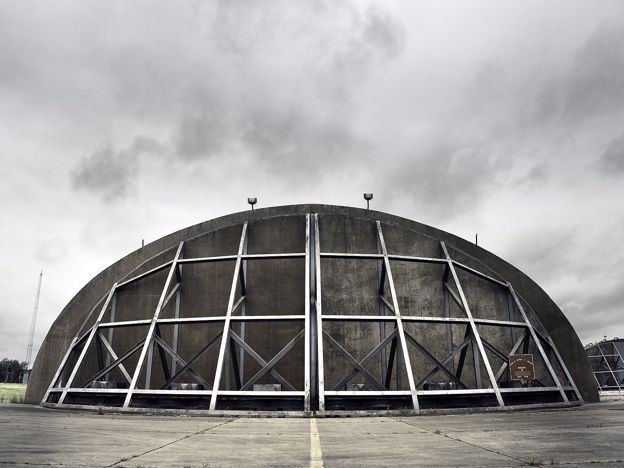
While the arguments ran, the base was being protected. Cherwell made the whole former airbase a conservation area, and its appraisal of April 2006 explains why: the site matters for its Cold War role, and it is unusual because closure in 1993 ended its military life before it could be rebuilt for later kinds of warfare. In December 2006 the council heard that five areas had been scheduled as monuments, among them the quick reaction alert shelters, the northern bomb stores and the battle command centre. On 7 April 2008 the control tower, three nose dock hangars and a squadron headquarters were listed at Grade II.
The council's draft local plan divides the base into three: the flying field and the technical site north of Camp Road, and the housing, mostly to the south. The flying field is the core of the site's national significance, and the plan says new building must keep its open character. What the monuments are, and how to see them, is in our guide to the Cold War sites.
The new village
Heyford Park grew out of the old base housing south of Camp Road. Its developer, Dorchester Living, built Heyford Park Free School, which opened in September 2013. Since November 2020 it has been Heyford Park School, run by the Eynsham Partnership Academy Trust: an all-through school for ages three to 19, with 700 pupils on the government's register (opens in a new tab). The developer's site (opens in a new tab) lists a high street with a Sainsbury's Local, a pharmacy, a dentist and a barber, a nursery, a gym and a village green, and The Heyford, opened in January 2022, which holds a hotel, the Baton restaurant and a bar with a two-lane bowling alley. Heyford Park now has its own parish council.
Cherwell's 2015 local plan allocated the 520-hectare former base for a new settlement of about 2,400 homes, with about 120,000 square metres of land for jobs. The masterplan to complete it, Dorchester Living's application (opens in a new tab) for up to 1,175 more homes, 60 close care homes, a school site, a medical centre and a 30-metre observation tower with a zip wire, went before the planning committee in November 2020 and was permitted on 9 September 2022. The council counted about 1,100 new homes finished by December 2024, with about 1,500 more committed. The developer's own site, when we checked in November 2026, claimed 1,200 homes built in ten phases over 12 years.
Nine thousand more homes?
Dorchester Living now wants far more. Its hybrid application (opens in a new tab), received by Cherwell on 22 August 2025, seeks up to 9,000 new homes: 8,848 in outline and 152 in four converted base buildings. It also asks for four primary schools and a secondary school, a library, a centre for peace studies, a hotel, a pub, a data centre, and three wind turbines with solar panels and battery storage. When we checked the register in November 2026 the application was still under consultation, with a fresh round of consultation from 27 October, comments due by 5 December and no decision.
Whitehall took an interest. On 28 September 2025 the government's New Towns Taskforce (opens in a new tab) named Heyford Park among 12 recommended places for new towns. But in the draft programme of 23 March 2026 (opens in a new tab) it was not among the seven proposed locations, only one of six alternatives. The draft credited a willing developer with a strong track record, and judged the scale relatively small beside other sites in the corridor between Oxford and Cambridge. Cherwell has taken a £500,000 government grant to study what housing on that scale would mean, and says the grant approves nothing (opens in a new tab).
The district's new plan does not count on it. Cherwell's local plan review, submitted for examination on 31 July 2025, keeps the 2015 allocation and the 2022 masterplan, and expects 1,601 homes at Heyford Park over its whole period, counting 553 already finished since 2020. Hearings began in February 2026. The first inspectors stood down in July, and two new ones were in place by late August. In November 2026, according to the council's examination page (opens in a new tab), the plan had not been adopted and a second stage of hearings was due to open the following January.
The Banburyshire newsletter
Events, new places and the best of the season, about once a month. Unsubscribe at any time.
What it means for the villages
The old villages are close by. Upper Heyford lies west of the base and Lower Heyford is down in the valley, and together they make up the Heyfords. The draft plan (opens in a new tab) draws strategic gaps to keep Heyford Park distinct from them, and from Caulcott, Somerton, Fritwell, Middleton Stoney and Ardley. It also aims for better drainage to avoid flood risk to neighbouring villages, a commuter cycle route to Bicester and more capacity at junction 10 of the M40. How much of that happens depends on the inspectors and on the decision on the 9,000 homes.
Visiting
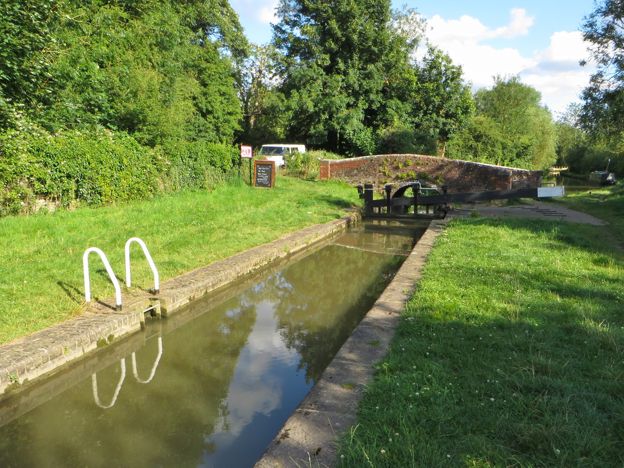
For a visitor, most of the base is still behind a fence. The scheduled shelters and bomb stores open only on the booked Sunday tours of the RAF Upper Heyford Heritage Centre (opens in a new tab), which runs them from March to November and opens its exhibitions on Wednesdays, Saturdays and Sundays. The airfield's businesses are closed to the public. The village itself is open: The Heyford serves food, and the 25 and 25A buses run from Bicester, up to two an hour between them from Monday to Saturday, with a Sunday service run by Stagecoach. On foot, the Heyfords circular walk starts at Heyford station in the valley below. And for the bomber station that came before the Cold War, RAF Bicester kept its 1920s shape.
Mentioned in this story
The places, sights and walks in this story, each with a page of its own: what it is, when to go and how to get there.
-
RAF Upper Heyford Cold War sites, Heyford Park
Sight · Monument · Upper and Lower Heyford
-
Heyfords Circular from Heyford Station
Walk · Starts in Upper and Lower Heyford · 2 hrs · Circular
Places to stay near Upper and Lower Heyford
-

Oxfordshire Narrowboats, Lower Heyford
Self-catering · Upper and Lower Heyford
Self-drive narrowboat holidays, short breaks and day boats from Heyford Wharf on the Oxford Canal at Lower Heyford, from mid March to the end of October, for 2 to 12 people, dogs included.
Dog-friendly · Family-friendly
Verified Nov 2026
-
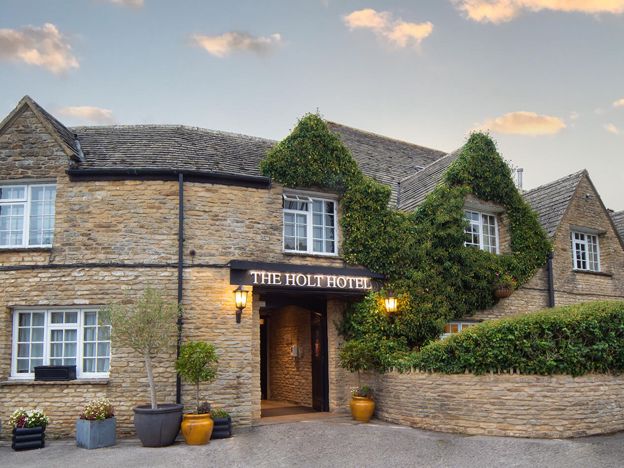
The Holt Hotel, Steeple Aston
Hotel · Steeple Aston
An independent 87-room hotel in an old coaching inn at the Hopcrofts Holt crossroads on the A4260 near Steeple Aston, with a bar, restaurant, afternoon teas and a Sunday carvery, about 15 minutes' drive from Bicester Village.
Family-friendly · Wedding venues · EV charging
Verified Nov 2026
-
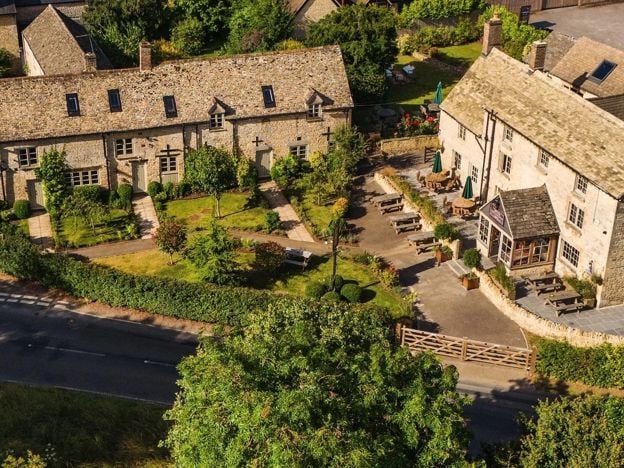
The Killingworth Castle, Wootton
Restaurants
A serious dining pub with eight rooms at Wootton near Woodstock, with 3 AA Rosettes and a Michelin Guide recommendation for 2026, à la carte and tasting menus, and open from Wednesday to Sunday.
Dog-friendly · EV charging
Verified Nov 2026
Read next
-

RAF Upper Heyford: the Cold War airbase south of Banbury
Story · History · 7 minute read
RAF Upper Heyford began as a First World War airfield, trained bomber crews in the Second, and from 1951 housed American nuclear bombers. Its F-111s left in December 1993. Its shelters and bomb stores are now a scheduled monument, with tours from a heritage centre.
-
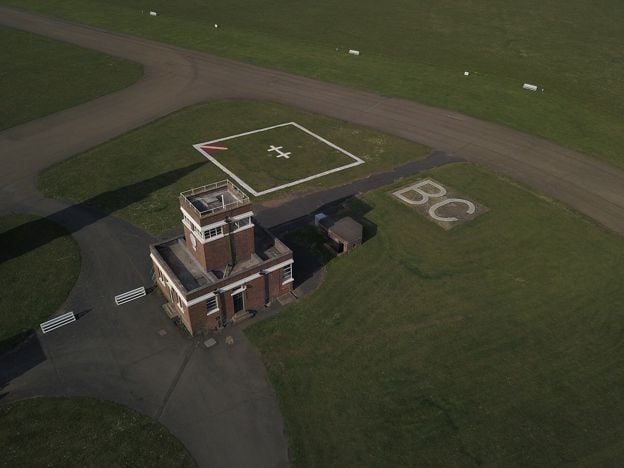
RAF Bicester: the bomber station that kept its 1920s shape
Story · History · 6 minute read
RAF Bicester opened in 1918, was rebuilt as a bomber station from 1925, trained bomber crews through the Second World War and ended as stores, gliders and an American hospital. Its hangars and bomb stores are now protected, and the site is Bicester Motion.
-
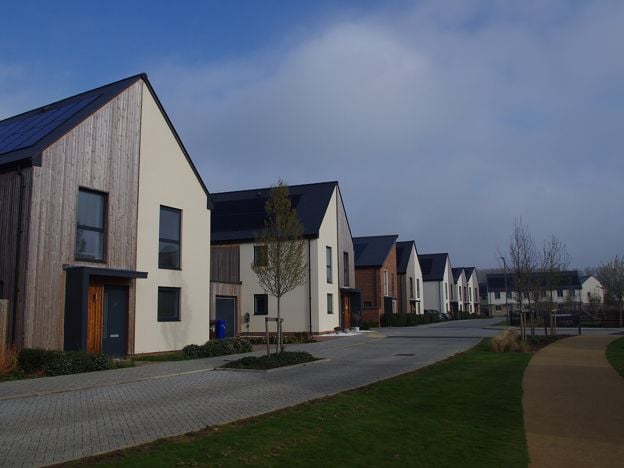
Elmsbrook and the Bicester eco-town: the story of North West Bicester
Story · History · 26 minute read
Elmsbrook is the first phase of North West Bicester, the only one of Labour's eco-towns built to the 2009 standards. This is the full story: the programme and why it failed elsewhere, the rules, who built it, what monitoring found, the later phases, and how to see it.