The Red Horse of Tysoe: the lost hill figure under Edge Hill
Uffington has its white horse. The Feldon had a red one, cut into the ironstone soil below Edge Hill, and it was lost about 200 years ago. Nobody knows who made it.
· 5 minute read
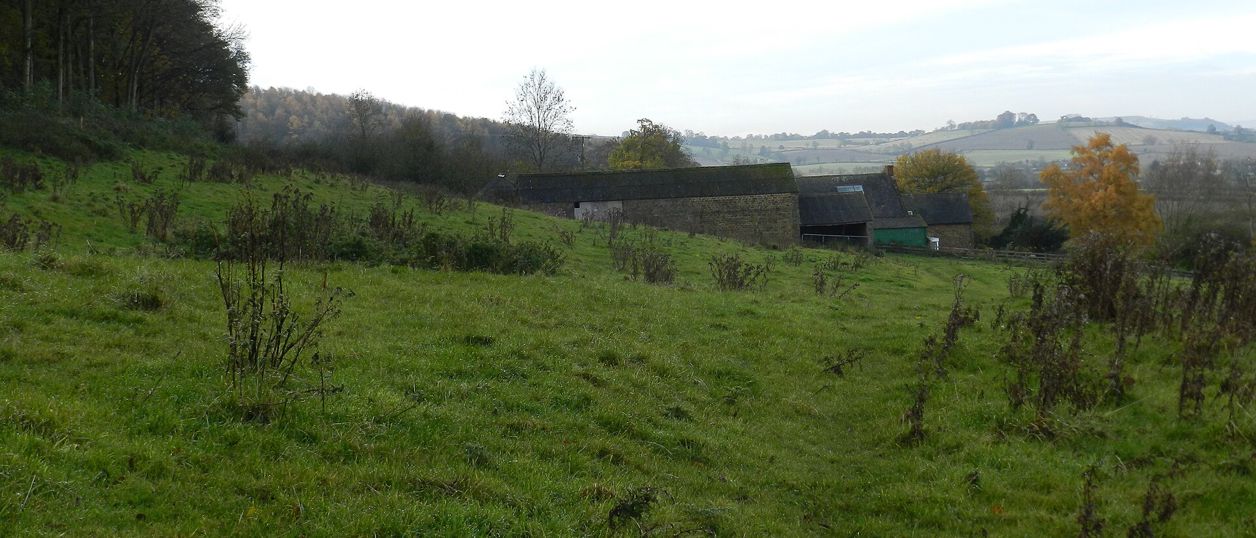
Below the ridge of Edge Hill, above the village of Tysoe, there was once a great horse cut into the hillside. Its outline showed red, because it was filled with the rusty marlstone of the ironstone country, and it was big enough to give the whole plain its name, the Vale of the Red Horse. It has been gone for about 200 years. The best modern account comes from the Tysoe Heritage Research Group (opens in a new tab), whose summary of its 2025 talks is on the parish council's site, and most of what follows is theirs.
Who saw it
The horse is on record from the early seventeenth century. John Speed's map of 1606 names Red Horse Vale, though that is a place name and not a description. Camden's Britannia of 1607 describes a horse cut out in a red hill near Pillerton. Michael Drayton's poem Poly-Olbion mentions the Vale of Red Horse in 1612, and William Dugdale's Antiquities of Warwickshire of 1656 refers to the Red Horse of Tysoe by name.
Later witnesses saw more than one. Celia Fiennes, late in the seventeenth century, reported the horse with a smaller one beside it, probably a foal. A map by Henry Beighton in the 1720s shows a horse with its head to the south, though the group suspects he never saw it himself. The poet Richard Jago, in his poem Edgehill of 1767, placed it in Tysoe parish and described an annual ceremony of scouring.
The Earl of Warwick's horse
The legend is that Richard Neville, Earl of Warwick, the Kingmaker, had it cut after the battle of Towton in 1461. The Tysoe group is blunt about it: no contemporary source supports the story. It first appears with the Reverend Wise in 1740, nearly 300 years after Towton, who also claimed there had been a third horse. Tradition also gives it a Saxon origin, and a newspaper in 2003 suggested 500 BC. None of these has evidence behind it.
How it was kept, and lost
A hill figure only lasts if people clean it. Jago described the scouring as a yearly event, so someone was still keeping it in the 1760s. The end came with enclosure. Tysoe's Inclosure Act was passed in 1796 and carried out from 1798, and the horse seems not to have survived the new fields. In the early 1800s Simon Nicholls, who kept the Sun Rising inn on the ridge, is said to have ploughed one horse up and cut a smaller one near his inn instead, and in 1806 a newspaper reported the 'Saxon Horse and foal' being grassed over.
People remembered it for a long time. Joseph Ashby of Tysoe, who died in 1919, spoke to people who remembered seeing the horse before 1800. Later still Mr Savoury, an owner of the Sun Rising, cut a small horse to revive interest, and it had gone by about 1910. Counting every report, the group thinks there may have been as many as five.
The dig
The serious search began in 1964, when Kenneth Carrdus and Graham Miller started fieldwork. They used aerial photographs, a resistivity survey by the Radley Institute in 1967 and an excavation in 1969, and published their booklet The Red Horse of Tysoe in 1965 with later editions. Their findings were striking. The whole horse had been dug out to between 50 and 80cm deep and filled with red marlstone brought down from higher up the slope, on ground whose own subsoil is a grey-green clay. They put it at about 73m from nose to tail and 85m from ear to hoof, and the group reckons 500 to 800 cubic metres of clay were moved to make it.
So the horse was not just scratched into the turf. Someone went to a great deal of trouble to make a red horse on a hillside that was not naturally red. Who, and when, is still unknown.
The Banburyshire newsletter
Events, new places and the best of the season, about once a month. Unsubscribe at any time.
Where to look
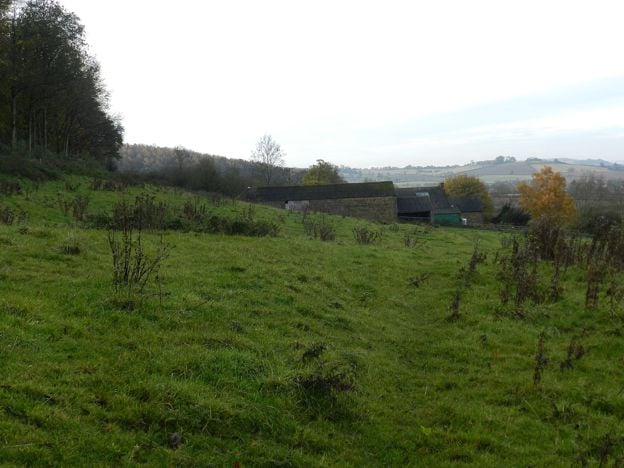
There is nothing of the horse to see, and the escarpment where it lay, above Old Lodge Farm and below the wood called the Hangings, was planted with trees in 1959. A view of the vale itself is easy: the ridge road along Edge Hill and our viewpoint page look out across it, and the Castle at Edgehill is the pub on top. Tysoe's parish plan of 2010 showed support for making a new horse. In Tysoe itself, the windmill on the hill is the landmark.
Mentioned in this story
The places, sights and walks in this story, each with a page of its own: what it is, when to go and how to get there.
-
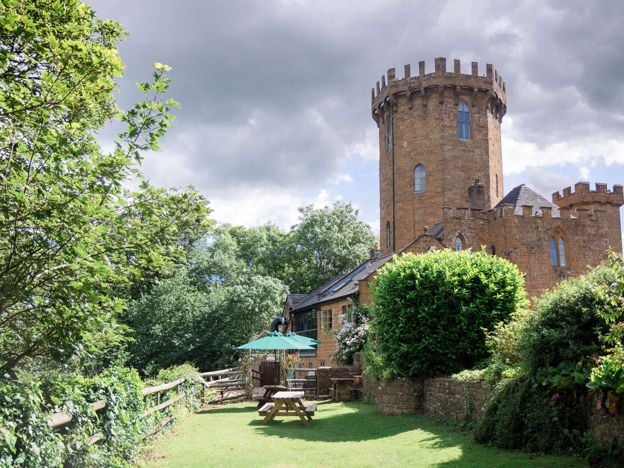
The Castle at Edgehill
Pubs · Edgehill and Radway
-
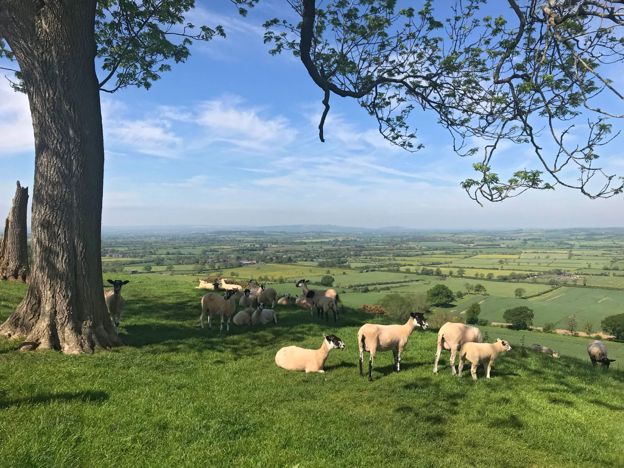
Edge Hill viewpoint
Sight · Viewpoint · Edgehill and Radway
-
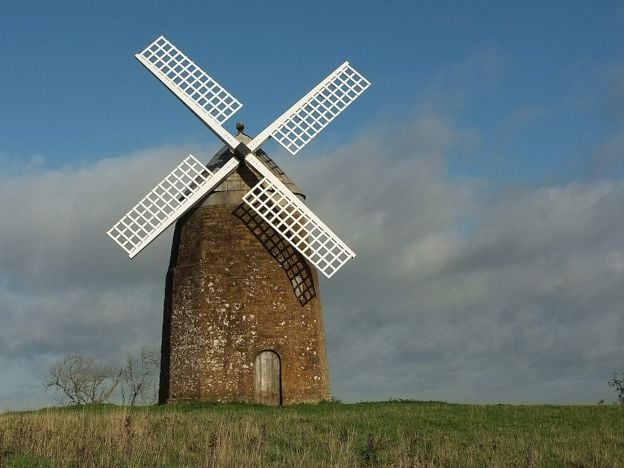
Tysoe Windmill
Sight · Historic building · Tysoe
Places to stay near Tysoe
-
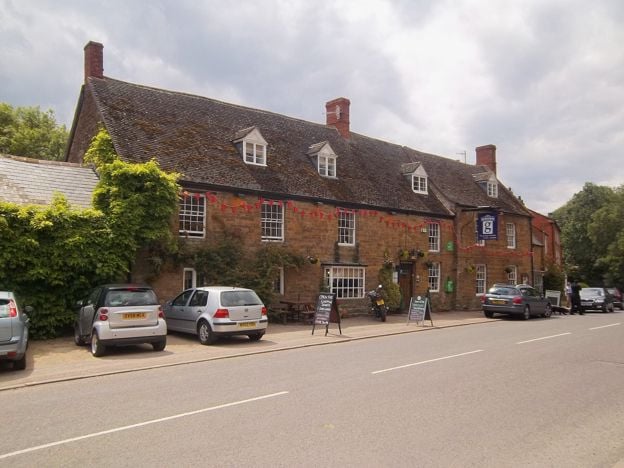
The George at Brailes
Pubs
A village inn on the high street at Lower Brailes, part of the Freespirit Pub Company, open seven days for breakfast, lunch and dinner, with local ales, a garden, first-floor bedrooms and a full calendar.
Dog-friendly · Walker-friendly
Verified Nov 2026
-
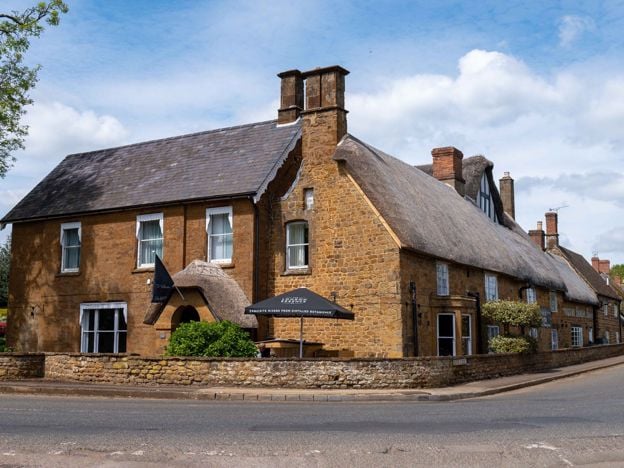
The Wroxton Hotel
Hotel · Wroxton
A 32-room hotel made from three adjoining stone cottages, partly dating from 1649, on the edge of thatched Wroxton, a few minutes' drive from junction 11 of the M40, with free parking and its own tea room.
Dog-friendly · Wedding venues
Verified Nov 2026
Read next
-
The Edgehill ghosts: the battle that was fought again in the sky
Story · Strange Things · 6 minute read
In January 1643 a London pamphlet said the Battle of Edgehill was being fought again in the night sky, and that officers sent by the King had seen it. The pamphlet is real. We cannot trace the claim that a royal commission's report survives as a state record.
-
The Rollright witch and the King Stone: the legend, and who told it
Story · Strange Things · 6 minute read
A king who would rule England if he could see Long Compton, a witch who turned him and his army to stone, and stones that go down to drink at midnight. The Rollright legend was written down from local people in the 1890s, and Long Compton's belief in witches was no joke.
-
Hornton stone and the ironstone villages: why Banburyshire is brown
Story · History · 5 minute read
Hornton stone is the rusty ironstone that colours the villages around Banbury. It is a band of Jurassic rock no more than about 10m thick, quarried at Hornton and on Edge Hill for centuries. Henry Moore carved it, and steelworks ate it until 1967.