The Rollright witch and the King Stone: the legend, and who told it
The tale is old and still told at the stones. Most of it reached print because an archaeologist took it down from country people round the stones in the 1890s and printed what they told him.
· 6 minute read
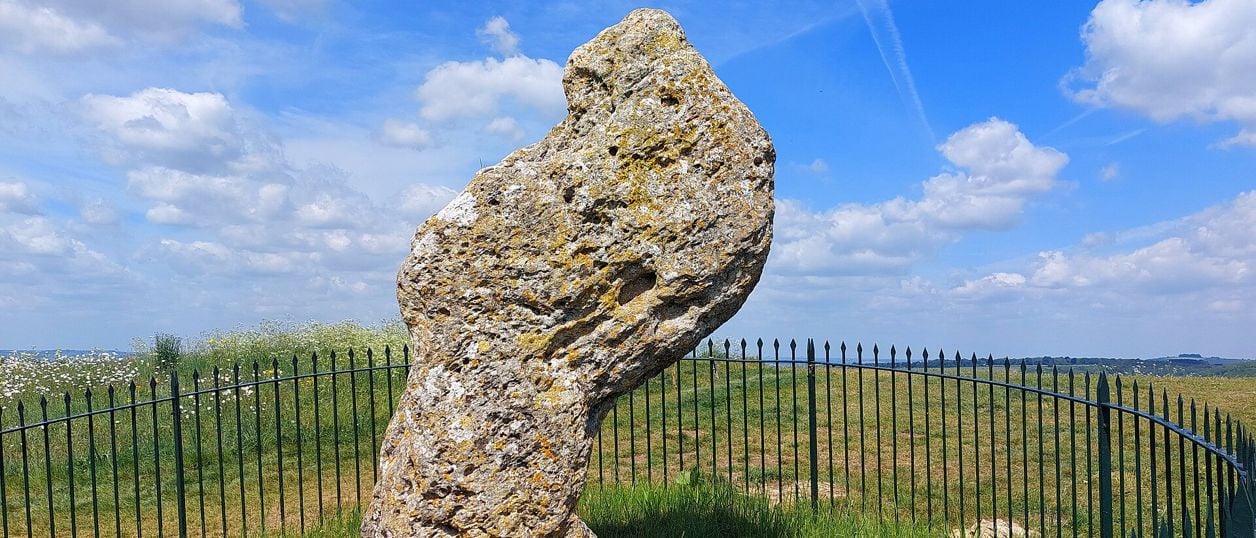
Everyone at the Rollright Stones hears the same story. A king marching to conquer England met a witch on the hill, who promised him the crown if he could see Long Compton after seven strides. He failed, and she turned him into the King Stone, his men into the circle and his knights into the Whispering Knights. The stones themselves were put up across nearly 2,000 years, long before any king of England, as our Rollright Stones page explains. The legend is much younger, and we know a surprising amount about it.
The first record
The belief that the stones were men was in print by the early seventeenth century. William Camden, in Philemon Holland's English translation of his Britannia, as Evans quotes it from the edition of 1637, wrote that the common people dreamed the stones had once been men, turned to stone by a wonderful metamorphosis. He already had the outline of the story. The tallest stone outside the circle, he said, they called the King, because he should have been King of England, forsooth, if he had once seen Long Compton. Five more stones standing together they took for knights on horseback, and the rest for the army.
Arthur Evans goes to Little Rollright
The full tale was written down more than two centuries later by Arthur Evans, the archaeologist later famous for Knossos. In an article for the journal {i:Folklore} in 1895 (opens in a new tab) he set down what he had heard from country people round the stones, especially at Little Rollright. They usually began, he noted, by saying they only repeated what they had heard and that such things could not have happened, and then told it with a good deal of half-belief.
The best version he heard has the witch stopping the king near the top of the hill with 'Seven long strides shalt thou take', and the promise:
If Long Compton thou canst see, King of England thou shalt be.
The king strode out, but instead of the village a long mound rose in front of him. Then the witch spoke again, and Evans gives her words as 'As Long Compton thou canst not see, King of England thou shalt not be', ending with 'Thou and thy men hoar stones shall be, And I myself an eldern-tree'. One day, people told him, the spell would break, and the king would lead his army out to rule the land.
The king had no settled name. Evans was told once that he was King Charles, and another collector heard him called King Billy. The witch was sometimes Mother Shipton.
The elder that bleeds
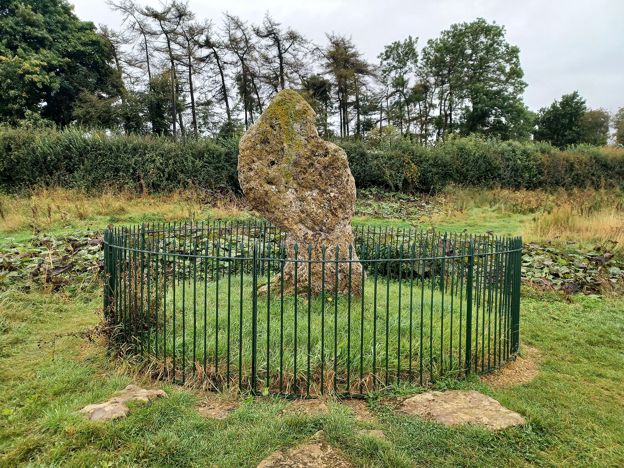
The witch became an elder tree, and the elder carried the strangest part of the lore. An elder bleeds when it is cut, people said, which proves it is a witch. An old woman told Evans what she had heard from her husband's mother: on Midsummer Eve, when the elder was in blossom, people came up to the King Stone and stood in a circle, the elder was cut, and as it bled the king moved his head. In Long Compton, he was told, if you only drew a witch's blood, be it but a pin's prick, she lost her power.
Stones that drink, and cannot be counted
Evans collected a run of other beliefs. The stones went down the hill at midnight to drink at a spring in Little Rollright Spinney, and people showed him the gap in the bushes they went through. Some said the king went down when he heard the clock strike twelve, which, one man explained carefully, meant never, since a stone cannot hear.
The circle could not be counted. A baker once set a penny loaf on every stone to keep his tally and always found one stone without a loaf. The man will never live, Evans was told, who shall count the stones three times and find the number the same.
Fairies danced round the King Stone at night, and children used to put a flat stone over a hole in the bank to keep them in, and found it turned over in the morning. Chips of the King Stone were taken for luck, and by soldiers going to war. Welsh drovers chipped so much, one account said, that the stone used to be bigger. A man who swore he would take a chip though his wheel locked found that it did.
The Whispering Knights had their own tale. Their capstone was once dragged down the hill by a team of horses to bridge a brook, turned itself over every night, and was taken back up by a single horse. The number of horses varied from one account to the next, Evans noted.
The real witches of Long Compton
The fear of witches in Long Compton was more than a story. Among the people Evans spoke to was an old woman whose mother, she told him, had been murdered as a witch. He does not say who her mother was. Twenty years earlier, in 1875, an 80-year-old woman of the village, Ann Tennant, was stabbed to death with a pitchfork by a farm labourer, James Haywood, who believed some 20 witches in the Long Compton area were, by their sorcery, preventing him from working in the fields. Warwickshire County Record Office's account (opens in a new tab) quotes The Times on the case: she was an old woman of harmless character, whose ill fame as a witch depended on her sex and age and nothing else.
That is worth keeping in mind at the stones. The witch of the legend is a story, but the belief behind her cost a real woman her life.
The Banburyshire newsletter
Events, new places and the best of the season, about once a month. Unsubscribe at any time.
Seeing it for yourself
The stones are open daily for a small fee paid to the Rollright Trust, which tells the legend as legend. Opening, prices and parking are on our Rollright Stones page. Stand by the King Stone and look towards Long Compton: the long mound that blocked his view is the reason, the story goes, that Long Compton stays hidden. Long Compton is below the ridge, and Chipping Norton is the nearest town.
Mentioned in this story
The places, sights and walks in this story, each with a page of its own: what it is, when to go and how to get there.
-
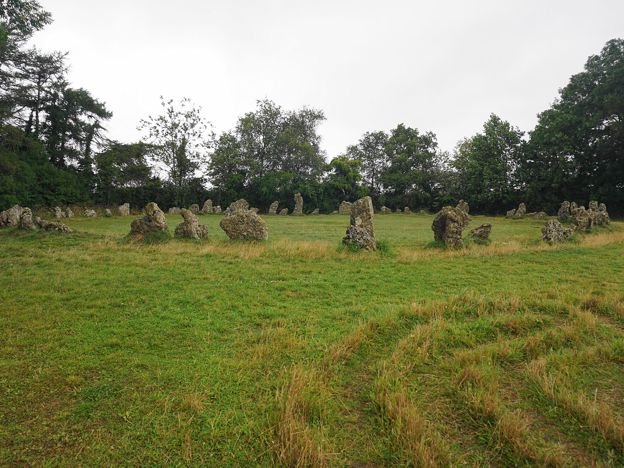
Rollright Stones
Sight · Hill fort or barrow
Places to stay near Long Compton
-
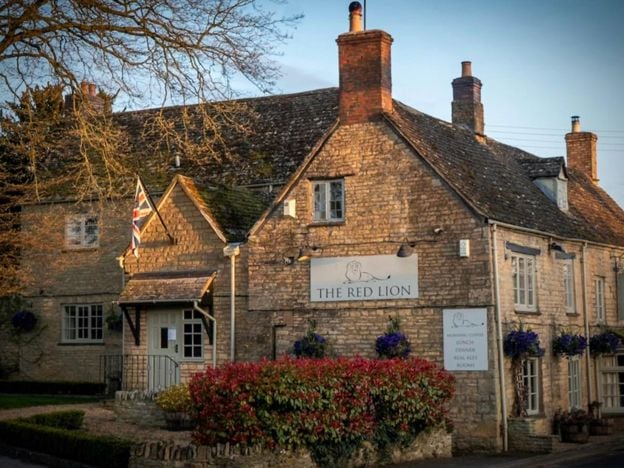
The Red Lion, Long Compton
Pubs
A Grade II listed inn on Main Street, Long Compton, under the Rollright Stones, with seven dog-friendly bedrooms, an AA Rosette and Breakfast Award for 2025, a play area and dogs welcome in bar and restaurant.
Dog-friendly · Family-friendly · Walker-friendly
Verified Nov 2026
-
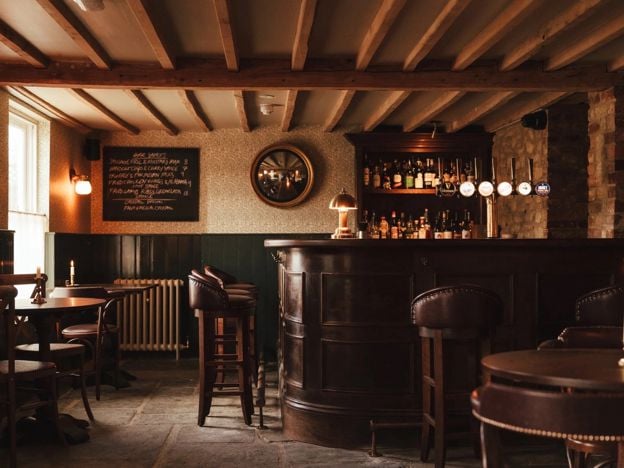
The Norman Knight, Whichford
Pubs
A pub with rooms in a restored former bakery at Whichford, serving seasonal British food and well-kept ales, with four rooms, five cabins, supper clubs, live music on Saturdays and a monthly car rally in summer.
Verified Nov 2026
-
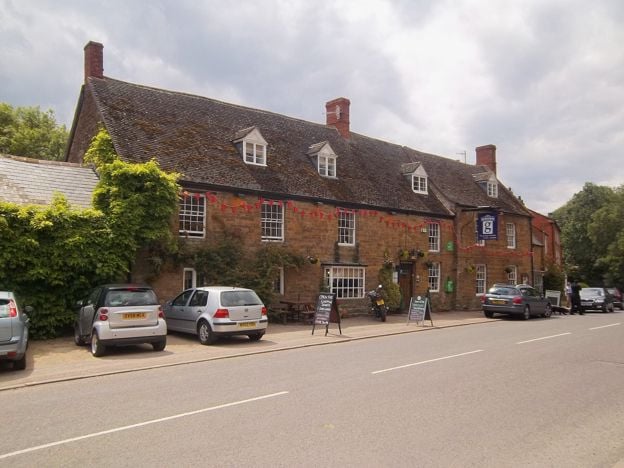
The George at Brailes
Pubs
A village inn on the high street at Lower Brailes, part of the Freespirit Pub Company, open seven days for breakfast, lunch and dinner, with local ales, a garden, first-floor bedrooms and a full calendar.
Dog-friendly · Walker-friendly
Verified Nov 2026
Read next
-
The Edgehill ghosts: the battle that was fought again in the sky
Story · Strange Things · 6 minute read
In January 1643 a London pamphlet said the Battle of Edgehill was being fought again in the night sky, and that officers sent by the King had seen it. The pamphlet is real. We cannot trace the claim that a royal commission's report survives as a state record.
-
The Red Horse of Tysoe: the lost hill figure under Edge Hill
Story · Strange Things · 5 minute read
A great horse was cut into the red hillside above Tysoe, under Edge Hill, and scoured each year in the eighteenth century. It gave the Vale of the Red Horse its name, then was lost around 1800. Who said they saw it, the legend of the Earl of Warwick, and what the diggers found.
-
Strange Banburyshire: ghosts, witches, lost horses and sham ruins
Story · Strange Things · 6 minute read
The odd corners of the country round Banbury: a ghost battle in the sky over Edgehill, a witch who turned a king to stone at Rollright, a lost red horse, a three-day saint, a priest said to have died of fright, and ruins built to look ruined. Each one told with what is on record.