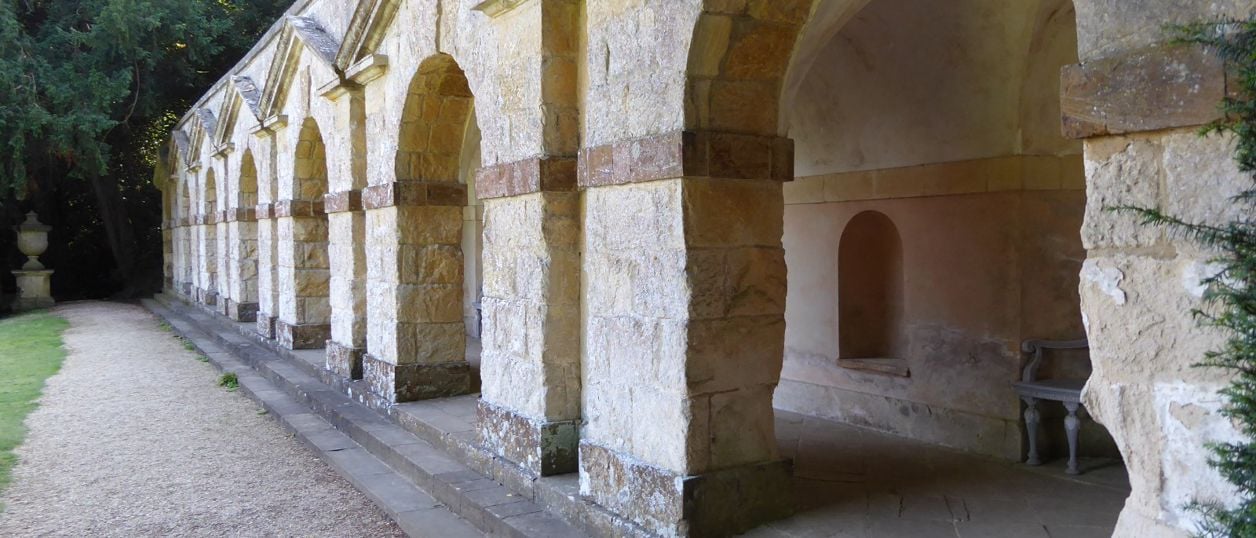
Philip Halling, CC BY-SA 2.0, via Wikimedia Commons
Rousham House and Garden
A house of about 1635 above the Cherwell near the Heyfords, and round it William Kent's landscape garden of 1737 to 1741, still much as he left it. The garden opens every day; no children under 15, no dogs, no tea room.
Historic building
Upper and Lower HeyfordRousham is a house of about 1635 above the River Cherwell near the Heyfords, and round it the garden William Kent remade between 1737 and 1741, one of the first English landscape gardens and still close to how he left it. The garden is open every day; there is no tea room, no shop, and no entry for children under 15.
The story of Rousham
Sir Robert Dormer bought the manor in 1635 and soon built the house, and the same family owns it today. The early gardens had a formal garden and a walled garden with a dovecote, dated 1685; by 1677 five terraced walks ran down to the river, and by 1721 a new garden by the Cherwell had ponds, straight walks and a temple.
About 1725 a plan, probably by the royal gardener Charles Bridgeman, reorganised the grounds, and men were at work in them from 1725 to 1734. Alexander Pope praised the waterfalls and ponds in 1728. Then, from 1737 to 1741, General James Dormer, who had fought under Marlborough at Blenheim, employed William Kent to remodel the house, the park and the pleasure grounds. Kent was a painter, stage designer and architect who had spent time in Italy. He kept Bridgeman's frame and added buildings, cascades and circuit walks that frame views of the countryside beyond.
Kent also added wings, a cupola and pavilions to the house, and decorated the parlour, with its painted ceiling, which Historic England calls a rare complete example of his work. About 1760 Thomas Roberts of Oxford turned the library into a drawing room with rococo plasterwork, and about 1860 William St Aubyn enlarged the house again.
What to look for
Follow the circuit from the bowling green, with Peter Scheemakers' statue of a lion attacking a horse, to Praeneste, Kent's arcaded loggia of 1738 to 1740 set into the hillside above the Cherwell and modelled on ruins at Palestrina. In Venus's Vale, two cascades fall either side of an octagonal pond.
The Watery Walk has its rill, with Kent's Cold Bath and grotto of 1738 to 1740 beside it. Townesend's Building is a rustic temple by Kent and William Townesend, and there is the Pyramid House too.
Further off are the eyecatcher, a sham gateway of three arches that Kent placed on a far hill about 1740, about 9 metres high and 21 metres long, and the Temple of the Mill, a seventeenth-century building he altered. Heyford Bridge, a medieval causewayed bridge, is about 500 metres north of the house.
The seventeenth-century walled gardens have herbaceous borders, a rose parterre, espaliers, a kitchen garden and the dovecote of 1685. A herd of longhorn cattle lives in the park.
Visiting Rousham
The garden is open every day of the year from 10am, with last admission at 4.30pm, and closes at dusk. Rousham's own pages give the price as £10 a person, paid on arrival by cash or contactless card. The house opens only by prior arrangement, at £20 a person with a £200 minimum; the site gives a contact for tours. Children under 15 are not admitted without prior permission, and dogs are not allowed. There is no tea room or shop, so bring a picnic; the toilets are next to the car park. We found no access statement, so ring ahead if steps or slopes matter to you.
Getting there
Rousham's postcode is OX25 4QX, about 12 miles north of Oxford and about 15 minutes' drive from junction 9 of the M40, the house says. Heyford station, on the Oxford to Banbury line, is about 15 minutes' walk. When we checked in November 2026 the timetable had 13 trains a day from Oxford to Heyford on weekdays, 10 on Saturdays and three on Sundays. Stagecoach's S4 between Oxford and Banbury stops at Rousham, Park Farm, roughly hourly from Monday to Saturday and about every 90 minutes on Sundays. Our walk from Heyford station follows the valley.
Nearby
Rousham has no café, and its own page sends hungry visitors to the Oxford Arms at Kirtlington and the Killingworth Castle at Wootton; the Chequers at Steeple Aston, the old Red Lion, is also close. St Mary's Church, Kirtlington has the Dashwoods' chapel, and up on the plateau the Cold War sites at Heyford Park show a different century altogether.
Walks past Rousham House and Garden
-
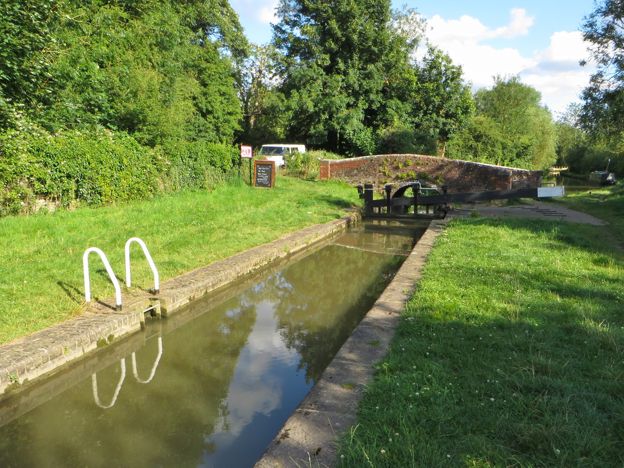
Heyfords Circular from Heyford Station
Walk · Starts in Upper and Lower Heyford · 2 hrs · Circular
The Heyfords Circular is a 3.4-mile (5.5km) easy circular walk from Heyford station, about two hours. It follows the Oxford Canal north to Allen's Lock, climbs to Upper Heyford's church and returns over fields to Lower Heyford's square. Flat, with gates, livestock and mud.
Stay and eat near Rousham House and Garden
-
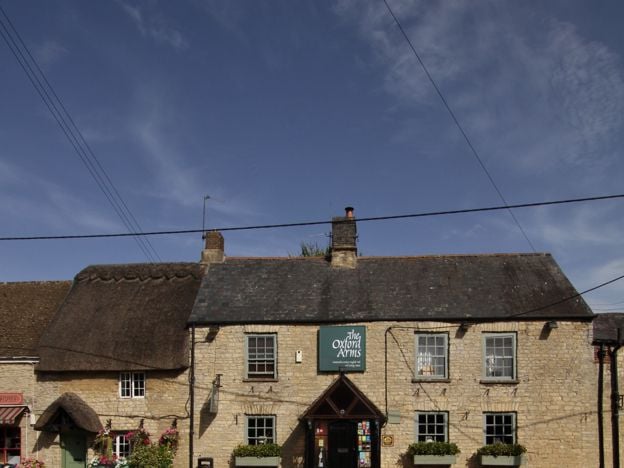
The Oxford Arms, Kirtlington
Pubs
A village pub on Troy Lane in Kirtlington, between Bicester and Woodstock, cooking British pub food with a twist, with a fish and chip night on Tuesdays and a Sunday roast with a vegan choice.
Dog-friendly · Family-friendly · Walker-friendly
Verified Nov 2026
-
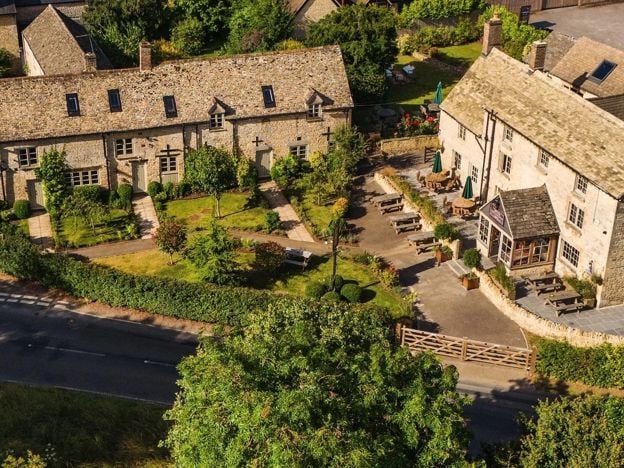
The Killingworth Castle, Wootton
Restaurants
A serious dining pub with eight rooms at Wootton near Woodstock, with 3 AA Rosettes and a Michelin Guide recommendation for 2026, à la carte and tasting menus, and open from Wednesday to Sunday.
Dog-friendly · EV charging
Verified Nov 2026
-
The Chequers, Steeple Aston
Pubs
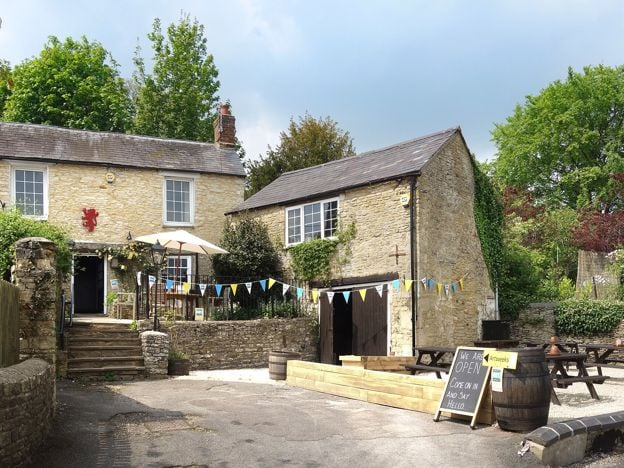
The former Red Lion at Steeple Aston, reopened in July 2026 under its original name of The Chequers: a Hook Norton pub established in 1765, with seasonal British food, a terrace and Sunday roasts.
Verified Nov 2026
Stories about Rousham House and Garden
-
Bicester with children: days out for families
Story · Guides · 6 minute read
Bicester with children: the play area and skate park at Garth Park, newts at Bure Park, a climbing centre, a pool and a cinema in the town, Scramble days at Bicester Heritage, the Cold War airbase at Heyford Park and boats at Lower Heyford, with ages, prices and what to skip.
-
Villages between Banbury and Bicester
Story · Guides · 8 minute read
The villages between Banbury and Bicester, group by group: the Cherwell valley from Somerton to Kirtlington, the plateau villages of Souldern, Fritwell and Middleton Stoney, and the quiet country north-east of Bicester. Which are worth a stop, what each has, which have no pub.
-
Walks near Bicester
Story · Guides · 6 minute read
Walks near Bicester: the Historic Town Trail and the West Health Route in the town, the Oxfordshire Way from Kirtlington and a circle over the Cherwell meadows to Somerton Mill, with distances, stiles, buses and the walks we are holding back.
More sights to see
-
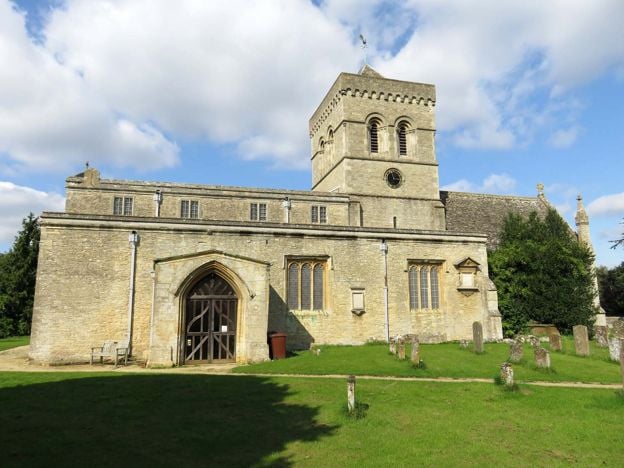
St Mary's Church, Kirtlington
Sight · Church · Kirtlington
Kirtlington's Grade II* church, with Norman arches under a Victorian tower that replaced one pulled down in 1770, late medieval paintings of St George and St Christopher, and the chapel of the Dashwoods of Kirtlington Park. Normally open in daylight.
-
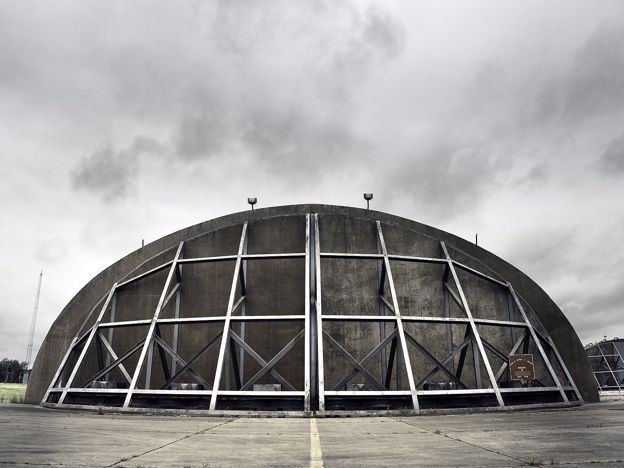
RAF Upper Heyford Cold War sites, Heyford Park
Sight · Monument · Upper and Lower Heyford
The Cold War shelters, nuclear bomb store and command centre of RAF Upper Heyford, scheduled in 2006 and seen on guided tours from the airbase's heritage centre at Heyford Park, which opens free three days a week.
-
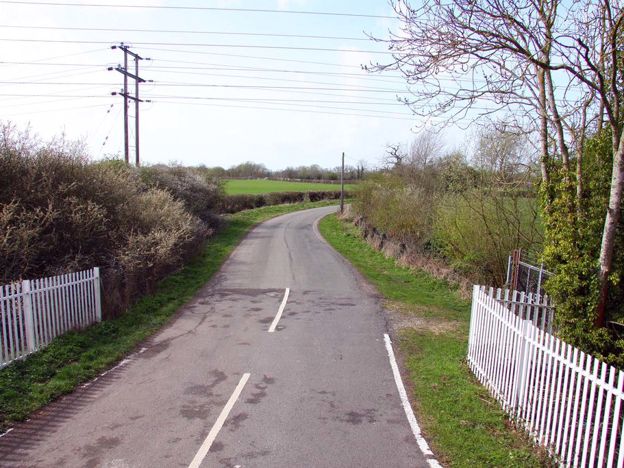
Alchester Roman Town, near Bicester
Sight · Monument · Bicester
The buried site of Oxfordshire's largest Roman town, south-west of Bicester, and of the legionary fortress before it, dated by its gate timbers to AD 44/45. A scheduled monument under private farmland, with nothing standing above ground.