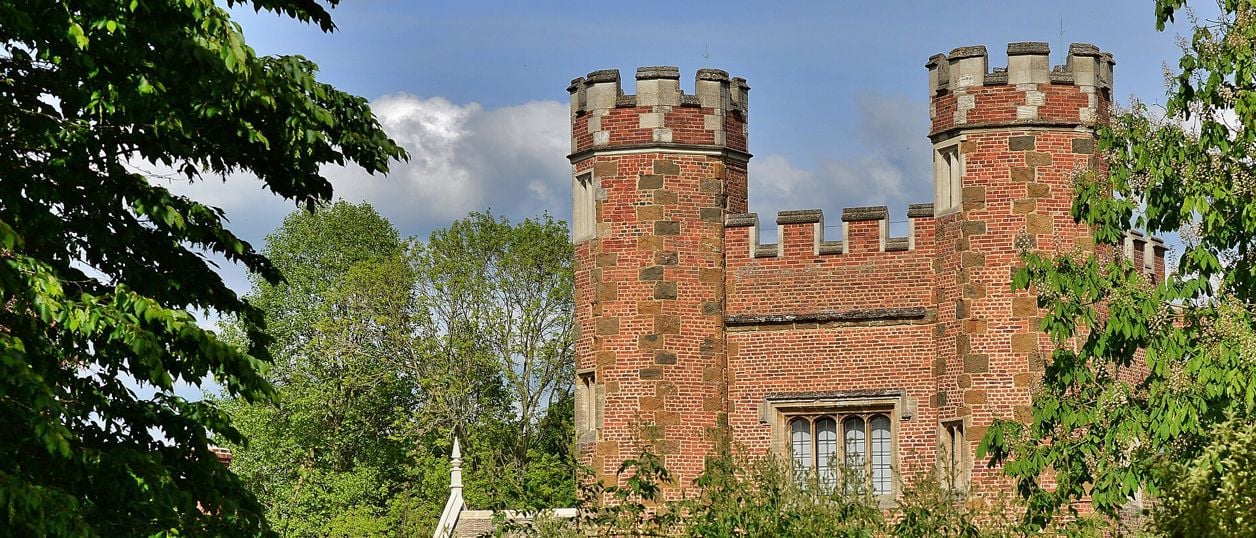
Michael Garlick, CC BY-SA 2.0, via Wikimedia Commons
Hanwell Castle
The surviving tower and range of a Tudor brick courtyard house built for the Cope family at Hanwell, north of Banbury. Grade II*, diapered in red and blue brick, and private: the grounds open on a few event days, such as the February snowdrop weekend.
Historic building
HanwellHanwell Castle is what is left of a brick courtyard house built for William Cope, cofferer to Henry VII, in Hanwell, about 2 miles north-west of Banbury. One corner tower and one range survive, patterned in red and blue brick, and Historic England lists them Grade II*. It is a private house today, and its grounds open only on a few event days a year.
The story of Hanwell Castle
It was never a castle. The Victoria County History says it was first called Hanwell House or Hall, and the name it has now came later. William Cope was granted the manor in 1498 and began building, but he died in 1513 with the house unfinished. His will told his executors to have it finished as it was begun. His son Anthony refused, the executors went to the Court of Chancery after 1518, and Anthony in the end did as his father wished, using Hanwell as his country house until he died in 1551. The Gatehouse gazetteer reports Christopher Taylor's view that 1498 is the date of the grant rather than of the building, and that the house was finished in the 1520s.
It was built of brick with stone dressings, one of the earliest uses of brick in the district, round three sides of a court open to the east, with the main entrance in the west front. That front had a gatehouse and an oriel window, and old prints show three-storey corner towers with octagonal turrets. John Leland, travelling between 1535 and 1545, called it pleasant and gallant. In the hearth tax of 1665 it was assessed on 27 hearths, one more than Broughton Castle.
Puritans and kings
The Copes made Hanwell a Puritan stronghold. Sir Anthony Cope, who died in 1614, was described as a hot Puritan and was imprisoned in 1587. In 1584 he gave the living to John Dod, whose house became a centre of Puritan teaching until Dod was deprived in 1606 or 1607. His successor, Robert Harris, held it for about 40 years, until royalist soldiers drove him from his house in August 1642. The family still entertained the Crown: James I came in 1605 and 1612, and the county history adds a visit by James in 1616 and by Charles I in 1637.
The house had its curiosities too. Robert Plot described a House of Diversion on an island in a fishpond north-east of the house, with a ball tossed on a jet of water and an artificial shower. He also described a mill in the park, built by a later Sir Anthony Cope, that ground corn and drove engines for cutting stone and boring guns, and a water clock that showed the hour by a gilded sun.
Decline and revival
The house was probably turned into a farmhouse after Sir Charles Cope died in 1781, and most of it was pulled down. A writer in 1818 said it had come down about 40 years before. Only the south-west tower and the south side of the court were left, and some of the bricks went into farm buildings. In 1902 the house, by then dilapidated, was let to G. F. Berkeley, and his wife Caroline restored it and the gardens and added an east wing. A private tutorial college opened here in 1957. The listing now describes it as three dwellings.
What to look for
The tower is the thing to see. Look for:
- Three storeys of red brick with a diamond diaper of blue brick and ironstone quoins, two corner turrets and battlemented parapets
- The south range, also diapered, with limestone dressings, a gabled porch and a four-centred doorway
- Late medieval and sixteenth-century mullioned windows on the first floor, and an oriel
- The two gate piers about 50m west, each listed Grade II in its own right
The fishponds are large: the Gatehouse gazetteer puts them at about 13 acres, and archaeologists investigated the water features between 2013 and 2015. The county history notes that a lake had replaced the earlier chain of ponds by 1962.
Visiting Hanwell Castle
The castle is lived in, so come on an event day. Hanwell Community Observatory runs Stars and Snowdrops each February: in 2026 it opened the woodland and its snowdrop colony, the archaeologists and the observatory on 14 and 15 February, at £5 for adults. Dogs were not allowed, the organisers warned that the grounds are not suitable for wheelchairs, and they asked for stout footwear. The 2027 date had not been announced when we checked, so look on the observatory's website before you plan a visit.
Getting there
Hanwell is a short drive north of Banbury. On event days there is no general parking at the castle, so use the signposted public parking behind St Peter's Church at the end of Gullicote Lane, and park with care in the village.
Nearby
Hanwell's own church, St Peter's, is worth the few minutes from the car park: the county history describes nave capitals carved with men and women with linked arms and with minstrels, and a large alabaster monument to Sir Anthony Cope and his wife in the chancel. The county history notes similar carving at St Mary's Church, Adderbury. For the other great Puritan house of the district, go to Broughton Castle and St Mary's Church, Broughton, and for the Copes' world read our story of the Banbury Puritans.
Stay and eat near Hanwell Castle
-
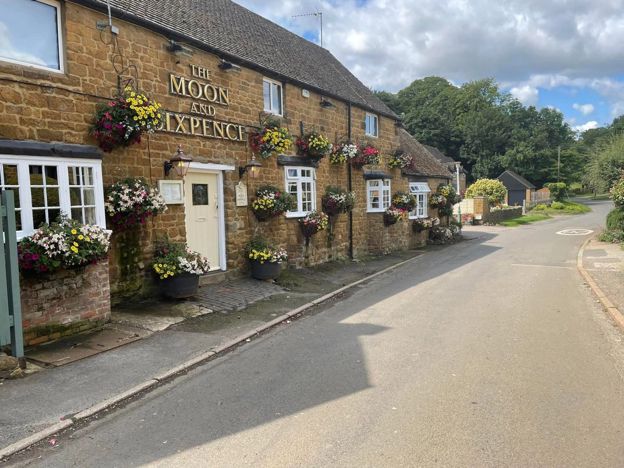
The Moon and Sixpence, Hanwell
Pubs · Hanwell
A refurbished dining pub on Main Street in Hanwell, about two miles north-west of Banbury, with an open kitchen run by chef Hylton Bradley, a set lunch and dinner menu, and a large car park.
Family-friendly · Walker-friendly
Verified Nov 2026
-
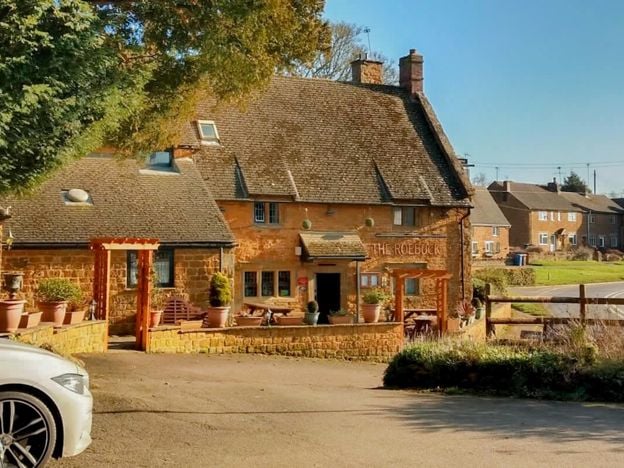
The Roebuck Inn, Drayton
Pubs
A Hook Norton pub in a late 17th-century listed building on the A422 at Drayton, just outside Banbury, with a south-facing courtyard, a modern British menu, a car park and dogs welcome.
Dog-friendly
Verified Nov 2026
-
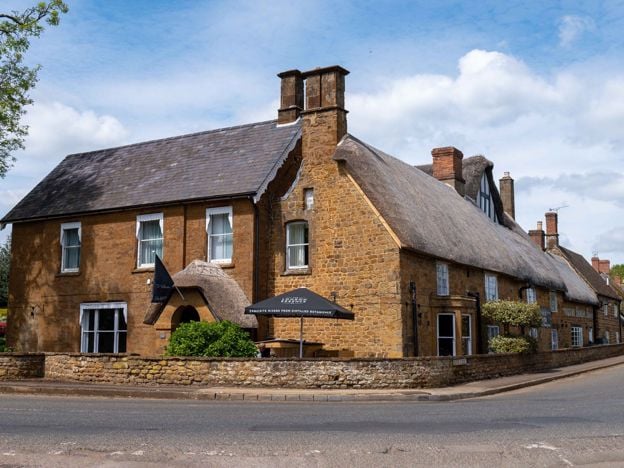
The Wroxton Hotel
Hotel · Wroxton
A 32-room hotel made from three adjoining stone cottages, partly dating from 1649, on the edge of thatched Wroxton, a few minutes' drive from junction 11 of the M40, with free parking and its own tea room.
Dog-friendly · Wedding venues
Verified Nov 2026
More sights to see
-
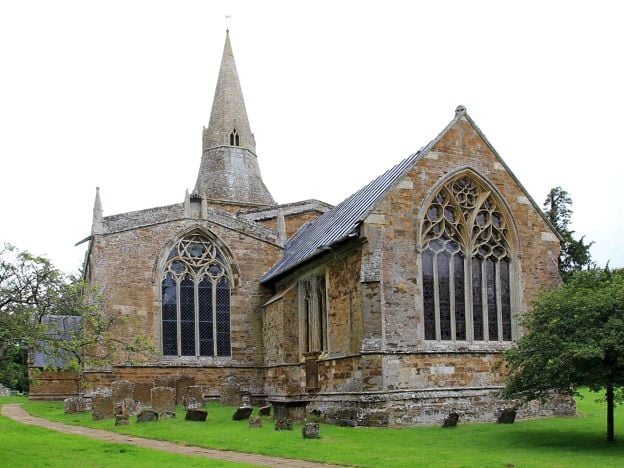
St Mary's Church, Broughton
Sight · Church · Broughton
The Grade I church in the park of Broughton Castle, built about 1300, with a rare stone chancel screen and the tombs and hatchments of the castle's owners from the fourteenth century on. Best seen on a castle open day.
-
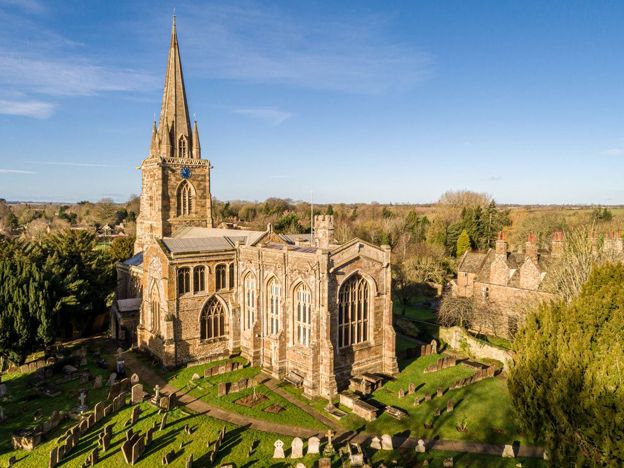
St Mary's Church, Adderbury
Sight · Church · Adderbury
Adderbury's Grade I church, with a stone spire, a frieze of medieval musicians and grotesques round its aisles, and a chancel built by Richard Winchcombe for New College, Oxford. Open daily and free to look round.
-
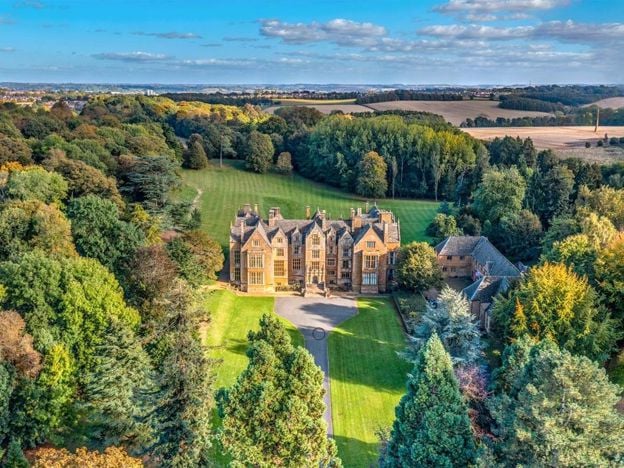
Wroxton Abbey
Sight · Historic building · Wroxton
A Jacobean house of about 1618 west of Banbury, on the site of a medieval priory and long the home of the Norths. Grade I. It is a college and closed to visitors. It passed to an alumni-led group in 2025 to 2026, and a public footpath crosses the grounds.