Ride a cock horse: what Banbury's nursery rhyme means, and where it came from
A cock horse is a hobby horse or a knee. The fine lady came late, and the cross the rhyme sends you to had been gone for 140 years when it was first printed.
· 4 minute read
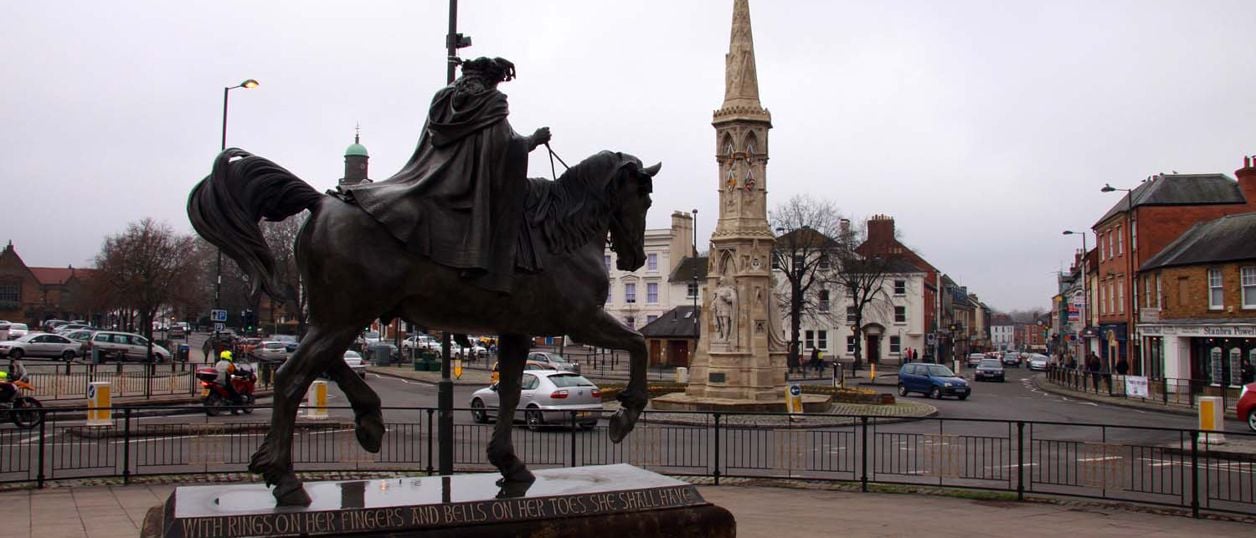
Ride a cock horse to Banbury Cross is one of the best-known nursery rhymes in English, and almost every word of it raises a question. What is a cock horse? Which cross? Who is the fine lady? The short answers are a toy, a lost one, and nobody knows. Our story of the crosses deals with the cross and the lady. This is about the rhyme itself.
What a cock horse is
A cock horse is a pretend horse. Phrase Finder (opens in a new tab) gives the senses: a child's hobby horse, or a stick standing in for one, or an adult's knee or foot that a child is bounced on. It quotes an example from Thomas Elyot's Image of Governance of 1541, where a father takes doting pleasure in seeing his little son ride on a cock horse.
That is what the rhyme is for. It is a jogging rhyme, said while a small child rides an adult's knee. The ride to Banbury is make-believe from the first line.
The earliest versions
The rhyme does not go back to the medieval cross. The Victoria County History gives the earliest recorded version as about 1744, with others by about 1780 and 1784, and notes that the writers of the early seventeenth century, who made plenty of jokes about Banbury, never mention it.
The first printing, in Tommy Thumb's Pretty Song Book of about 1744, sends the rider to Banbury to buy bread, cake and a pie for a boy called Tommy. No lady, no white horse, no bells. Joseph Ritson's Gammer Gurton's Garland of 1784 has the wording closest to today's, but with an old woman on the horse, already with rings on her fingers and bells on her toes. The Victoria County History finds the fine lady first in 1797. Later collections sometimes send the rider to Coventry or Shrewsbury instead, though Banbury is named in all the eighteenth-century versions.
A rhyme about a cross the town had pulled down
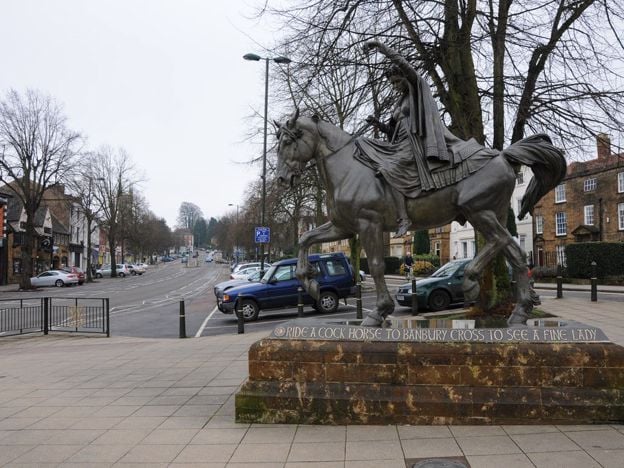
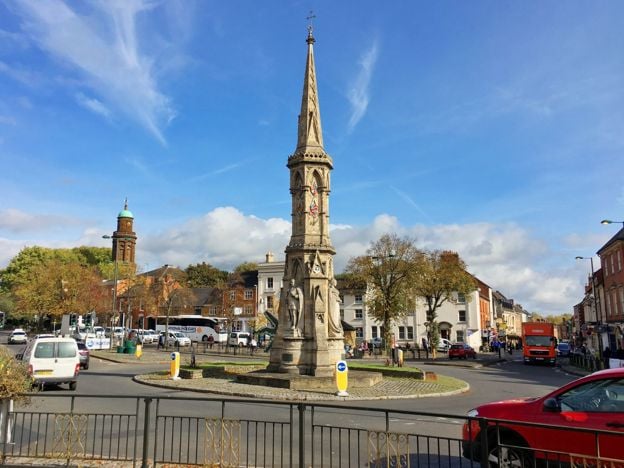
The rhyme's best joke is one it did not mean to make. Banbury's aldermen had the town's High Cross pulled down on 26 July 1600, as objects of superstition, and by the time the rhyme was printed the town had been without a principal cross for more than 140 years. A child in 1744 was being sent to a monument that did not exist. The present Banbury Cross went up only in 1859, to mark a royal wedding, on Horse Fair, where there is no evidence that a medieval cross ever stood. Our story of Banbury's puritans tells how the town came to pull its crosses down.
Who was the fine lady
Nobody knows, and every name is a guess. Elizabeth I, Lady Godiva and Celia Fiennes, of the family at Broughton Castle, are the usual candidates, the last on the strength of 'a Fiennes lady' becoming 'a fine lady'. Phrase Finder finds no evidence for any of them, and the earliest versions have no lady to identify.
The Banburyshire newsletter
Events, new places and the best of the season, about once a month. Unsubscribe at any time.
The rhyme in Banbury now
The town has made the rhyme its own. The Fine Lady statue near the cross, unveiled in 2005, has the words on its base. The Banbury Historical Society named its journal Cake and Cockhorse, joining the rhyme to the town's other famous export, whose story is in our history of the Banbury cake.
For some years Banbury also held a hobby horse festival, with horses and other beasts brought from across the country and a parade of beasts through the town. Calendar Customs (opens in a new tab) records that the full festival seems to have lapsed. Adderbury Village Morris (opens in a new tab) keep an October dance-out in its memory, most recently on Saturday 10 October 2026, when they danced round Banbury Cross and in the Market Place. Check the side's own pages for the next date.
To see the places, stand at the Banbury Cross on Horse Fair and walk down to the statue, a short walk apart. Both are free and in the open.
Mentioned in this story
The places, sights and walks in this story, each with a page of its own: what it is, when to go and how to get there.
-
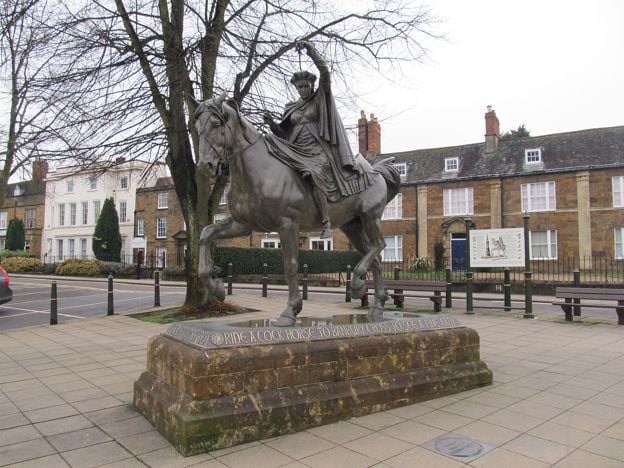
Fine Lady statue, Banbury
Sight · Monument · Banbury
-
Banbury Cross
Sight · Monument · Banbury
Places to stay near Banbury
-
Whately Hall Hotel, Banbury
Hotel · Banbury
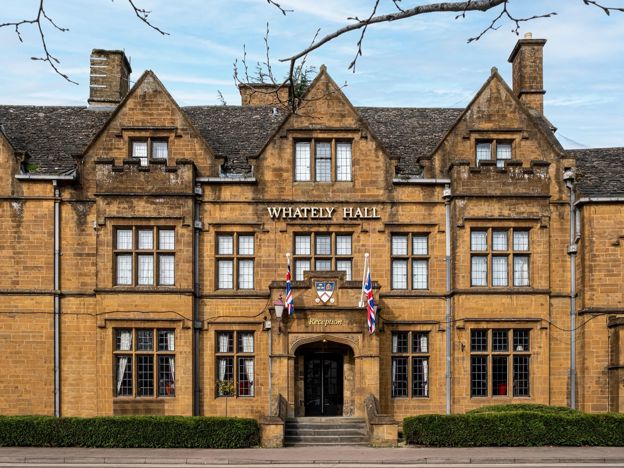
A Grade II listed 17th-century inn, now a 71-room hotel on Horse Fair in the middle of Banbury, with gardens, an oak-panelled restaurant and six EV chargers.
Dog-friendly · Family-friendly · Wedding venues
Verified Nov 2026
-
The Three Pigeons, Banbury
Pubs · Banbury
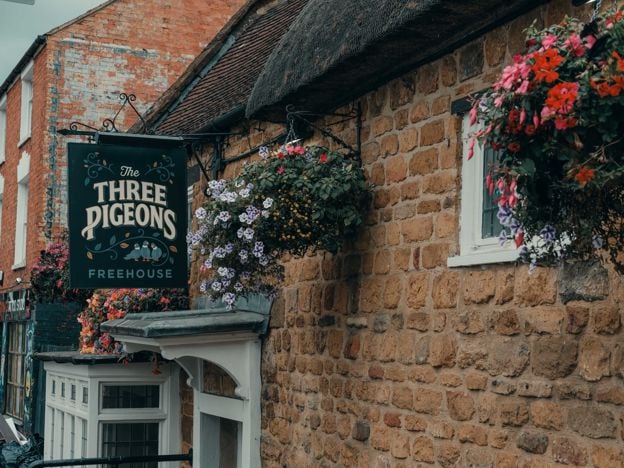
A Grade II listed 17th-century inn, partly thatched, on Southam Road, Banbury, with real ales and ciders, a courtyard, Smash Cow street food from Thursday to Saturday and three en-suite rooms.
Dog-friendly · Car-free
Verified Nov 2026
-
Banbury Cross Bed and Breakfast
B&B · Banbury
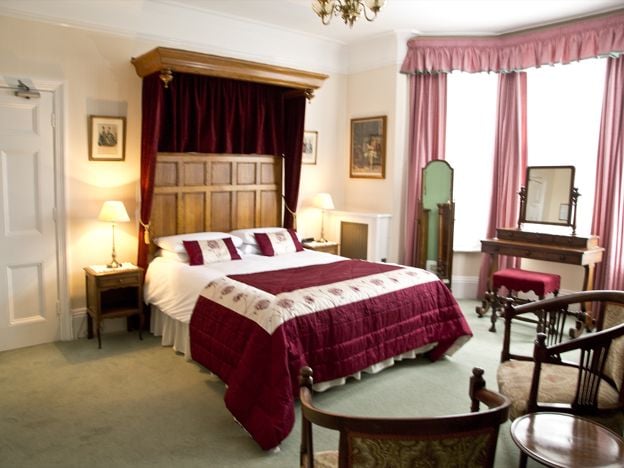
A family-run Victorian B&B on Broughton Road, Banbury, with seven bedrooms, about 370m from Banbury Cross, with free off-road parking, cooked breakfasts and rates from £77. No under-18s.
Car-free
Verified Nov 2026
Read next
-
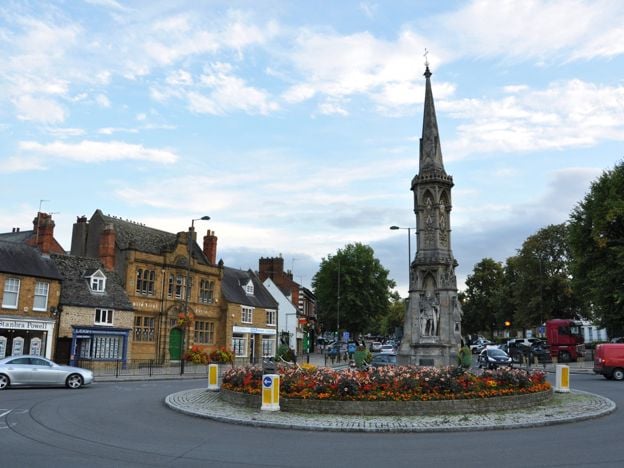
Banbury Cross: the lost crosses and the fine lady
Story · History · 7 minute read
The Banbury Cross of the rhyme is gone. Banbury's own aldermen had the High Cross pulled down on 26 July 1600. The cross you can see dates from 1859 and stands somewhere else, and nobody has ever shown who the fine lady was.
-
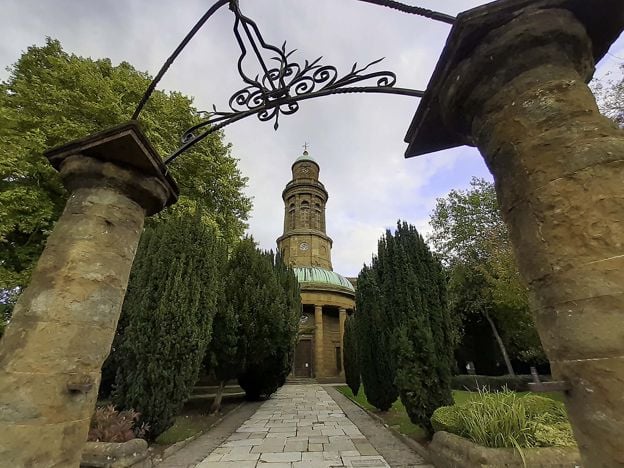
Banbury's puritans: the 'Banbury man', the roaring boy and the zealots
Story · History · 7 minute read
By 1614 'a Banbury man' meant a puritan, and writers mocked the town's zeal. Its people pulled down their crosses, a vicar preached twice every Sunday and was called the roaring boy, and the Quakers came next. What the record shows, and what was a joke.
-
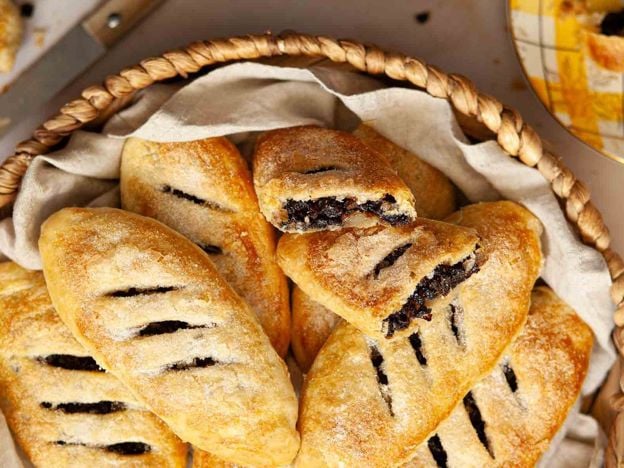
The original Banbury cake: its history and Gervase Markham's recipe
Story · History · 6 minute read
Banbury cakes are spiced currant cakes known by 1610. The oldest printed recipe we have found, in Gervase Markham's household book, was a yeasted dough. This is what the records show, what they do not, and a recipe worked from his method, with the later puff pastry version.