Banbury cattle market: the biggest in England, and how it closed
For most of the twentieth century Banbury was where the south of England came to sell its animals. The market grew from 9,700 sales a year to almost half a million, and in 1998 it was gone.
· 6 minute read
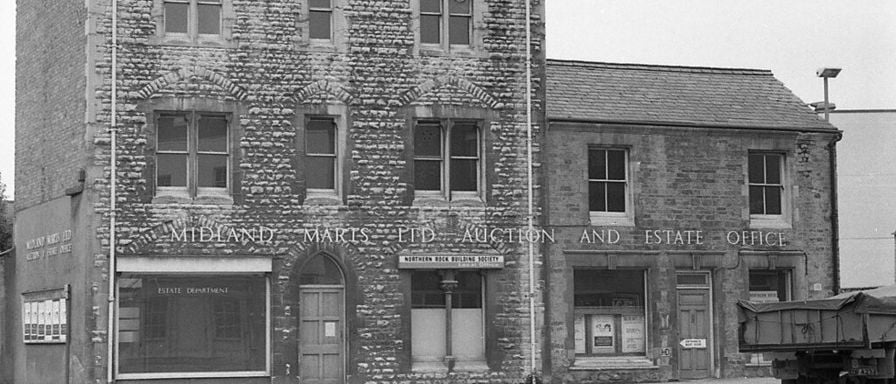
For most of the twentieth century Banbury's best-known business was not the cakes or the cross but the cattle market. In the 1960s it handled between 400,000 and 500,000 animals a year, and the Victoria County History calls it the largest stock market in England. It closed on Thursday 4 June 1998. Nothing of it is left to visit, so this is a story to read rather than a place to go, but it explains a good deal about the town.
Animals in the streets
Banbury had sold animals in its streets for centuries before there was a market building. The county history's economic chapter (opens in a new tab) finds an Ox Market, a Sheep Market and a Horse Market among the town's street names between 1319 and 1525. Sheep were penned in Sheep Street. In 1656 an order to move the sheep market was disputed so hard that it went to the Oxford assizes and then to the Exchequer. Horse Fair, where the cross now stands, is named for the same trade.
The fairs carried much of the trade. At the Michaelmas Fair of 1832, the county history notes, 6,300 animals changed hands in a single fair. Our story of the Michaelmas Fair follows how that hiring and selling fair turned into a funfair.
Off the streets, and into Grimsbury
By the twentieth century the old way was failing. In 1924 only 9,700 animals were sold in the town all year, fewer than at that one fair of 1832. After the First World War the growth of motor traffic made animals in the streets a problem, and there was pressure for a proper market.
The borough corporation's first plan came to nothing. It bought land where the Warwick and Southam roads meet, then dropped it because it was too far from the railway. Instead a syndicate of stock traders bought a site at Grimsbury, east of the Cherwell and nearer the railway, and became Midland Marts Ltd. The corporation handed its auction sales of cattle to the company in 1925 and its private sales in 1931. From then on the council's own weekly market was left to the household traders in the Market Place.
The largest in England
The move worked better than anyone could have planned. Sales rose from that 9,700 in 1924 to between 400,000 and 500,000 a year in the 1960s. The county history describes animals coming in from all over southern England, with Scottish sheep and Irish cattle at times, and going out to London and to the towns of the Midlands and the north as far as Leeds.
Sales ran on Wednesdays and Thursdays for about 70 years, Farmers Weekly reported, and Banbury FM's retrospective remembers the tiered rings round the sale floor and the auctioneers' fast patter. It also gives the market a history of about 1,000 years and a mention in Domesday. We have not found that in the records: the county history's earliest mention of Banbury's market is from 1138 or 1139, and the market at Grimsbury dates only from the 1920s. When the market was closing, Farmers Weekly described it (opens in a new tab) as the biggest livestock sales centre in Britain in the mid-1980s. You will also read that it was the biggest in Europe. That may be true, but we have not found a primary source that says so.
Why it closed
The end came quickly. From the early 1990s, Banbury FM's look back (opens in a new tab) records, Midland Marts had been trying to move to a new site at Huscote Farm, by the M40. Planning permission was granted, but South Northamptonshire District Council objected, several MPs petitioned the Environment Secretary, John Prescott, who ordered an inquiry, and the work never started. The company was also negotiating with the owners of the Grimsbury site about staying.
Meanwhile the BSE crisis had wrecked the livestock trade. Farmers Weekly reported in May 1998 that the company blamed two years of disastrous beef prices, and that its chairman, Jim Watson, called closing the hardest decision he had ever had to make. Banbury FM quotes him saying it was financially impossible to continue, and lists the rent, the rates, the water and effluent costs, falling commission and lower cattle numbers. The talks over the old site failed, and the last day of trading was Thursday 4 June 1998. About 100 people lost their jobs. Northamptonshire Auctions, hoping to take on the trade, moved its own sales to the week beginning 8 June.
The Banburyshire newsletter
Events, new places and the best of the season, about once a month. Unsubscribe at any time.
What stands there now
Nothing of the market survives as a building to visit. Banbury still has its street market, the descendant of the one the corporation kept in 1931, on Thursdays and Saturdays in the Market Place, and that is the nearest you can now get to the old trade. Our page on the Market Place has the days and times. Banbury FM lists what occupies the land: Dashwood Banbury Academy, the Banbury Madni Masjid and a number of houses and flats. The street names of the old town, Horse Fair and Sheep Street, are the clearest trace of the trade that came before it.
For the town's farming and market history in one place, Banbury Museum and Gallery is free. Ask there about photographs of the market, as we have not confirmed what the museum holds.
Mentioned in this story
The places, sights and walks in this story, each with a page of its own: what it is, when to go and how to get there.
-
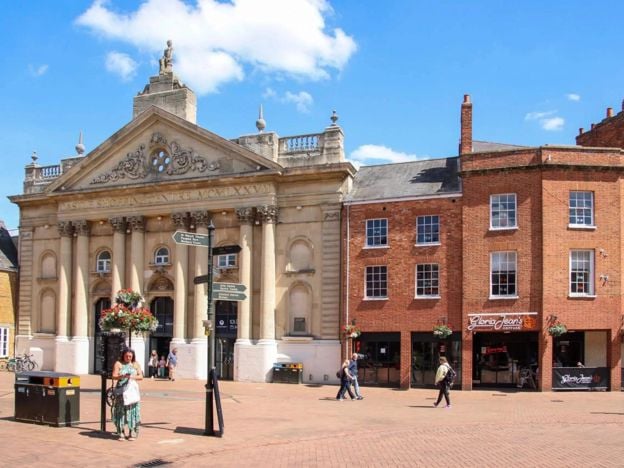
Banbury Market Place
Sight · Historic building · Banbury
Places to stay near Banbury
-
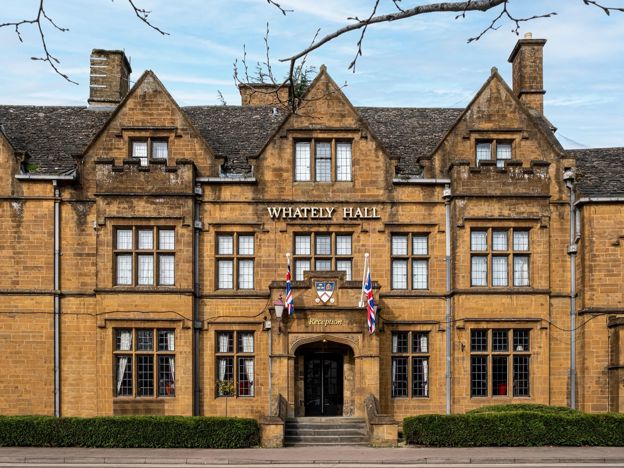
Whately Hall Hotel, Banbury
Hotel · Banbury
A Grade II listed 17th-century inn, now a 71-room hotel on Horse Fair in the middle of Banbury, with gardens, an oak-panelled restaurant and six EV chargers.
Dog-friendly · Family-friendly · Wedding venues
Verified Nov 2026
-
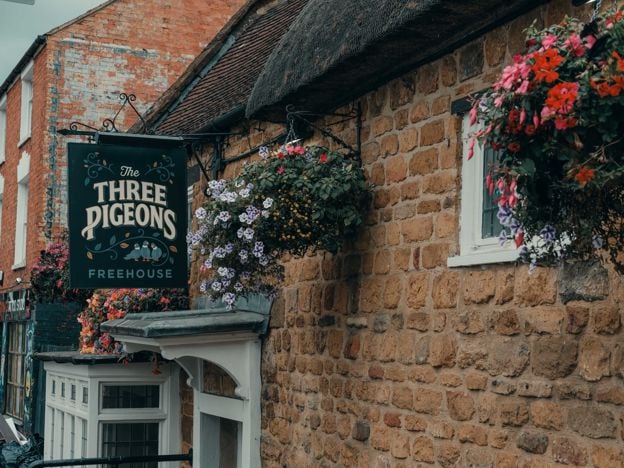
The Three Pigeons, Banbury
Pubs · Banbury
A Grade II listed 17th-century inn, partly thatched, on Southam Road, Banbury, with real ales and ciders, a courtyard, Smash Cow street food from Thursday to Saturday and three en-suite rooms.
Dog-friendly · Car-free
Verified Nov 2026
-
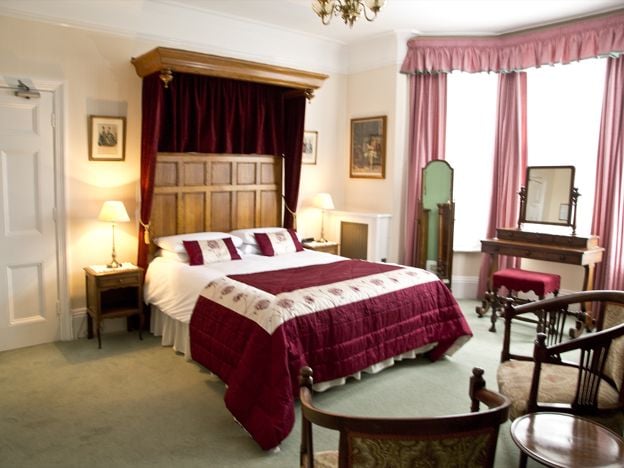
Banbury Cross Bed and Breakfast
B&B · Banbury
A family-run Victorian B&B on Broughton Road, Banbury, with seven bedrooms, about 370m from Banbury Cross, with free off-road parking, cooked breakfasts and rates from £77. No under-18s.
Car-free
Verified Nov 2026
Read next
-
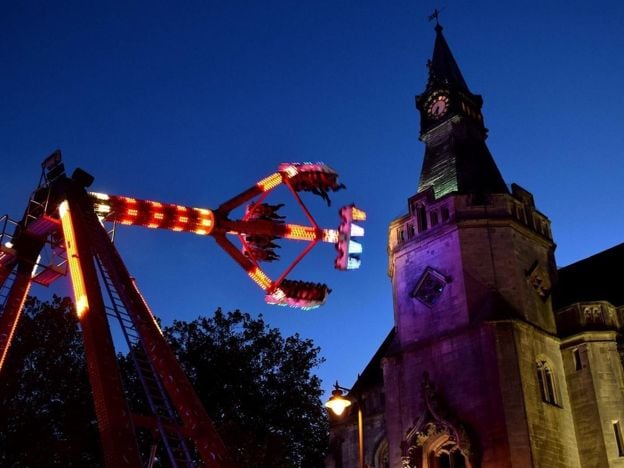
Banbury Michaelmas Fair: from hiring fair to street funfair
Story · History · 5 minute read
Banbury's Michaelmas Fair fills the town centre for four days each October. Records show fairs here from 1154, a hiring fair called the Mop by 1677, and a pleasure fair that outlived its purpose. This is that history, and how the fair runs today.
-
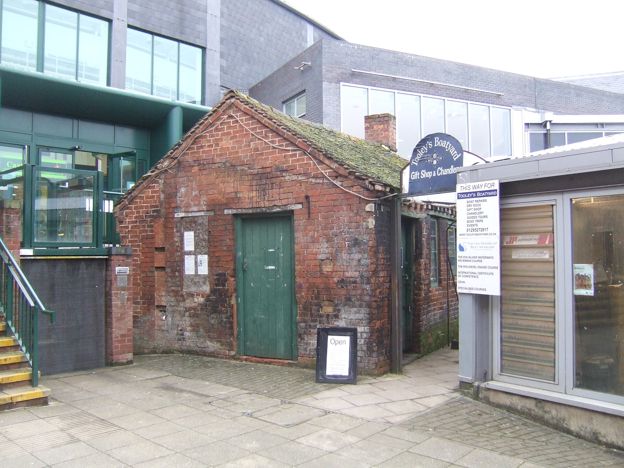
How the Oxford Canal came to Banbury, and stopped there for 12 years
Story · History · 7 minute read
The Oxford Canal was planned in a Banbury inn in 1768, and the first coal boats reached the town on 30 March 1778. Then the money ran out, and Banbury was the end of the line for almost 12 years. How it happened, who paid, and what is left to see.
-
Alcan in Banbury: the aluminium works that made a market town industrial
Story · History · 6 minute read
In 1931 the Northern Aluminium Company opened a works on the Southam Road, and Banbury stopped being only a market town. It rolled sheet for wartime aircraft behind a decoy factory, employed over 3,000 at its height, became Alcan and closed in 2009.