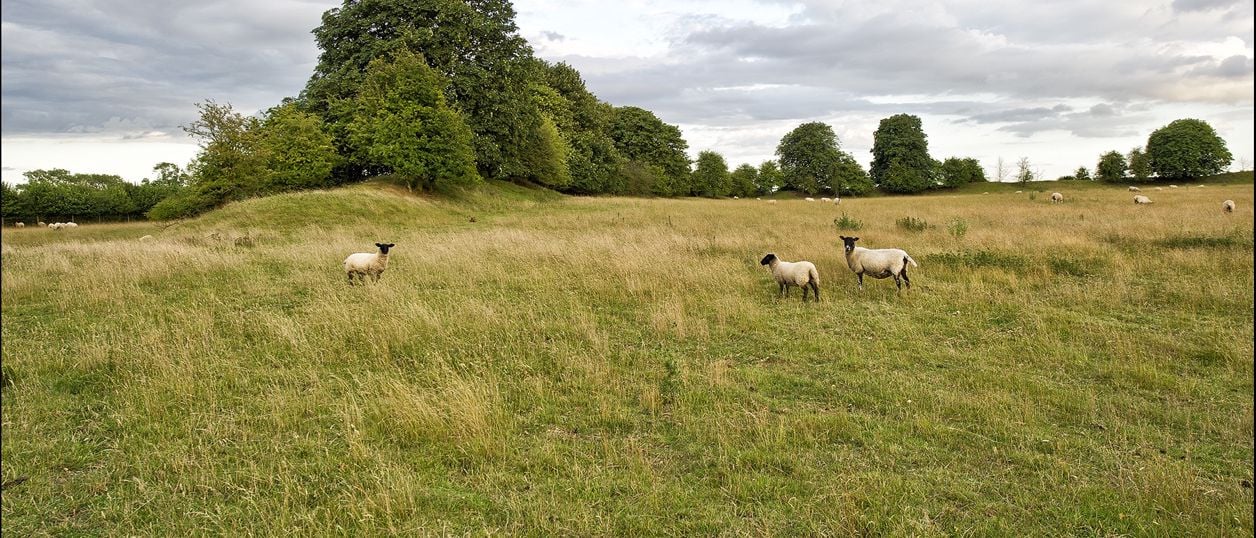
Julian Dowse, CC BY-SA 2.0, via Wikimedia Commons
Rainsborough Camp
An Iron Age hillfort with double ramparts on the plateau above the Cherwell near Aynho and Charlton, burnt in the fourth century BC and reused by the Romans. Scheduled, under pasture, on private land; a bridleway passes close by.
Hill fort or barrow
AynhoRainsborough Camp is an Iron Age hillfort on the plateau north-east of Aynho, about a mile south of Charlton, with wide views north over the Cherwell valley. Historic England schedules it. Its inner rampart still stands up to 3m above the interior, and excavation in the 1960s found that it was burnt and its gate guardrooms destroyed in about the early fourth century BC. It is on private land.
The story of Rainsborough Camp
The fort is roughly oval, about 2.6 hectares, inside two banks and ditches, at about 145m above sea level on a limestone plateau, says the Northamptonshire Historic Environment Record, which also gives its other name, Charlton Camp. Michael Avery, J. E. G. Sutton and J. W. Banks dug it between 1961 and 1965, and their phases, with the question marks they carry, run like this:
- Before the fort, postholes and occupation debris, perhaps of the sixth or fifth century BC
- The double-ramparted fort, probably of the fifth century BC, with an inturned western gate and two C-shaped, stone-lined guardrooms set into it
- Repairs to the entrance and the inner ditch, perhaps in the early fourth century BC
- Then the burning: the fort was set on fire and the guardrooms destroyed, and it was perhaps abandoned
- Refortification late in the second century BC, with a rebuilt entrance and people living inside again
- Roman use: pottery of the late first century AD, and a stone building near the entrance of the third or fourth century
The record adds that the fort may have been the centre of a large estate that lasted into the Middle Ages, but it offers that as a suggestion.
What the eighteenth century did
Not everything you see is Iron Age. In about 1772, as part of a landscaping scheme, the inner bank was raised, drystone walling was built along its top and the inner ditch was dug deeper. Earlier, around 1700, the interior was ploughed and levelled, and pottery, glass and ashes turned up. Roman coins, now lost, were also recorded.
What to look for
The inner bank is the thing to see: up to 3m above the interior, with an inner ditch about 4m deep, says the record. A drystone wall runs partway up the outer face of the inner rampart and stands about 75cm high in places. The outer bank has been ploughed down to no more than 50cm on the west and north and has gone on the east. Only the western entrance is original, by the magnetometer surveys. The small gaps on the north and north-west were cut for local traffic in the seventeenth century, and the eastern gap may be Roman.
Visiting Rainsborough Camp
The camp is under permanent pasture on private land, and we could not confirm a public right of way onto the ramparts. OpenStreetMap shows a public bridleway passing about 150m from it, so look from there and keep to the path. The scheduling description rates its condition below good, though a field note of 1970 in the HER found it in fair condition despite many small cuts to the ramparts.
Getting there
The camp is in the far south of Newbottle parish, between Aynho and Charlton. We found no parking for it. Aynho and Charlton are the villages to start from.
Nearby
Aynho has the canal at Aynho Wharf and the Great Western Arms beside it. The Crewe Arms at Hinton-in-the-Hedges is east of Charlton. The spire of Kings Sutton is to the north-west, and Arbury Banks at Chipping Warden is another hillfort of the district.
Stay and eat near Rainsborough Camp
-
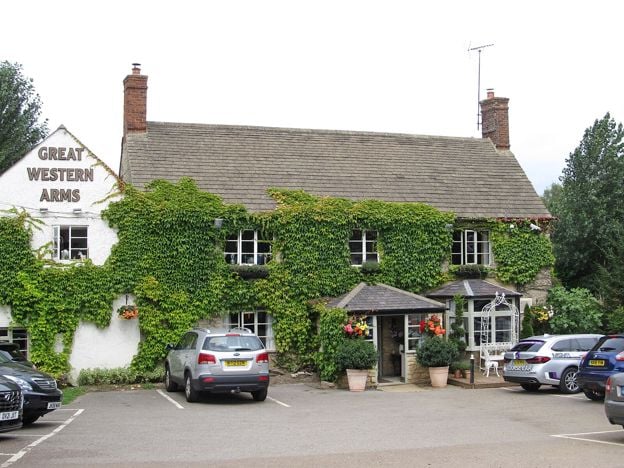
The Great Western Arms, Aynho
Pubs · Aynho
A Hook Norton pub with four rooms between the Oxford Canal and the old Aynho station, about 15.5 miles by road from Silverstone. It sells itself as a base for the circuit, Bicester Village and Blenheim Palace. A small place, so rooms for a race weekend will not last.
Verified Nov 2026
-
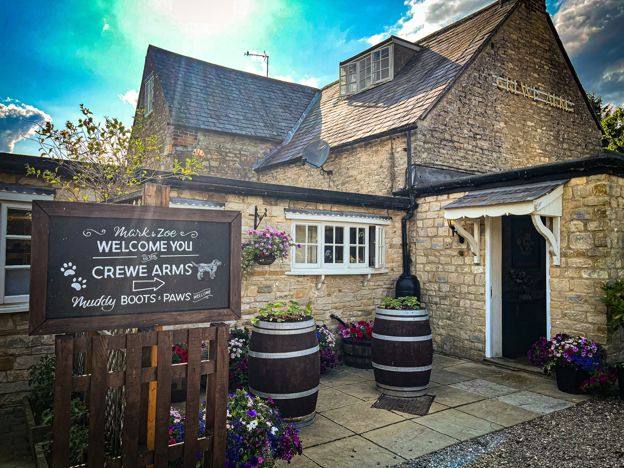
The Crewe Arms, Hinton-in-the-Hedges
Pubs
A pub at Hinton-in-the-Hedges, just west of Brackley, that dates itself to the 15th century, with a log fire, a couple of gardens, a snug, dogs welcome and vegetarian dishes given proper room. It cites a 2022 Good Beer Guide entry. The car park is small.
Dog-friendly · Family-friendly
Verified Nov 2026
-
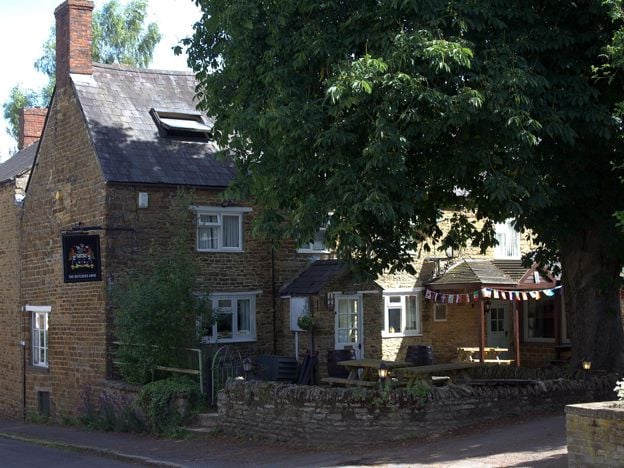
The Butchers Arms, Kings Sutton
Pubs · Kings Sutton
A village pub on Whittall Street in Kings Sutton, open every day from noon to 10pm, with a large garden, parking and main, Sunday, lunch and buffet menus all updated in autumn 2026. A plain local, handy for the spire and the station.
Verified Nov 2026
More sights to see
-
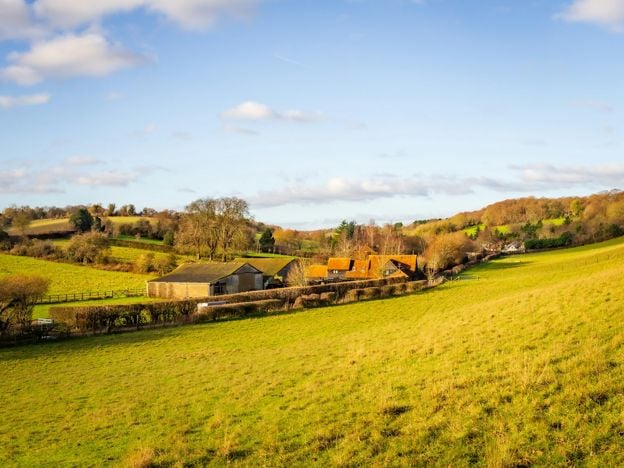
Arbury Banks, Chipping Warden
Sight · Hill fort or barrow · Chipping Warden
The low bank of a probable Iron Age enclosure, and the ridge and furrow around it, on a hill south-west of Chipping Warden. A scheduled monument on private farmland, mostly ploughed, seen from public footpaths nearby.
-
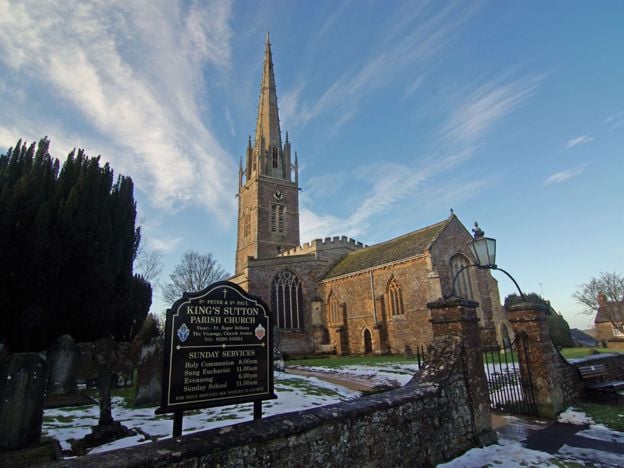
St Peter and St Paul's Church, Kings Sutton
Sight · Church · Kings Sutton
The Grade I church on The Square at Kings Sutton, whose crocketed spire of about 1370, given as about 60m, is the beauty in the old rhyme. Norman arcading, painted roof bosses and a Resurrection monument inside. Open in daylight.
-
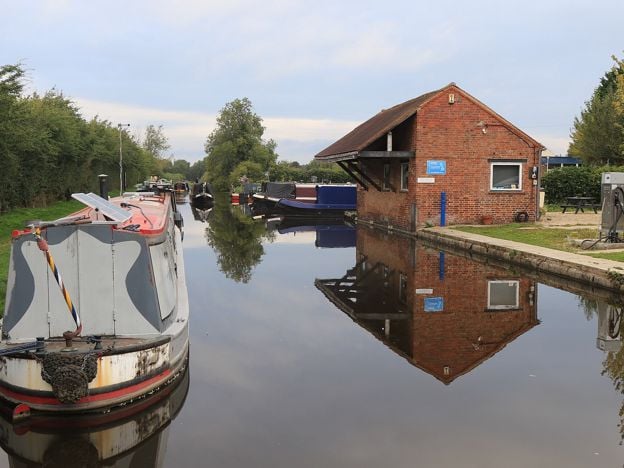
Aynho Wharf
Sight · Historic building · Aynho
A canal wharf of 1788 on the Oxford Canal below Aynho, with a warehouse whose roof hangs over the water and a listed stone bridge, and a walk north to the odd diamond-shaped Weir Lock where the Cherwell crosses the canal.