Aunt Sally: how a fairground shy became Oxfordshire's pub game
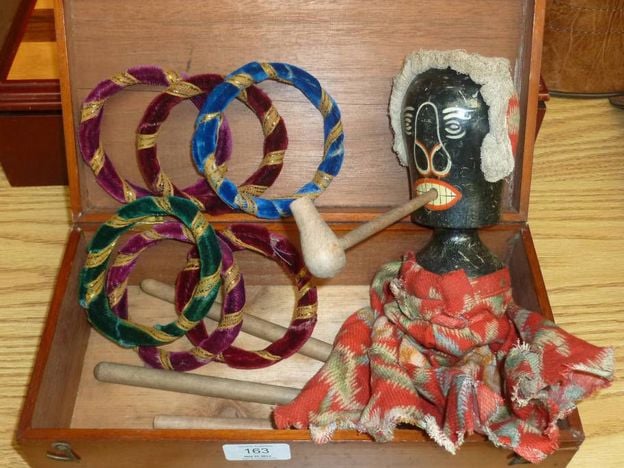
Before the white skittle there was a painted figure with a clay pipe, and it is not a comfortable story. Here is where Aunt Sally came from, how it is played, and how to see a match.
· 5 minute read
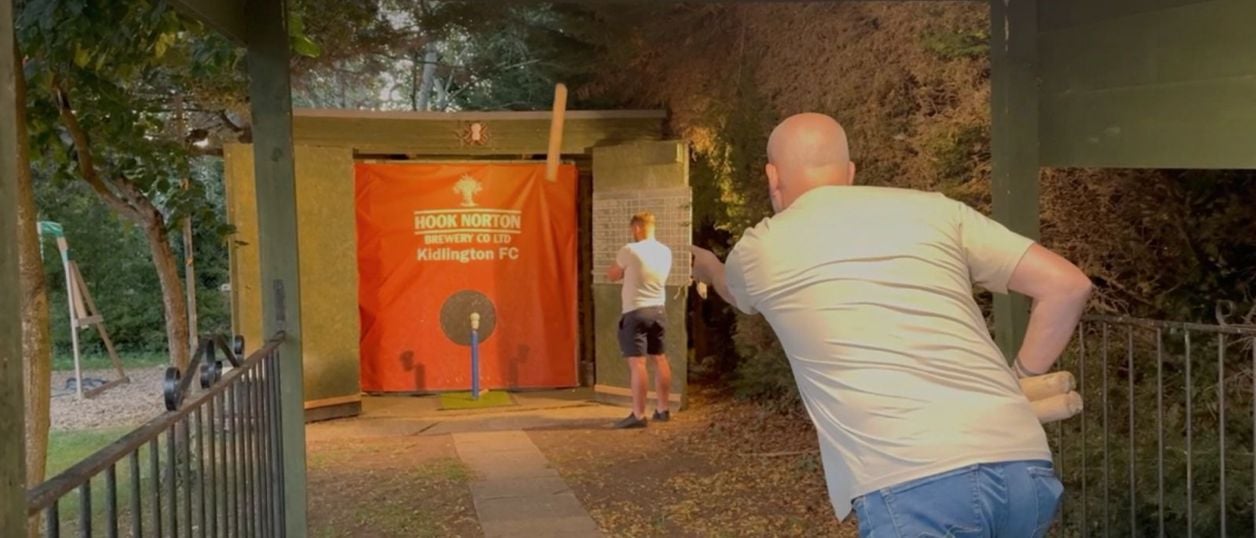
Aunt Sally is a throwing game played in pub gardens, mainly in Oxfordshire and the counties next to it. Teams of eight throw wooden sticks at a white doll perched on a metal swivel, and a point goes to each doll knocked clean off without touching the iron. It began in the nineteenth century as a fairground game with a painted figure as the target, and that part of its history is not a comfortable one.
The first records
The name appears in the 1850s, far later than most accounts claim. The earliest uses that the word historian Pascal Tréguer has collected (opens in a new tab) come from December 1858, when the London Standard reported a court case from Brighton races. The Duke of Beaufort had been amusing himself on the racecourse by throwing sticks at an Aunt Sally figure. A rider's horse collided with him, the Duke threw sticks at the rider and pulled him from his horse, and the rider sued for assault. The jury gave the rider £100, and the Duke one farthing for false imprisonment.
So the game was already well known at race meetings, and common enough for a duke. By 1885 the first edition of the Oxford English Dictionary could describe it as much in vogue at fairs and races, with players trying to break a pipe in the head of a figure of a woman. The 1911 Encyclopaedia Britannica describes the target as a grotesque female puppet, with a clay pipe in the mouth or forehead.
An uncomfortable target
The figure was often black, and that is on the record. The Standard's report of 1858 used a racial term for the head. A London account printed in The New York Times in April 1866 describes crowds in the parks (opens in a new tab) throwing at a large black figure on a stick, with a pipe in its mouth, for a prize such as an orange.
Where the name came from is less certain. James Redding Ware's slang dictionary of 1909 traces it to Black Sall, a character in Pierce Egan's Life in London of 1821. The language writer Michael Quinion notes that 'aunt' was also an old term for a Black woman in the United States, known in London, and that it could equally be a familiar name for any old woman. John Farmer, writing in 1890, said the origin was 'wrapped in mystery', and that remains the fair summary. The writer of the Traditional Games site (opens in a new tab) calls the Victorian game both misogynistic and racist, which is hard to argue with.
The older stories
Much of what you will read is older and has no evidence behind it. One story has Royalist soldiers bringing the game to Oxford when Charles I's court was there during the Civil War, which would date it to the seventeenth century, but no document has been produced for it. The Bicester league's own history traces it back to throwing sticks at a chicken tied to a stake. Throwing at birds was a real blood sport, and a plausible ancestor, but a direct line has not been shown. The Traditional Games writer leans towards a Victorian invention, and the dates of the first records support that.
How it became a pub game
The move into Oxfordshire pubs is poorly recorded. An 1890 book mentions a tremendous run of popularity, and the game was fading at the racecourses by 1909. The pub game was established by the 1930s, with the first singles winner in the Oxford league recorded in 1938. Play stopped from 1939 to 1941 and resumed in 1942. Somewhere along the way the figure gave way to a plain white skittle, which is why the target today is still called the doll.
The rules
The game is simple enough to learn in a minute. These are the Oxford and District league's rules for 2026 (opens in a new tab), and other leagues differ in small ways. The doll is a white wooden skittle about 15cm high, set on an iron post so that its top stands about 75cm off the ground. You throw from behind a raised bar, the ochre, about 9m away, using sticks about 46cm long.
Teams are eight a side, each player throws six sticks, and a match is three legs, called horses. Knock the doll cleanly off and you score. If the stick hits the iron first, that is an 'iron', and it does not count. Six throws with nothing to show is a blob, marked with a cross on the score sheet, and it is exactly as embarrassing as it sounds. Chipping Norton's league adds a fourth 'beer leg' whose winner gets a drink from the other team.
The Banburyshire newsletter
Events, new places and the best of the season, about once a month. Unsubscribe at any time.
Where it is played around Banbury
Aunt Sally is alive and well here, and the leagues are the proof. The Banbury and District league (opens in a new tab) has a summer league of six divisions and a run of cup competitions, with its 2026 fixtures posted in March. The Chipping Norton Invitation League (opens in a new tab) dates from the 1960s and in 2026 had 16 teams in two divisions and over 200 people playing, though it says numbers have declined. It runs from April to September, with league matches usually on Thursdays at 8.30pm and cups on Mondays.
Further out, the Bicester league's site names its sponsor as Hook Norton Brewery. Oxford plays on Wednesday evenings and says it regularly runs about 120 teams in 12 sections, and Abingdon reported 60 teams at its 2026 meeting. Both figures come from the leagues themselves.
How to see a match
Nothing is staged for visitors. These are league nights, played by people who live here in pub gardens on summer evenings, so the way in is to find a fixture and go for a pint. The Banbury and Chipping Norton league sites post fixtures, and Chipping Norton league matches start at 8.30pm. Stand well clear of the throw, and ask before you try a stick, because they are in the middle of a match. Our list of pubs near Banbury and the Chipping Norton guide will help you pick an evening's base.
Places to stay near Chipping Norton
-
The Fox, Chipping Norton
Pubs · Chipping Norton
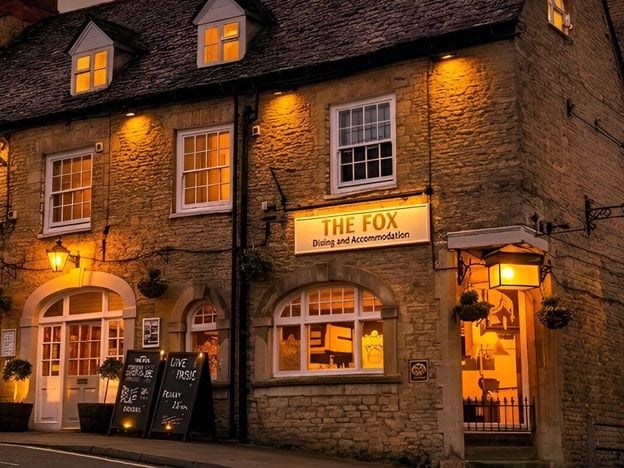
A Hook Norton Brewery inn on the Market Place in Chipping Norton, in a Grade II listed building of the early 17th century, with Hooky on the bar, ten en suite bedrooms, breakfast to dinner and a car park behind.
Verified Nov 2026
-

Cotswolds Hotel and Spa, Chipping Norton
Hotel
A large golf and spa hotel at Southcombe, on the edge of Chipping Norton, with 114 rooms and suites, an 18-hole parkland course, padel, spa treatments and Greys Restaurant, plus free parking.
Verified Nov 2026
-
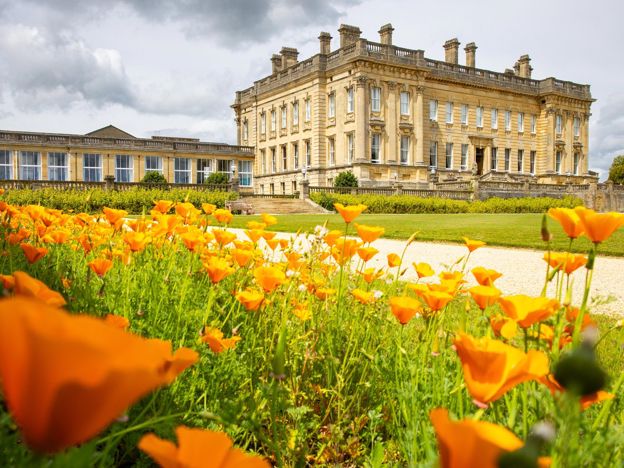
Heythrop Park
Hotel
A Warner adults-only hotel in a Grade II* listed house of the early 1700s, on 440 acres near Enstone, selling dinner, bed and breakfast breaks with nightly entertainment, a spa, a pool and an 18-hole golf course.
Verified Nov 2026
Read next
-
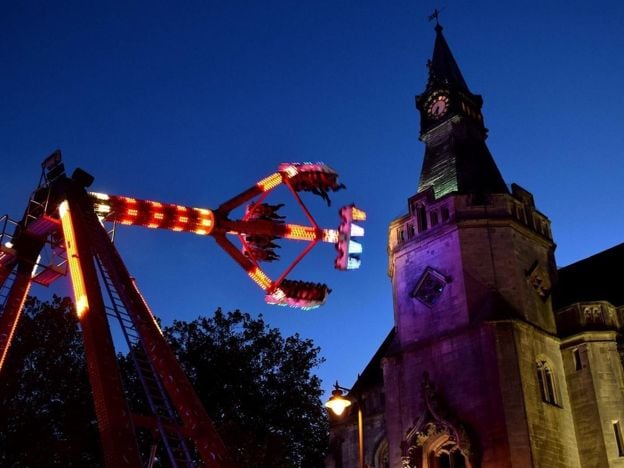
Banbury Michaelmas Fair: from hiring fair to street funfair
Story · History · 5 minute read
Banbury's Michaelmas Fair fills the town centre for four days each October. Records show fairs here from 1154, a hiring fair called the Mop by 1677, and a pleasure fair that outlived its purpose. This is that history, and how the fair runs today.
-
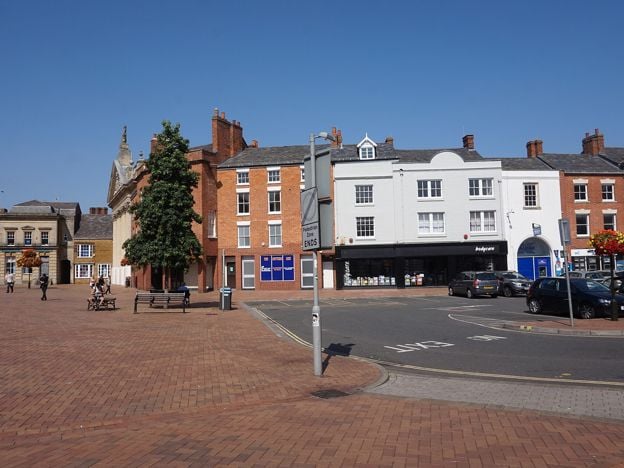
Things to do in Banbury
Story · Guides · 13 minute read
Things to do in Banbury: the Cross and the Fine Lady, the Thursday and Saturday market, the free museum and Tooley's boatyard on the canal, then Broughton Castle, Upton House and the brewery at Hook Norton, with what it costs and what to skip.
-
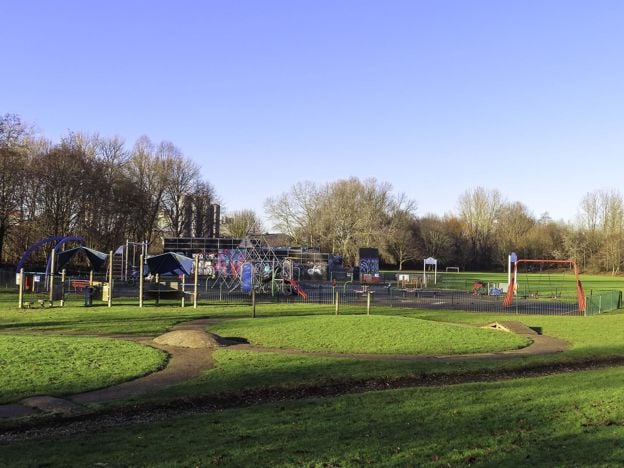
Banbury with children: days out for families
Story · Guides · 9 minute read
Banbury with children: the aviary and play areas in the two parks, the free museum, swimming at Spiceball, boat trips at Tooley's, then Silverstone Museum, Compton Verney, Burton Dassett and Sulgrave by car, with ages, prices and what to skip.