Banbury’s WWI Munitions Factory
Hidden beneath the fields of Grimsbury lies the skeletal remains of National Filling Factory No. 9, a site once so vital to the war effort that it became a target for the Luftwaffe. From the dangerous production of mustard gas to the story of the "Canary Babies" born with chemically tinted skin, this forgotten landmark tells a powerful story of Banbury’s frontline contribution to the World Wars.
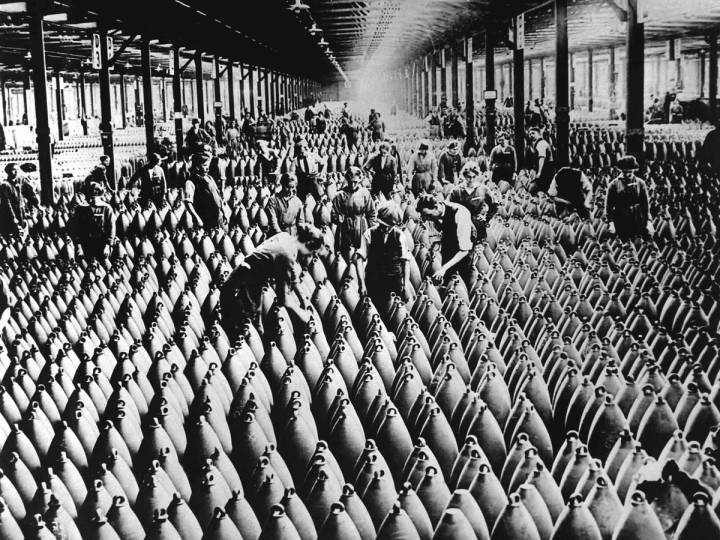
In the fields of Grimsbury in south east Banbury, close to where thousands of cars pass on the M40 every day, lies the earthwork remnants of one of the town’s contributions to World War One.
What was once a National Filling Factory (No.9), this area was scheduled under the Ancient Monuments and Archaeological Areas Act 1979 – by the Secretary of State of the time – as a site of national importance.
National Filling Factories were essentially a series of units linked together by a light railway, where local workers filled shells with lyddite (a high explosive containing picric acid) under extremely dangerous conditions. Production of filled shells began in April 1916 and ended in 1924, but at the height of the war it gave employment to 933 men and 548 women.
When demand for lyddite declined by September 1917 as the army switched to TNT, sections of the factory were converted to filling naval mines and shrapnel shells and, early in 1918, part of the factory was given over to the filling of chemical shells with mustard gas.
Production officially ceased in 1924, and the site underwent a rigorous decommissioning process. Due to the high risk of explosion from lingering chemical residues, many of the wooden buildings were burned to the ground. By the early 1930s, the site had been largely dismantled, leaving behind only the concrete foundations and the protective earth traverses that remain today. By the 1940s, the factory was no longer operational, yet it remained a target on German maps. In October 1940, the Luftwaffe dropped five bombs in the fields behind the Bowling Green pub. Because the distinctive 'mounds' of the shell-filling huts were still visible from the air, German intelligence mistakenly believed the site had been reactivated for the new war effort.
There was a smaller satellite depot on the nearby Middleton Road during 1919, which was reactivated in WWII. Twenty WWII anti-tank phosphorus grenades and a small number of WWI phosphorus grenades were dug up by developers and defused by the army in 2012, leading to evacuation of the area.
The Remains of the Site
In 2014, broadcaster Jane Markham’s Podcats production company produced a video for Banbury Museum about the site. The BBC has since picked up the story and has included it as part of their World War One at Home series of stories. In partnership with Imperial War Museums and the Arts and Humanities Research Council, the series depicts how WWI affected the people and places of the UK and Ireland.
Courtesy of Banbury Museum and Podcats, Dale Johnston the Events and Exhibitions Manager at the museum, walks us through the ghostly remains of the factory, beside what now runs the M40 motorway. There’s also footage of the workers at the time, along with descriptions of how the factory operated.
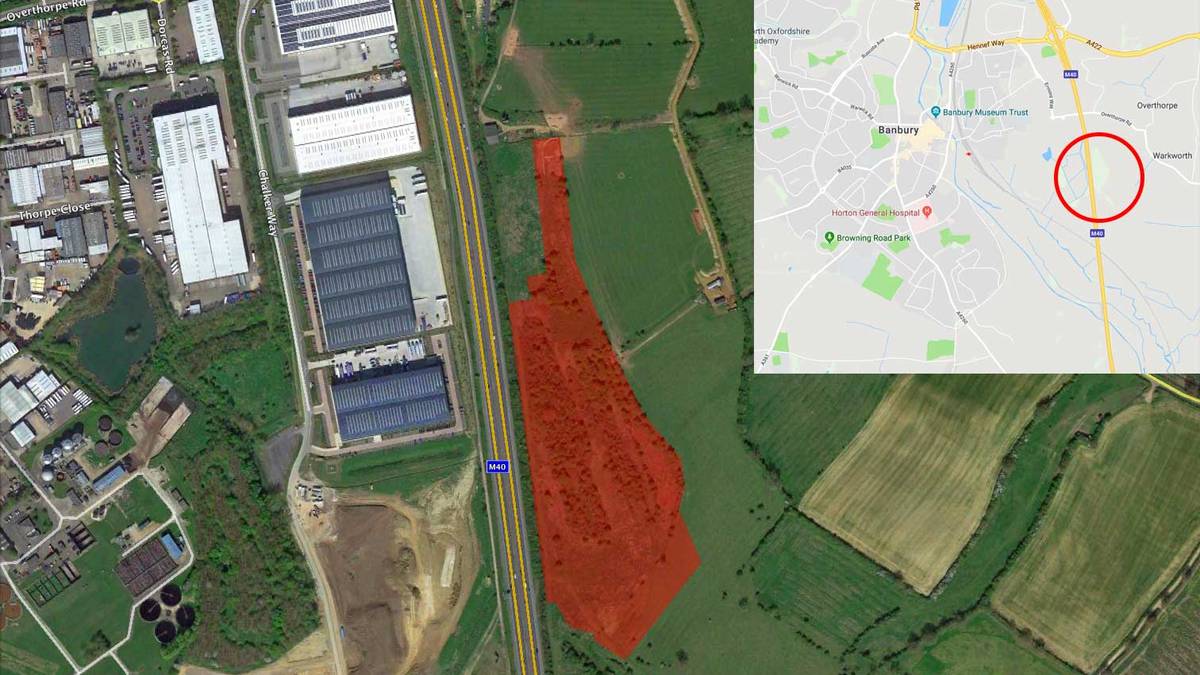
Location of the Factory
The M40 motorway now cuts through the site, with Grimsbury to the west and Warkworth to the east. The site is now a protected monument and on private land, so no attempts should be made to try and visit the site, without prior arrangement and consent.
Canary Babies
There were many women working in the factories during WWI, helping to fill the jobs lost when the men went off to fight in the war. They had the unenviable job of being in one of the most dangerous workplaces you could imagine. Some workers in these factories lost limbs or even their lives when explosives were accidentally set off.
Gladys Sangster – who features in the video above – is one of the oldest surviving ‘Canary Babies’, whose skin at birth was a shade of yellow. This was due to the dangerous sulphuric chemicals and liquid explosives used to build munitions for the war effort.
Here’s an edited transcript of a recording made with Gladys, whose mother worked at the factory in Banbury, and Dale Johnston from Banbury Museum.
Jane Markham:
“National Filling factory No.9 was built on fields near the pub The Bowling Green, in Grimsbury, on the outskirts of Banbury. It started filling shells in 1916.”
Gladys;
“I was born when the war was still on, and I was yellow, and that’s why they, we, new babies we were called Canary Babies.”
Dale Johnston:
“I’m Dale Johnston the Events and Exhibitions Manager at Banbury Museum. Gladys Sangster is one of the members of our Times Gone By reminiscence group. Her mother used to work at the filling factory and while she was working there, she had Gladys – this was 1917. She was one of the Canary Babies, because her mum had been working with the chemicals at the factory.”
Gladys:
“Every women that was pregnant, nearly every baby was born yellow.”
Dale:
“Many people will have had babies with jaundice, but this is chemically induced yellow colouration of the skin.”
Gladys:
“Well it gradually faded away. Mum said you just took it for granted, it happened and that was it. You was tougher in those days than what they are today.
“They were not allowed to wear anything metal. They couldn’t wear hair grips, they couldn’t wear the shoelaces with the tabs on the end. Everything that they wore, if it had any metal in it, they all had to be taken off and everything had to be tied up with tape, the ordinary white tape.”
Dale:
“Anything that could have created a spark would have been very dangerous, so whatever they arrived in, everybody had to get into their khaki outfits. So everyone in the factory had their own uniform of sorts. They’d have know that if anything went wrong, they were in trouble. Of course they had the danger of air raids – and if there’s an air raid going on you don’t want to be in an ammunition factory.”
Gladys:
“One day, one of the bosses, he said; ‘Mary? If there was a raid on now’ – the planes, they’d started with the planes then – ‘what would you do?’. Because she was in charge of so many women (chuckles), she turned around and said to him; ‘If they’ve got any sense, they’d do the same as what I’m going to do’, and he said ‘What’s that?’. She said; ‘Run like hell across those fields away from the bombing.’ She burst out laughing as she said it because of course, we all pictured mum running across these fields, to escape the bombing.”
To further explore Banbury’s heritage, pay a visit to the Banbury Museum. They offer excellent site tours for those who want a more hands-on experience; check their schedule to plan your trip!
Places to visit
Discover the Heart of Our Heritage
Explore Banbury’s history from the Civil War to its industrial canal legacy through interactive exhibits and world class touring galleries.
Areas to explore

Historic market town in Oxfordshire, known for its cross and vibrant community.
More from Discover
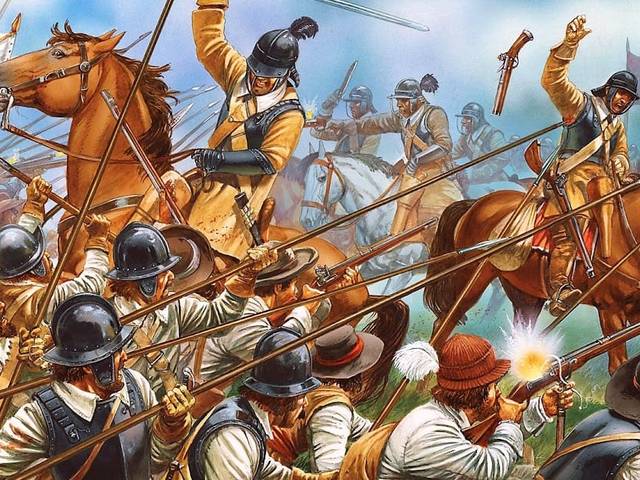
Edgehill, England’s Only ‘Officially’ Haunted Battlefield
In the winter of 1642, the villagers of Radway witnessed a supernatural phenomenon so terrifying it required a Royal Commission. Explore the deep history of Edge Hill, where the ghosts of the English Civil War were once recorded as a matter of state record.

The History and Culture of Banbury Michaelmas Fair
Step back in time to discover the "Mop" traditions of Banbury. From medieval hiring fairs and the "hiring shilling" to the modern-day Golden Key ceremony, explore the deep-rooted culture of the Michaelmas Fair.
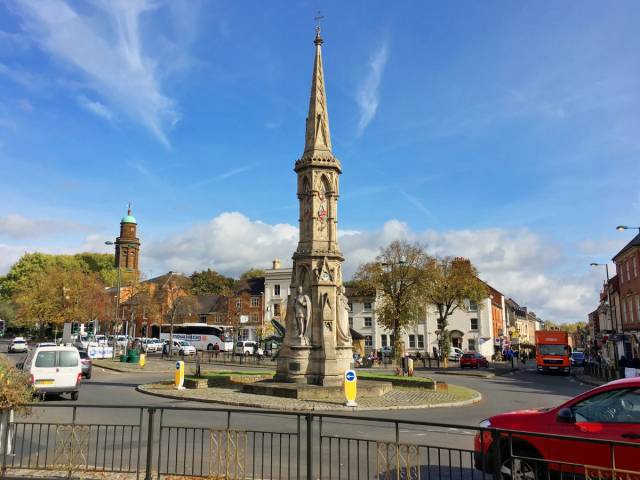
The Fascinating History of Banbury’s Four Crosses
Discover the true story behind the nursery rhyme. From the mysterious 'Fine Lady' on her white horse to the 1600s religious riot that levelled the town’s original monuments, Banbury Cross is more than just a landmark and it’s a tale of royal weddings, lost history, and Puritan rebellion.