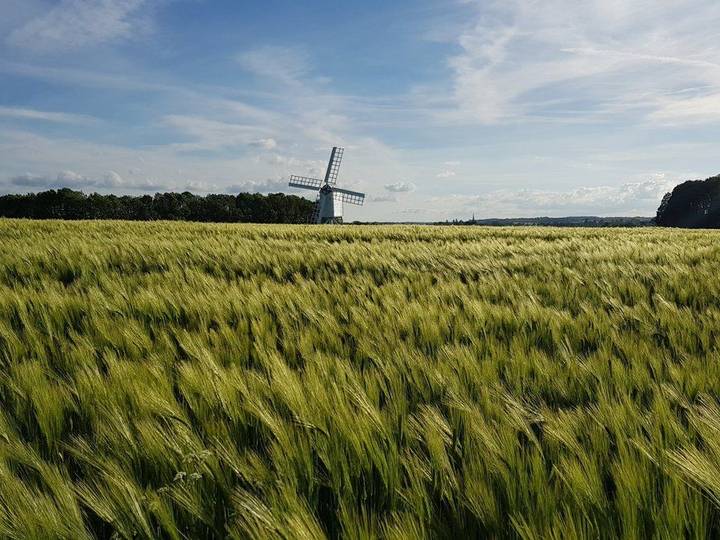

The Warriner Windmill stands as one of the most unexpected and striking silhouettes in the local landscape. Located on the elevated ridge between Bloxham and Adderbury, this Grade II listed structure is a rare surviving example of a "smock mill" in a region dominated by stone-built architecture. While most historic buildings in the Banbury area use the local honey-coloured ironstone, the windmill’s white weather-boarded exterior provides a sharp, aesthetic contrast that has made it a celebrated landmark for centuries.
Architectural rarity and the smock mill design
Built in the late 18th or early 19th century, the Warriner Windmill is distinguished by its octagonal timber-framed tower. The term "smock mill" derives from the structure’s resemblance to the linen smocks worn by agricultural workers of the era. This style of mill is far more common in the south-east of England, particularly in Kent and Sussex, making its presence in the Midlands a significant industrial anomaly.
The choice of timber over stone was often a matter of engineering and weight; the lighter wooden frame allowed the mill to be situated on the high, exposed ridge without the need for the massive foundations required by a traditional stone tower. For decades, the mill harnessed the consistent winds sweeping across the plateau between the Sor Brook and Cherwell valleys, grinding grain for the local agricultural community and serving as a vital engine for Bloxham’s self-sufficiency.
The Warriner legacy and village provenance
The mill takes its name from the Warriner family, who were prominent local landowners and major benefactors to the village of Bloxham. Their influence is woven into the fabric of the area, most notably through the nearby Warriner School. Historically, the windmill was the centrepiece of a working farm, and its operation was a cornerstone of the local economy before the advent of steam-powered milling.
By the mid-20th century, like many wind-powered structures across Britain, the mill fell into disuse as industrial milling moved to larger, centralised hubs. However, unlike many of its contemporaries that were demolished or left to ruin, the Warriner Windmill was preserved. It was eventually converted into a private residence, a move that secured its structural future while maintaining its historic exterior. The white weather-boarding is meticulously maintained, ensuring the "white mill" remains visible for miles around.
A navigational waypoint for regional walkers
The windmill has transitioned from a functional industrial building into one of the most important navigational waypoints for walkers south of Banbury. It sits at a crucial junction of the regional footpath network, acting as a visual guide for those navigating the circular trails between Bloxham Grove, Adderbury, and Milton.
The public footpaths that skirt the boundary of the mill’s grounds offer some of the most panoramic vantage points in North Oxfordshire. From this elevated position, the views stretch westward toward the dramatic Edge Hill escarpment and southward across the rolling ironstone plateau. The contrast between the brilliant white timber of the mill and the deep greens and browns of the surrounding arable fields creates a scene that is a favourite for local photographers and landscape artists.
Preservation and modern identity
As a protected Grade II listed building, the Warriner Windmill is recognised for its "special architectural and historic interest." Its survival is a testament to the local community's commitment to preserving the unique character of the Banburyshire landscape. It remains one of the few standing windmills in the county and serves as a silent reminder of the region’s pre-industrial heritage.
For those exploring the area on foot, the mill provides a sense of scale and history that defines the Bloxham skyline. It bridges the gap between the village’s agricultural past and its modern identity as a scenic residential hub. Whether viewed through the mist of a winter morning or standing bright against a summer sky, the Warriner Windmill remains an iconic symbol of the enduring heritage of the North Oxfordshire countryside.