Aunt Sally and the Evolution of the British Pub Game
Discover the history of Aunt Sally, from its dark Victorian origins to its modern role as a beloved pub sport tradition.
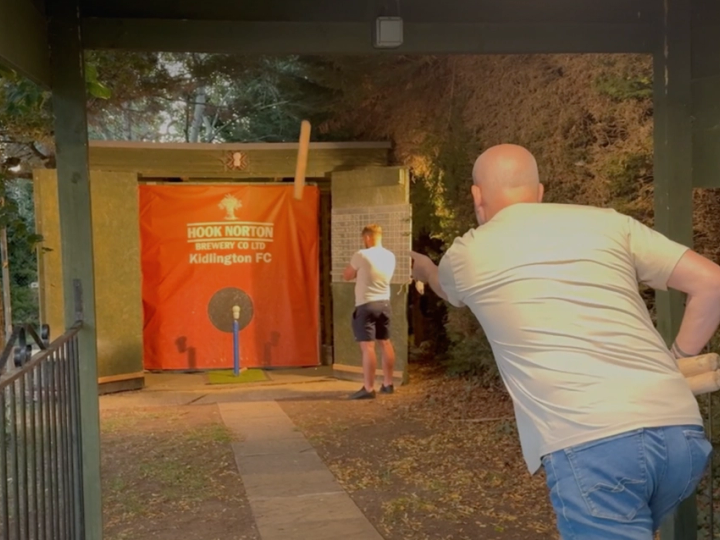
The low sun hangs over a Cotswold stone wall, casting long shadows across a pub garden where the air smells of cut grass and local ale. A crowd gathers, not in hushed anticipation, but with the boisterous energy of a tradition that refuses to fade. In the centre of the lawn stands a wooden plinth, and atop it, a small white cylinder known as the Dolly. This is not a high-stakes athletic pursuit or a modern televised spectacle. This is Aunt Sally, the quintessential pub game of the South Midlands and the heart of the Oxfordshire countryside.
To the uninitiated, the sight is peculiar. A player stands ten yards away at the oche, clutching a heavy wooden baton. With a concentrated squint and a flick of the wrist, they hurl the timber towards the Dolly. Success is marked by a clean hit that knocks the cylinder off its perch without touching the iron spike underneath. If the baton strikes the metal first, the cry of "Iron!" rings out, and the throw is void. A "blob" is the ultimate ignominy, a scoreless round that invites immediate, good-natured ribbing from the opposing team.
From Blood Sports to Wooden Targets
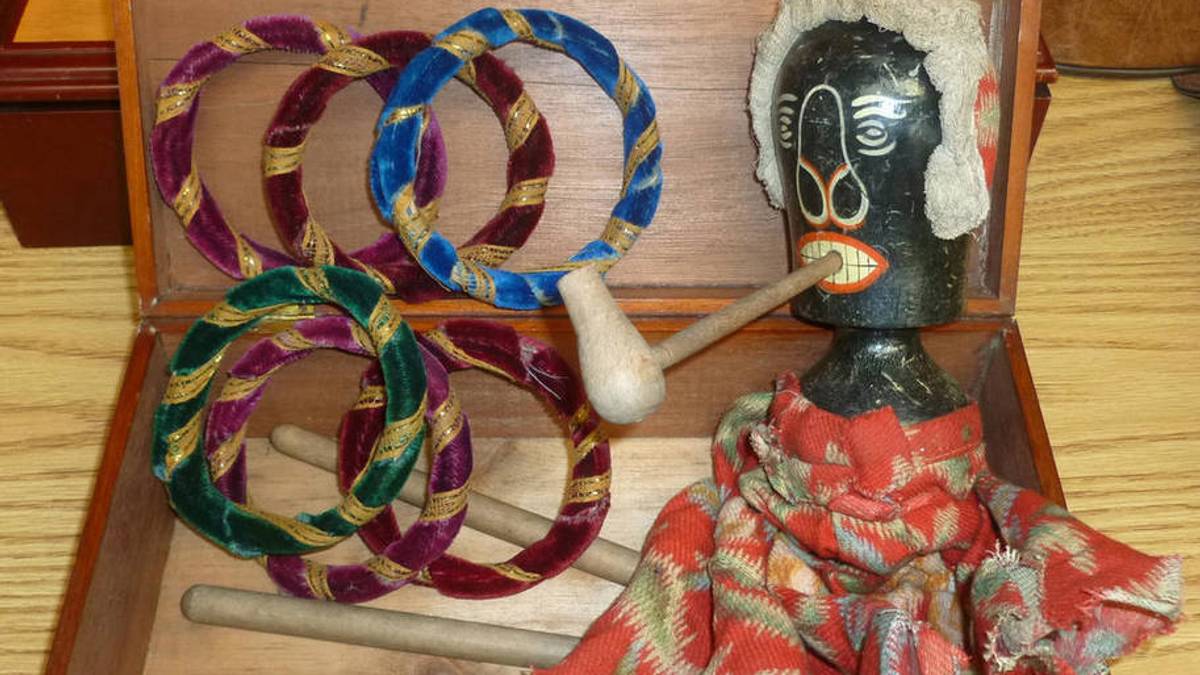
While many associate the game with the local leagues of today, its origins are steeped in a history that stretches back centuries, beginning with a far darker predecessor. Before the wooden doll, there was "cock-throwing," a medieval pastime where a live cockerel was tethered to a stake and pelted with sticks until it died. As society moved away from these brutal blood sports in the seventeenth and eighteenth centuries, the live bird was replaced by a wooden model.
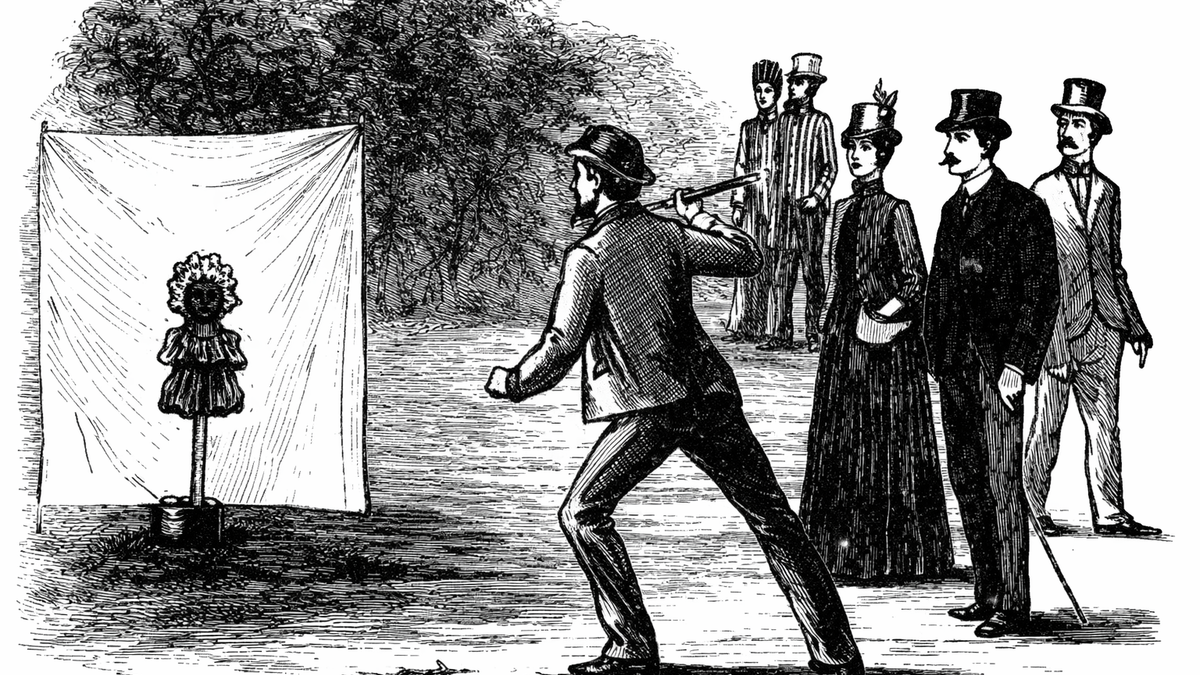
By the Victorian era, this evolved into the fairground "Aunt Sally." This was a wooden bust of an old woman, often carved with a clay pipe in her mouth. The game was a "vulgar pursuit" where players paid to throw sticks at the figure, aiming to break the pipe. This period of the game carried uncomfortable social baggage, as the "Aunt" figure was often a caricature reflecting the prejudices of 19th-century entertainment.
The Darker Victorian Legacy
The history of the "Aunt" figure is particularly complex and tied to the racial tropes of the era. In many Victorian fairgrounds, the wooden bust was often painted black, drawing directly from "blackface" caricatures that were common in contemporary theatre and sideshows.
The name "Aunt" itself was a diminutive often used in the 1800s to refer to enslaved or formerly enslaved Black women, a nomenclature that stripped them of their surnames and reinforced a subservient social standing. By casting this figure as a target for projectiles, the game historically mirrored the systemic dehumanisation found in other forms of Victorian amusement. It is a stark reminder of how regional pastimes were often shaped by the broader, more troubling cultural currents of the British Empire.
The Modern Transition and the Rise of the Dolly
The transition from a controversial fairground attraction to a regulated pub sport occurred primarily in the early 20th century. By the 1930s, as social sensibilities shifted, the game began to shed its anthropomorphic features. The caricature was replaced by a simple, abstract white cylinder, now universally known as the "Dolly." This shift sanitised the game, moving the focus away from the "target" and onto the technical skill of the throw.
The game eventually found its spiritual home in the breweries and back gardens of Oxfordshire, Gloucestershire, and Buckinghamshire. It became a leveller of people. On any given summer evening, a local landowner might find himself outscored by a tradesperson, both bound by the strict etiquette of the throw and the shared pursuit of a post-match pint. The physics of the throw are deceptive, requiring a flat, skimming trajectory rather than a high lob, ensuring the baton strikes the Dolly squarely.
Beyond the Oxfordshire Borders
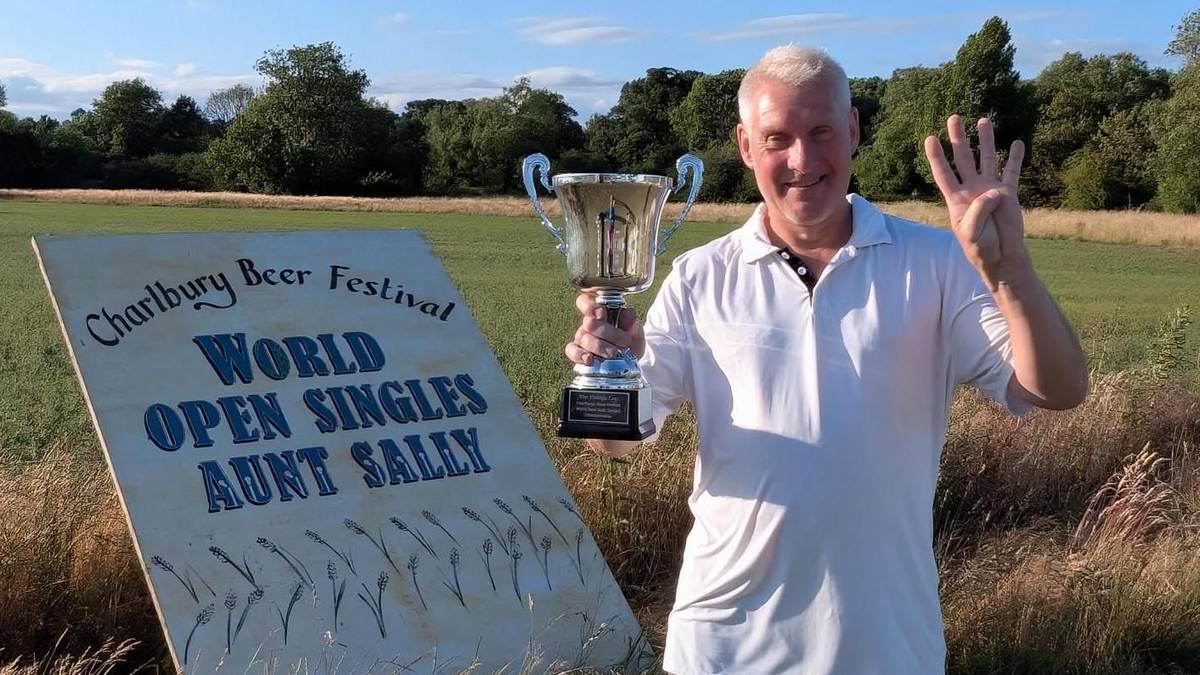
Though Oxfordshire claims Aunt Sally as its own, the game is a broader regional treasure. While it remains most concentrated in Oxfordshire, the "Aunt Sally belt" spills over into the surrounding counties of Warwickshire, Berkshire, and the Cotswolds. Each area brings its own flavour to the game, yet the core remains unchanged. The World Aunt Sally Open Singles Championship, held annually at the Charlbury Beer Festival, draws players from across these borders, proving that the competitive fire burns just as brightly in a Gloucestershire village as it does in a North Oxfordshire market town.
In an era where digital entertainment threatens to erode local community spaces, Aunt Sally remains a vital anchor for the village pub. The leagues that crisscross the region are more than just competitive fixtures; they are social lifelines. On a Wednesday night, the car parks of thatched inns fill with teams carrying their own personal batons, often custom-turned from dense woods like beech or boxwood.
The Heartbeat of the Village Pub
The sounds of the game are the sounds of an English summer. There is the rhythmic thwack of wood on wood, the metallic ping when a throw goes wide, and the collective groan of a "four-doll" lead being squandered at the final hurdle. It is a game played in the spirit of fierce rivalry tempered by immense respect for the craft.
As the evening light fades and the final batons are thrown, the teams retreat inside. The scores are tallied on chalkboards, and the conversation shifts from the technicalities of the "underarm release" to the broader happenings of the parish. Aunt Sally is more than just a game. It is a declaration of identity for a corner of England that still values the weight of a wooden stick and the warmth of a local crowd.
More from Discover

The Birth of Britain's Motorsport Valley
From post-war airfields to global dominance, discover how North Oxfordshire became the beating heart of world-class automotive engineering and motorsport innovation.
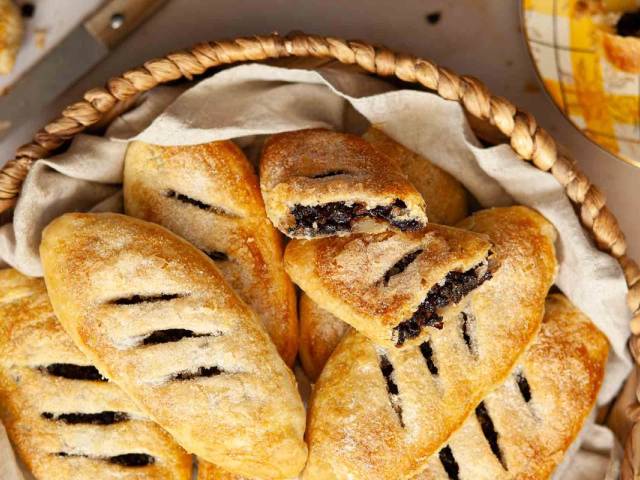
The Original Banbury Cake
Is it a mince pie, an Eccles cake, or something entirely unique? Discover the royal history of the Banbury Cake: a spiced, boozy, and flaky pastry that has been exported from our town for over 400 years.