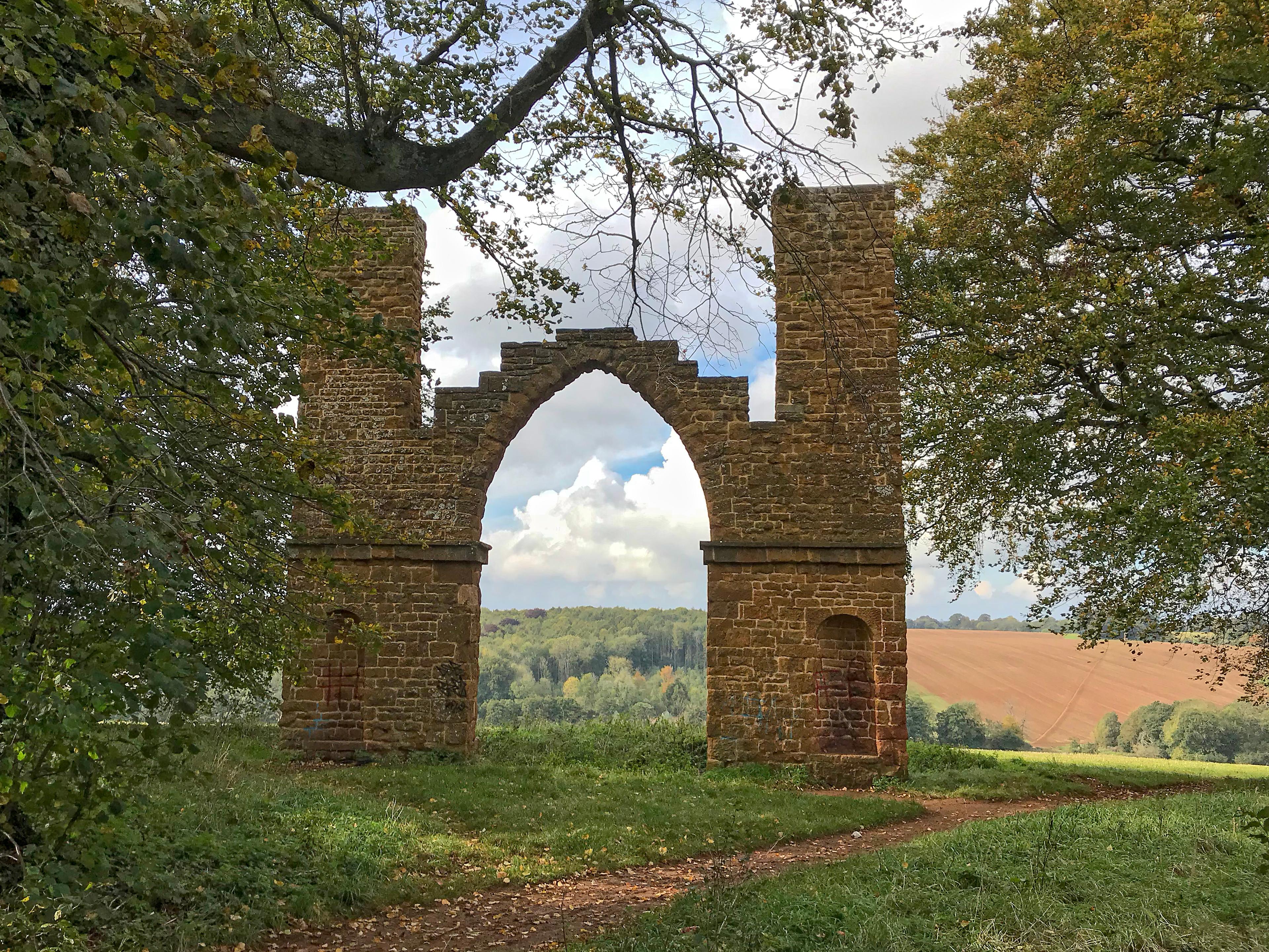
Drayton Arch
Drayton Arch, also known as Wroxton Arch, is a magnificent 18th-century architectural folly standing in the parkland between Banbury and Wroxton. Built by David Hiorn in 1771, this Grade II* listed structure consists of two impressive 40-foot towers connected by a central arch, creating one of the finest eye-catchers in Oxfordshire. The arch was designed as a dramatic focal point to be viewed from Wroxton Abbey, the grand country house lying in the valley to the west. Eye-catchers were fashionable features of 18th-century landscape design, intended to draw the eye across parkland and create picturesque views from the main house. Drayton Arch served as the eastern entrance to the Wroxton Abbey estate, marking where the main approach from Banbury entered the park. The drive would pass north of the arch before crossing the south park westward toward the house, making the structure both a functional gateway and an ornamental feature. David Hiorn was part of the renowned Hiorn family of architects and masons from Warwick, who were responsible for numerous important buildings across Warwickshire and Oxfordshire during the 18th century. The arch stands prominently on the eastern skyline when viewed from Wroxton Abbey, approximately 1.2 kilometres east of the house. Its commanding position on higher ground makes it visible across the parkland, fulfilling its purpose as an eye-catcher perfectly. The structure's architectural style reflects the Georgian taste for classical proportions and dramatic silhouettes in the landscape. The arch is located just inside the boundary between the parishes of Drayton and Wroxton, hence its dual naming. It stands a few fields away from the village of Drayton, near the ever-expanding western edge of Banbury. The surrounding landscape remains largely rural, though the western suburbs of Banbury are now prominent on the eastern skyline beyond the arch. Drayton Arch forms part of the Grade II* registered historic park and garden of Wroxton Abbey, which encompasses approximately 125 hectares of parkland, pleasure grounds, and formal gardens. The estate was developed primarily during the 18th century by the North family, later Earls of Guilford, with significant input from the amateur architect and landscape adviser Sanderson Miller, who lived nearby at Radway Grange in Warwickshire. Miller was instrumental in creating the mid-18th century rococo landscape at Wroxton, combining Gothic and Chinese buildings throughout the pleasure grounds and park. The arch was part of a series of ornamental park buildings along the approach from Banbury, which also included an obelisk erected in 1739 to commemorate a visit by Frederick, Prince of Wales to Banbury races, and an octagonal Gothic dovecote designed by Sanderson Miller in 1745. These structures were carefully positioned to create a sequence of architectural incidents as visitors approached the house, each offering panoramic views across the park. Today, Drayton Arch remains a striking landmark in the North Oxfordshire countryside. Though the view from Wroxton Abbey is now partially obscured by mature trees that have grown up since the 18th century, the arch still commands attention from the surrounding parkland and nearby footpaths. A public footpath crosses through the Wroxton Abbey grounds, allowing walkers to appreciate the historic landscape and catch glimpses of the arch from various vantage points. The structure stands as a testament to the ambition and aesthetic sensibilities of 18th-century landscape design, when wealthy landowners transformed their estates into carefully composed parkland scenes. Drayton Arch represents the Georgian ideal of integrating architecture with landscape, creating dramatic focal points that enhanced both the visual experience of the park and the prestige of the estate. Its survival as a Grade II* listed building ensures that this remarkable example of landscape architecture continues to grace the Banburyshire countryside, connecting present-day visitors with the artistic vision of the 18th-century landscape movement.